Vocabulary Building Vowels Worksheets for Ages 4-6
3 filtered results
-
From - To
Unlock your child’s linguistic potential with our Vocabulary Building Vowels Worksheets, tailored for ages 4-6! These engaging printable worksheets focus on mastering vowel sounds to enhance reading fluency and vocabulary. Perfect for early learners, each activity blends fun and learning through interactive tasks such as matching, tracing, and picture association. By integrating vibrant illustrations, our worksheets captivate young minds and inspire a love for words. Boost your child's phonetic skills and vocabulary confidence today, paving the way for effective communication and literacy. Ideal for both classroom and at-home learning, making vocabulary-building a delightful adventure.
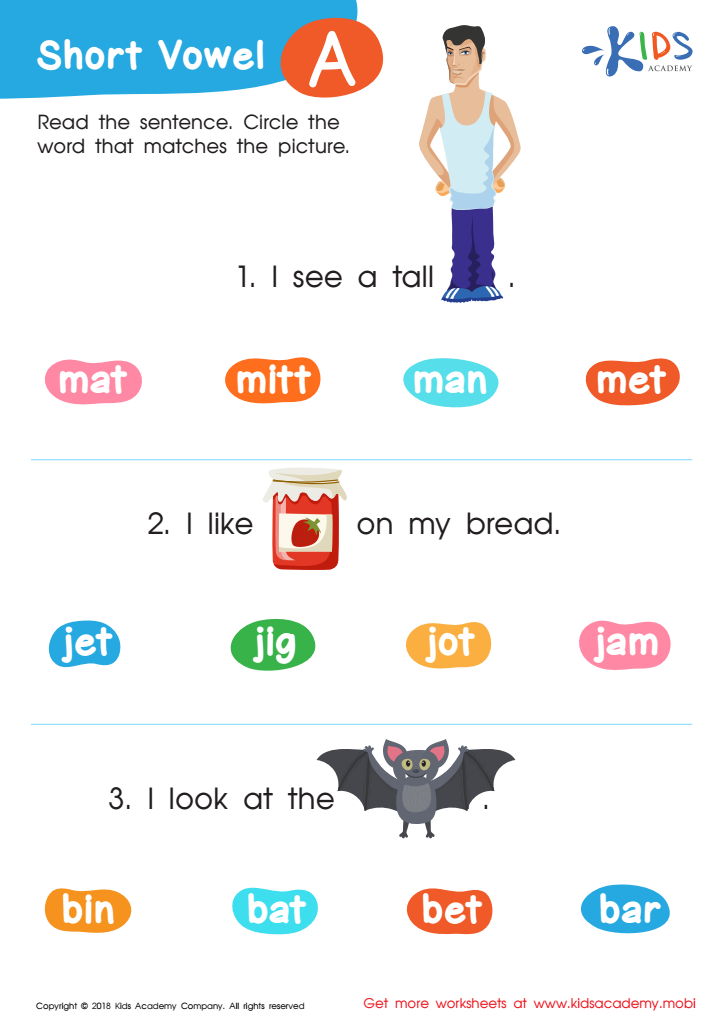
Short Vowel /a/ Worksheet
 Assign to My Students
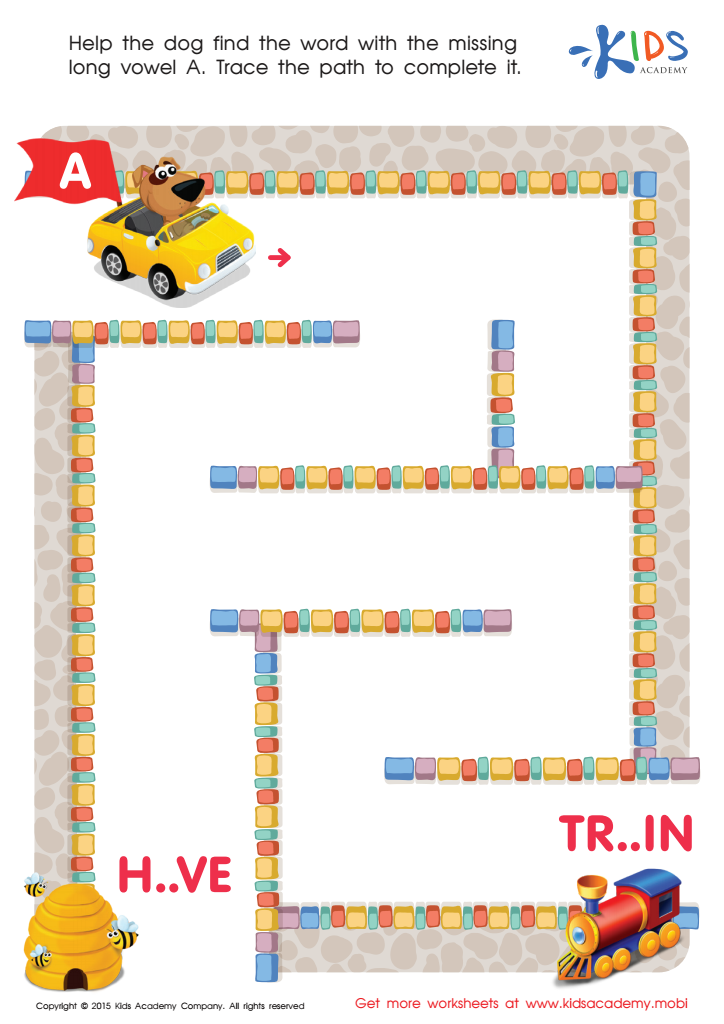
Long Vowel Sound A Worksheet
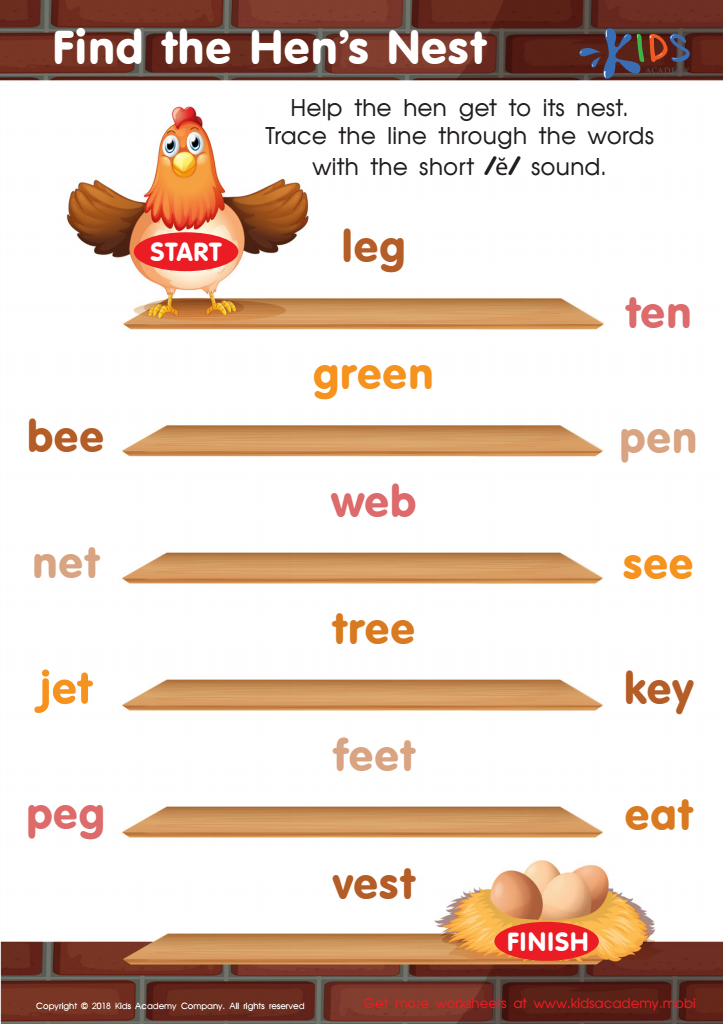
Find Hens Nest Reading Worksheet





Vocabulary Building Vowels are crucial for children aged 4-6, as they lay the foundational groundwork for effective communication, reading, and overall literacy skills. At this early developmental stage, young learners are naturally curious and capable of absorbing language rapidly. Introducing them to vocabulary and vowel sounds enhances their phonemic awareness, making it easier for them to decode words when they start reading.
Vowels play a critical role in the formation of syllables and words. A strong understanding of vowel sounds helps children differentiate between similar-sounding words and improves their pronunciation. This foundational knowledge makes the learning of more complex reading skills smoother and less frustrating.
Early vocabulary development directly impacts a child's ability to understand and construct sentences, fueling their ability to express thoughts and emotions clearly. It also lays the groundwork for future academic success. Research indicates that children with a robust vocabulary tend to perform better in all subjects, as they find it easier to understand instructions and illustrate their learning effectively.
Parents and teachers should prioritize Vocabulary Building Vowels because early literacy skills are linked to long-term educational outcomes. By nurturing a rich language environment, they empower children to become confident communicators and eager learners, setting the stage for continued academic achievement and personal growth.







