
Word identification Vowels Worksheets for Ages 4-6
4 filtered results
Difficulty Level
Grade
Age
-
From - To
Subject
Activity
Standards
Boost your child's literacy skills with our engaging Word Identification Vowels Worksheets designed for ages 4-6! These fun, interactive sheets help young learners recognize and identify vowels while enhancing their reading proficiency. Through colorful illustrations and age-appropriate activities, children will practice vowel sounds, match words to pictures, and develop crucial word identification skills. Our worksheets align with early childhood education standards, making them perfect for homeschooling or classroom settings. Encourage your child’s love for reading while building a strong foundation in phonics. Discover the importance of vowels in language and watch your little one excel in their literacy journey with Kids Academy!
Favorites
With answer key
Interactive
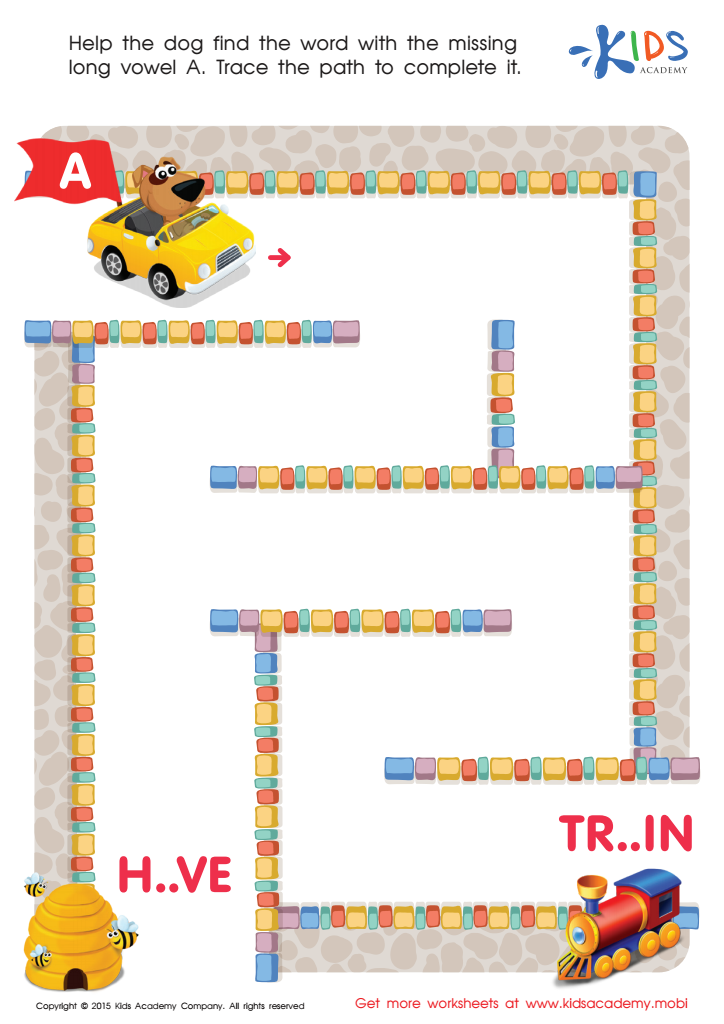
Long Vowel Sound A Worksheet
Teach your young learner about the long vowel A with this colorful free printable phonics worksheet. The long vowel A says its name while the short vowel A does not. Complete the worksheet by tracing the root to the toy train and helping the dog by filling in the missing letter A. Have them practice writing and spelling with phonics while having fun!
Long Vowel Sound A Worksheet
Worksheet
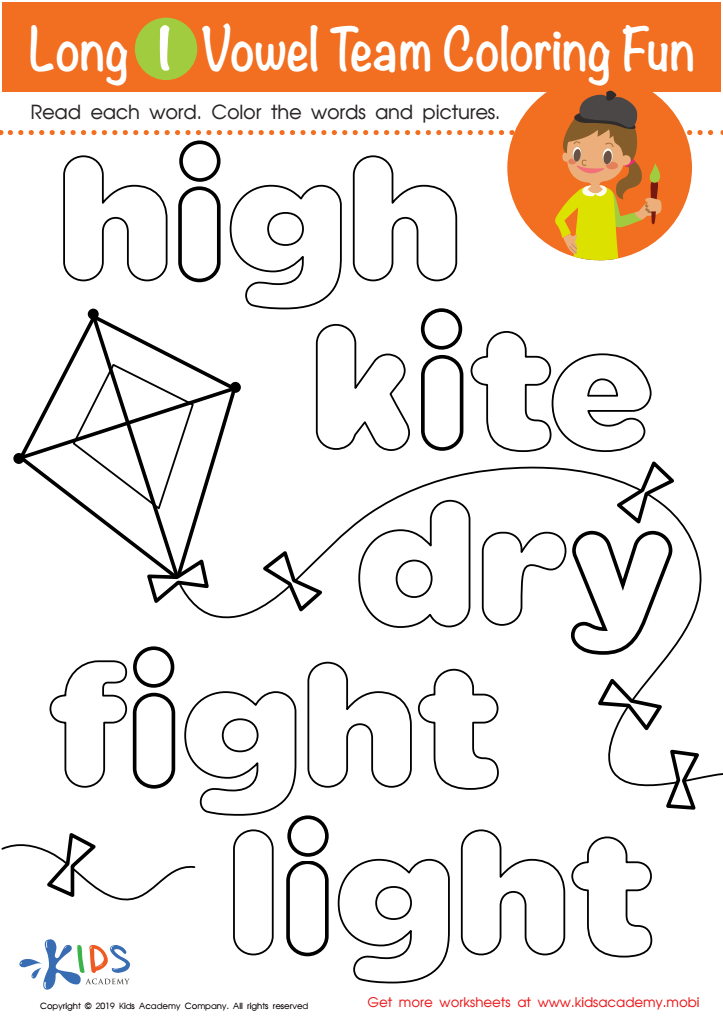
Long I Vowel Team Coloring Worksheet
This worksheet provides practice with letter combinations that make the long "i" sound while enhancing creativity and motor skills with a fun coloring activity. Unknowingly, new readers learn key phonics skills while having fun!
Download (PDF)
 Assign to My Students
Assign to My Students
Long I Vowel Team Coloring Worksheet
Worksheet
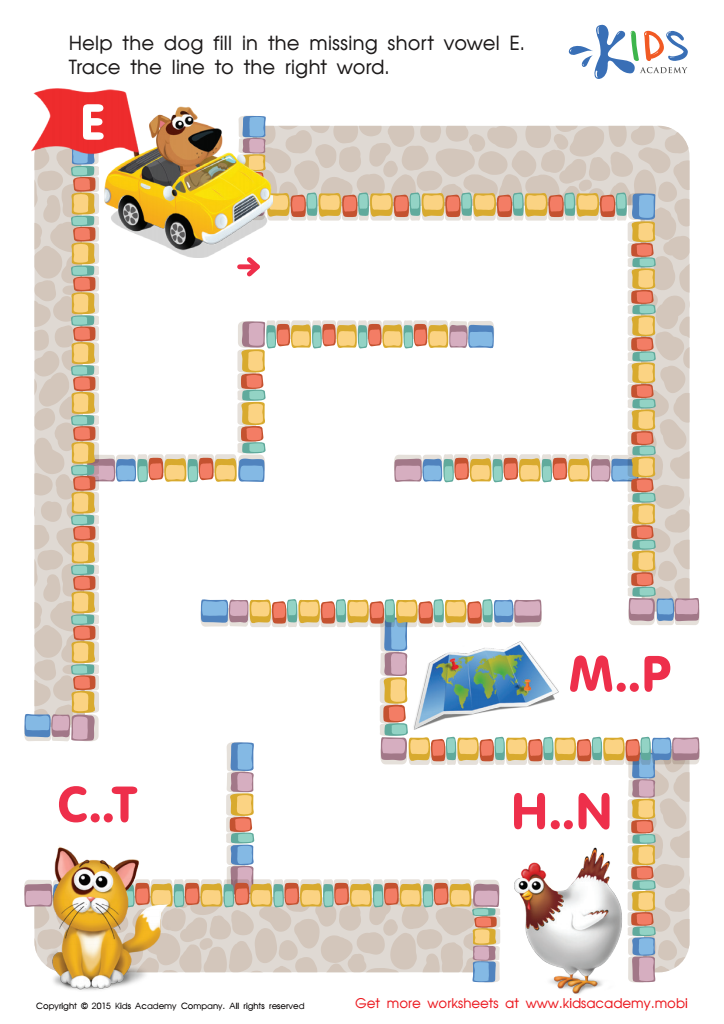
Short Vowel Sound E Worksheet
This free printable phonics worksheet helps kids learn the short vowel sound E. Kids need to help the dog complete the word “hen” by finding their way through a maze. It teaches kids to see the connection between letters and sounds and also strengthens their writing and spelling skills. Fun and educational, this phonics worksheet is great for kids. Want more? Check out here.
Short Vowel Sound E Worksheet
Worksheet
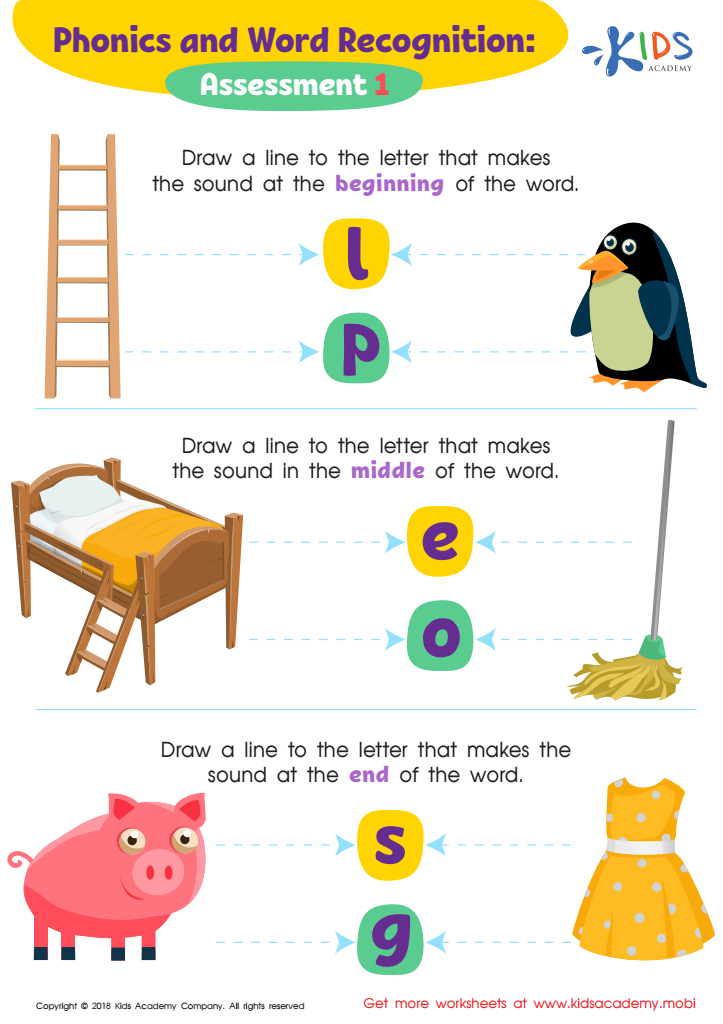
Phonics and Word Recognition: Assessment 1 ELA Worksheet
This fun worksheet tests your child's sound recognition skills for each part of a word. Ask your child to name each image and trace the line to match it with the corresponding letter. Listen for beginning sounds on 1st, middle sounds on 2nd, and ending sounds on 3rd. Encourage learning with this colorful and interactive activity!
Phonics and Word Recognition: Assessment 1 ELA Worksheet
Worksheet
Join Kids Academy for Free
Who is primarily going to use this learning content?





Word identification, particularly the understanding of vowels, is crucial for children aged 4-6 as it lays the foundation for early literacy skills. At this age, kids are in the prime stage of language acquisition, wherein they start recognizing letters, sounds, and their combinations. Vowels play a significant role in word formation; understanding them helps children develop phonemic awareness, which is the ability to hear, identify, and manipulate phonemes.
When kids grasp how vowels function, they are better equipped to decode words, enabling them to read with more confidence and fluency. This strengthens their comprehension and fosters a love for reading, important for academic success. Additionally, phonics instruction involving vowels helps sharpen their spelling skills, guiding them towards more accurate written communication.
The earlier children become proficient in recognizing and using vowels, the better their language skills will develop. Furthermore, this competence expands their vocabulary, allowing them to express thoughts and ideas more freely. Thus, parents and teachers should prioritize word identification and vowel awareness in young learners to promote literacy, critical thinking, and overall academic growth, setting them up for a brighter educational future.







