Sound Association English for Beginners Worksheets for Ages 4-6
5 filtered results
-
From - To
Discover engaging "Sound Association English for Beginners Worksheets" tailored for children ages 4-6! These educational activities help young learners connect sounds with letters and words, enhancing their phonetic skills and laying a strong foundation for reading. Each worksheet features playful illustrations, interactive tasks, and easy-to-follow instructions, making learning fun and effective. Perfect for early readers and ESL students, these resources develop auditory discrimination, vocabulary, and pronunciation. Empower your child’s language journey with Kids Academy’s expertly crafted worksheets, designed to boost confidence and promote lifelong learning in young minds. Free downloads available. Start learning today!
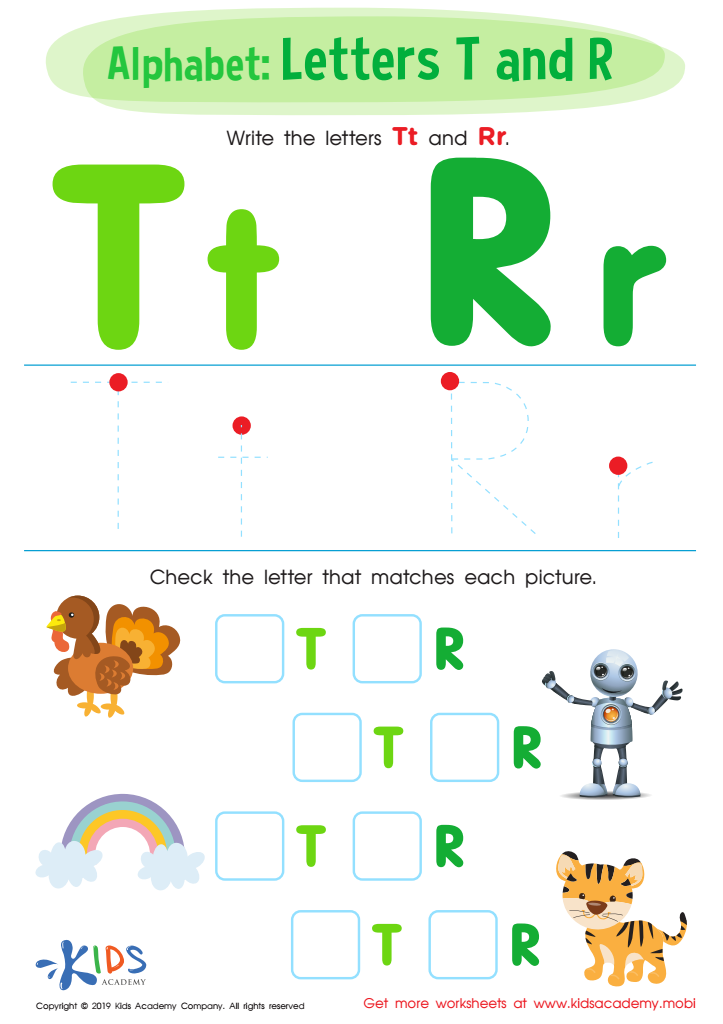
Letters T and R Worksheet
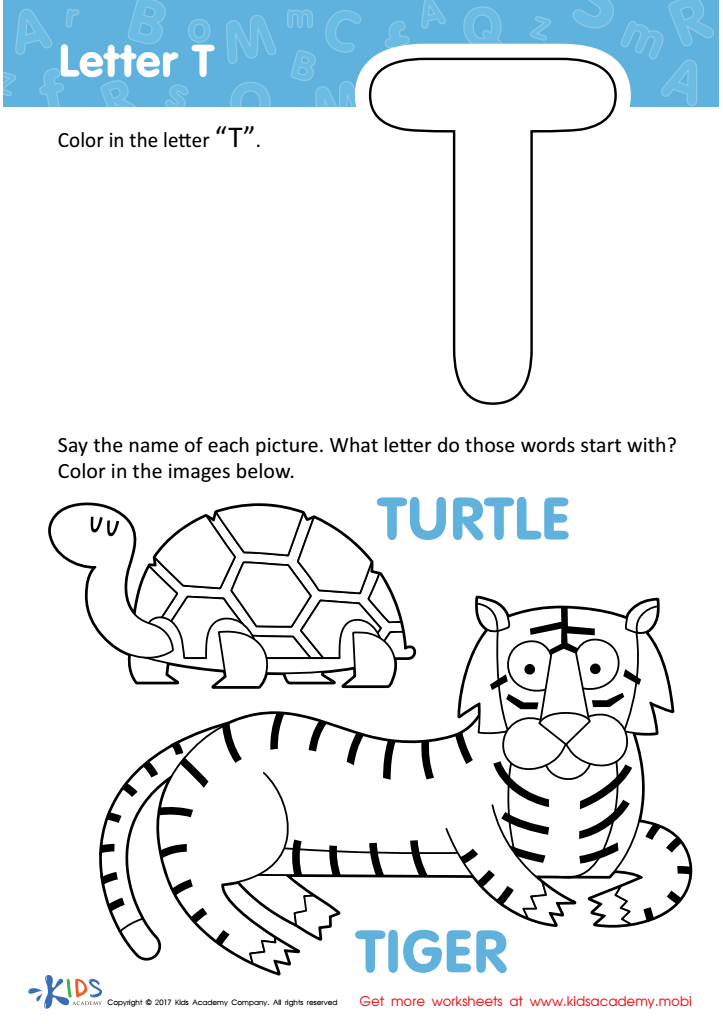
Letter T Coloring Sheet
 Assign to My Students
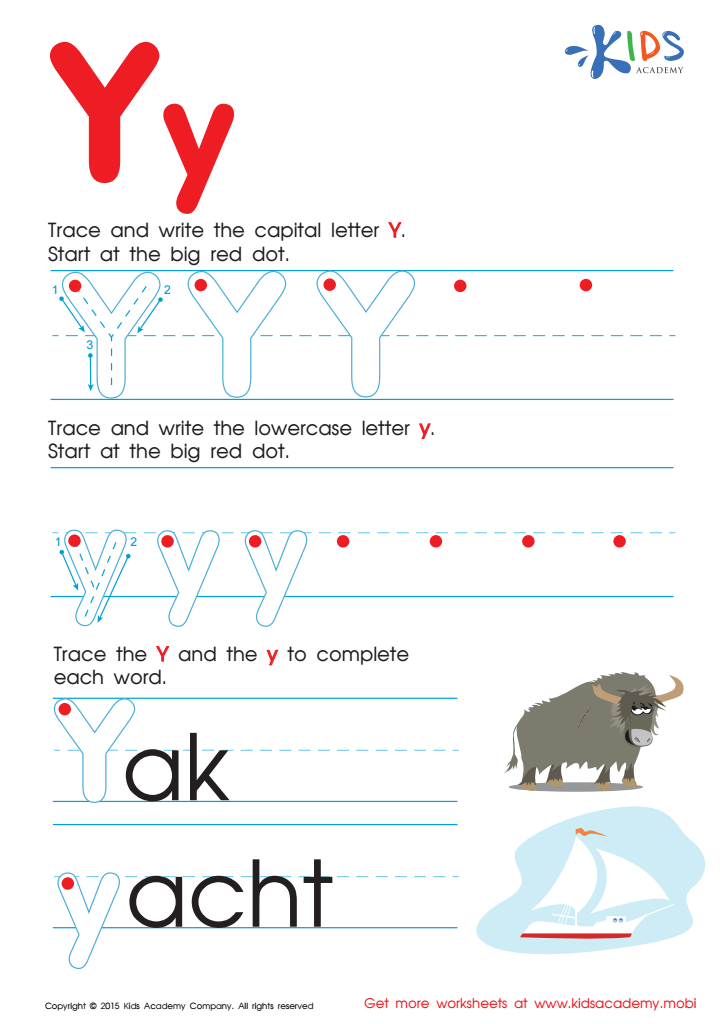
Letter Y Tracing Page
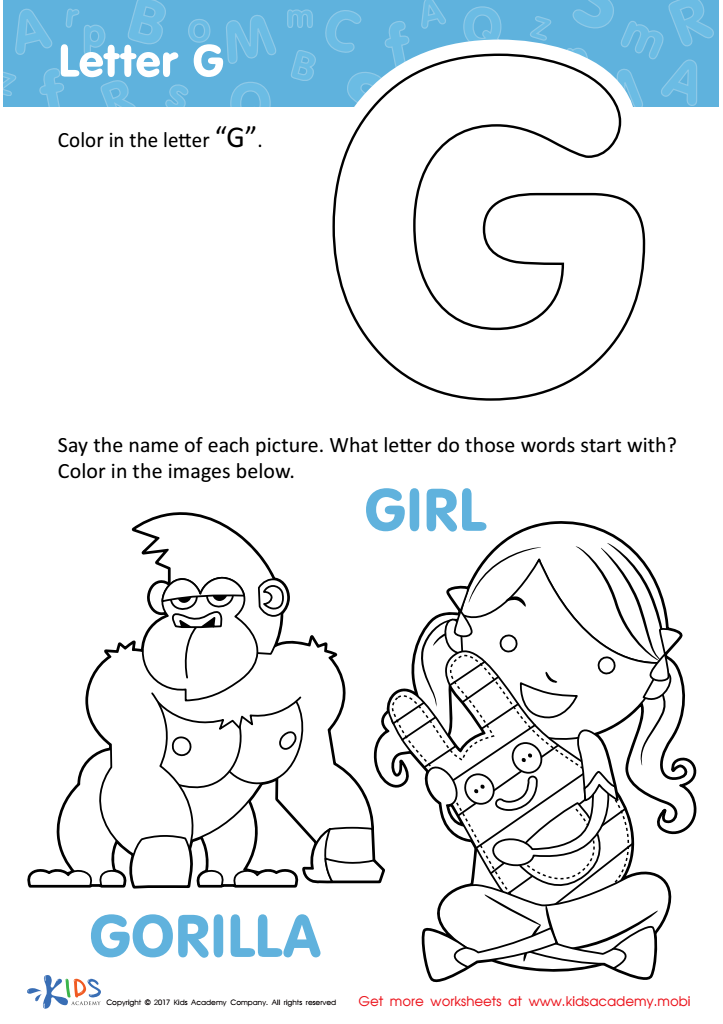
Letter G Coloring Sheet
Assign to My Students
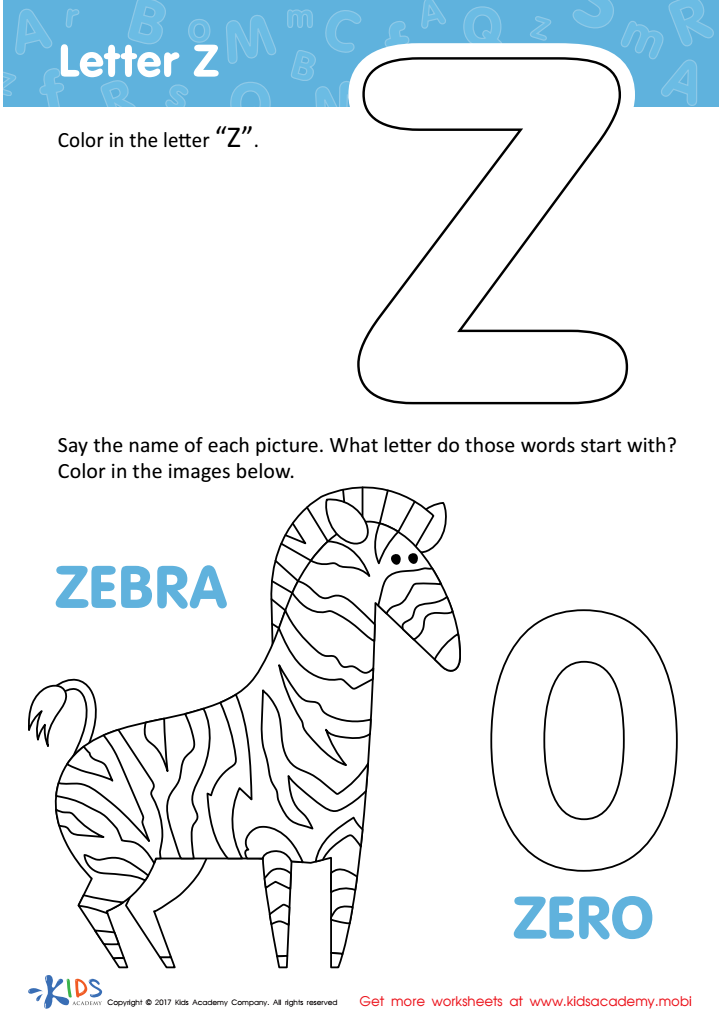
Letter Z Coloring Sheet
Assign to My Students





Sound Association English is crucial for young learners aged 4-6 because it forms the foundational skills necessary for reading and language development. During these formative years, children's brains are especially receptive to phonemic awareness—the ability to hear, identify, and manipulate individual sounds, or phonemes, in spoken words. When parents and teachers invest time in teaching sound association, they are helping children establish essential decoding skills that aid in word recognition, reading fluency, and ultimately, comprehension.
Grasping sound association also empowers children to become confident communicators. It bridges the gap between spoken and written language, making it easier for them to spell accurately, read new words, and write expressively. Activities designed to reinforce sound association, such as rhyming games and alphabet songs, do more than entertain—they enhance cognitive development and auditory skills.
Furthermore, early mastery of these skills reduces the likelihood of reading difficulties later on. Research consistently shows that children who start school with strong pre-reading skills are more likely to experience academic success. Thus, parents and teachers play an integral role in not only fostering a lifelong love for reading but also in positioning children for a brighter academic future by prioritizing sound association.