Addition Practice Worksheets for Ages 4-6 - Page 6
139 filtered results
-
From - To
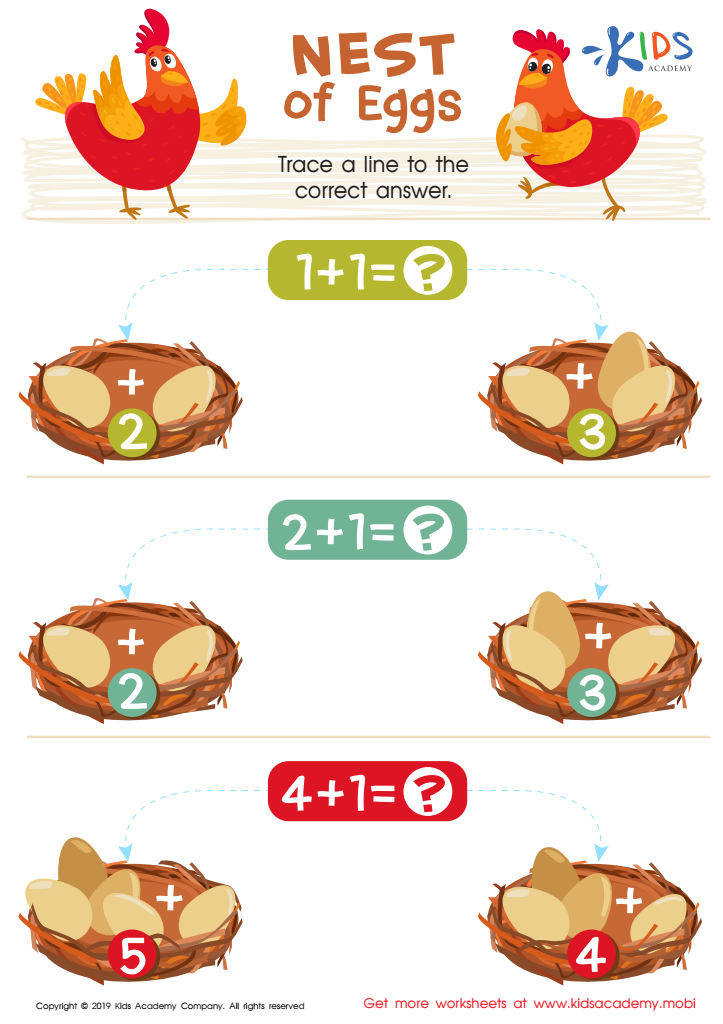
Nest of Eggs Worksheet
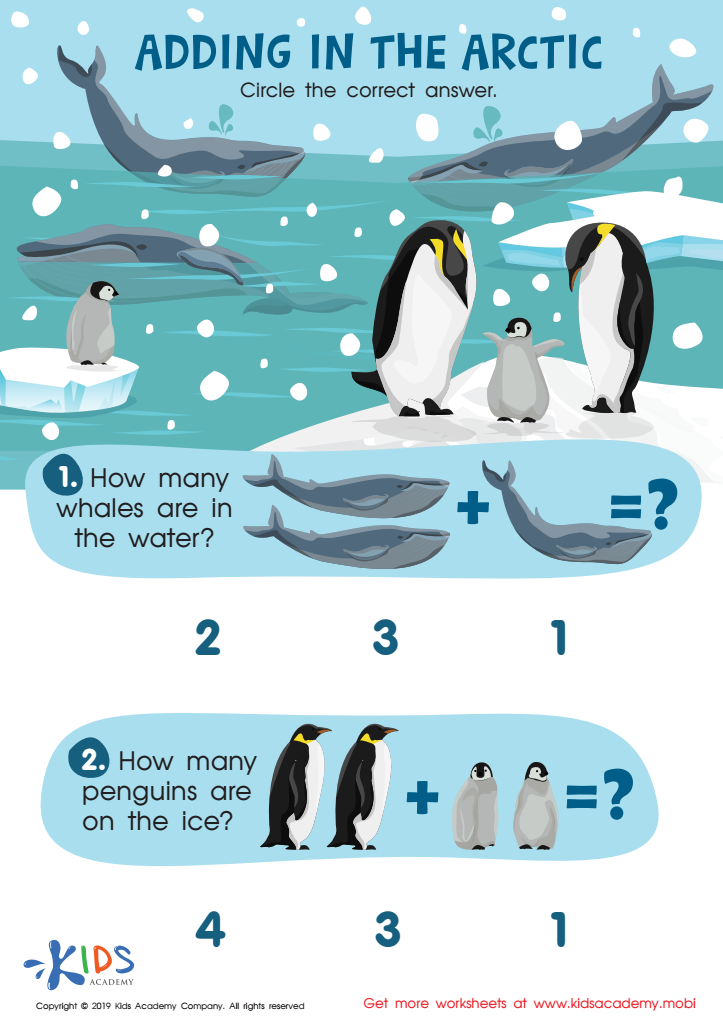
Adding in the Arctic Worksheet
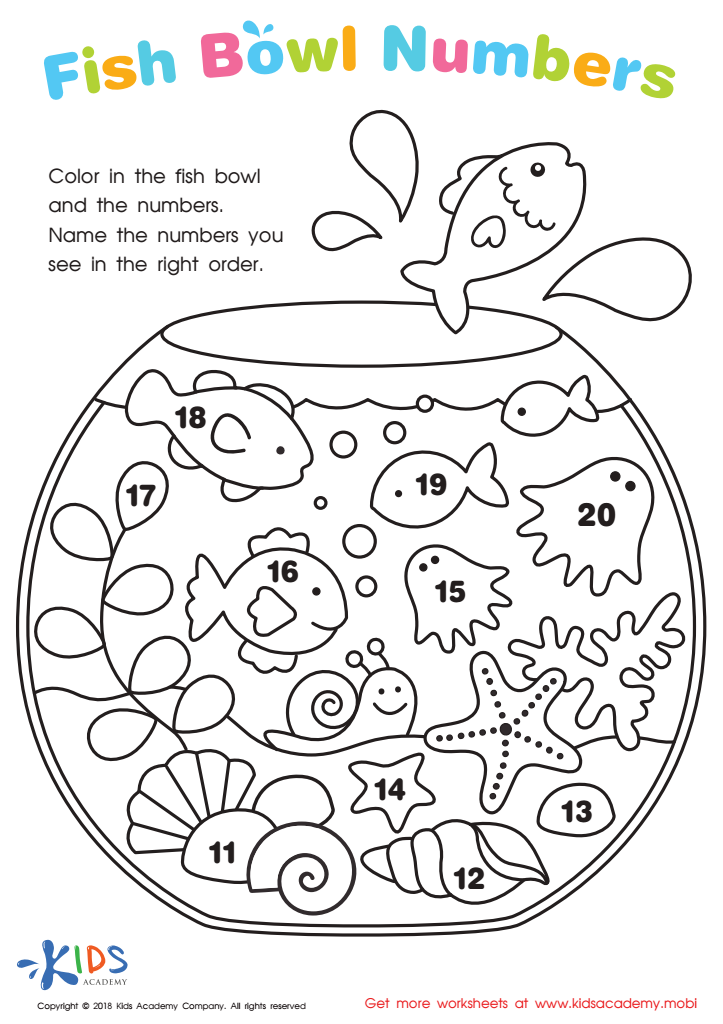
Fish Bowl Numbers Worksheet
 Assign to My Students
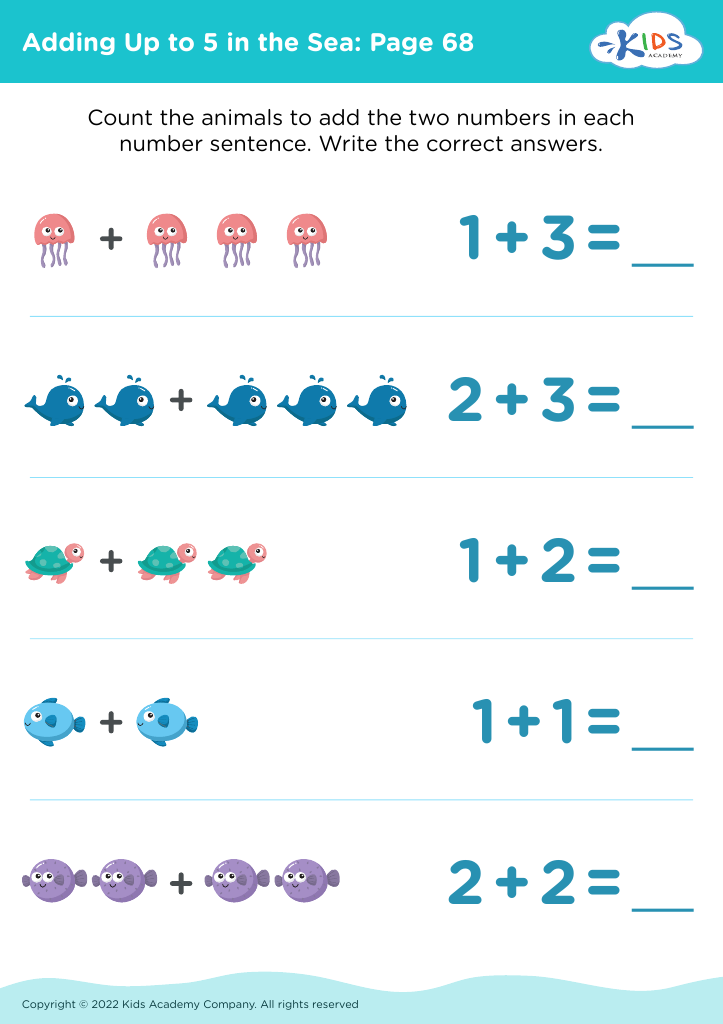
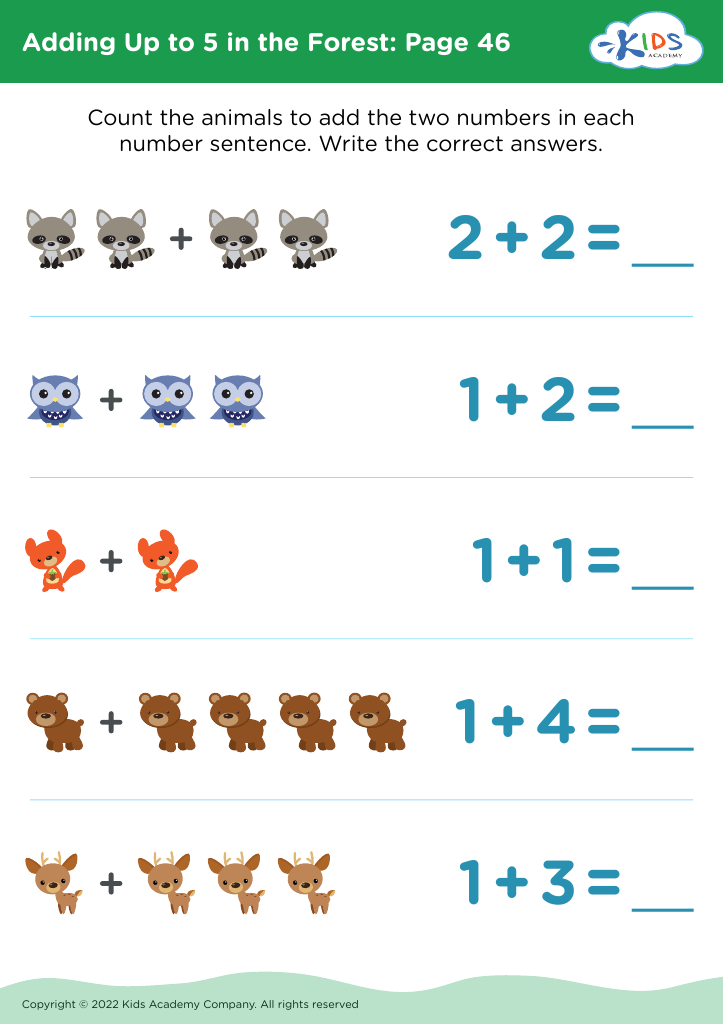
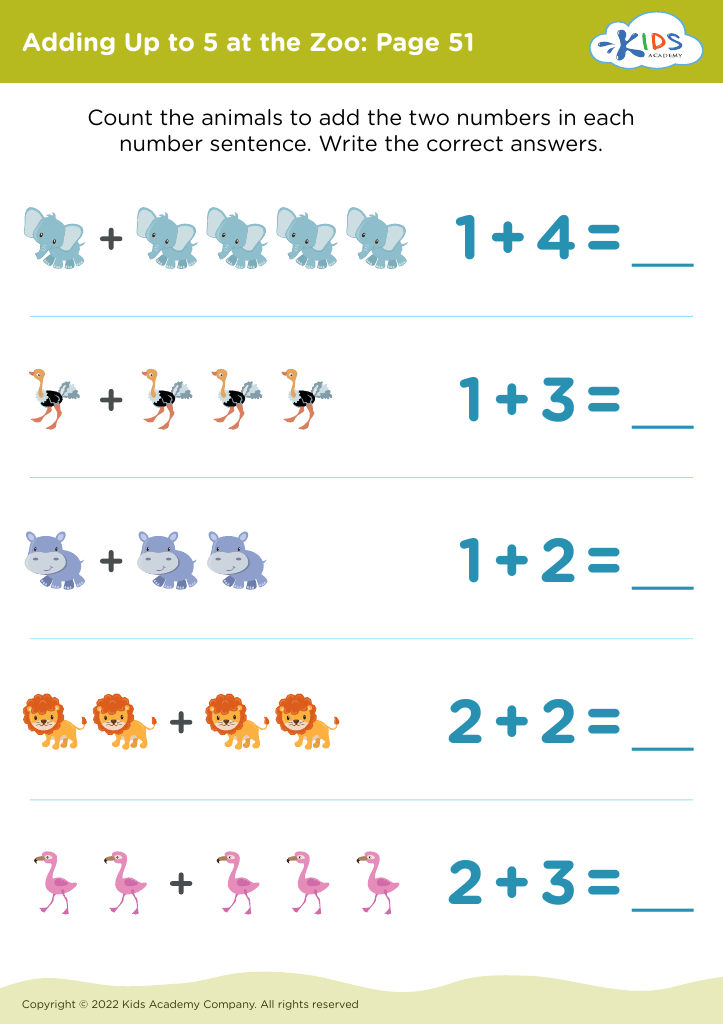
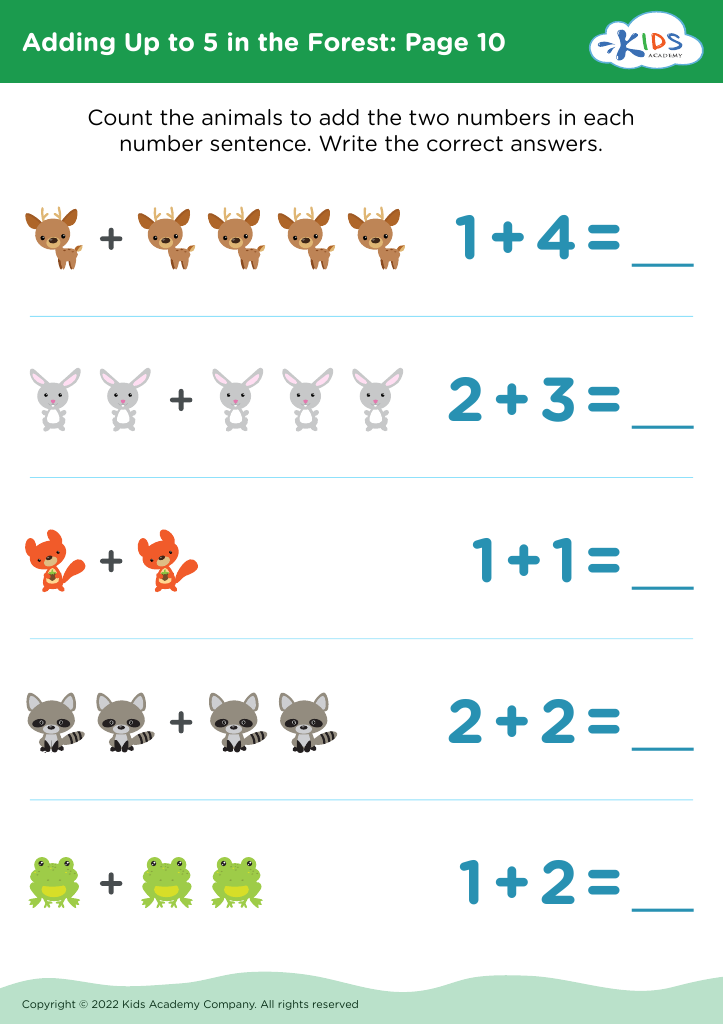
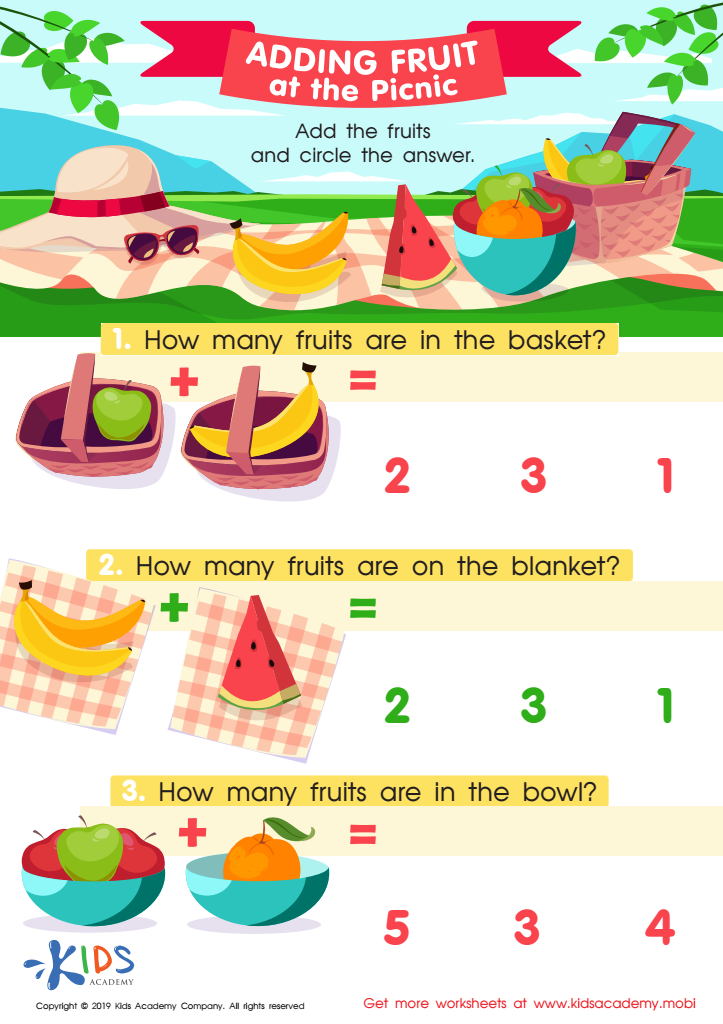
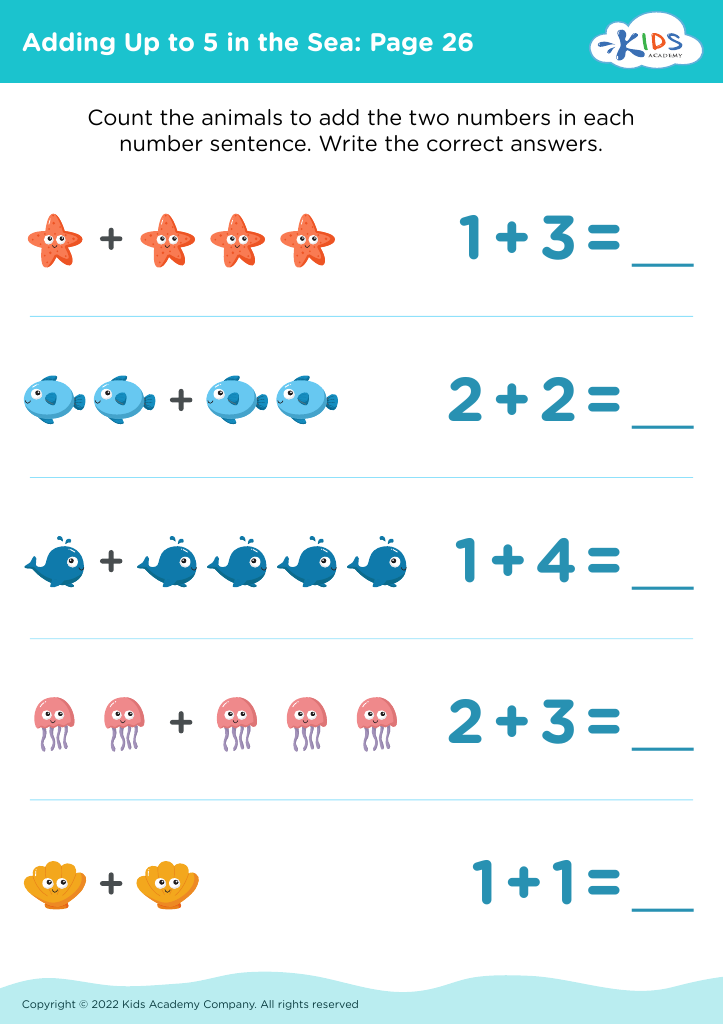
Adding Fruit at the Picnic Worksheet
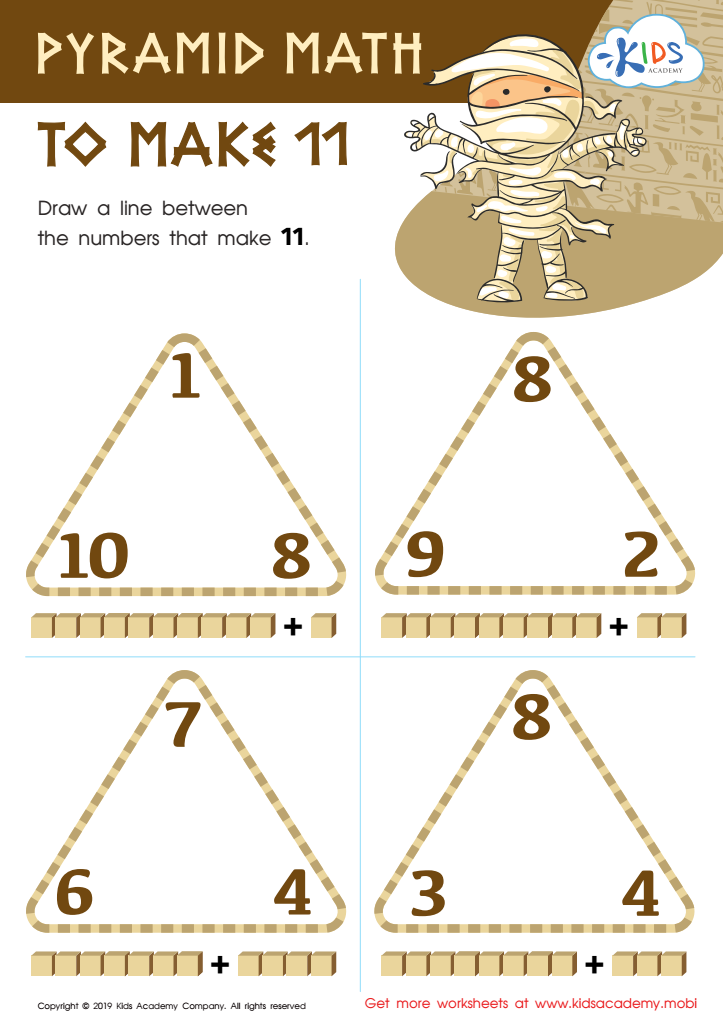
Pyramid Math to Make 11 Worksheet
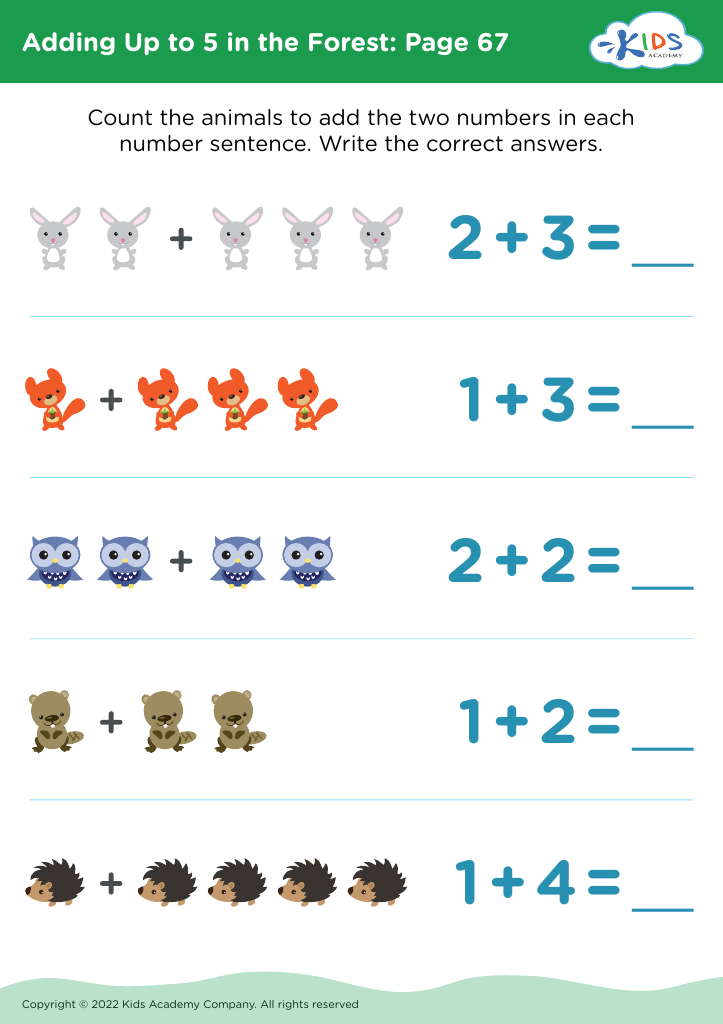
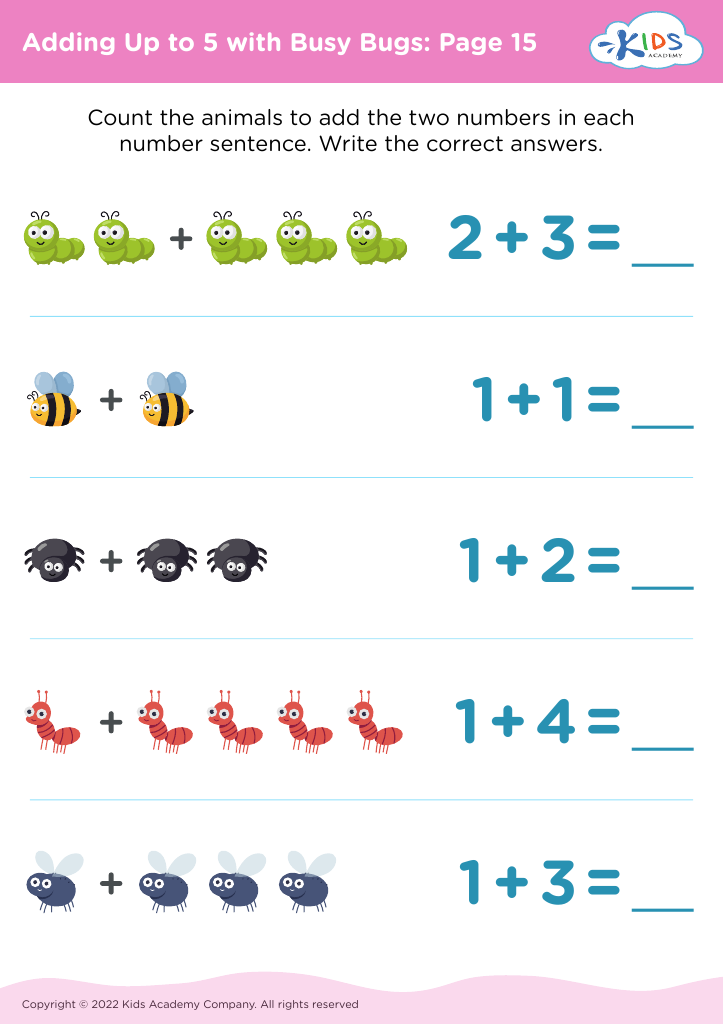
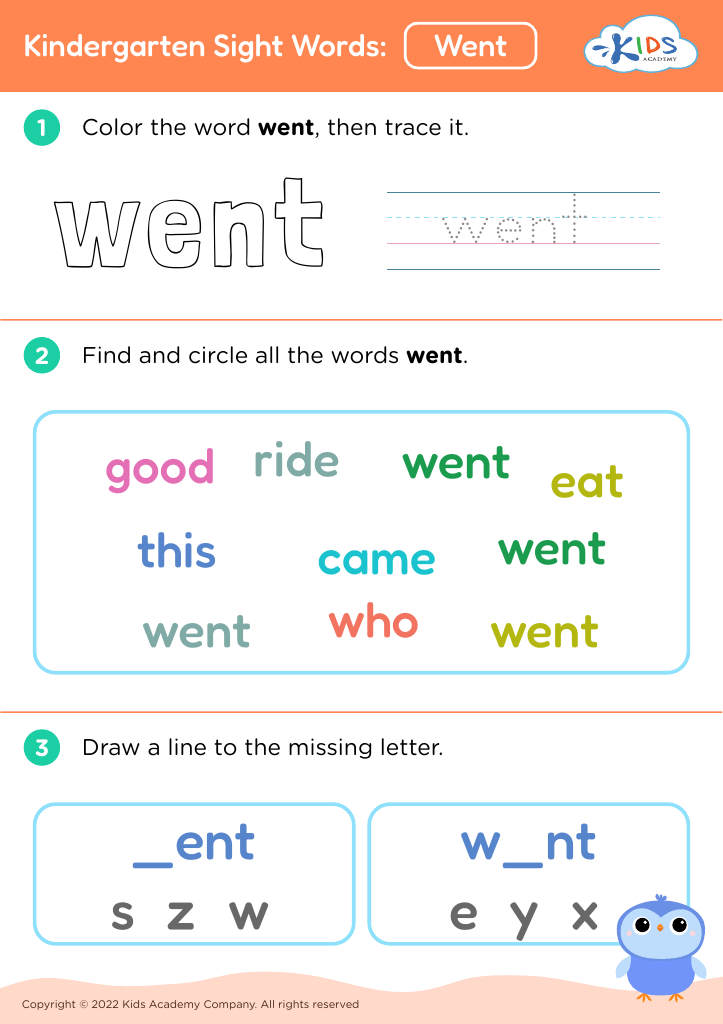
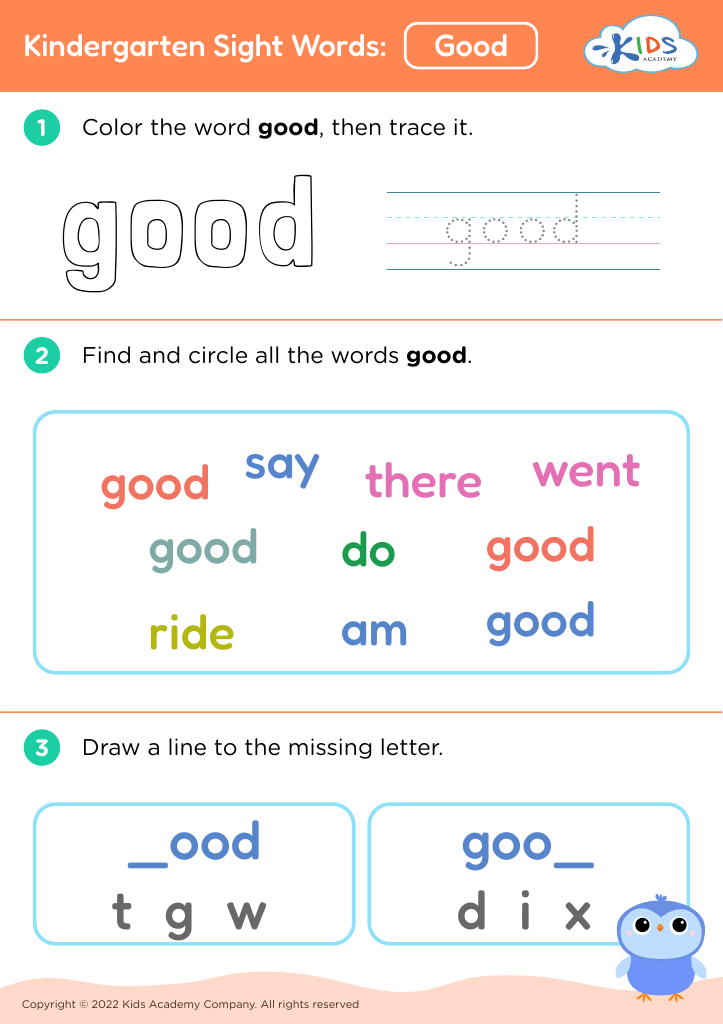






Addition practice for children aged 4-6 is foundational for several crucial reasons. During these formative years, children's brains rapidly develop, and exposing them to basic math concepts like addition helps stimulate cognitive growth. Addition practice not only builds arithmetic skills but also enhances critical thinking, problem-solving, and logical reasoning abilities, which are essential for future academic success and everyday decision-making.
Mastering addition at an early age improves number sense, enabling children to understand quantities and relationships between numbers. This solid numerical foundation eases the transition to more complex mathematical concepts later on, such as subtraction, multiplication, and division. Patience in learning to add also teaches children perseverance and the value of effort, which are valuable life skills.
Moreover, consistent addition practice can boost children's confidence in their abilities. Early math success often fosters a positive attitude toward learning in general. For parents and teachers, integrating fun and engaging methods to practice addition—like games, songs, or hands-on activities—can make learning enjoyable, further nurturing a child’s enthusiasm for numbers.
In summary, addition practice for young children is not just about learning to add numbers; it’s an investment in their overall intellectual development and a tool for building a strong and confident foundation in mathematics.








