
Addition up to 5 Worksheets for Ages 4-6
4 filtered results
Difficulty Level
Grade
Age
-
From - To
Subject
Activity
Standards
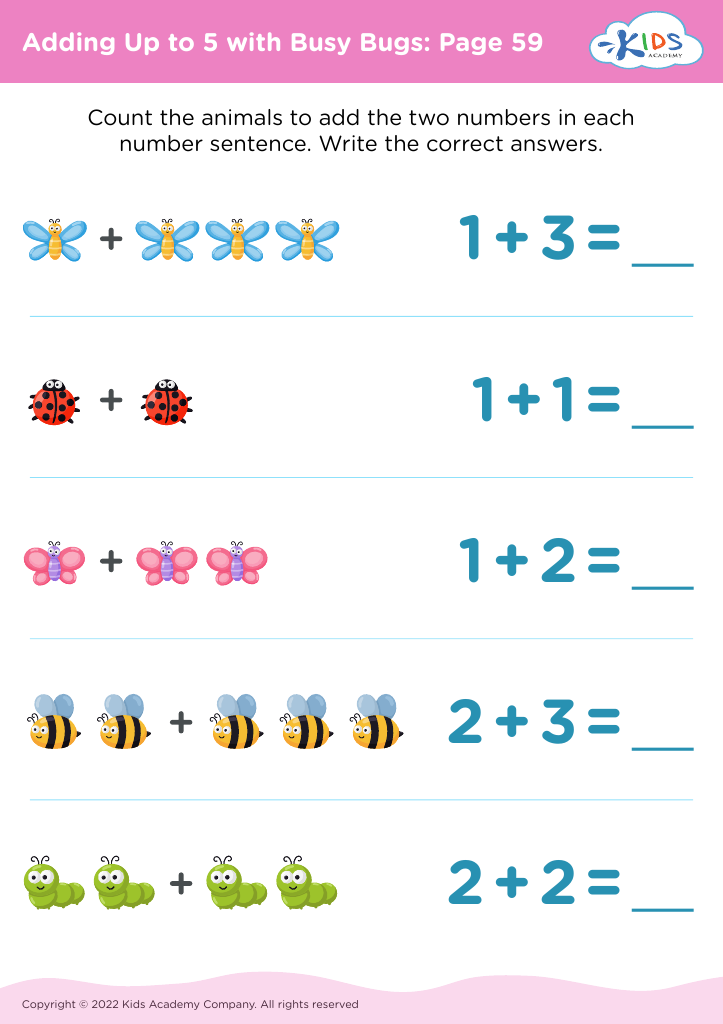
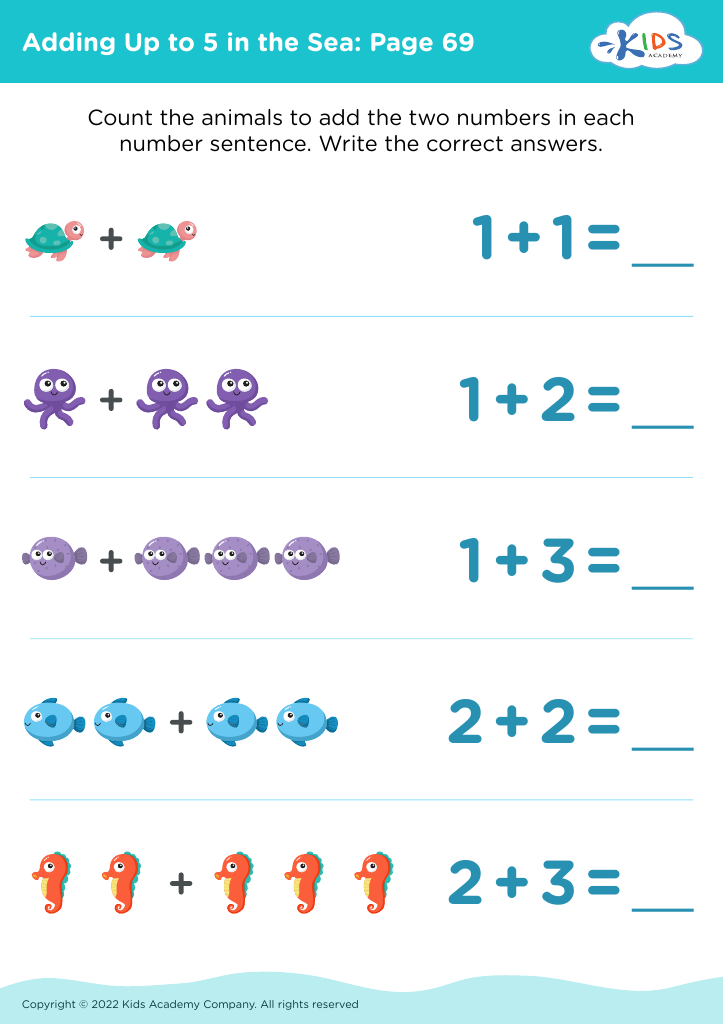
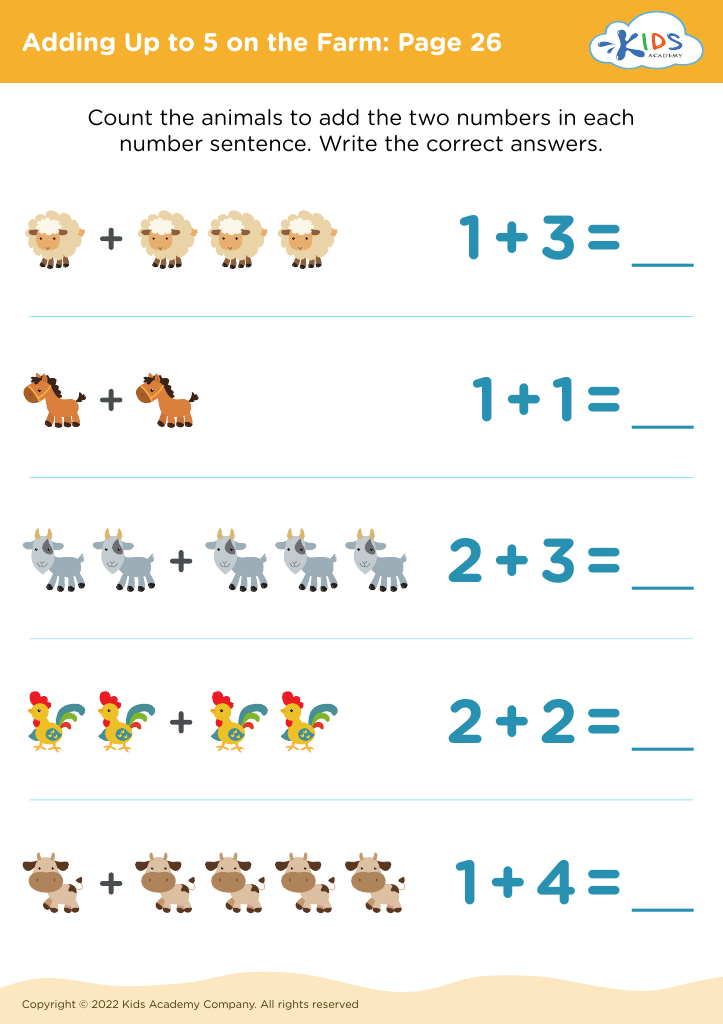
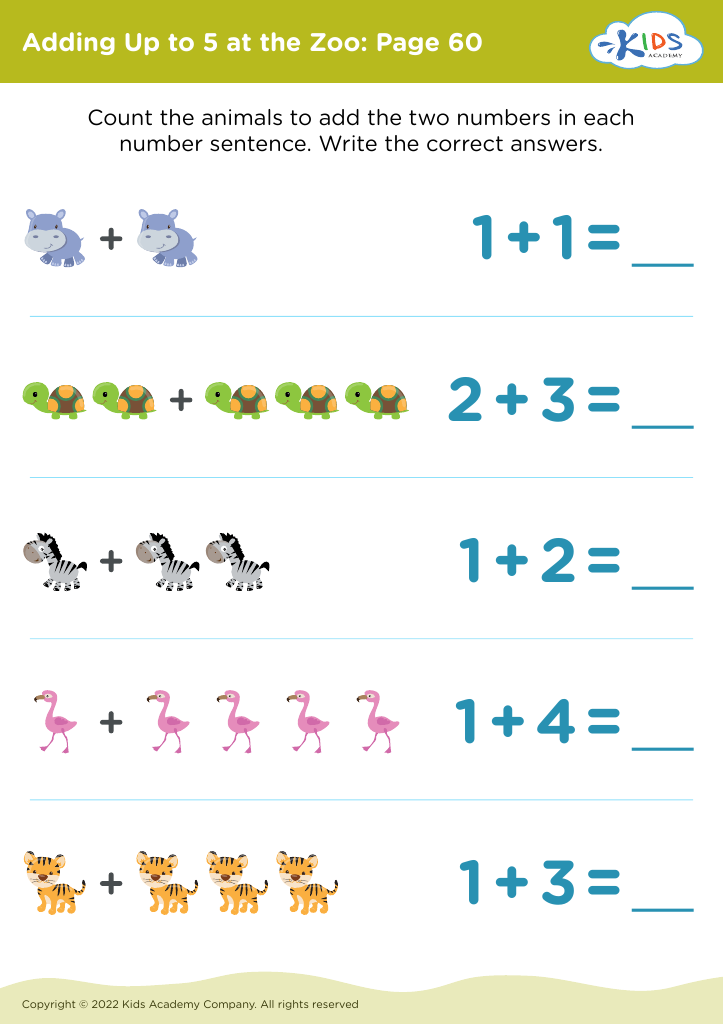
Explore our engaging "Addition up to 5 Worksheets" designed specifically for children ages 4 to 6! These colorful and interactive worksheets make learning the basics of addition fun and accessible. Each worksheet features simple addition problems using visuals like dots and friendly characters to help young learners understand concepts at their own pace. Perfect for preschool and early elementary students, these worksheets encourage foundational math skills while enhancing critical thinking and problem-solving abilities. Download today to support your child’s math journey and watch them gain confidence as they master addition up to 5!
Favorites
With answer key
Interactive
Join Kids Academy for Free
Who is primarily going to use this learning content?








Parents and teachers should care about teaching addition up to 5 for ages 4-6 because it lays the foundational skills necessary for future mathematical development. At this early stage, children are naturally curious and eager to learn, making it an ideal time to introduce basic math concepts. Mastering addition up to 5 helps children become comfortable with numbers, enhances their confidence in math, and fosters logical thinking.
Addition skills enable children to progress in more complex math topics as they grow. It aids in the understanding of concepts like counting, number recognition, and basic problem solving. These early bursts of learning can stimulate cognitive development, improving critical thinking and reasoning skills at a young age.
In addition, interactive activities such as games and storytelling can make learning addition engaging, which supports emotional development as children enjoy the learning process. By reinforcing these foundational skills, parents and teachers promote a positive attitude towards math, reducing anxiety and fostering a love for learning.
Ultimately, laying a strong foundation in addition prepares children not only for future math success but also supports their overall academic and personal growth. Skills acquired in this formative stage have lifelong impacts.








