Basic geometry knowledge Worksheets for Ages 4-6
3 filtered results
-
From - To
Discover our engaging Basic Geometry Knowledge Worksheets, designed specifically for children aged 4-6! These worksheets offer a fun and interactive way for young learners to explore essential geometric concepts, including shapes, patterns, and spatial awareness. From identifying circles and squares to understanding basic angles, each activity fosters critical thinking while enhancing fine motor skills. Our age-appropriate exercises feature bright illustrations and relatable scenarios, making learning enjoyable and effective. Whether at home or in the classroom, these worksheets provide a solid foundation in geometry, setting the stage for future mathematical success. Download our Basic Geometry Knowledge Worksheets today and watch your child thrive!
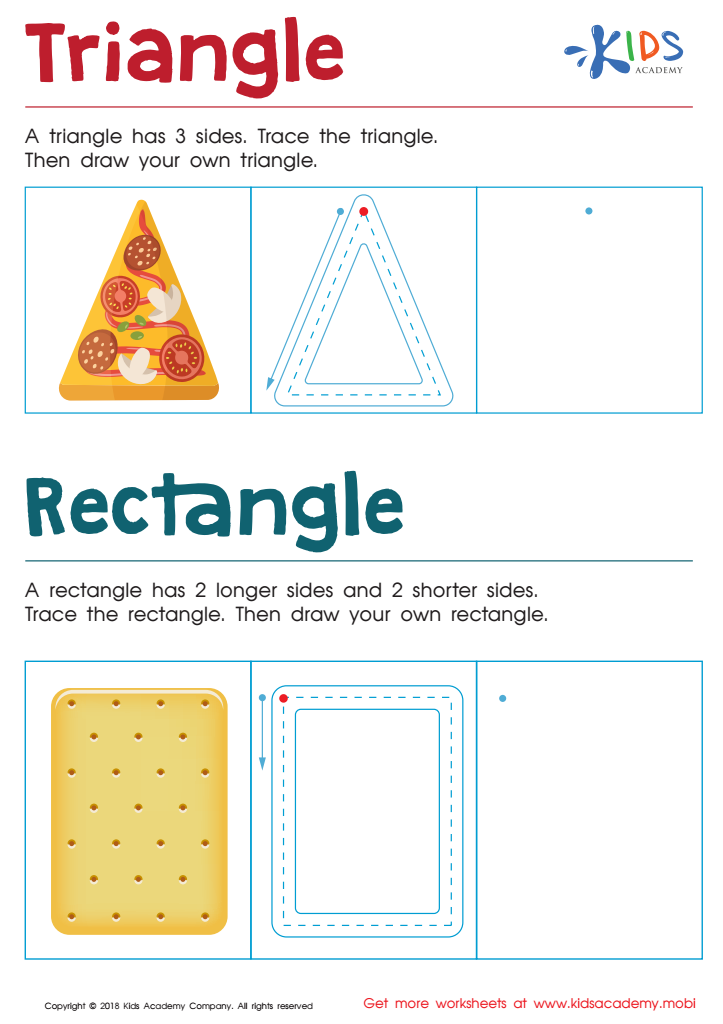
Triangle Rectangle Worksheet
 Assign to My Students
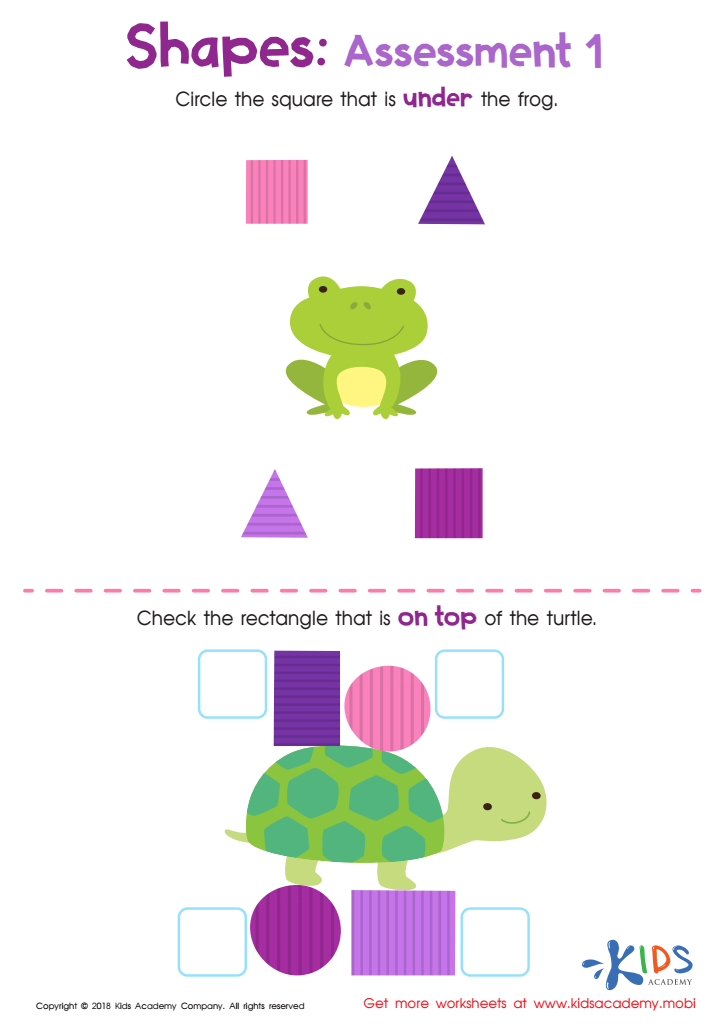
Geometry – Assessment 1 Worksheet
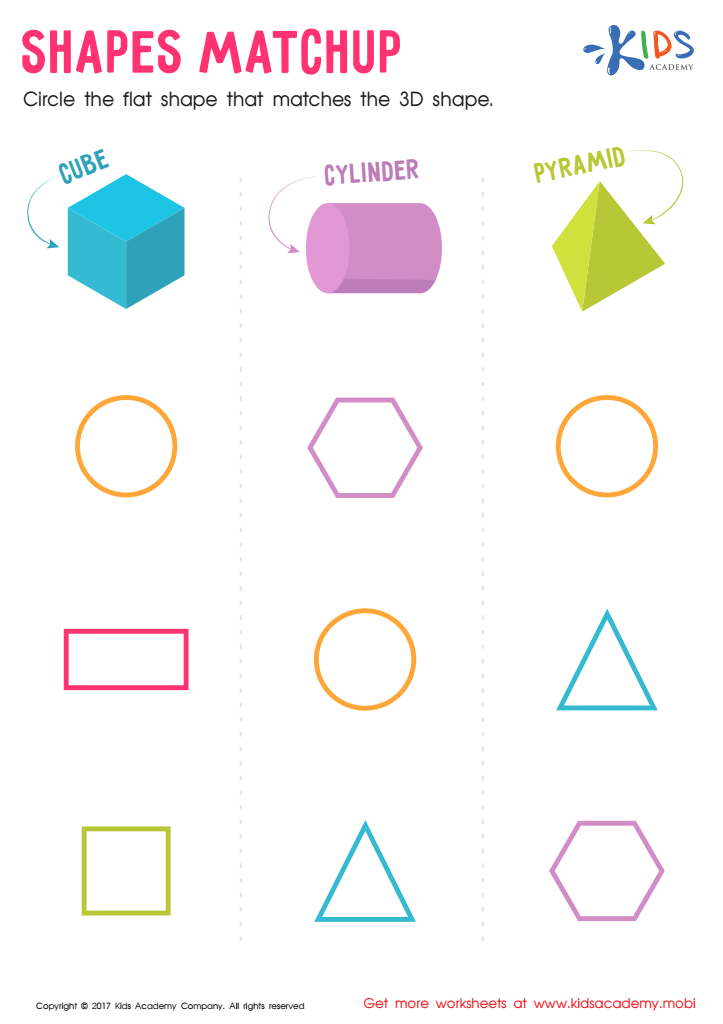
Shapes Matchup Worksheet








Basic geometry knowledge for children ages 4-6 is crucial for their cognitive development and lays the foundation for advanced mathematical skills. At this age, children are naturally curious and eager to explore their surroundings; introducing them to geometric concepts encourages this aspect of learning. Understanding shapes, sizes, and spatial relationships enhances their ability to categorize and organize information, which is essential for problem-solving.
Moreover, fundamental geometry helps develop critical thinking and reasoning skills. When children identify and manipulate shapes, they learn about symmetry, patterns, and transformation, which are key concepts in both mathematics and everyday life. Activities like building with blocks, drawing shapes, or playing shape-based games foster creativity while reinforcing these concepts.
In addition, geometry is linked to literacy skills. Learning to describe shapes and evaluate spatial relationships enhances vocabulary and communication abilities. By incorporating basic geometry into early childhood education, teachers and parents can also promote collaborative learning and social interaction as children engage with peers in group activities.
Ultimately, fostering basic geometry knowledge profoundly impacts children's academic readiness and success in future STEM (Science, Technology, Engineering, and Mathematics) pursuits, making it essential for parents and educators to prioritize at this formative stage.








