Character recognition Worksheets for Ages 4-6
3 filtered results
-
From - To
Unlock your child's reading potential with our Character Recognition Worksheets for Ages 4-6, expertly designed to make learning fun and engaging! These activities help young learners identify letters, numbers, and common characters, fostering essential early reading skills. Perfect for preschool and kindergarten students, our worksheets feature vibrant illustrations and interactive exercises that capture attention and promote retention. Tailored to support developmental milestones, these printable resources are an excellent supplement to any learning program. Boost your child's confidence and pave the way for academic success with our comprehensive and enjoyable character recognition activities!
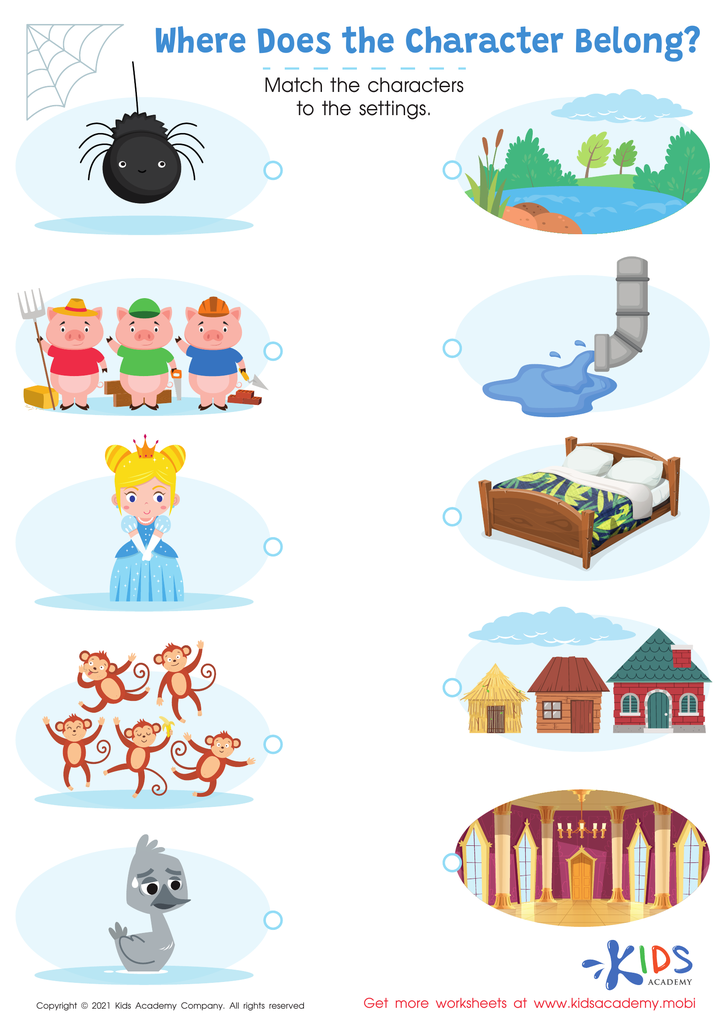
Where Does the Character Belong? Worksheet
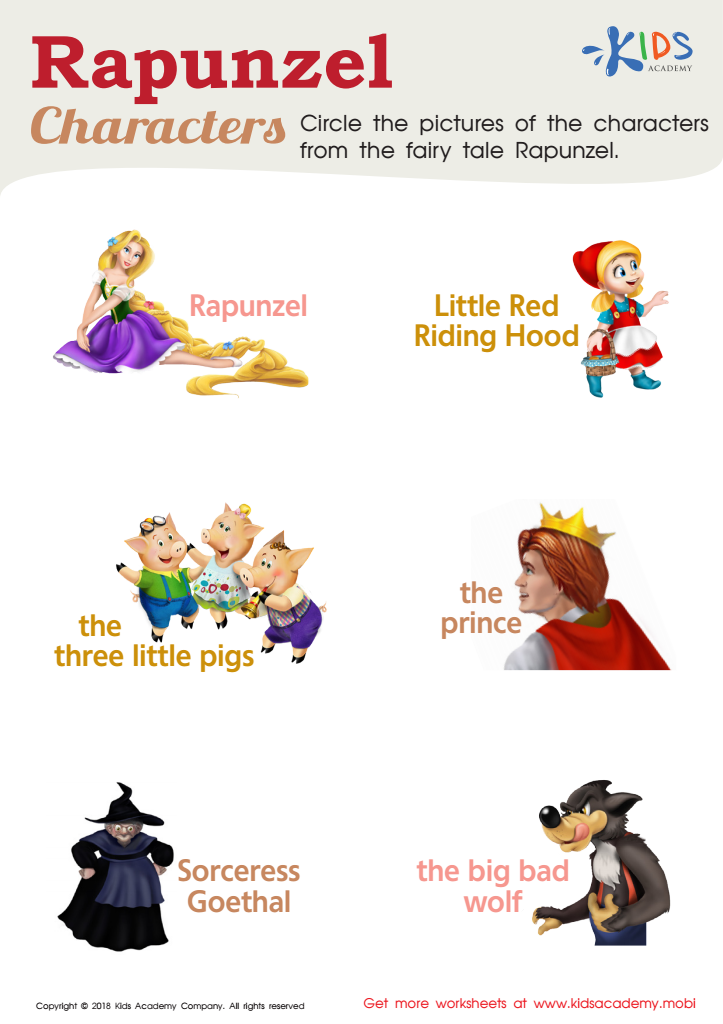
Rapunzel Characters Worksheet
 Assign to My Students
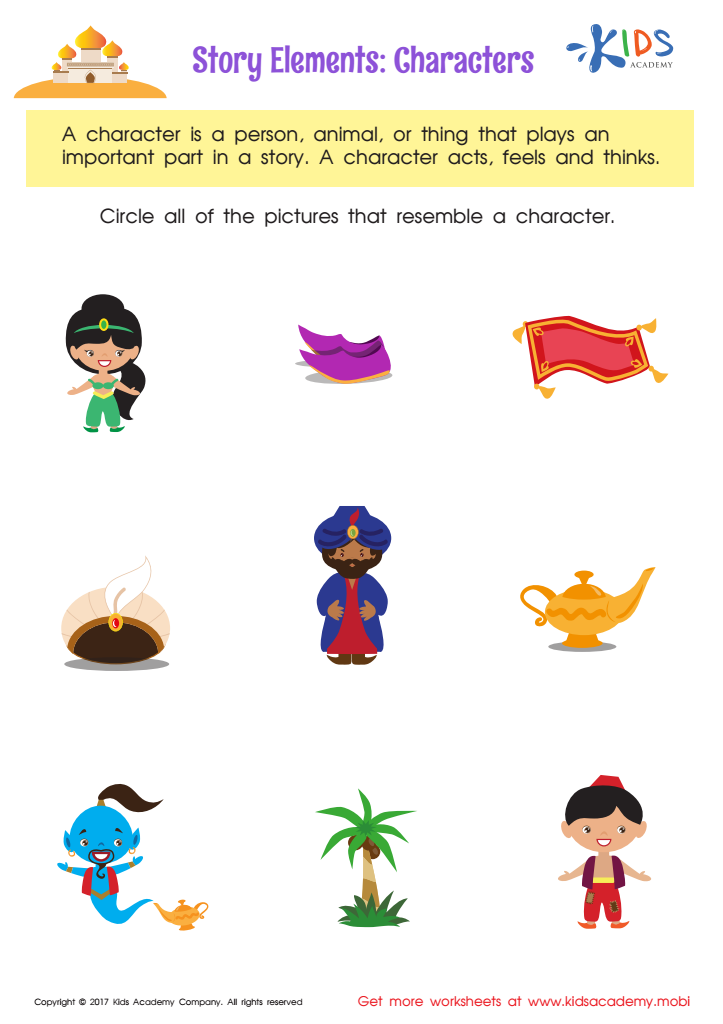
Story Elements Printable








Understanding character recognition is crucial for children aged 4-6, forming a foundational skill vital for future academic and life success. Characters, or letters, are building blocks of language; recognizing them is the first step toward reading and writing proficiency. During these early years, children's brains are exceptionally adaptable and primed for learning, so introducing character recognition can enhance cognitive development related to language processing.
Of prime importance is the fact that character recognition aids in developing essential literacy skills. As children learn to identify letters and associate them with sounds, they start to decode words and sentences effectively. This early success with reading not only boosts confidence but also fosters a love for learning, which can translate into better performance in all academic areas.
Additionally, recognizing characters enhances fine motor skills. Activities such as tracing or copying letters involve hand-eye coordination and dexterity, contributing to children's overall motor development, which is essential for everyday tasks.
Socially, success in character recognition enables children to engage more fully during group reading activities. This promotes inclusivity, cooperative learning, and social interaction—key components in personal development.
Thus, fostering character recognition for children aged 4-6 aligns with broader educational and developmental goals, offering a strong start to lifelong learning and growth.








