Chess strategy learning Worksheets for Ages 4-6
10 filtered results
-
From - To
Unlock your child’s potential with our Chess Strategy Learning Worksheets, designed for ages 4-6. These engaging and educational resources introduce young minds to the fascinating game of chess, building foundational skills in critical thinking, problem-solving, and strategic planning. Each worksheet incorporates fun activities and easy-to-understand instructions, making early learning enjoyable and interactive. Perfect for parents and educators, our worksheets help to stimulate intellectual growth, boost cognitive development, and cultivate a passion for chess. Get started today and set your child on the path to mastery with Kids Academy’s expertly crafted chess strategy worksheets!
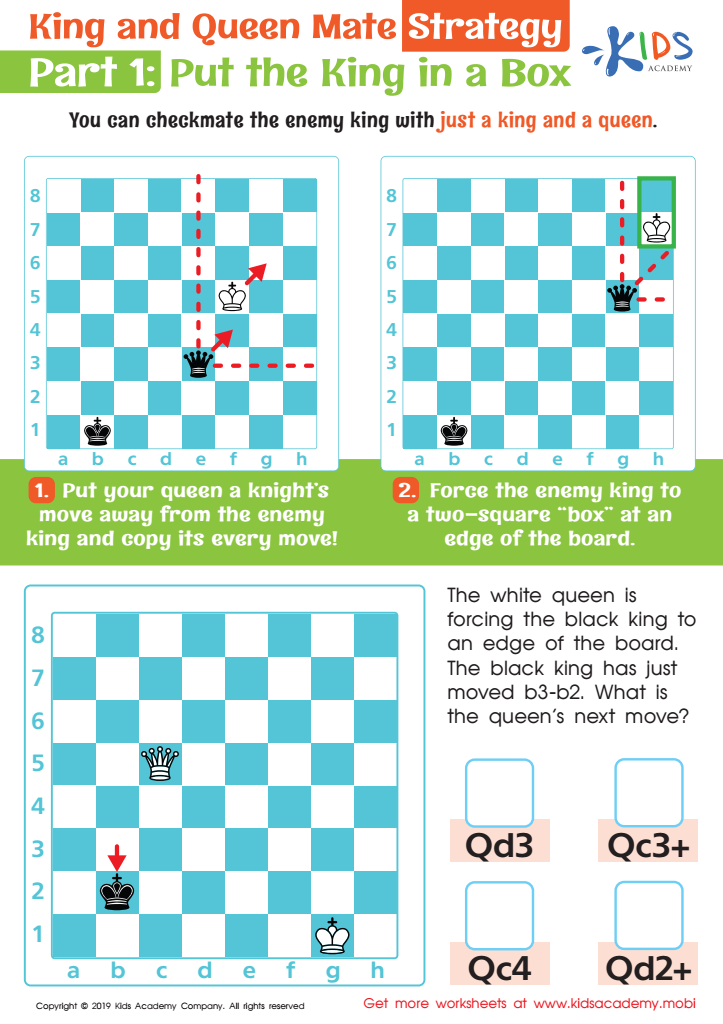
King and Queen Mate Strategy: Part 1 Worksheet
 Assign to My Students
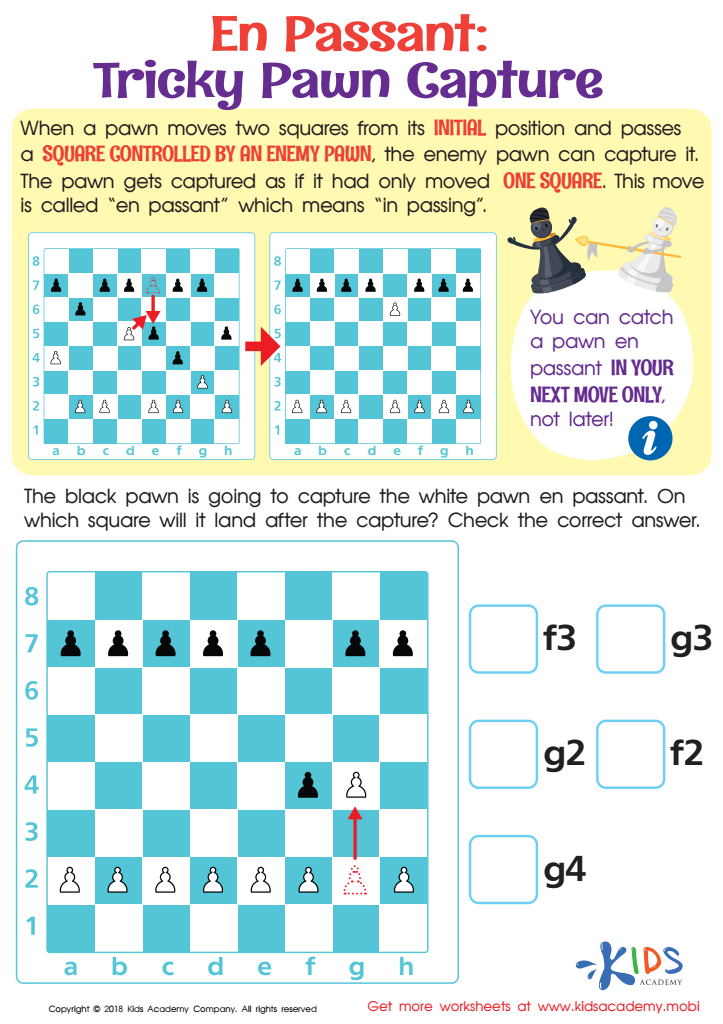
En Passant: Tricky Pawn Capture Worksheet
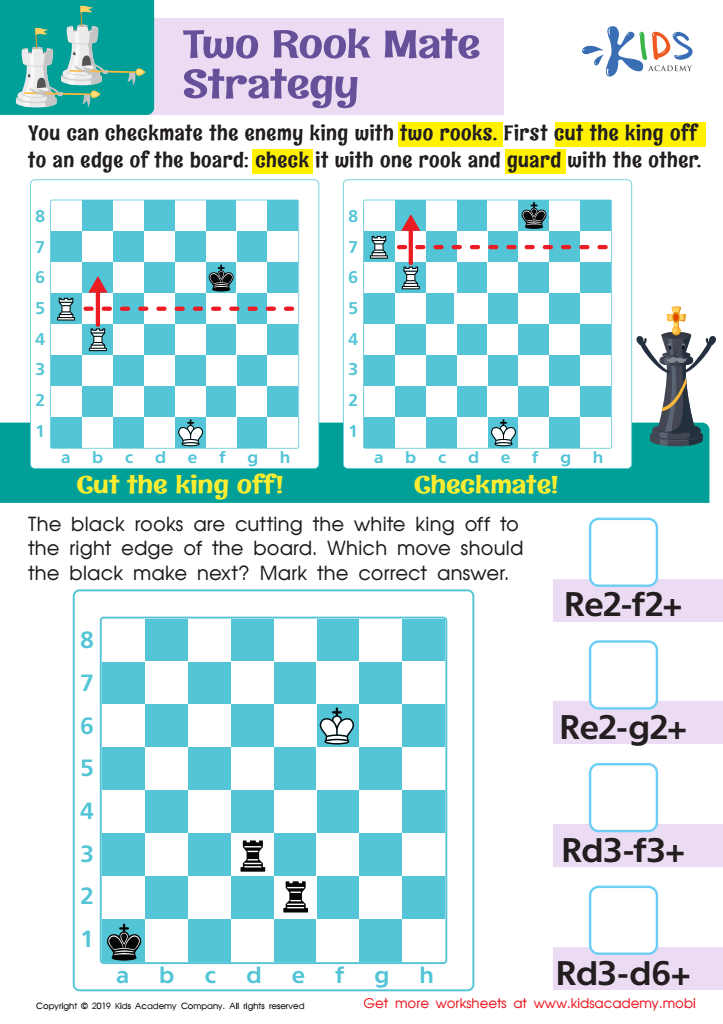
Two Rook Mate Strategy Worksheet
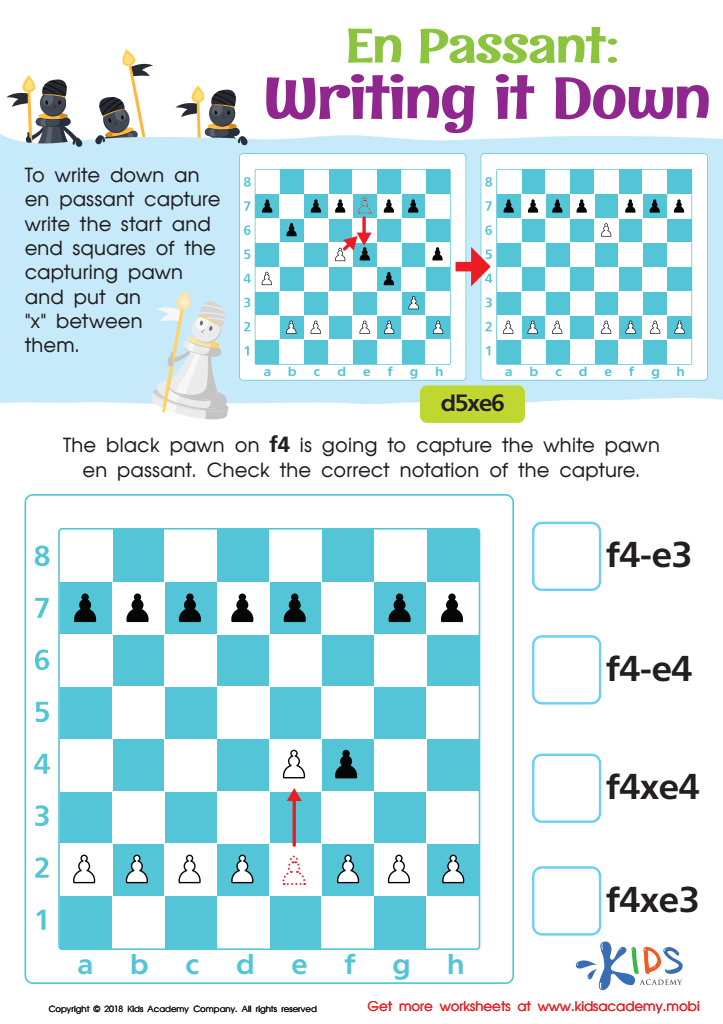
En Passant: Writing it Down Worksheet
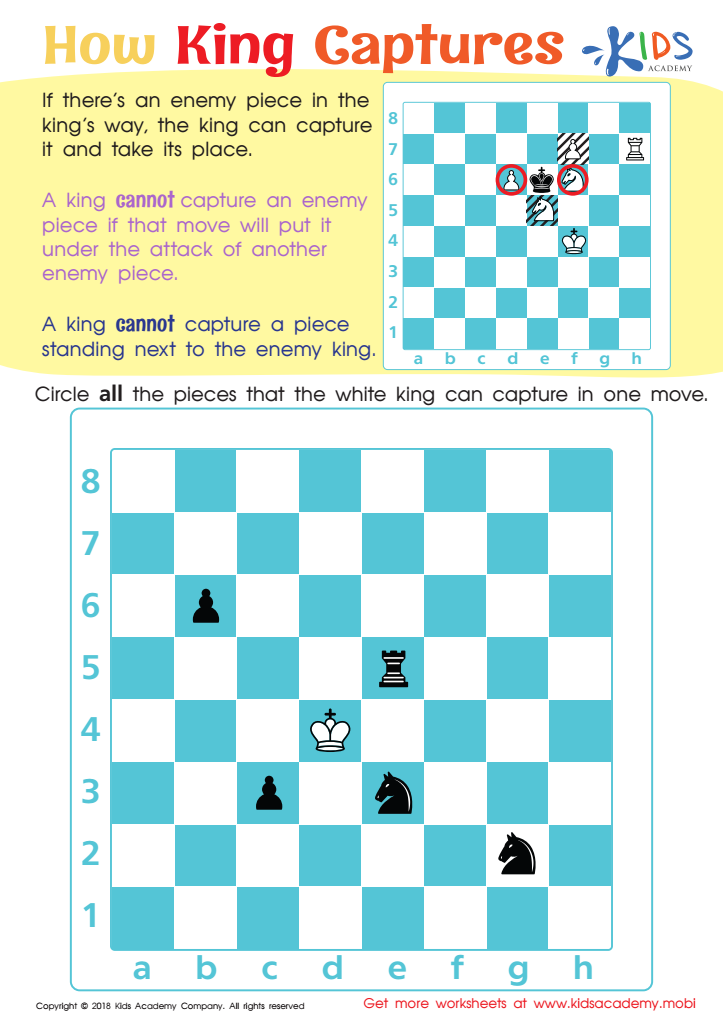
How King Captures Worksheet
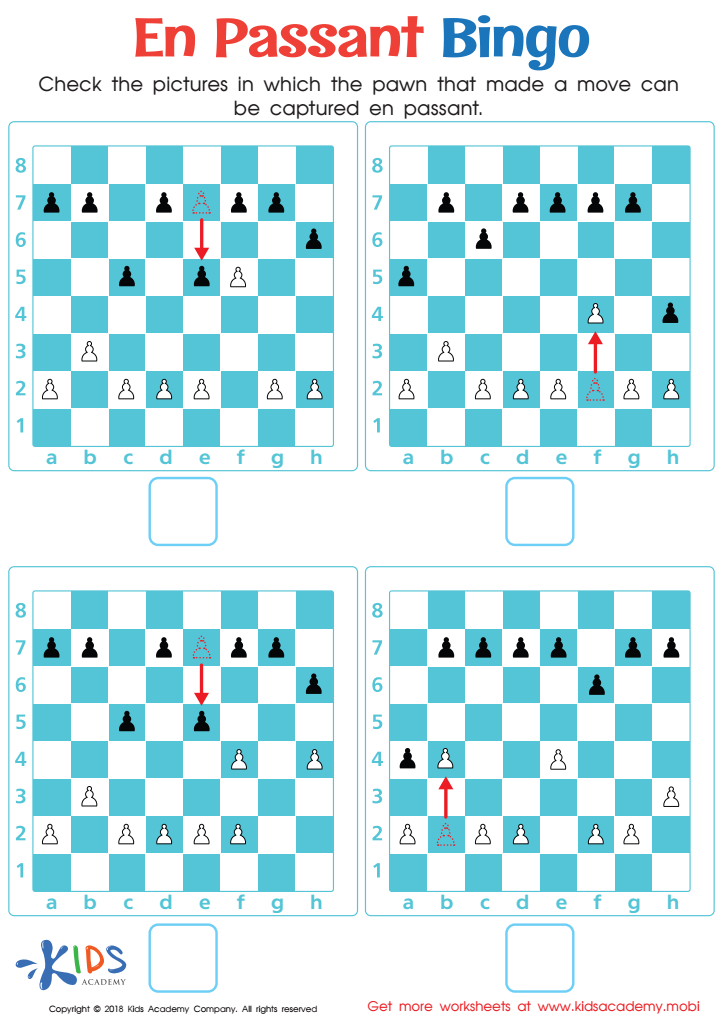
En Passant Bingo Worksheet
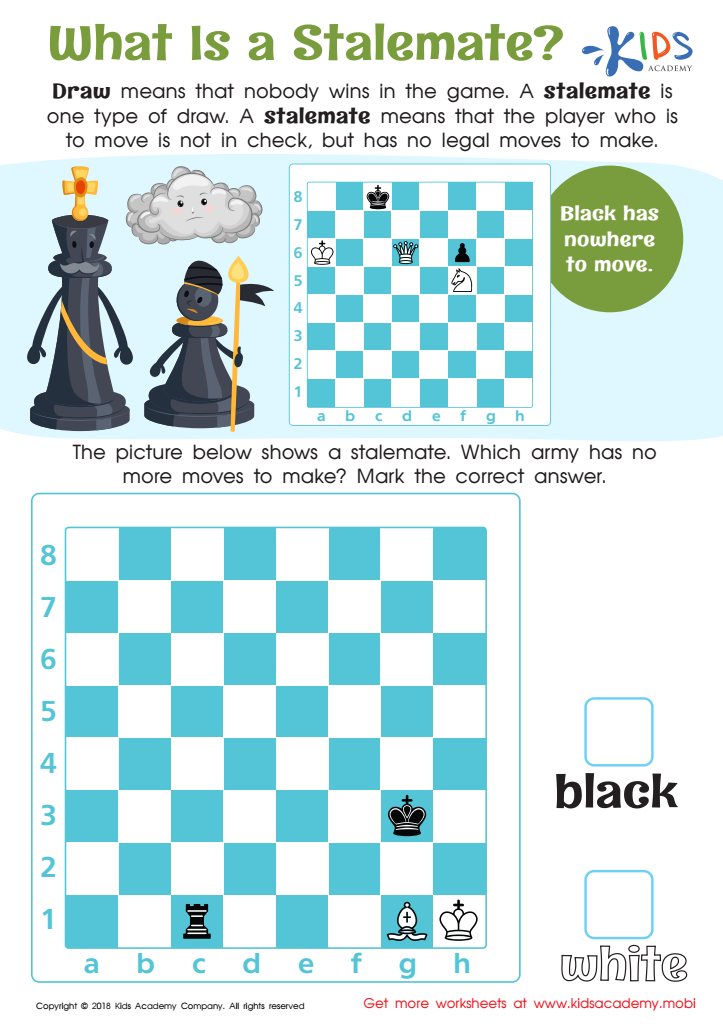
What Is a Stalemate? Worksheet
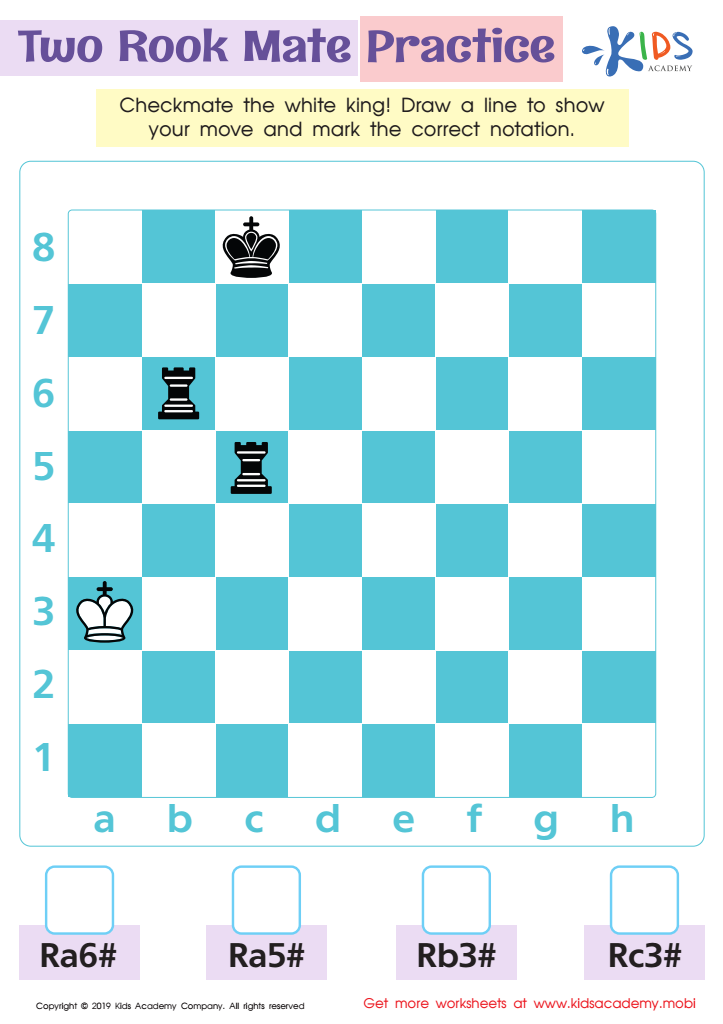
Two Rook Mate Practice Worksheet
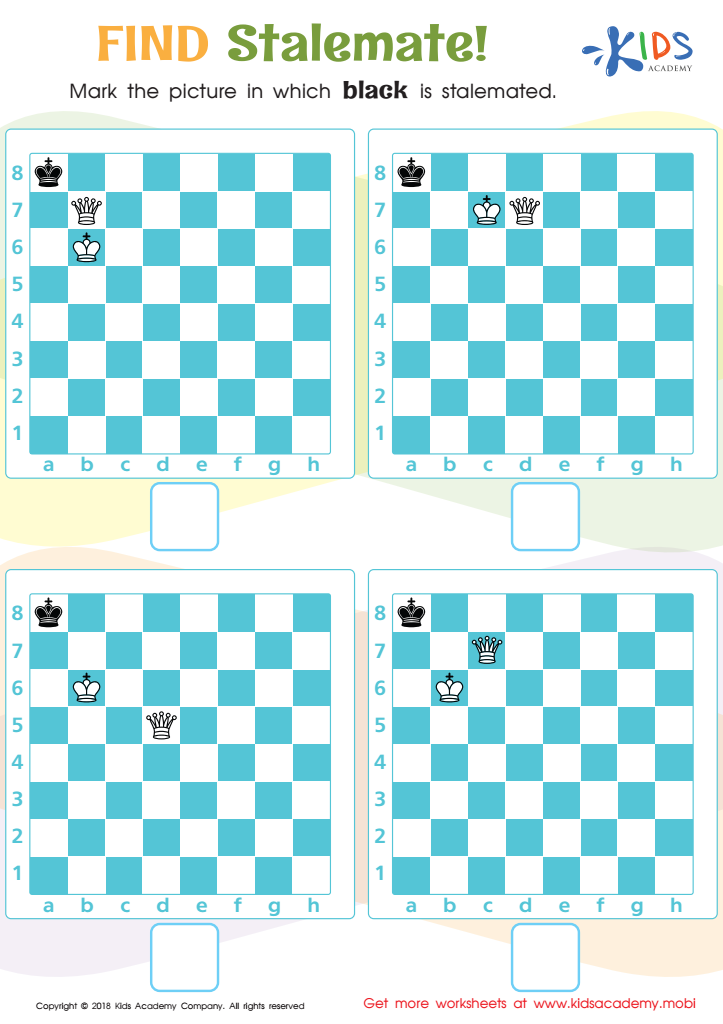
Find Stalemate! Worksheet
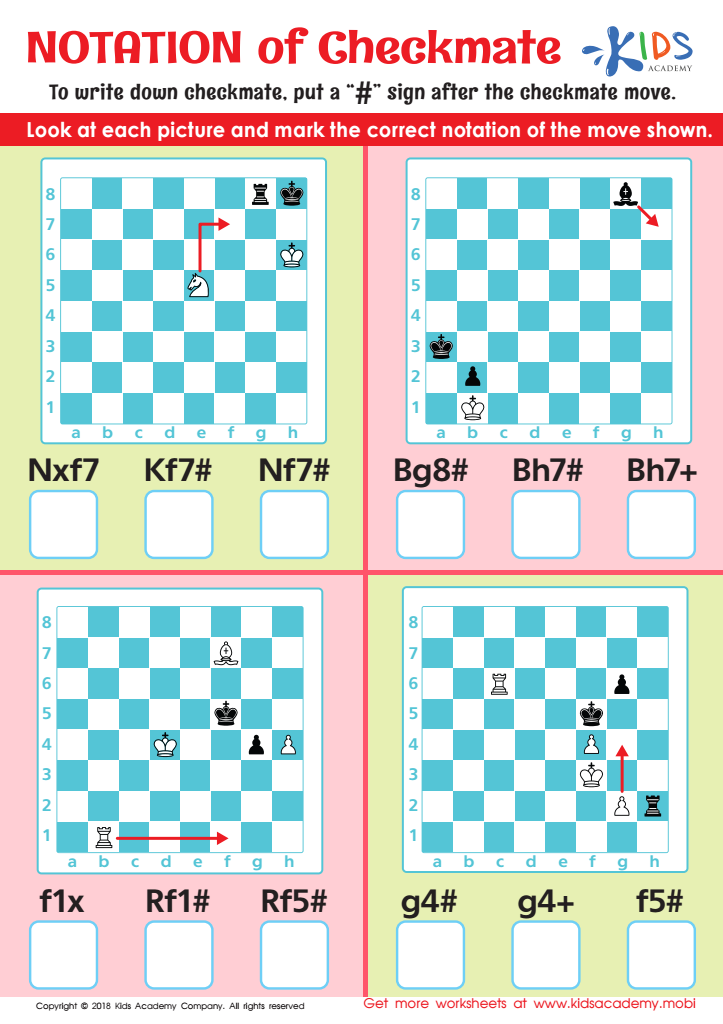
Notation of Checkmate Worksheet







Introducing children aged 4-6 to chess and its strategies offers numerous benefits crucial to their developmental growth. At this early age, their cognitive abilities are rapidly expanding, and chess serves as an excellent tool for nurturing critical thinking and problem-solving skills. Chess requires players to anticipate consequences, make decisions, and think several moves ahead, fostering both analytical thinking and foresight.
In addition, playing chess enhances memory as children need to remember game rules and strategies while recognizing patterns. Research suggests that engaging in activities requiring intense concentration, like chess, significantly improves attention span, which can translate into better academic performance and other life areas requiring focus.
Furthermore, chess encourages patience, perseverance, and emotional intelligence. Young children learn to handle winning gracefully and losing constructively, helping develop a healthy relationship with competition and self-improvement.
Moreover, chess serves as a social bridge as it encourages positive interactions, teaching sportsmanship and mutual respect. Kids meet peers over game boards, sharing experiences and learning that cooperation, as well as competition, plays a fundamental role in society.
In a world increasingly dominated by digital and passive forms of entertainment, chess provides a rich, engaging, and mentally stimulating alternative, making it worthwhile for parents and educators to incorporate this timeless game into the lives of young children.








