Comparative analysis Worksheets for Ages 4-6
5 filtered results
-
From - To
Explore our engaging Comparative Analysis Worksheets designed specifically for children ages 4-6! These worksheets help young learners develop essential skills by encouraging them to compare and contrast various objects, animals, and shapes. Designed with vibrant visuals and age-appropriate activities, our worksheets promote critical thinking and cognitive development in a fun, interactive way. As children identify similarities and differences, they enhance their observational skills and boost their vocabulary. Ideal for parents and educators alike, these resources support early learning objectives while making education enjoyable. Download the comparative analysis worksheets today to inspire curiosity and foster a love of learning in your little ones!
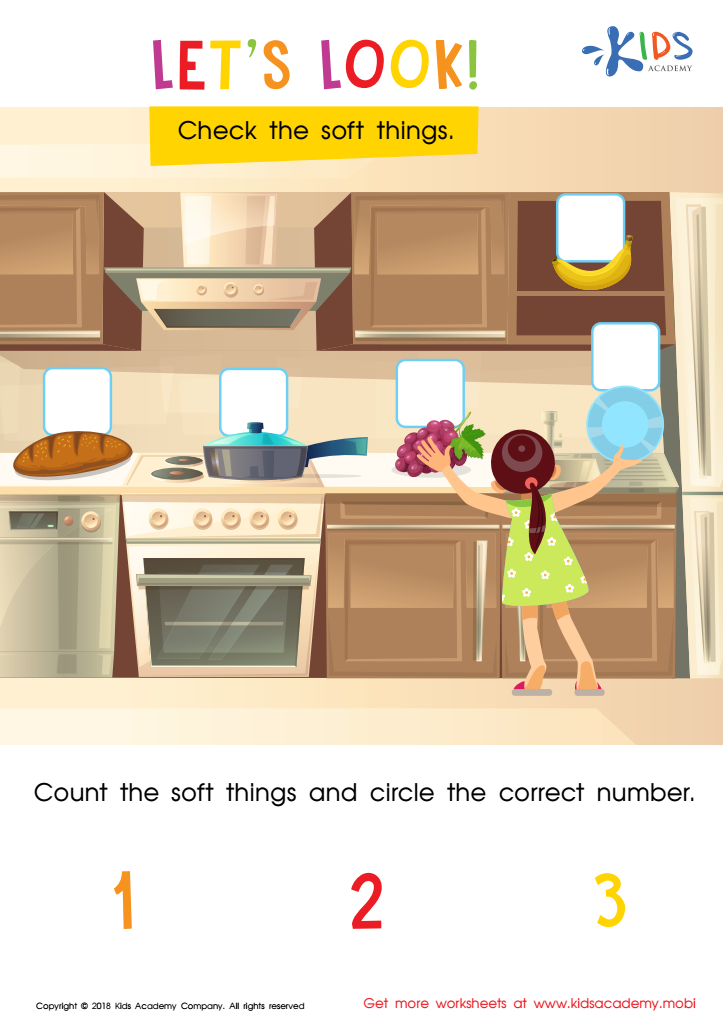
Let's Look! Assessment Worksheet
 Assign to My Students
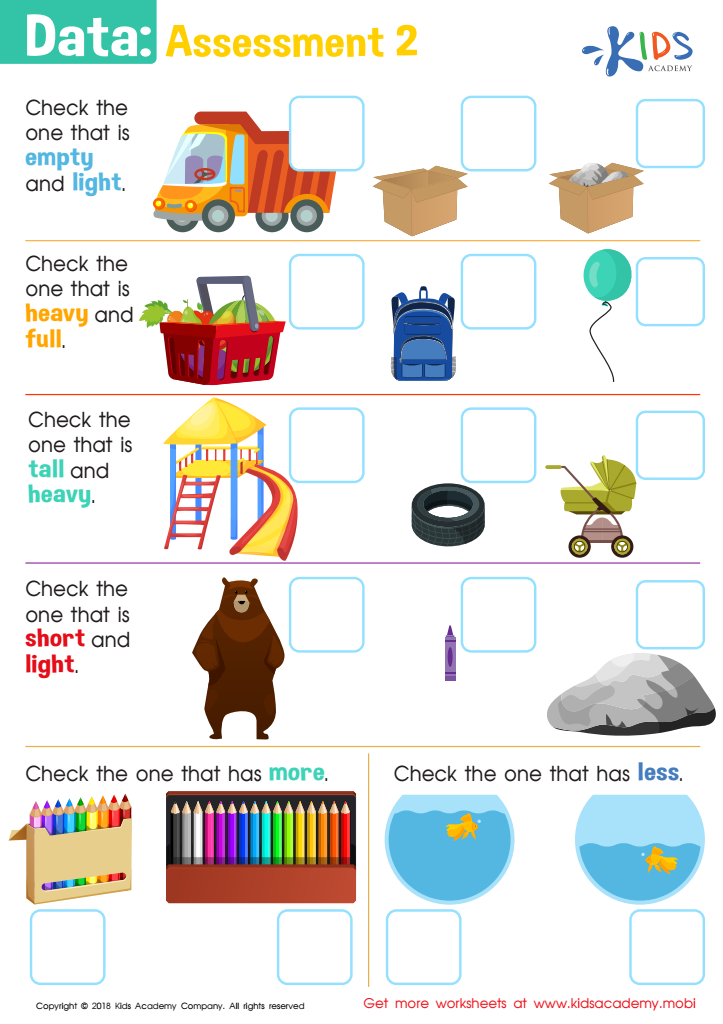
Data: Assessment 2 Worksheet
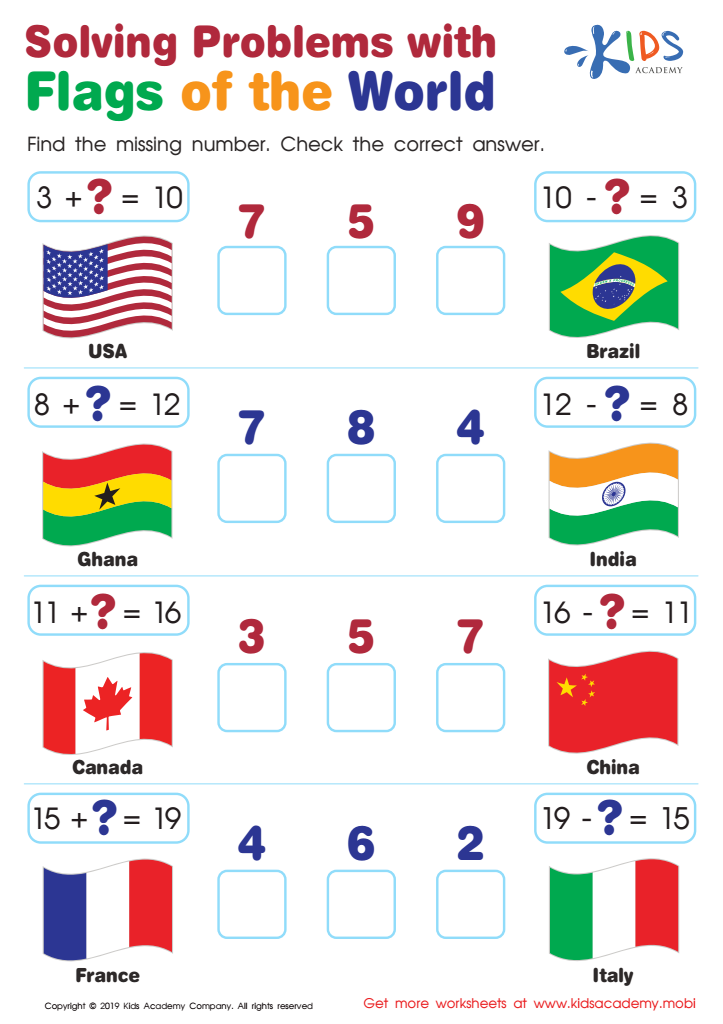
Solving Problems with Flags of the World Worksheet








Comparative analysis for children aged 4-6 is essential for both parents and teachers as it fosters a deeper understanding of developmental milestones and learning styles. This analytical approach enables educators and caregivers to identify differences in social, emotional, cognitive, and physical development among children. Understanding these variations allows for the enhancement of individualized learning experiences, ensuring that instruction is tailored to meet the diverse needs of each child.
Parents and teachers can use comparative analysis to track children’s progress, identify any areas needing additional support, and celebrate achievements regardless of developmental pace. This encourages a growth mindset, promoting resilience and motivation in children. It also aids in recognizing the impact of different educational methods and environments, allowing educators to adopt the most effective strategies to enhance learning experiences.
Moreover, by grasping how individual children relate to their peers, parents and teachers can foster a more inclusive environment that values uniqueness and diversity. Ultimately, comparative analysis equips adults with the insights necessary to support holistic development, nurturing well-rounded, confident young learners. Ensuring that children thrive during these formative years sets a strong foundation for lifelong learning and emotional intelligence.








