
Constellation identification Worksheets for Ages 4-6
3 filtered results
Difficulty Level
Grade
Age
-
From - To
Subject
Activity
Standards
Explore the wonders of the night sky with our engaging Constellation Identification Worksheets, designed specifically for children ages 4-6. These fun and interactive worksheets introduce young learners to the fascinating world of constellations, helping them recognize and name various star patterns. Each worksheet features colorful illustrations and simple activities that encourage creative thinking and observation skills. Perfect for early education settings or at-home learning, these resources are not only educational but also cultivate a love for science and exploration. Make stargazing a delightful experience for your child while they develop crucial cognitive skills! Download your worksheets today!
Favorites
With answer key
Interactive
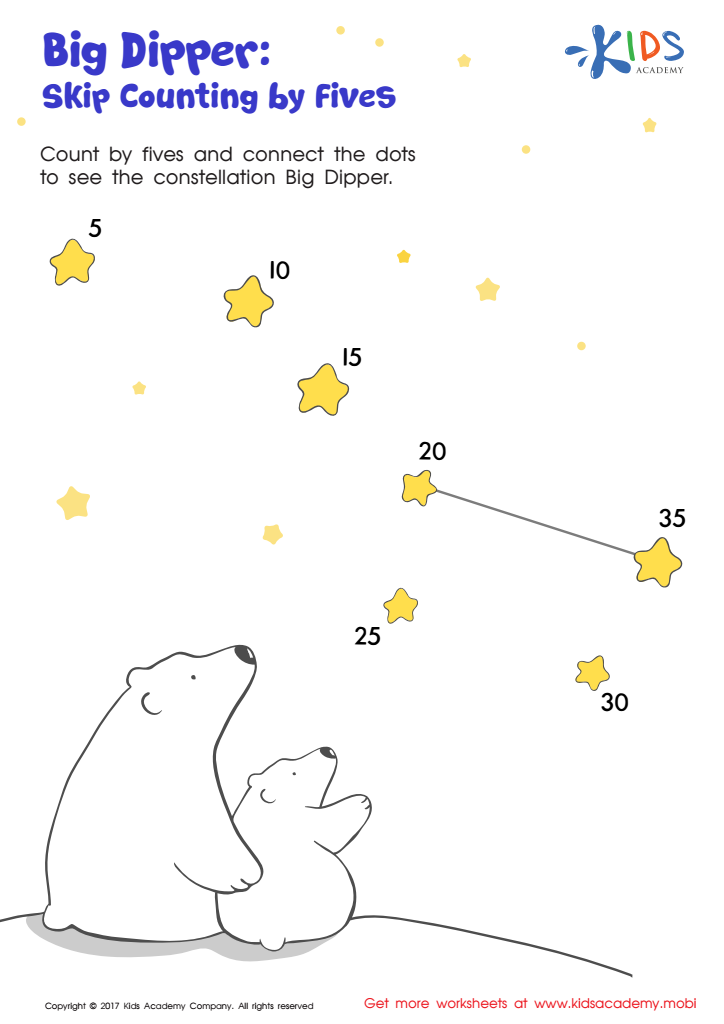
 Assign to My Students
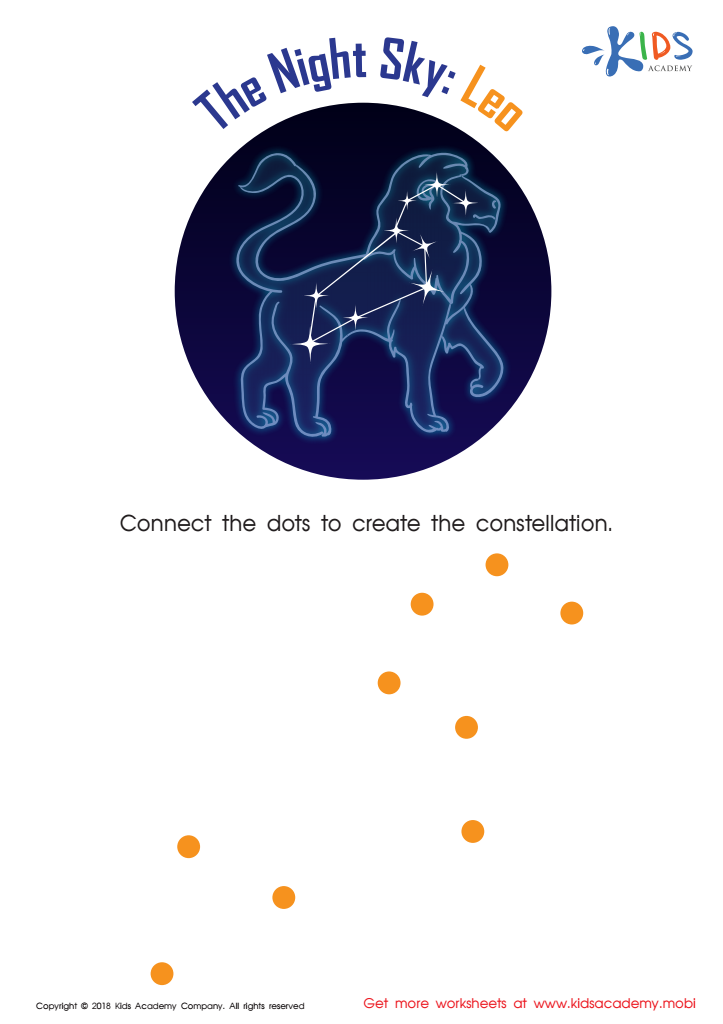
The Night Sky: Leo Worksheet
Let your kids explore the wonders of the stars with this fun worksheet! They'll connect the dots to create the constellation Leo. Night gazing instruments, a telescope or this printout can help your kids learn about constellations and horoscopes. Download the worksheet and let the star watching begin!
The Night Sky: Leo Worksheet
Worksheet
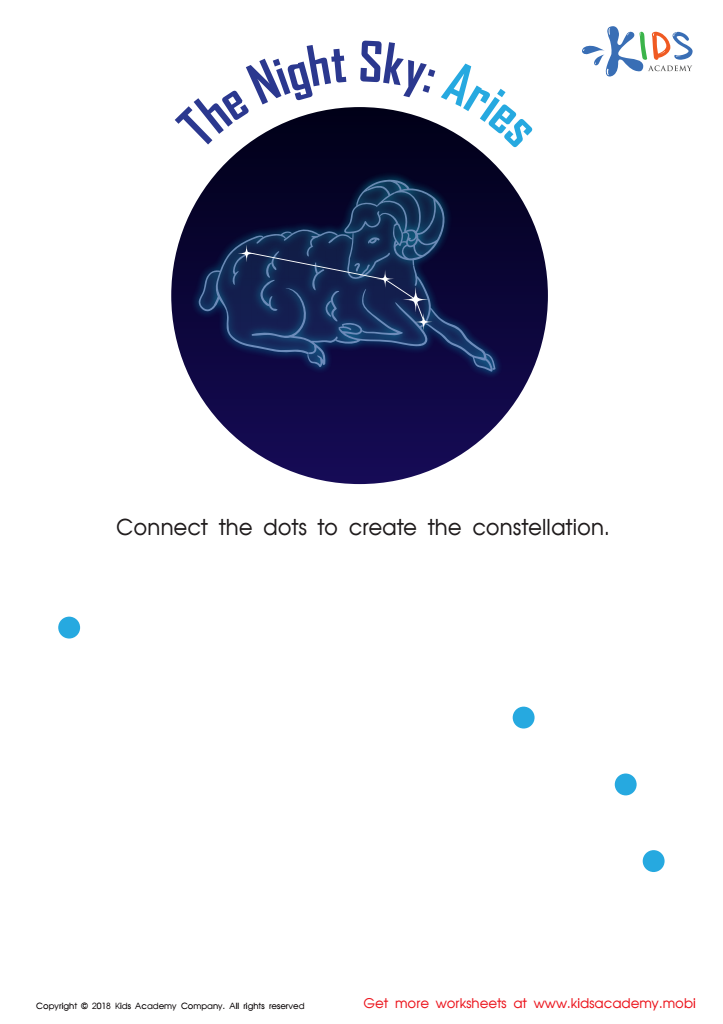
The Night Sky: Aries Worksheet
Does your child know constellations and horoscope? If you've got them interested in horoscope readings and star gazing, the Aries constellation in the pdf should be familiar. Have them look at the picture and identify it. If they can't, tell them it's Aries. Then, help them connect the dots to form the constellation.
The Night Sky: Aries Worksheet
Worksheet
Join Kids Academy for Free
Who is primarily going to use this learning content?








Teaching constellation identification to children ages 4-6 fosters a sense of wonder and curiosity about the universe, which is crucial for cognitive and emotional development. At this young age, children are naturally inclined to explore and ask questions about their surroundings. Introducing constellations not only enhances their observational skills, but also encourages storytelling and imagination as they learn the myths and legends behind each group of stars.
Moreover, understanding constellations nurtures early scientific literacy. It provides a foundational understanding of astronomy, linking to important concepts like patterns, measurements, and spatial awareness. By recognizing different constellations, children also cultivate patience and concentration as they learn to identify them in the night sky.
For parents and teachers, encouraging this kind of exploration introduces opportunities for collaborative learning—stargazing as a family or in a classroom setting can create bonding experiences. These activities become prompts for discussions about science, nature, and even history.
Ultimately, engaging children with constellations can lay the groundwork for a lifelong love of learning and a deeper respect for the natural world. Building this connection at an early age can inspire future interest in sciences, arts, or cultures, enriching their educational journey.








