
Enhances problem-solving skills Worksheets for Ages 4-6
3 filtered results
Difficulty Level
Grade
Age
-
From - To
Subject
Activity
Standards
Unlock your child's potential with our "Enhances Problem-Solving Skills Worksheets" designed for ages 4-6! Tailored to promote critical thinking and essential reasoning abilities, these engaging worksheets use fun, age-appropriate challenges to stimulate cognitive development. Activities include puzzles, pattern recognition, and simple logic games that captivate young minds while encouraging independence and confidence in problem-solving. With vibrant illustrations and interactive exercises, your child will enjoy learning essential skills that lay the foundation for future academic success. Give your little one the tools they need to thrive with our comprehensive selection of worksheets, perfect for inspiring curiosity and creativity in every young learner!
Favorites
With answer key
Interactive
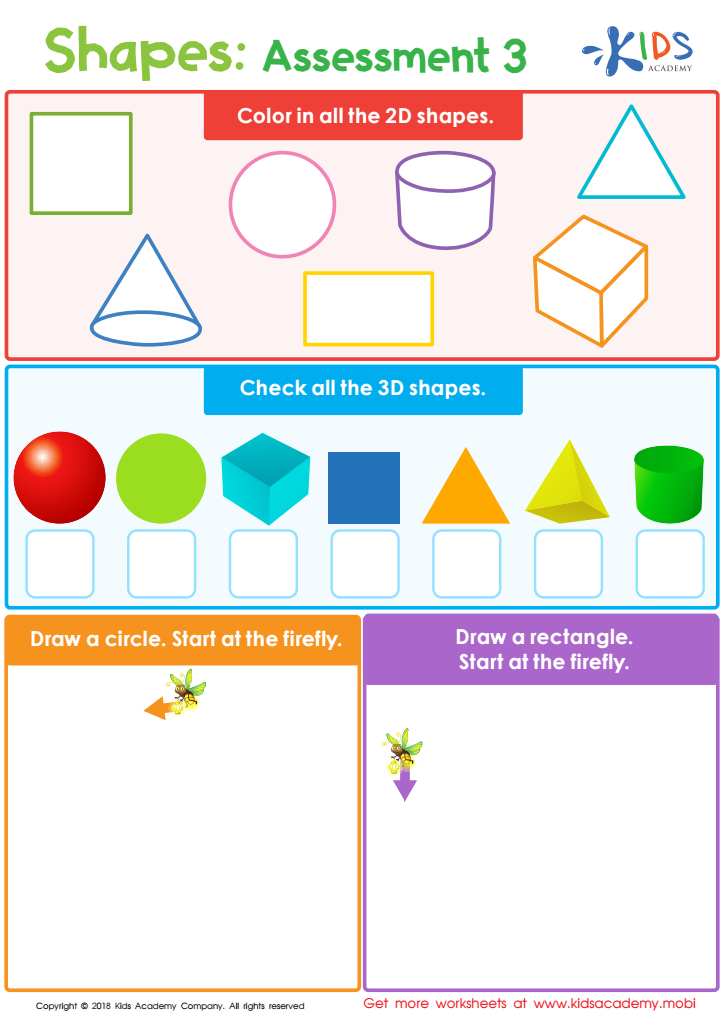
Shapes: Assessment 3 Worksheet
Shapes are everywhere! Help your students differentiate between 2D and 3D shapes. Ask them the difference between a triangle and pyramid, or a circle and a sphere. This worksheet tests their understanding of both types and is a useful assessment tool.
 Assign to My Students
Shapes: Assessment 3 Worksheet
Worksheet
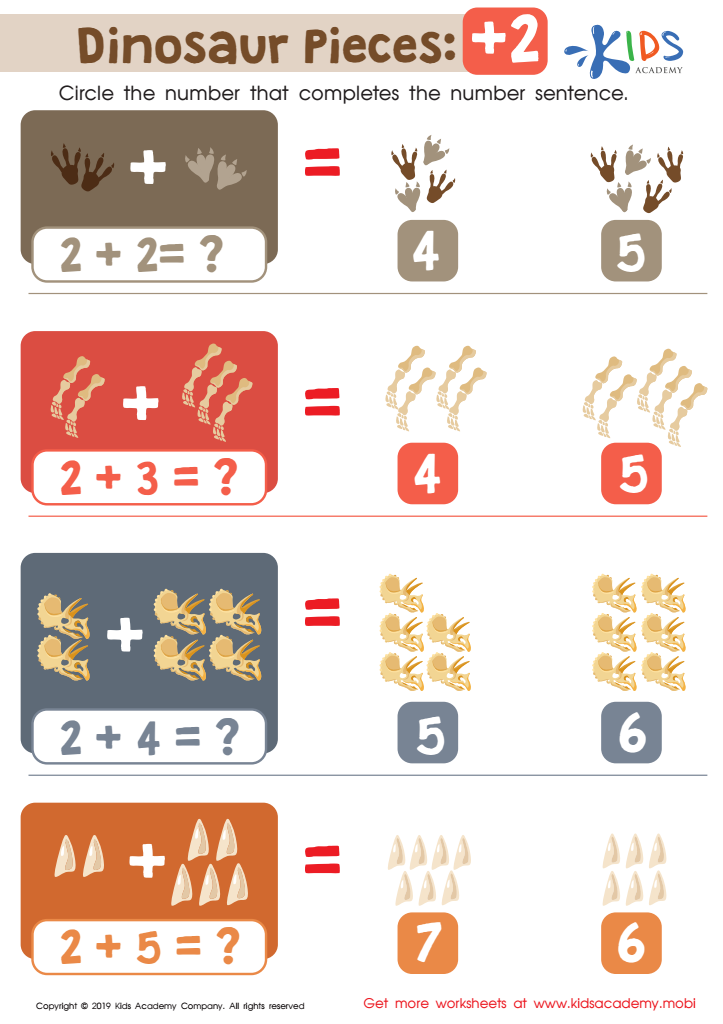
Dinosaur Pieces: +2 Worksheet
Kids love dinosaurs! See if your kids can solve these three equations featuring the mysterious creatures. Download the PDF and have them circle the number that completes each equation. Dinosaurs are extinct, not seen for thousands of years, but they can still help kids work on their math skills!
Dinosaur Pieces: +2 Worksheet
Worksheet
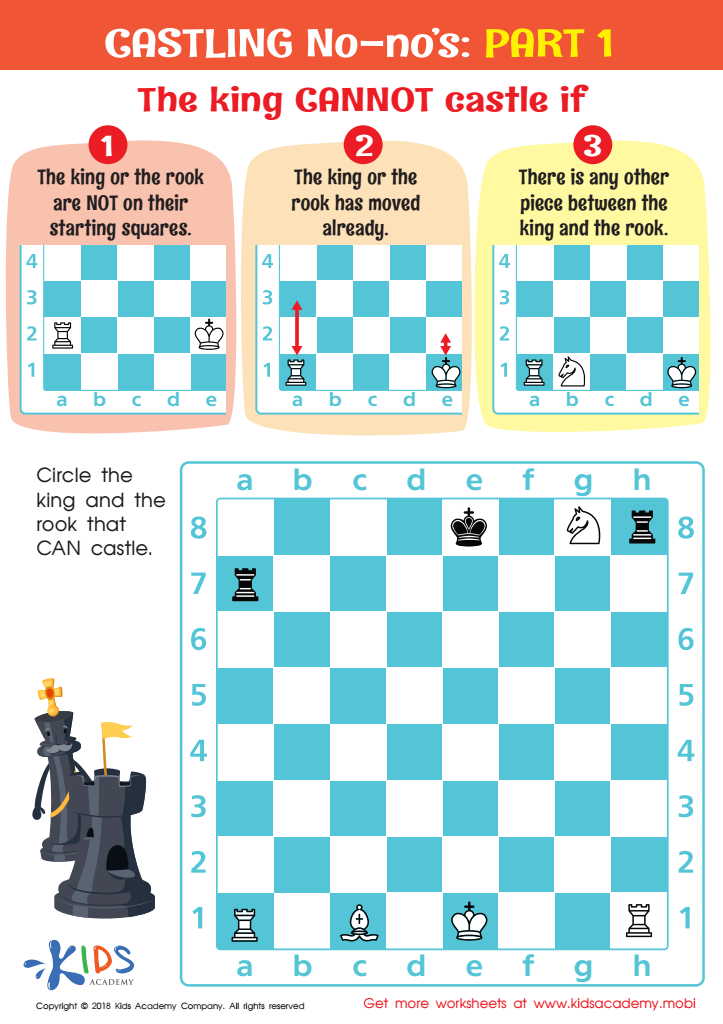
Castling No–no's: Part 1 Worksheet
Help your child learn how to play chess by using this worksheet. Ask them to circle the king and rook that can castle in the picture. Explain that a king cannot castle if the king or rook has moved, or if there is any other piece between them. Knowing these rules will make playing a lot easier!
Castling No–no's: Part 1 Worksheet
Worksheet
Join Kids Academy for Free
Who is primarily going to use this learning content?





.jpg)

Enhancing problem-solving skills in children aged 4-6 is crucial, as this developmental stage lays the foundation for future learning. At this age, children are naturally curious and eager to explore the world around them. Encouraging problem-solving fosters their critical thinking, resilience, and creativity, which are essential for navigating everyday challenges.
For parents and teachers, promoting problem-solving skills helps develop independent learners who can tackle obstacles confidently. Activities like puzzles, simple math games, and hands-on projects encourage children to think critically and approach problems systematically. These skills not only benefit academic success but also assist in emotional and social development, as children learn to collaborate, negotiate, and handle frustration when solutions are not immediately apparent.
Moreover, teaching problem-solving aligns perfectly with early childhood education goals. It prepares children for future learning environments where creativity and critical thinking are increasingly valued. By cultivating these skills now, parents and teachers ensure that children are better prepared for academic challenges and life experiences as they grow. Thus, prioritizing problem-solving in young children will have lifelong advantages, benefitting both their educational pursuits and personal growth.








