History knowledge Worksheets for Ages 4-6
4 filtered results
-
From - To
Explore our engaging History Knowledge Worksheets designed specifically for children ages 4-6. These worksheets introduce young learners to the basics of history through fun and interactive activities that boost their curiosity about the past. Featuring colorful illustrations and simple tasks, our resources encourage kids to identify historical events, understand timelines, and recognize important figures. Perfect for both classroom and home environments, these worksheets foster critical thinking and promote a love for learning about history. Ideal for young minds eager to explore the world around them, our History Knowledge Worksheets ensure that learning is both educational and entertaining!
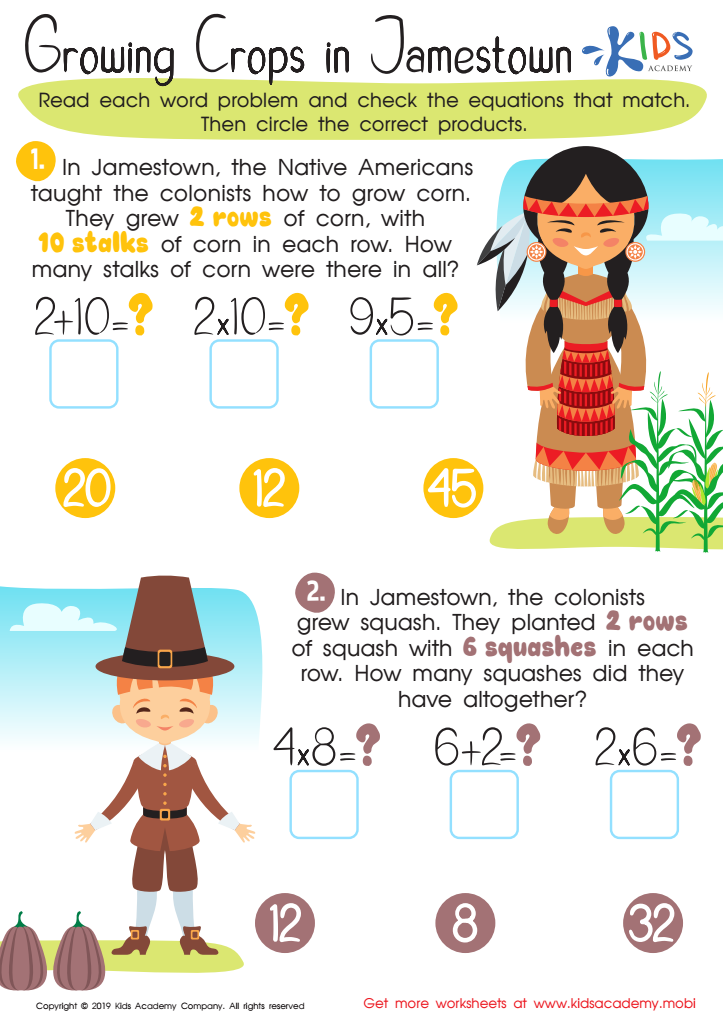
Growing Jamestown Worksheet
 Assign to My Students








Understanding history is essential for children aged 4-6 as it lays the foundation for their identity, critical thinking, and social awareness. At this young age, children are naturally curious about their world; exposing them to historical narratives helps satisfy that curiosity and fosters a sense of belonging within a larger community. Learning simple historical concepts can instill a sense of pride and awareness of cultural heritage, making children feel connected to their past.
Incorporating history into early education develops essential skills such as storytelling, sequencing, and comprehension. When teachers and parents share age-appropriate historical stories or concepts, they encourage children to ask questions, promote discussion, and engage in critical thinking from a young age. Additionally, history helps children understand the diversity of experiences and perspectives. This awareness fosters empathy and respect for others, crucial traits in today’s increasingly interconnected world.
Moreover, early exposure to historical contexts, such as family traditions or significant events, can help strengthen family bonds and encourage children to appreciate their lineage. In summary, integrating history into early learning shapes well-rounded and informed individuals, preparing them to navigate a complex societal landscape with awareness and understanding.








