Improve calculation skills Worksheets for Ages 4-6
3 filtered results
-
From - To
Boost your child's calculation skills with our engaging worksheets designed specifically for ages 4-6! Our collection features a variety of fun and interactive activities that help young learners grasp basic math concepts, including addition and subtraction through colorful illustrations and familiar themes. These worksheets are perfect for encouraging critical thinking and problem-solving abilities while keeping children entertained. tailored to be age-appropriate, they support the development of essential early math skills in a playful, supportive environment. Whether used at home or in the classroom, our resources are a fantastic way to enhance a child's mathematical foundation. Start building confidence in math today!
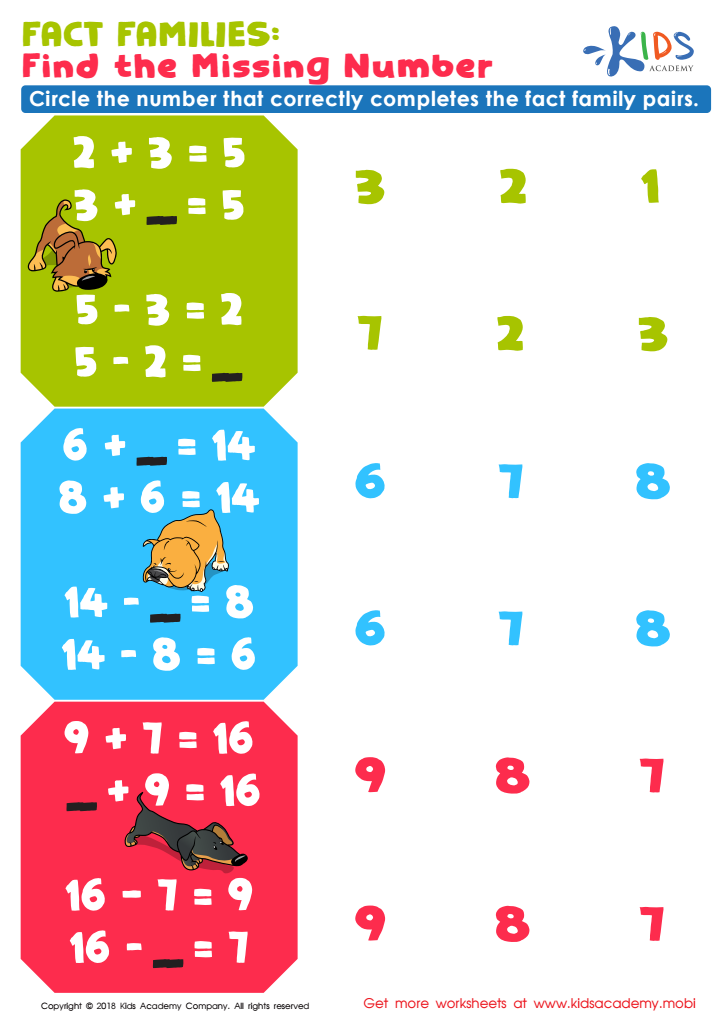
Fact Families: Find Missing Number Worksheet
 Assign to My Students
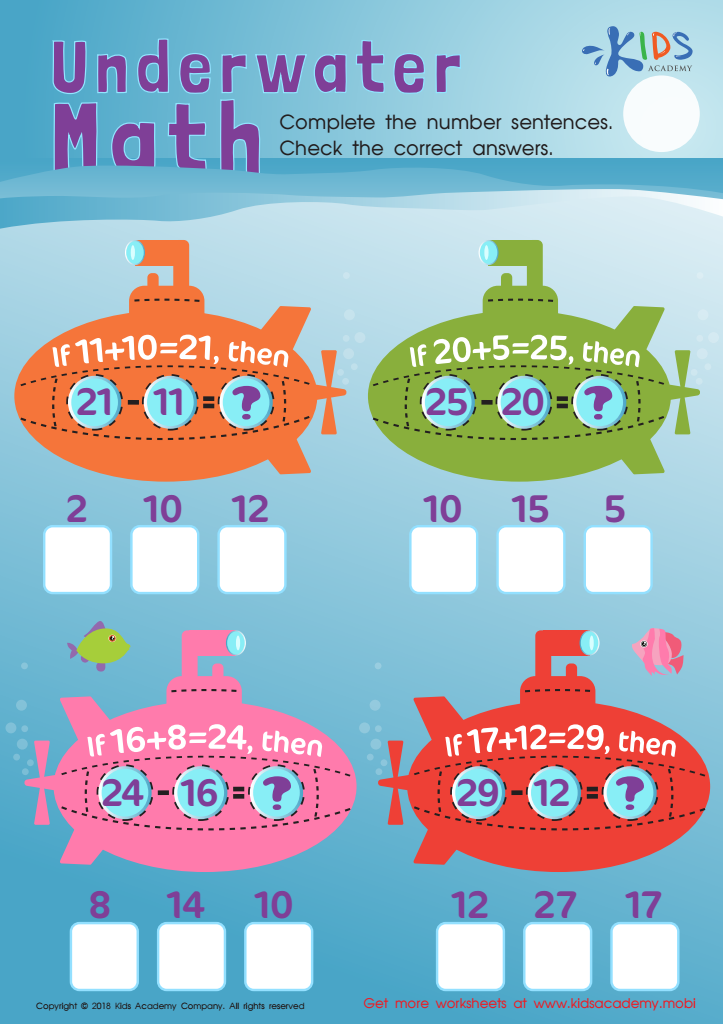
Addition and Subtraction: Underwater Math Worksheet
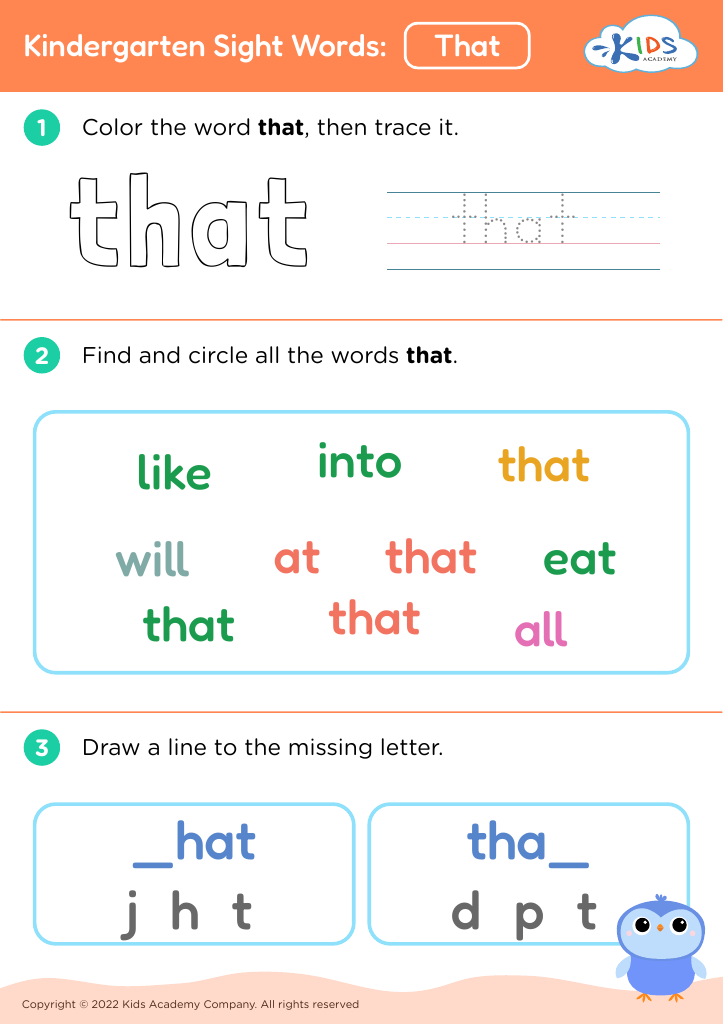








Improving calculation skills in children ages 4-6 is crucial for their overall cognitive development and future academic success. At this stage, early math skills form the foundation for more complex concepts later on. Engaging in simple calculations—such as addition and subtraction—helps children enhance their problem-solving abilities, logical thinking, and analytical reasoning.
Moreover, these early experiences with numbers boost children's confidence and encourage a positive attitude towards math, which can significantly influence their educational journey. Fun and interactive activities, such as counting games or puzzles, make learning enjoyable, transforming potentially daunting subjects into exciting challenges.
Additionally, strong calculation skills foster independence, as children learn to work through problems and understand the world around them in quantifiable terms. As parents and teachers guide children in recognizing numbers in daily life—like counting apples or sharing toys—they develop as critical thinkers who can approach challenges systematically.
Ultimately, by nurturing calculation skills early on, we equip children with tools they will need in life. Early intervention can help beat the detrimental effects of math anxiety, leading to more willing, capable learners as they progress through school and beyond.








