
Improving calculation skills Worksheets for Ages 4-6
5 filtered results
Difficulty Level
Grade
Age
-
From - To
Subject
Activity
Standards
Boost your child's mathematical abilities with our "Improving Calculation Skills Worksheets for Ages 4-6". These engaging and carefully designed worksheets focus on fundamental math concepts, helping young learners develop essential skills in addition, subtraction, counting, and number recognition. Our resources incorporate fun, age-appropriate activities to make learning enjoyable and effective, ensuring kids build a solid math foundation. With our printable worksheets, children will not only improve their calculation skills but also gain confidence and a love for math. Begin your child’s math journey with exercises crafted to enhance their problem-solving abilities from an early age.
Favorites
With answer key
Interactive
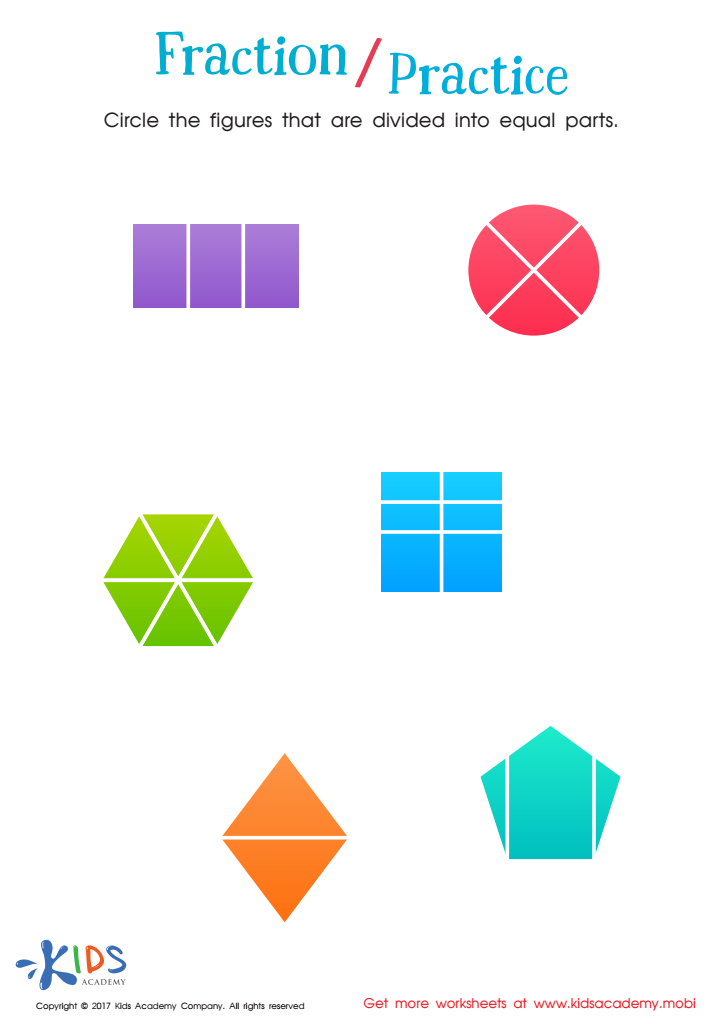
Fractions: Shapes Worksheet
Get your printable now.
Kids learn math differently today than you did in school; understanding concepts rather than memorizing facts. Help your child understand fractions with this printable worksheet. It'll help your child recognize parts of a whole, identify equal parts and build a foundation for numeracy. A better understanding sets kids up for math success! Get your printable now.
 Assign to My Students
Fractions: Shapes Worksheet
Worksheet
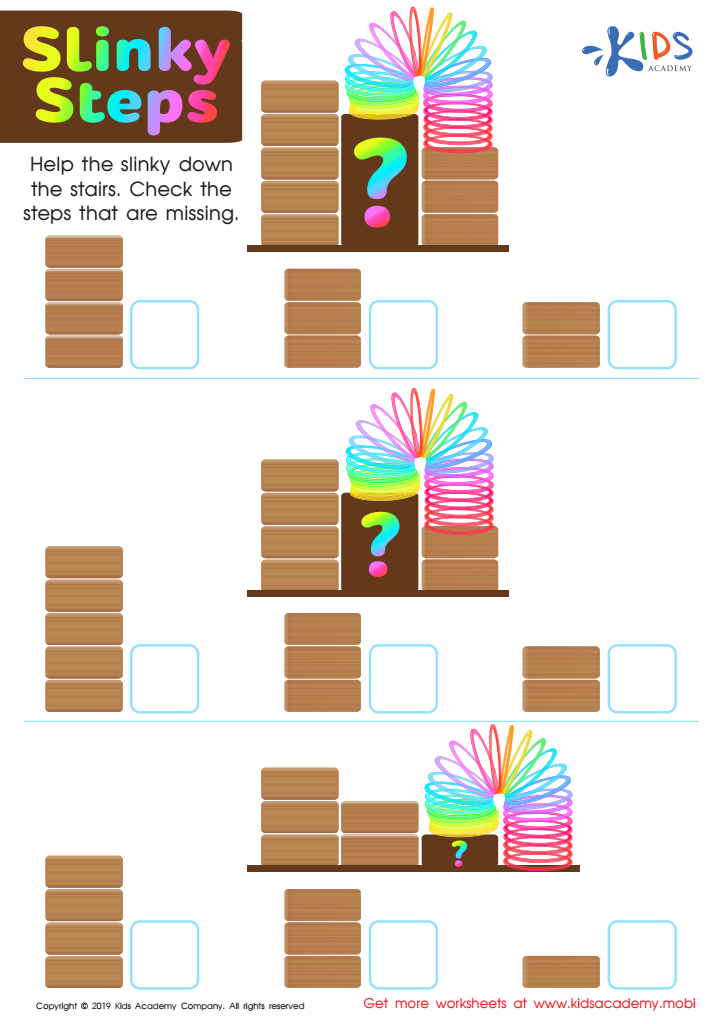
Slinky Steps Worksheet
Help your kids improve their counting and math skills with this fun worksheet! Challenge them to help the slinky make its way down the stairs by selecting and checking the missing steps. Your assistance is key - get the printout and let them practice. It's the best way to becoming better in maths!
Slinky Steps Worksheet
Worksheet
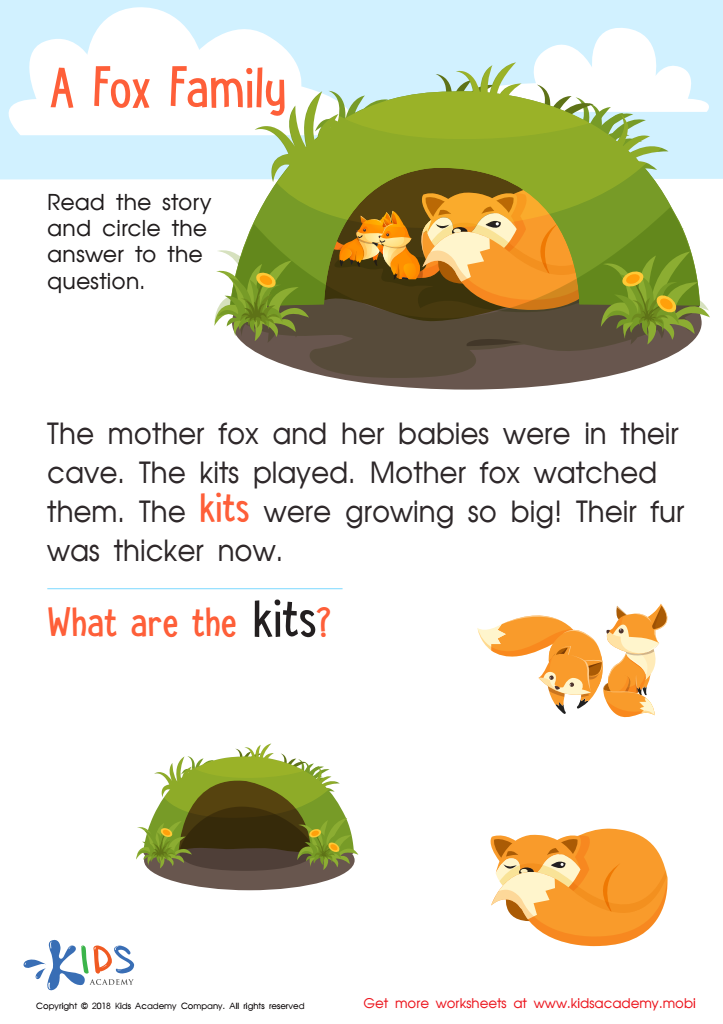
A Fox Family Worksheet
Reading is an easy way to learn new words. This worksheet introduces an interesting story about a fox family, teaching your child that "kits" refers to baby foxes. Read the text together and circle the picture to answer the question.
A Fox Family Worksheet
Worksheet
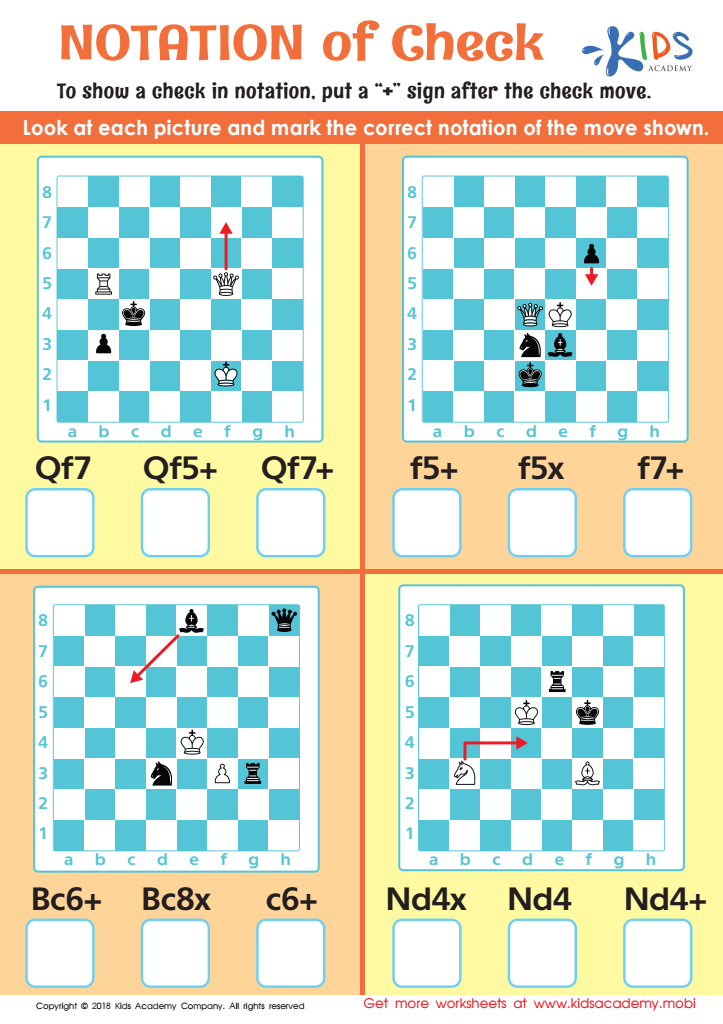
Notation of Check Worksheet
Chess is an addictive game! Once you know the basics of check and checkmate, you'll be hooked! Teach your little one to make check notation with this free PDF worksheet. They can use downloadable practice to look at each picture and mark the correct notation, strengthening their problem-solving skills while they learn to play - and win - this fun game!
Notation of Check Worksheet
Worksheet
Join Kids Academy for Free
Who is primarily going to use this learning content?







.jpg)
Improving calculation skills for children aged 4-6 is essential for laying the groundwork for future academic success and overall cognitive development. At this early stage, children are in a critical period for brain development, where foundational skills are built through interaction, play, and structured learning. Strong calculation skills contribute to a young child's ability to understand and manipulate numbers, which is crucial for more advanced math concepts they'll encounter later.
One significant reason parents or teachers should focus on this is that early math proficiency is a predictor of later academic achievement not only in mathematics but also in other subjects. When children grasp basic concepts like addition and subtraction early, they are more likely to excel in complex problem-solving and logical thinking tasks.
Additionally, understanding numbers and developing calculation skills can boost a child's confidence and encourage a positive attitude towards learning. Activities that promote these skills, such as counting games, number puzzles, and interactive educational tools, can make learning fun and engaging, fostering a love for learning in young minds.
Beyond academics, numeracy skills are vital for daily life. From adjusting recipes to budgeting pocket money, these calculations are integral to everyday tasks. Ensuring that children develop strong calculation skills sets them on a path to becoming competent and self-reliant individuals.








