Jumpstart reading success with our fun and engaging "Letter-Sound Correlation Worksheets" specifically designed for ages 4-6. Our printable worksheets help young learners connect letters with their corresponding sounds, a crucial step in phonics development. Featuring colorful illustrations, interactive activities, and diverse exercises, these resources make learning enjoyable and effective. Ideal for both classroom and at-home practice, our worksheets cater to various learning styles, ensuring every child gains confidence. Guide your child or student on their literacy journey with our expertly crafted, easy-to-use worksheets tailored to lay a strong foundation for reading proficiency.

Check out this FREE "Letter-sound correlation" Trial Lesson for age 4-6!

Rearrange Sounds to Make Words

Favorites
With answer key
Interactive
  • 4-6
  • Letter-sound correlation
Beginning Sounds Assessment Printable

Beginning Sounds Assessment Printable

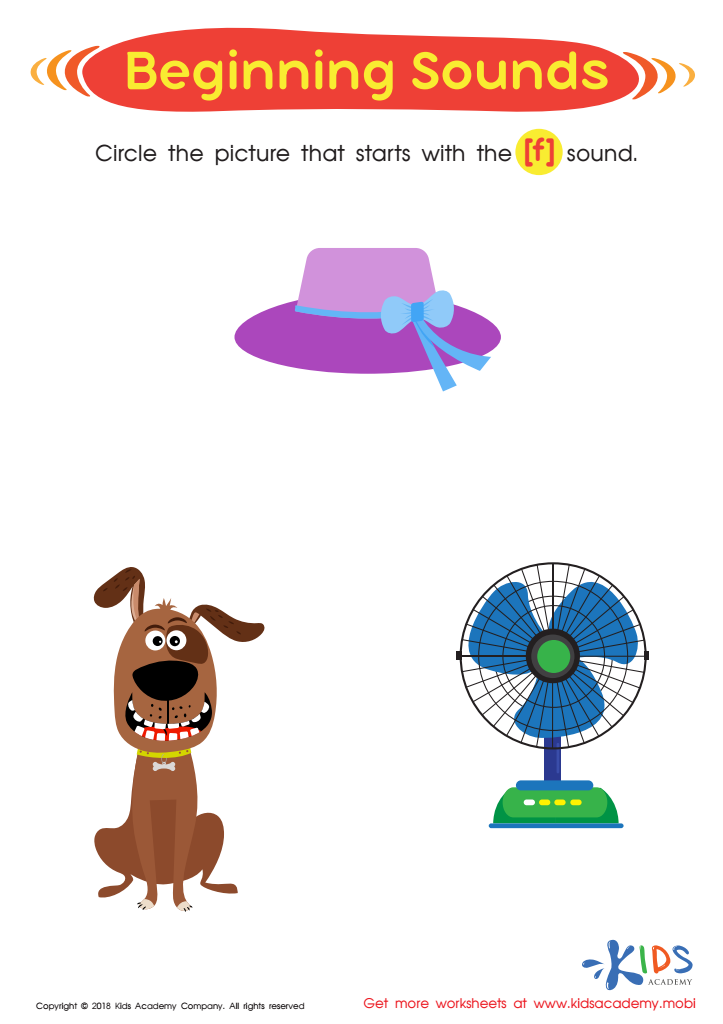
Test your child's knowledge of the alphabet. Ask them to recite the whole alphabet and the words for each letter. For example: A for apple, B for boy. Identify objects on this worksheet, then ask your child which one starts with the letter "f" and have them circle it.
Beginning Sounds Assessment Printable
Worksheet
Letter A Sounds Worksheet

Letter A Sounds Worksheet

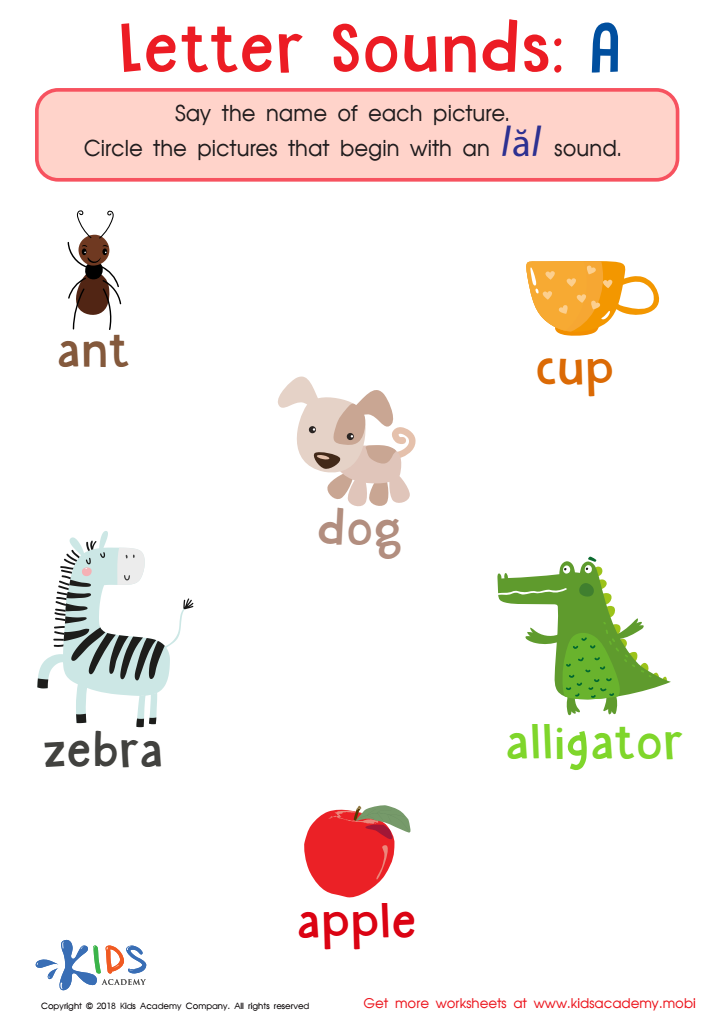
Encourage your new reader to practice the «ă» sound with this fun, free PDF worksheet. With the help of picture clues, they'll say the name of each word and trace circles around the items that start with «ă». This worksheet is an effective way to boost beginning sound skills while having fun!
Letter A Sounds Worksheet
Worksheet
Letter Sounds: J Printable Worksheet

Letter Sounds: J Printable Worksheet

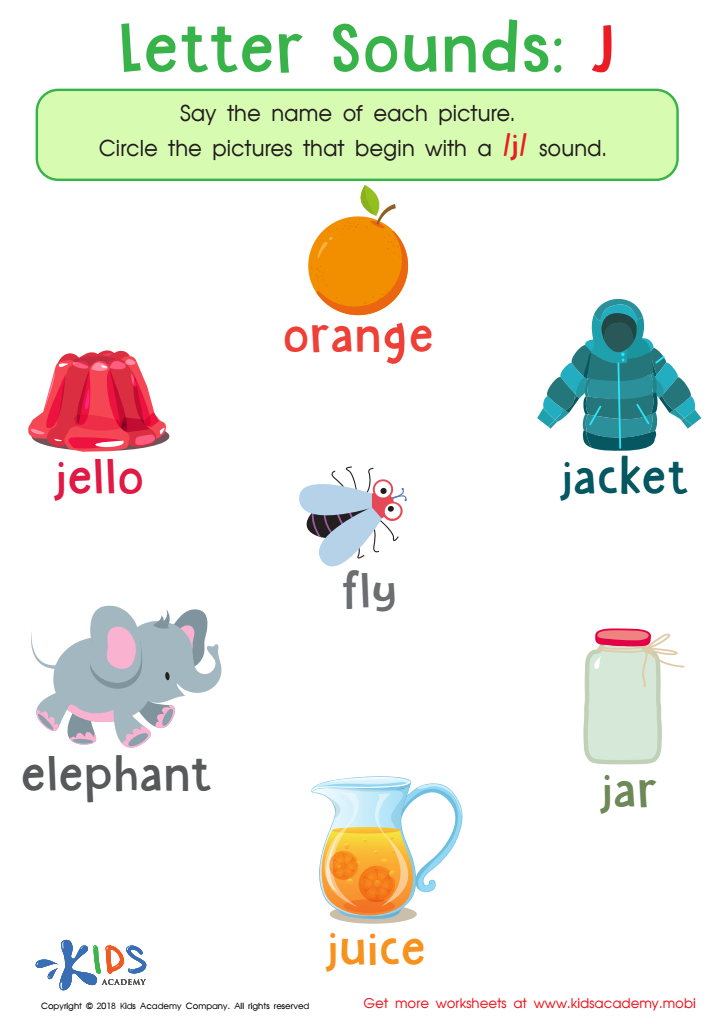
Preschoolers can learn to identify letter sounds by focusing on beginning sounds. This cute and colorful worksheet reviews the hard “j” sound. Kids can point it out by naming the words and circling only those starting with the “j” sound. Read the text out loud and listen closely!
Letter Sounds: J Printable Worksheet
Worksheet
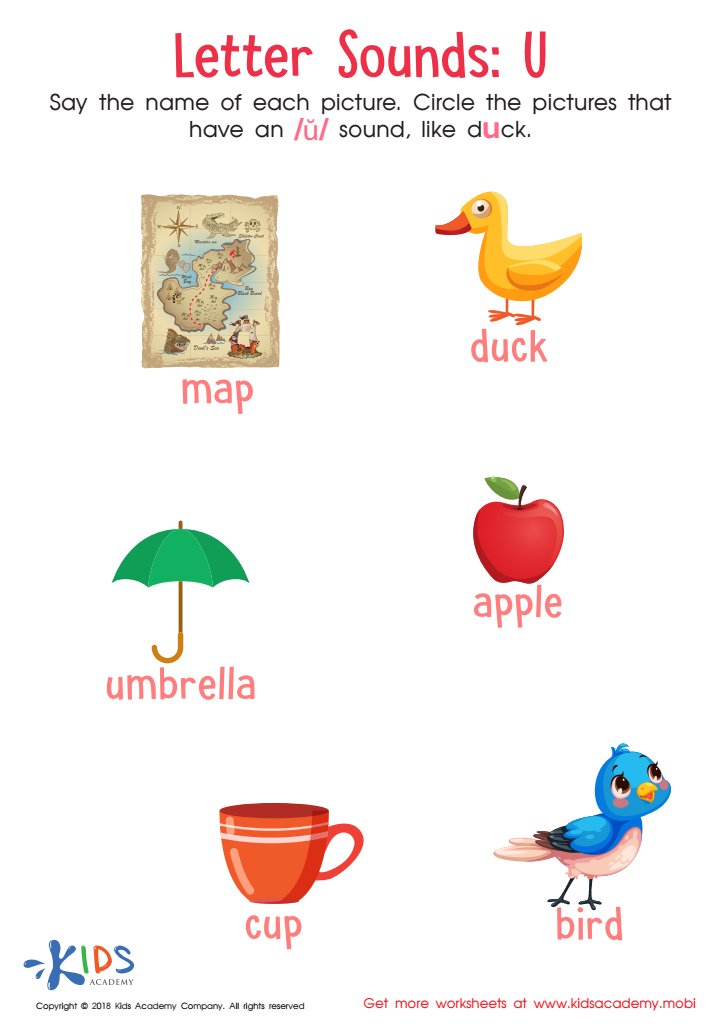
Letter U Sounds Worksheet

Letter U Sounds Worksheet

The letter U is special with multiple pronunciations. This worksheet helps kids identify the short «u» in words like duck and cup. Read the words aloud and listen closely to the sounds. Circle only words with the correct sound to complete the sheet. Kids will quickly know that words like "map" don't contain a U.
Letter U Sounds Worksheet
Worksheet
Letter t sounds worksheet

Letter T Sounds Worksheet

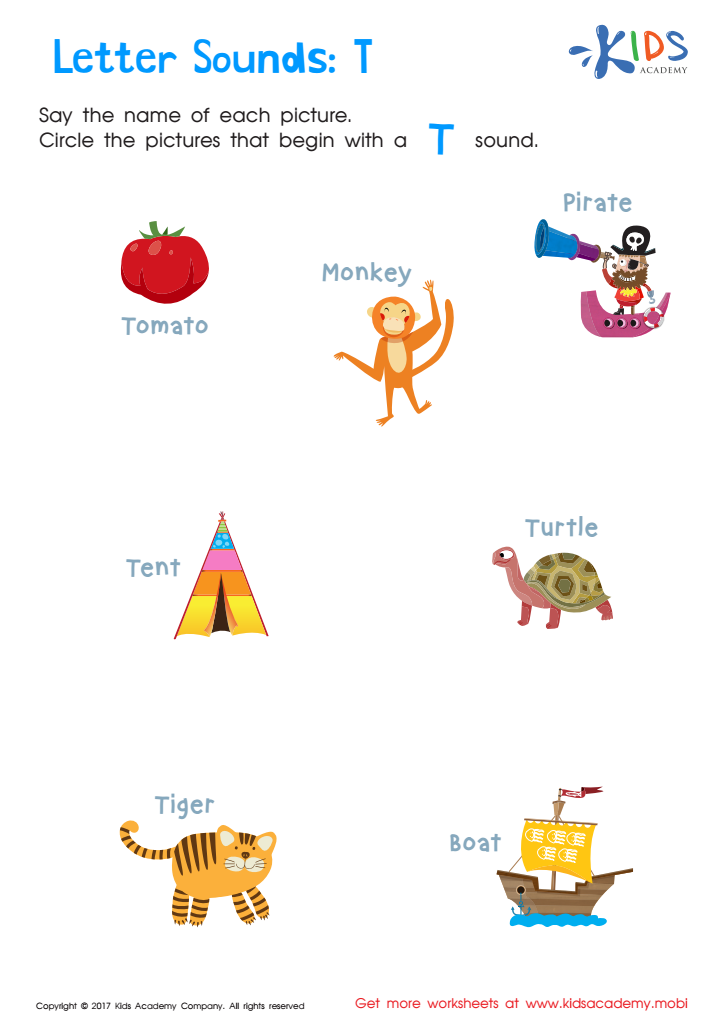
This worksheet is a fun way to help kids learn the t sound. It has familiar pictures and an easy-to-follow format, so kids can quickly recognize and learn the letter t.
Letter T Sounds Worksheet
Worksheet
The SH Digraph Worksheet

The SH Digraph Worksheet

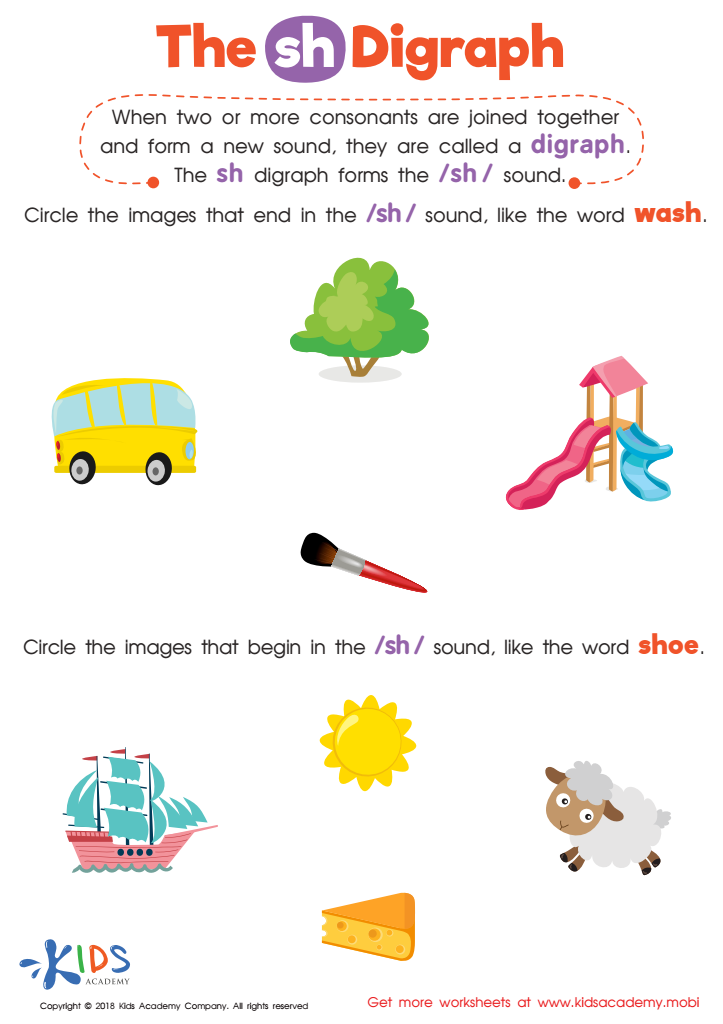
There are many phonetic sounds, each with its own unique sound. When two or more consonants are combined to create a new sound, it's called a digraph. Example: the sh digraph creates the /sh/ sound. Have kids look at the pictures and say the words aloud. Help them circle the images ending with /sh/, like 'wash'.
The SH Digraph Worksheet
Worksheet
Matching Consonant Sounds - Part 1 Worksheet Preview

Matching Consonant Sounds: Part 1 Worksheet
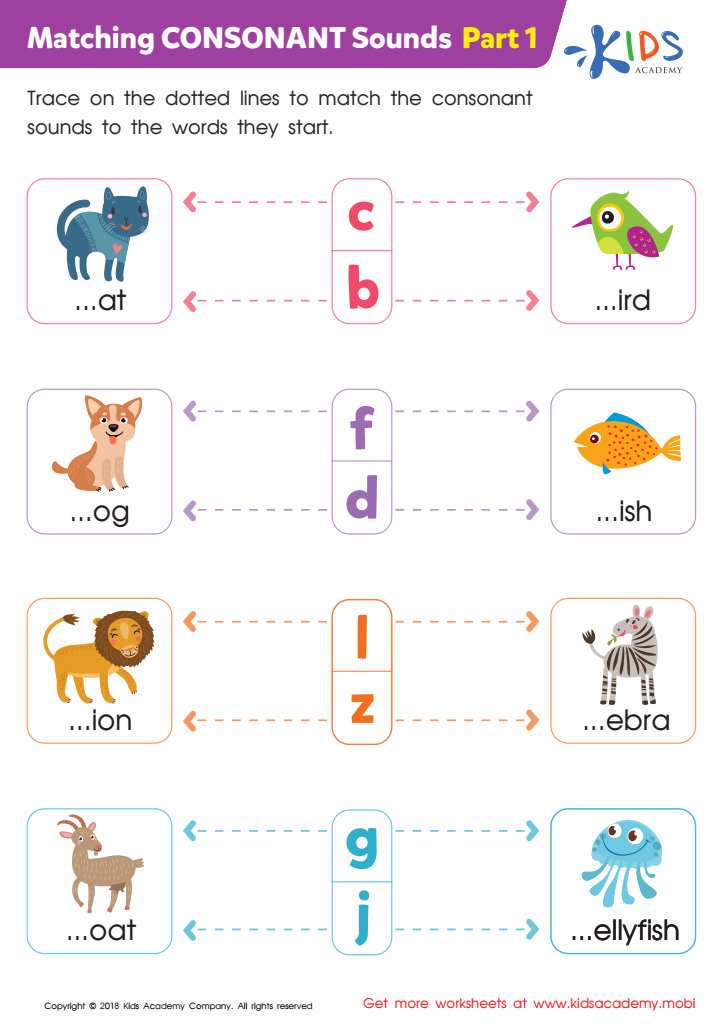
Decide which letter matches each word and picture in this fun phonics worksheet. Slide your finger over each word, trying out each letter to check for matches. Once each pair is solved, trace the dotted lines with pencil to complete the printable. Who knew learning could be so enjoyable?
Matching Consonant Sounds: Part 1 Worksheet
Worksheet
Sounds Are Everywhere! Worksheet

Sounds Are Everywhere! Worksheet

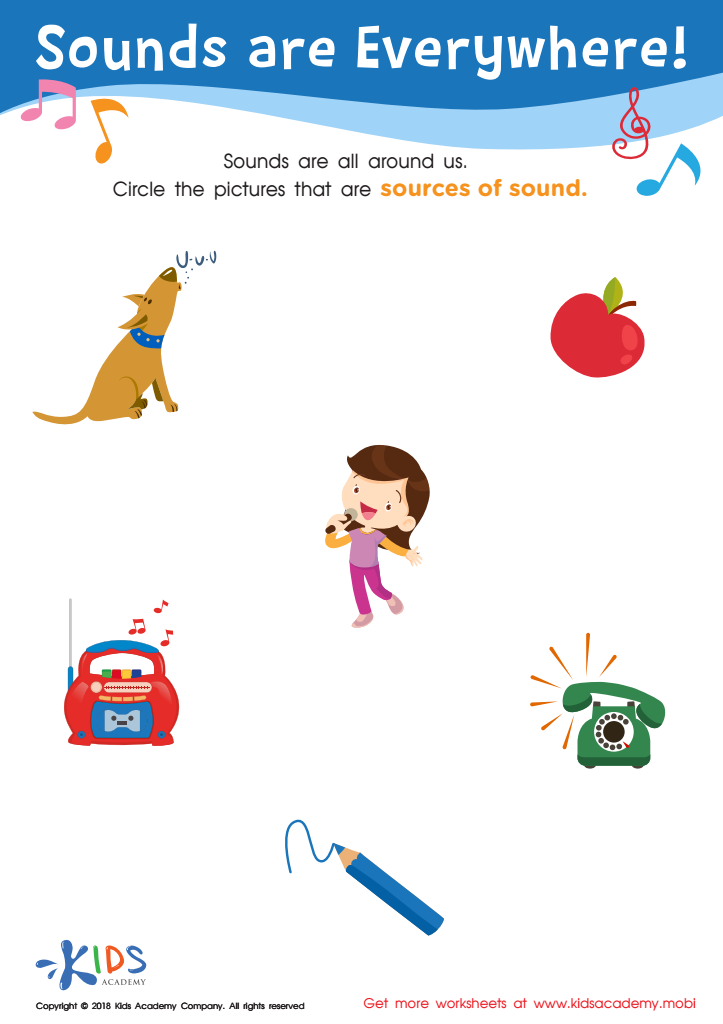
Ask your students to recall objects that make sound. Then, help them identify the sources of sound in the pictures of this worksheet.
Sounds Are Everywhere! Worksheet
Worksheet
Beginning Sounds Match-up Printable

Match–Up Game: Beginning Sounds Worksheet

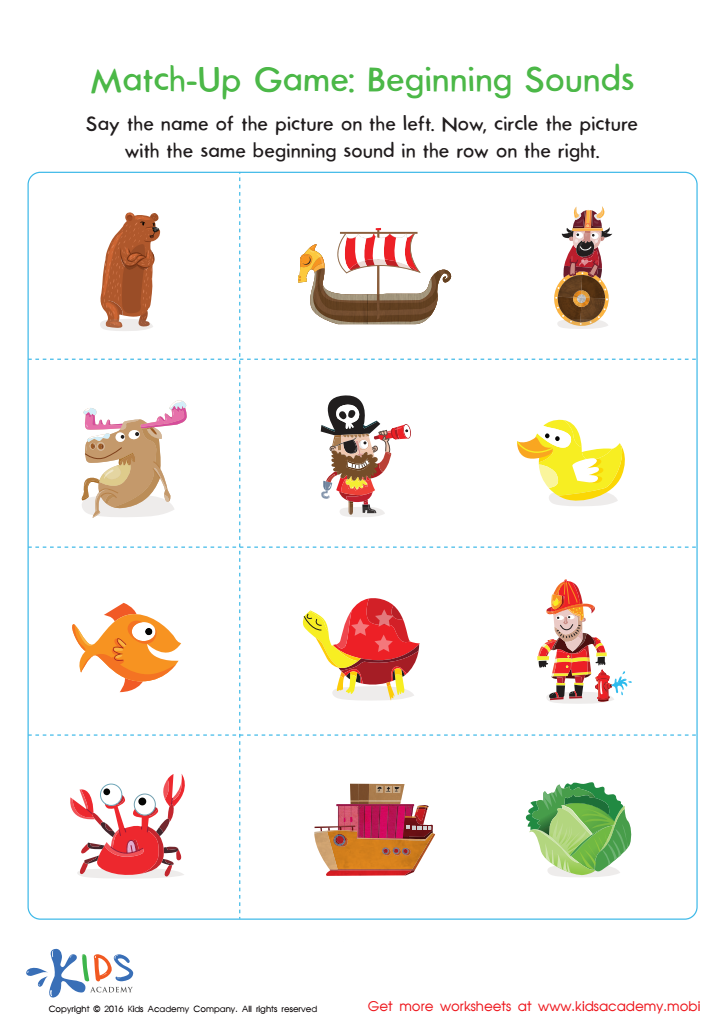
Start today with this beginning sounds match-up printable! Teach your child to solve problems mentally with this beginning sounds match-up printable. They'll learn to categorize pictures based on phonics rules, developing mental stamina and focus. It's an important step for recognizing sounds and letters in print, building a foundation for reading and spelling. Start today and take your child's skills to the next level!
Match–Up Game: Beginning Sounds Worksheet

Worksheet


Parents and teachers should highly value letter-sound correlation for children aged 4-6 because it is the cornerstone of early literacy. At this developmental stage, young learners are beginning to recognize that letters represent specific sounds, a skill fundamental to decoding words and building reading fluency. Mastering these correlations enables children to "sound out" words, fostering their ability to read independently.

Understanding letter-sound relationships also enhances spelling abilities, as children can apply their phonetic knowledge to write words correctly. This foundation aids in developing strong reading comprehension skills; the quicker they recognize words, the more brain energy they can allocate to understanding the text. Early literacy skills are critical predictors of academic success in later years, influencing performance across various subjects, not just English or language arts.

Furthermore, grasping these correlations can boost children’s confidence and enthusiasm for learning. Activities focusing on letter-sound relationships can be both educational and fun, which encourages a positive attitude toward reading from an early age. For parents and teachers, practicing these skills through engaging books, games, and activities can create a supportive and enriching environment that nurtures a lifelong love of reading and learning.

In essence, investing time and effort into teaching letter-sound correlation is key to developing proficient, confident, and motivated young readers.