Noun identification Worksheets for Ages 4-6
7 filtered results
-
From - To
Discover engaging and educational "Noun Identification Worksheets for Ages 4-6" to help young learners grasp the fundamentals of grammar. Our printable worksheets are designed to make learning fun and interactive, featuring vibrant images and simple activities that capture children's attention. By identifying nouns through matching, coloring, and sorting exercises, kids will build a solid foundation in language skills. Perfect for preschoolers and kindergarteners, these worksheets foster critical thinking and comprehension. At Kid’s Academy, we are dedicated to providing high-quality resources that support early childhood education and make learning enjoyable for our little scholars.
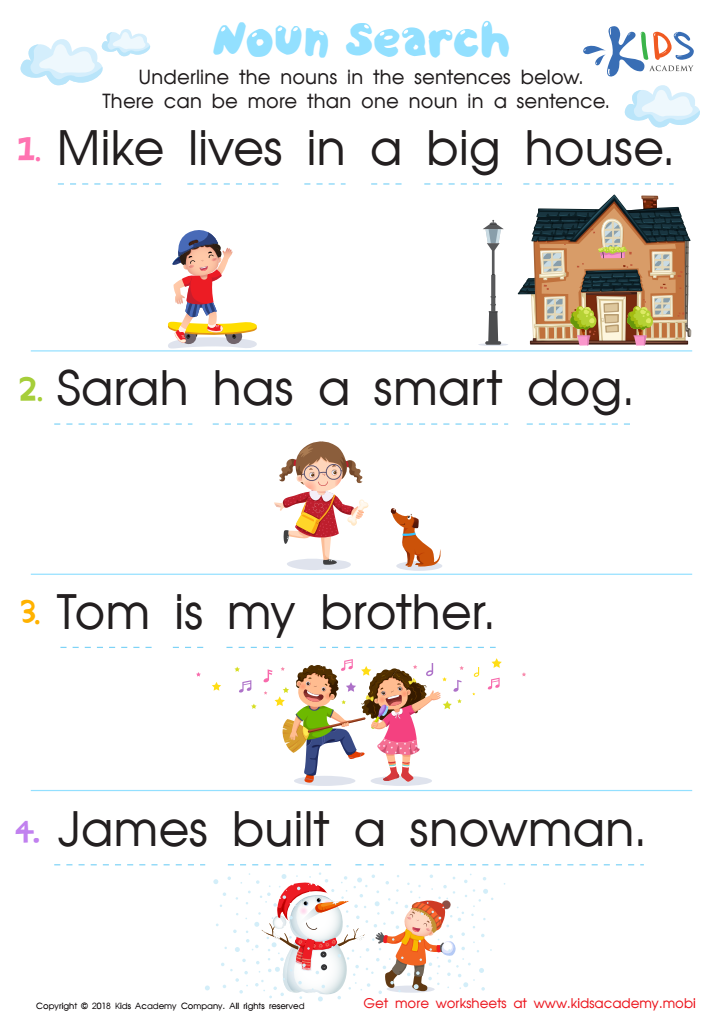
Noun Search Worksheet
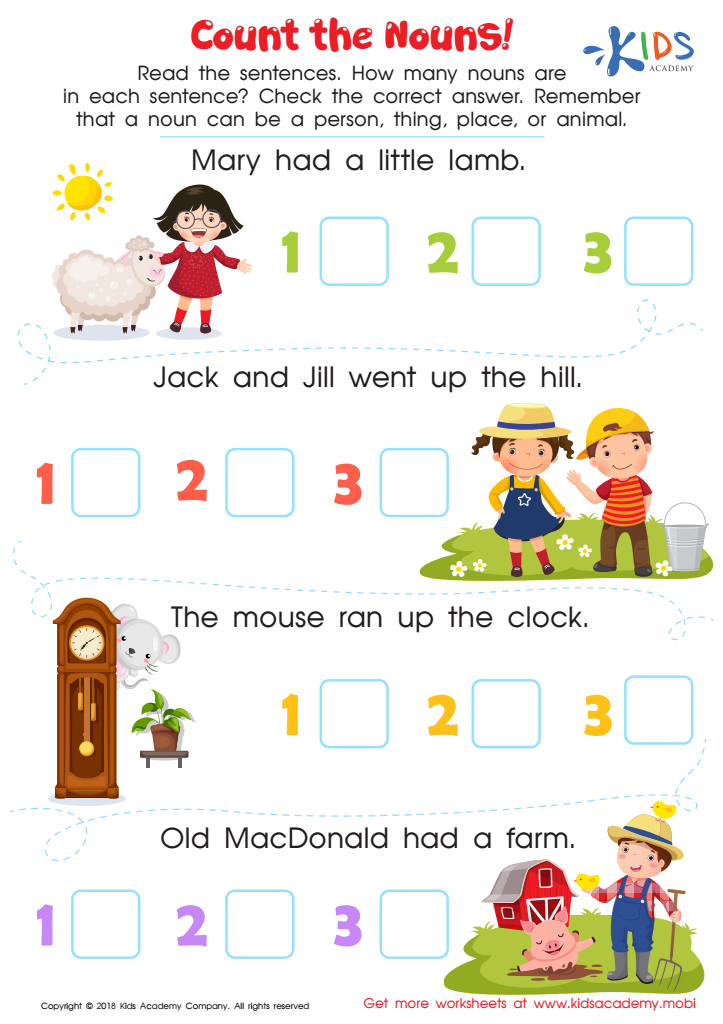
Count the Nouns Worksheet
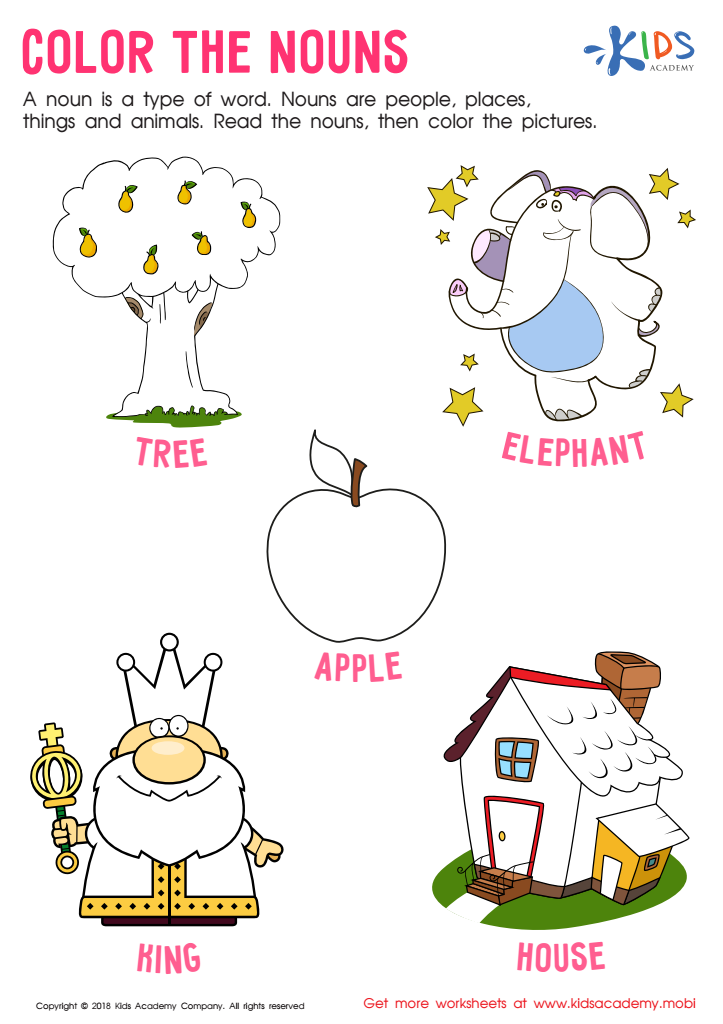
Color the Nouns Worksheet
 Assign to My Students
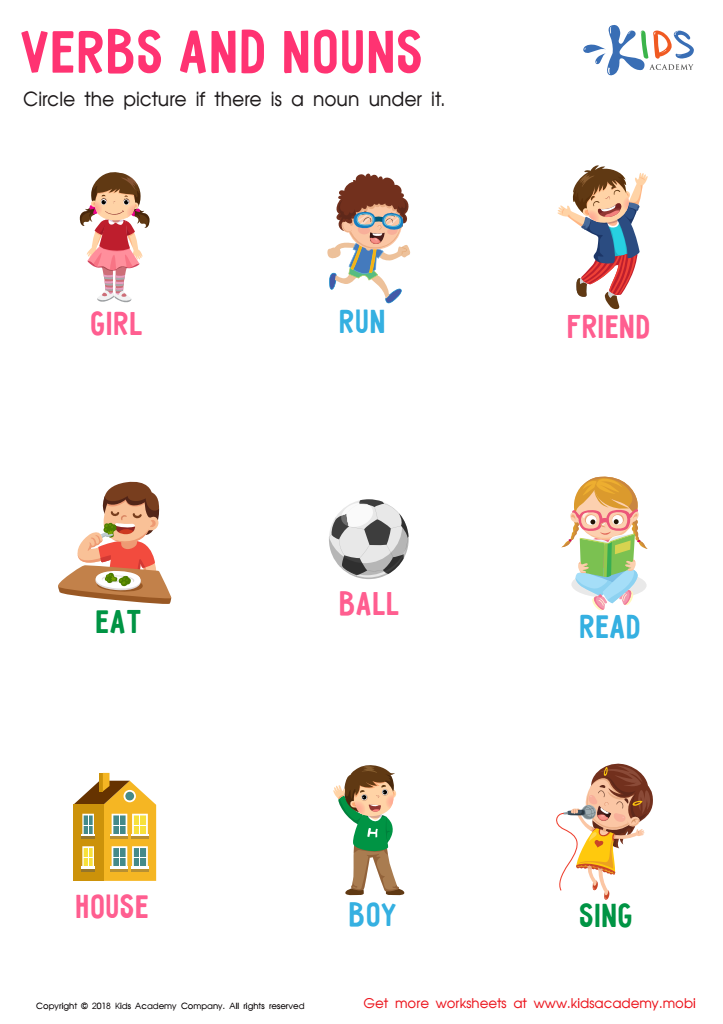
Verbs and Nouns Worksheet
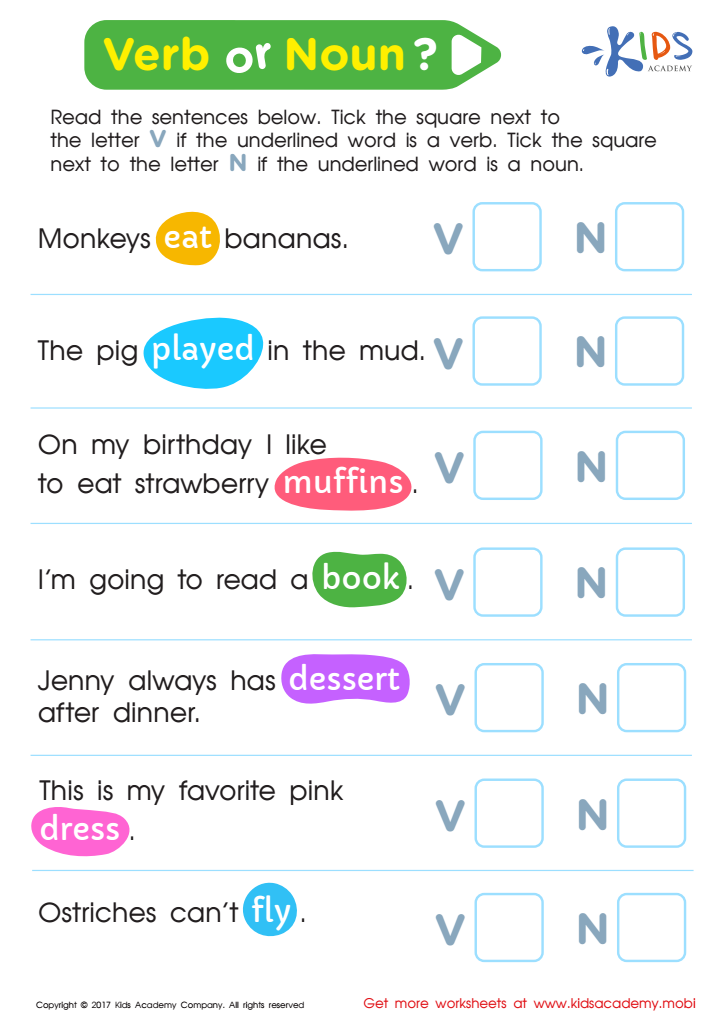
Verb or Noun Worksheet
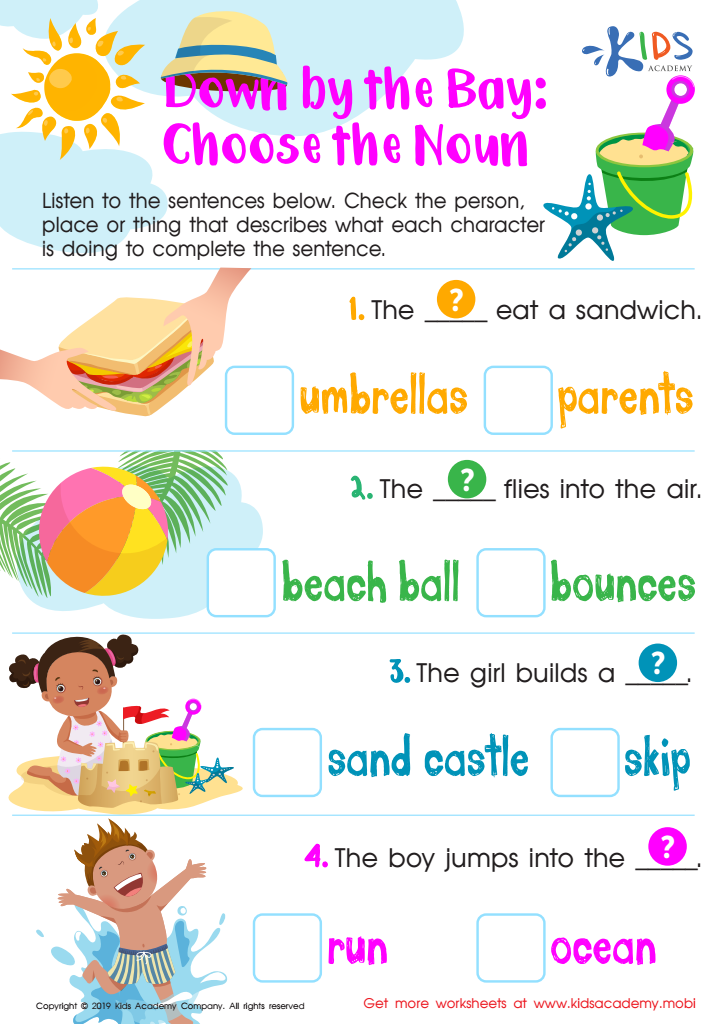
Down by the Bay: Choose the Noun Worksheet
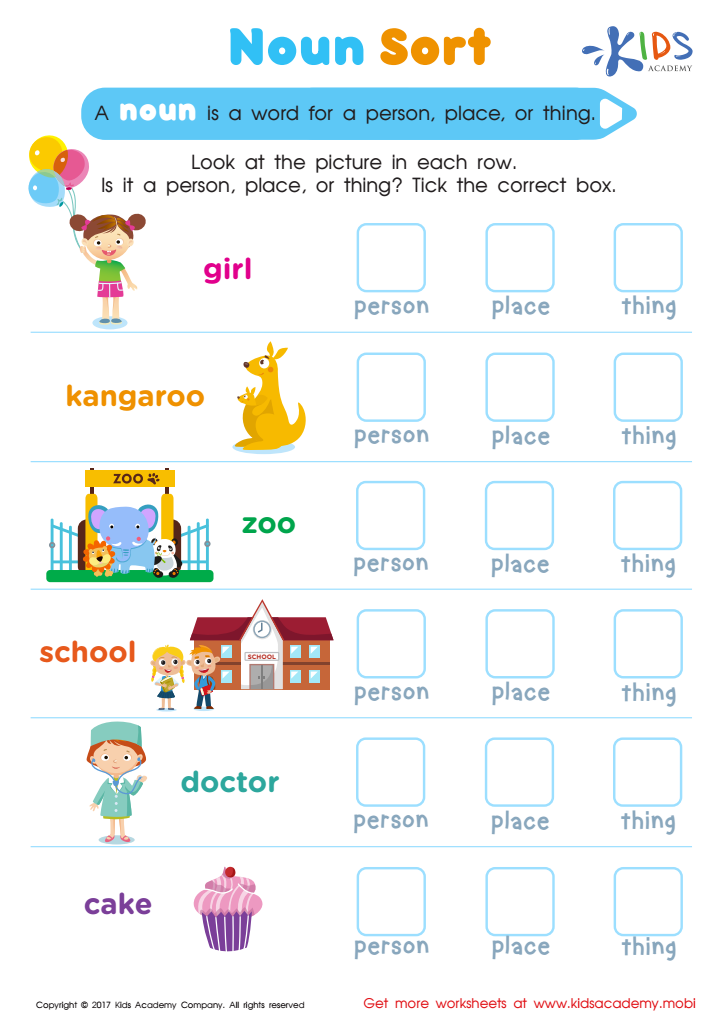
Noun Sort Printable








Noun identification is a fundamental skill in early childhood education that plays a crucial role in the overall language development of children aged 4-6. At this stage, children's brains are exceptionally receptive to learning new concepts, which makes it the perfect time to introduce the basic components of language.
Understanding nouns – words that name people, places, things, and ideas – helps children build their vocabulary and improves their ability to communicate effectively. This foundational skill enables them to construct simple sentences and eventually develop more complex language structures. For instance, recognizing nouns can help children follow and give instructions, tell stories, and engage in conversations, all of which are essential for successful social interaction.
For parents and teachers, focusing on noun identification means we're setting children up for academic success. Proficiency in language arts is related to reading comprehension, which in turn impacts learning across all subjects. Children who can easily identify nouns are likely to find reading and writing less daunting, fostering a positive attitude towards learning.
Moreover, early competence in language skills boosts a child’s confidence and self-esteem. When children can express themselves clearly, they are more likely to engage in class, participate in discussions, and cultivate a love for learning that transcends the early years of education. Therefore, parents and teachers should prioritize teaching noun identification to lay a strong foundation for lifelong language proficiency.








