Practice addition Worksheets for Ages 4-6
4 filtered results
-
From - To
Welcome to our Practice Addition Worksheets designed for children aged 4-6! Our engaging and vibrant worksheets help young learners build a solid foundation in basic addition skills. Each worksheet features fun scenarios and colorful illustrations that captivate children’s attention while promoting active learning. Perfect for home or classroom use, these worksheets cater to various learning styles, ensuring every child can grasp addition concepts enjoyably. As your little mathematician progresses, they will gain confidence in problem-solving and number recognition. Explore our collection today to support your child's journey in mastering addition with fun and interactive activities!
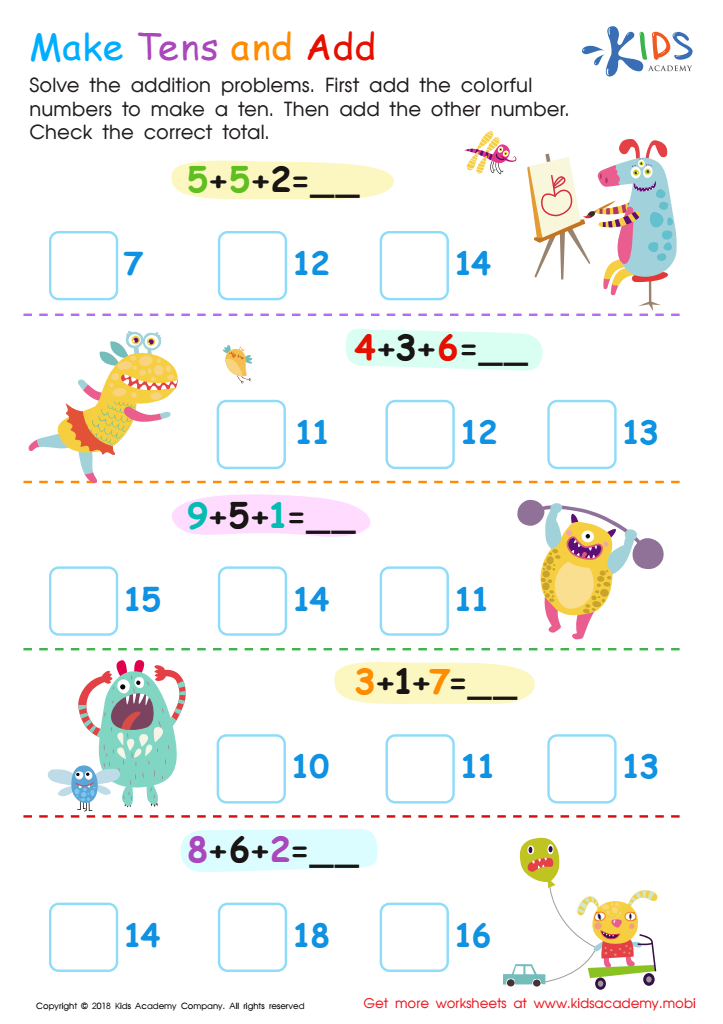
Make Tens and Add Worksheet
 Assign to My Students
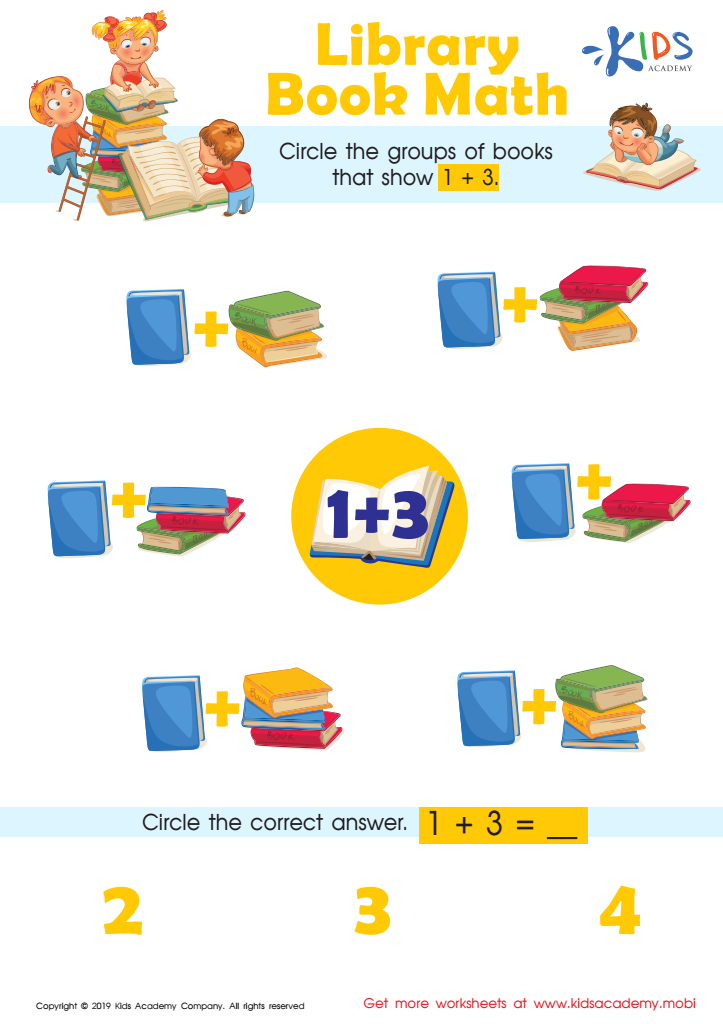
Library Book Math Worksheet







Practicing addition for children aged 4-6 is crucial for their cognitive and social development. During these early years, children's brains undergo significant growth, and introducing mathematical concepts lays the foundation for future learning. Mastery of basic addition helps children develop critical thinking and problem-solving skills, essential for navigating everyday situations.
Furthermore, understanding addition fosters confidence in young learners. When children grasp how to combine numbers, they gain a sense of achievement that fuels their love for learning. This excitement can lead to improved academic performance and a positive attitude towards mathematics.
Additionally, addition practice enhances fine motor skills through activities like counting with blocks or drawing number lines. It also provides parents and teachers opportunities to promote social skills by encouraging collaborative games that involve counting and adding together.
Moreover, early math skills have been linked to later success in school and beyond. Parents and teachers play a pivotal role in nurturing these skills by incorporating fun and interactive addition activities into play. Ultimately, prioritizing addition practice in the formative years sets children on a path to becoming confident, curious, and capable learners, ready to tackle more complex mathematical concepts as they progress.








