
Real-world application Worksheets for Ages 4-6
5 filtered results
Difficulty Level
Grade
Age
-
From - To
Subject
Activity
Standards
Explore our "Real-World Application Worksheets for Ages 4-6" designed to make learning fun and practical! Tailored for young minds, these worksheets connect everyday experiences with essential skills, enabling children to see the relevance of what they learn. Topics include counting, sorting, simple problem-solving, and more, all crafted to stimulate curiosity and critical thinking. Each worksheet is engaging and age-appropriate, encouraging toddlers and preschoolers to navigate real-life scenarios. Perfect for parents and educators, these resources promote hands-on activities and creative thinking. Empower your little ones as they discover the world around them, all while building a strong foundation for future learning!
Favorites
With answer key
Interactive
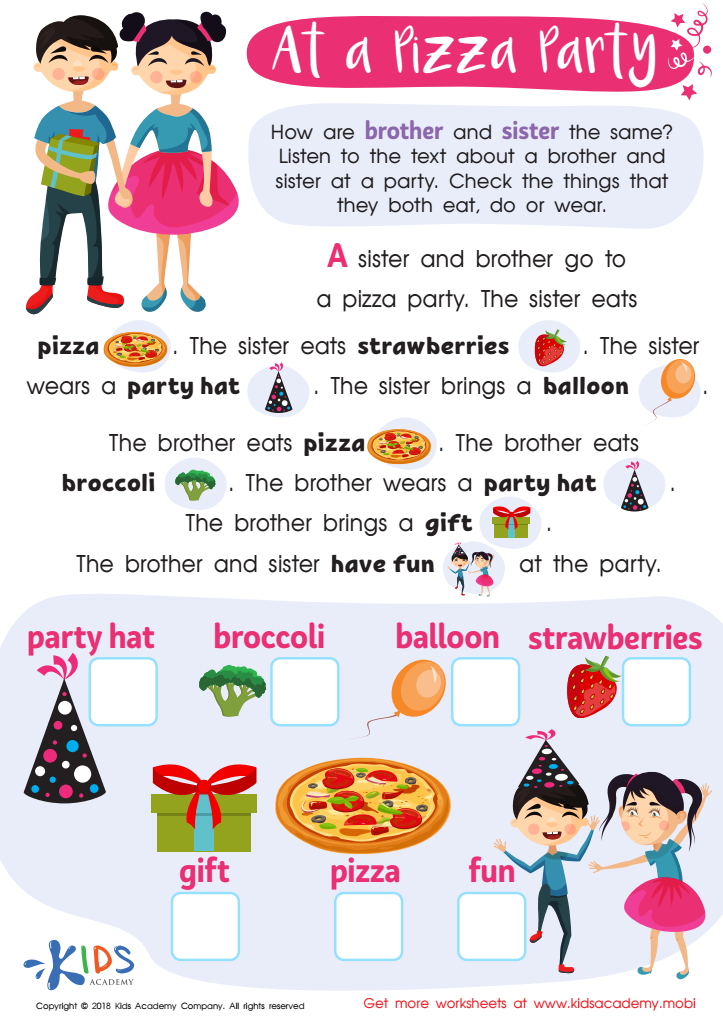
At a Pizza Party Worksheet
Parties are the best! Eating, playing, singing, dancing and gift-exchange - what's your child's fave part? In this worksheet, a brother and sister are eager to enjoy their party. Read the text to them and help them check what they do, eat, and wear. 80 words.
 Assign to My Students
At a Pizza Party Worksheet
Worksheet
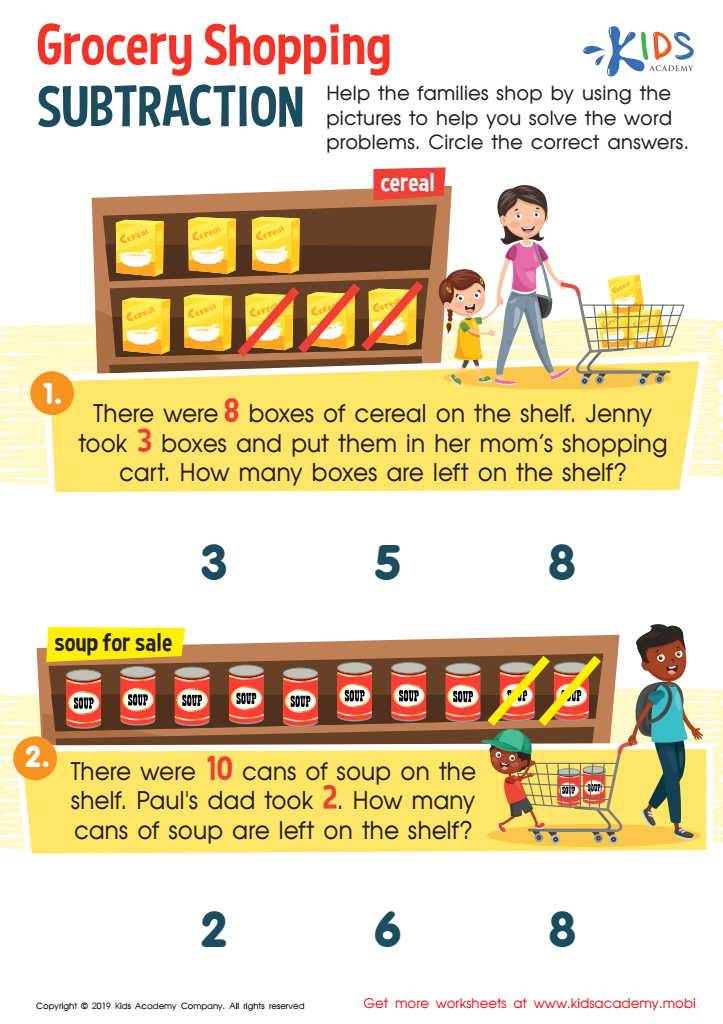
Grocery Shopping Subtraction Worksheet
Take your kids on a virtual grocery trip with this worksheet! Help them read the two word problems and use the pictures to solve them. Then, have them circle the correct answers. It's an easy, fun way to get kids comfortable with math while also getting them excited about grocery shopping!
Grocery Shopping Subtraction Worksheet
Worksheet
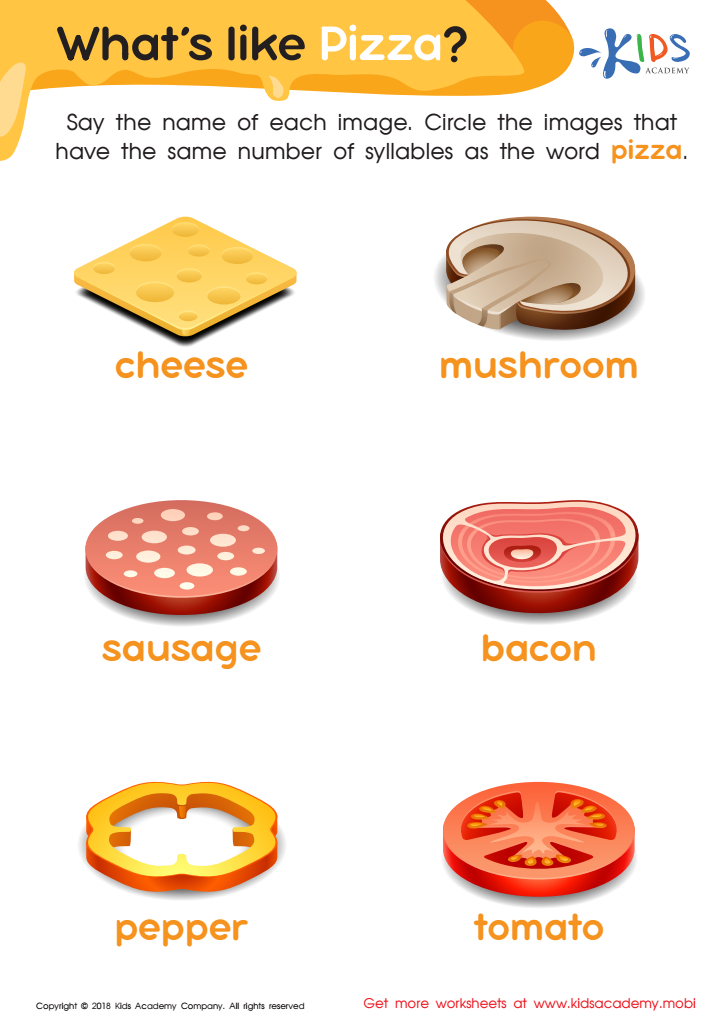
What's Like Pizza? Worksheet
Encourage your kids to exercise their minds with this pizza worksheet! Ask them to name the ingredients they like on their favourite pizzas. Then, help them circle the images that have the same number of syllables as 'pizza'. They'll have fun while learning too!
What's Like Pizza? Worksheet
Worksheet
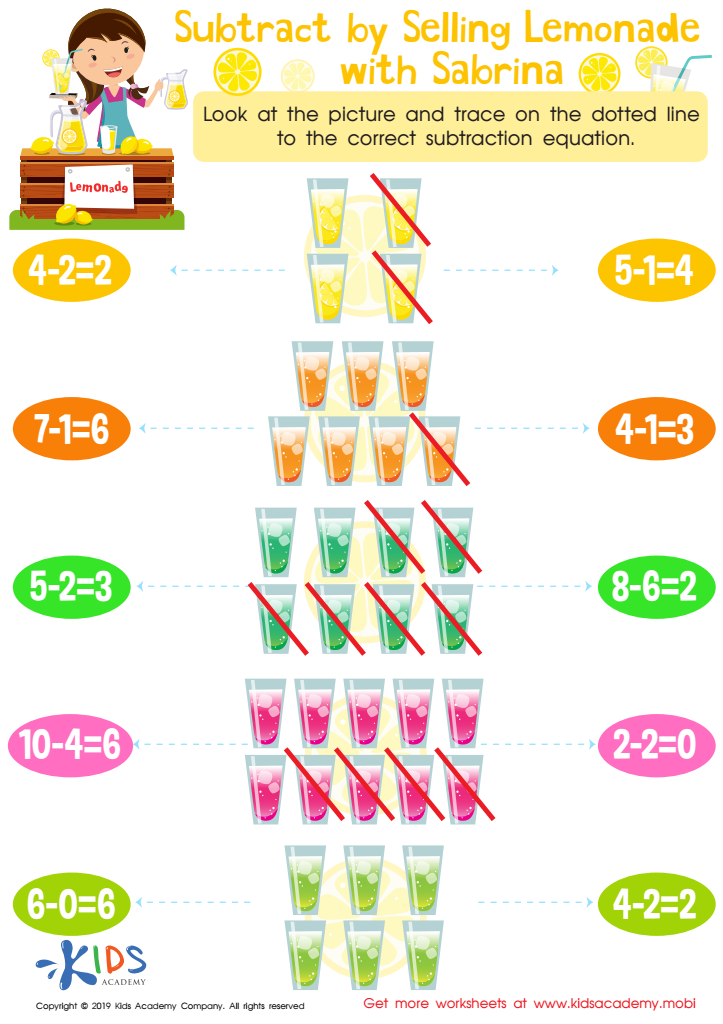
Subtract by Selling Lemonade with Sabrina Worksheet
Kids love running a lemonade stand! Help Sabrina serve up delicious lemonade while working on basic subtraction skills. Look at each picture and use the traceable lines to link them to the correct equations. Download this fun, easy PDF to help kids practice basic computation with success.
Subtract by Selling Lemonade with Sabrina Worksheet
Worksheet
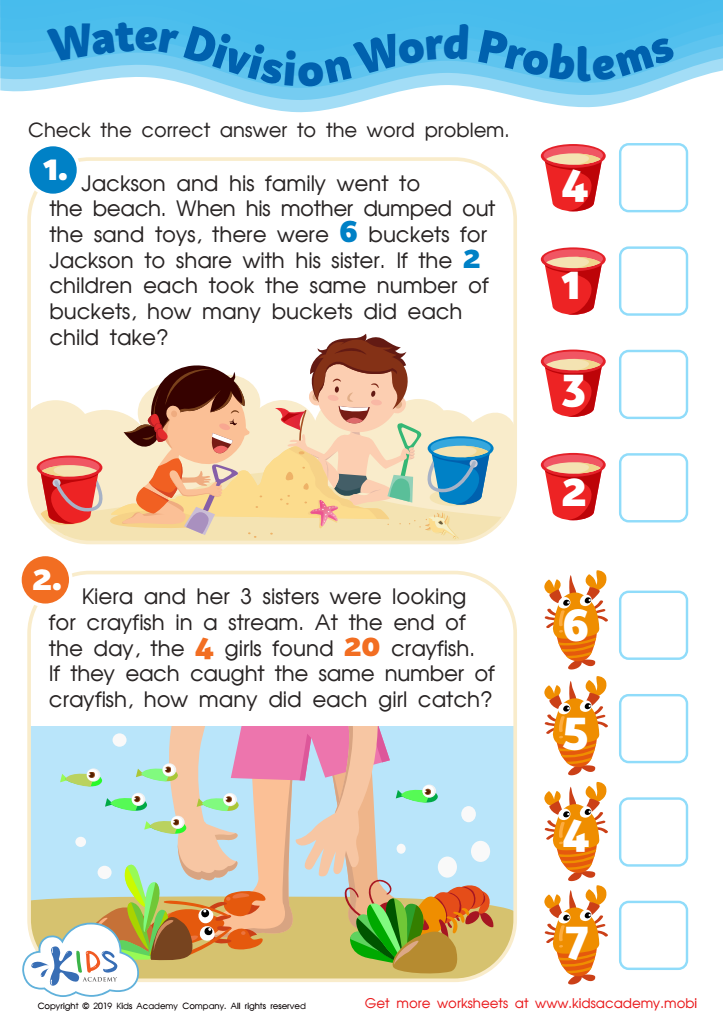
Water Division Word Problems Worksheet
Kids can sharpen their math skills with this fun PDF! They'll see pictures of friends at the beach, plus bold numbers and colorful pictures. All they need to do is read and understand the problem to find the answer - without even realizing they're doing division. A great way to make math enjoyable!
Water Division Word Problems Worksheet
Worksheet
Join Kids Academy for Free
Who is primarily going to use this learning content?








Real-world application is crucial for children aged 4-6 as it fosters authentic learning experiences and nurtures essential skills for future success. At this age, children are naturally curious and eager to explore their environment. When parents and teachers connect lessons to real-life situations, it promotes active engagement and deeper understanding. For instance, using familiar grocery store visits to teach counting or basic math concepts helps children recognize the importance of these skills in everyday life.
Moreover, real-world applications encourage critical thinking and problem-solving as young learners encounter authentic challenges. They learn to ask questions, explore solutions, and develop resilience when faced with frustrations, which are invaluable life skills.
In addition, such experiences enhance social skills. Children learn to communicate, collaborate, and resolve conflicts when engaging in play-based activities, whether it's in a classroom, home, or community setting. This approach fosters a sense of belonging and promotes civic awareness, as children understand their role within their families and communities.
Overall, real-world application makes learning relevant, exciting, and meaningful for young children. It lays a strong foundation for lifelong learning by encouraging curiosity, creativity, and a love for exploring the world around them. Parents and teachers must therefore prioritize these experiences in early education.








