
Recognizing numbers Worksheets for Ages 4-6
6 filtered results
Difficulty Level
Grade
Age
-
From - To
Subject
Activity
Standards
Introduce your child to the world of numbers with our "Recognizing Numbers Worksheets" designed for ages 4-6. These fun and educational worksheets help young learners identify and understand numbers through engaging activities and colorful illustrations. Perfect for preschool and kindergarten students, these resources develop essential math skills while boosting confidence and curiosity. Easily downloadable and printable, our worksheets make learning accessible from anywhere. Foster a strong mathematical foundation in your child today with our expertly crafted recognizing numbers worksheets, ensuring they build the skills needed for future success effortlessly. Download now and start the numeracy journey with a smile!
Favorites
With answer key
Interactive
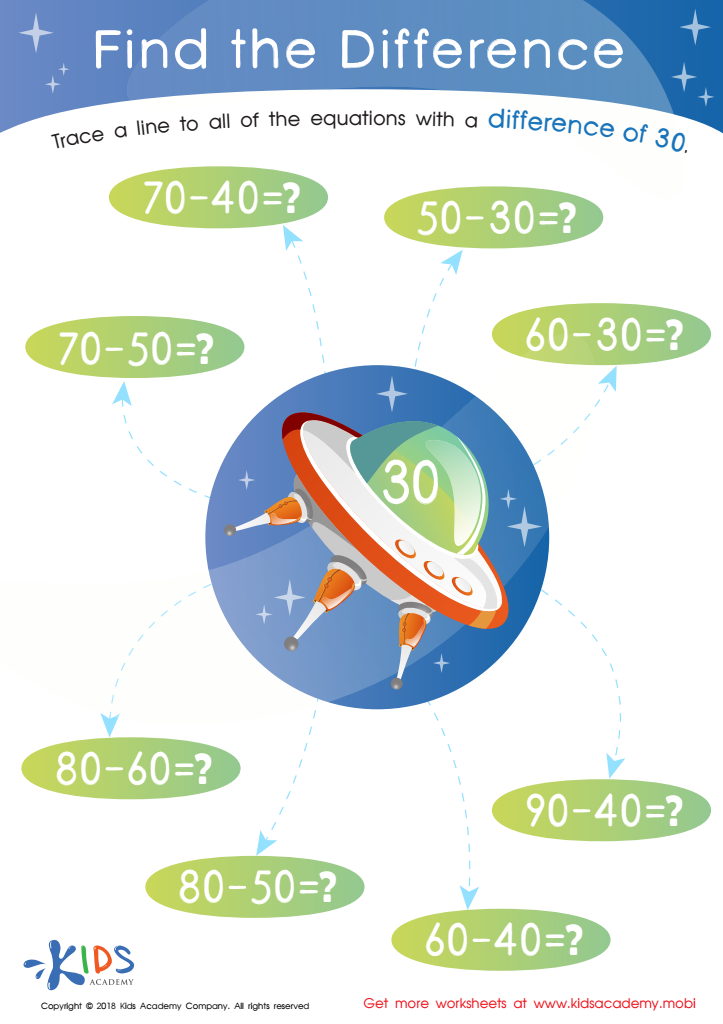
Find The Difference Worksheet
Kindergarteners need to work out subtraction problems and get the right answers. To help them, point to the alien ship with '30' in it on the worksheet. Get them to follow a line to the equations with a difference of 30. Solving these simple subtraction problems will give the answers.
 Assign to My Students
Find The Difference Worksheet
Worksheet
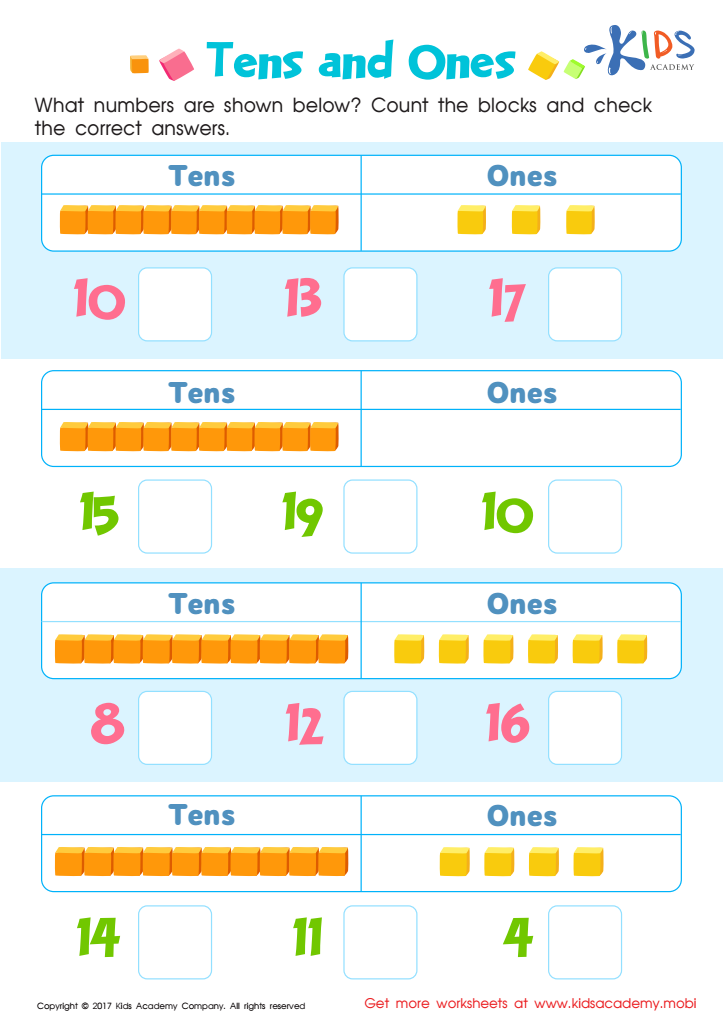
Tens and Ones Worksheet
Help your child make math fun with this worksheet! Count the blocks on both sides and enter the total in the box below the figures. This will help them overcome any math-related anxieties they might have and let them enjoy the learning process.
Tens and Ones Worksheet
Worksheet
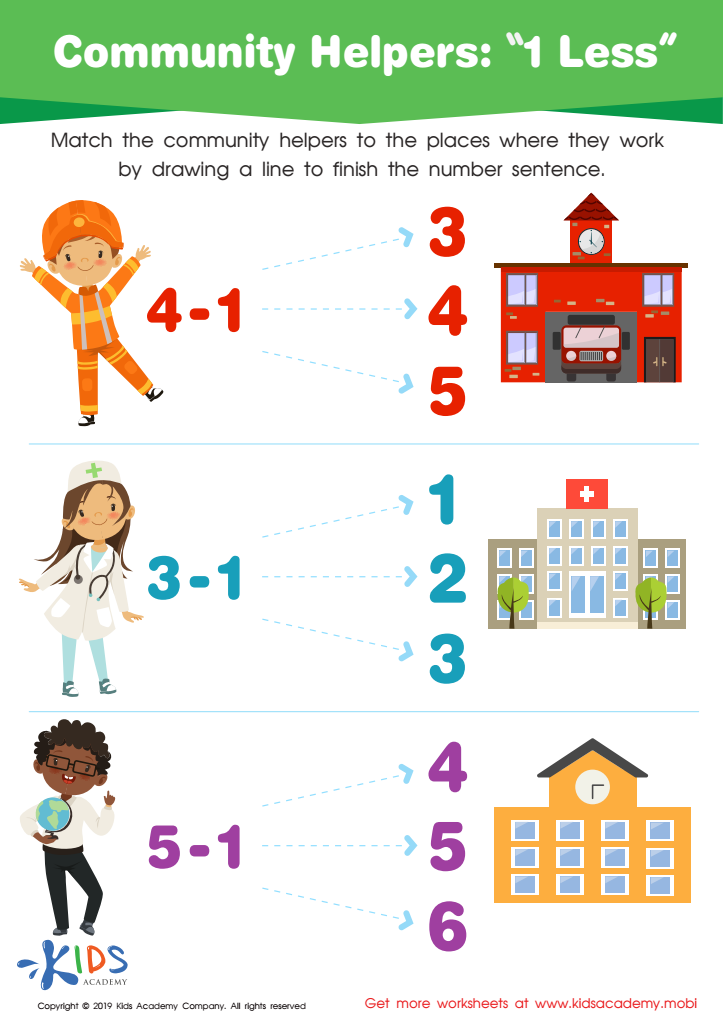
Community Helpers: 1 less Worksheet
Look at this worksheet with your child and ask them to identify the different community helpers. Match them to the places where they work by drawing a line to finish the number sentence. This helps them identify the people that help keep the community organized and running smoothly. Examples of community helpers include doctors, police officers, firefighters, teachers, etc.
Community Helpers: 1 less Worksheet
Worksheet
Join Kids Academy for Free
Who is primarily going to use this learning content?







Recognizing numbers at ages 4-6 is crucial for children’s cognitive development, laying the foundation for future math skills and overall academic success. At this stage, children are developing their numeracy skills, including counting, basic arithmetic, and number sense, which are essential for both their present and future learning.
Firstly, number recognition aids in the everyday understanding of the world around them. Whether it's telling time, identifying quantities, or understanding money, a solid grasp of numbers significantly influences daily activities. For instance, knowing the difference between 5 and 10 can help them share their toys more fairly or understand simple recipes during cooking.
Secondly, early number recognition supports the development of critical thinking and problem-solving skills. When children recognize and understand numbers, they can begin to grasp patterns, make predictions, and solve simple problems. This not only enhances their cognitive abilities but also boosts their confidence and eagerness to learn.
Thirdly, early exposure to numbers prepares children for formal education. Number recognition is often a prerequisite for kindergarten and the early grades, serving as the basis for more complex math topics they will encounter later on, such as addition, subtraction, and eventually multiplication and division.
In summary, recognizing numbers at an early age is paramount not just for academic readiness but also for practical life skills, fostering a well-rounded and capable young learner.








