
Rhyming skills development Worksheets for Ages 4-6
5 filtered results
Difficulty Level
Grade
Age
-
From - To
Subject
Activity
Standards
Boost your child's phonemic awareness with our engaging Rhyming Skills Development Worksheets for Ages 4-6. Tailored to early learners, these worksheets promote essential pre-reading skills through fun and interactive activities. Kids will learn to recognize and produce rhyming words, enhancing their ability to identify sound patterns in playful contexts. Perfect for preschoolers and kindergarteners, our printables are designed to make learning enjoyable and effective. Prepare your little one for successful reading with these expertly crafted educational tools that balance fun with foundational skill-building. Explore our collection today and set the stage for literacy success!
Favorites
With answer key
Interactive
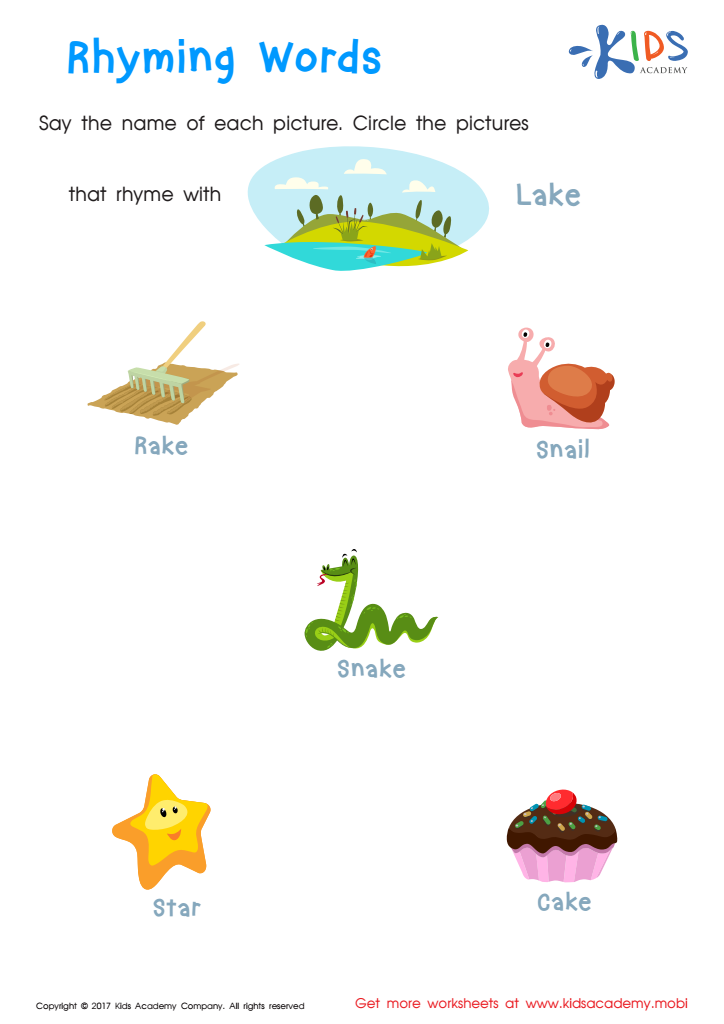
Rhyming Words Rhyming Worksheet
This worksheet is great for honing pre-reading skills. It helps kids make connections between pictures and written words, use problem-solving, and recognize sounds and words that rhyme. Have fun exploring rhyming words with your child, and they'll be rhyming in no time!
 Assign to My Students
Rhyming Words Rhyming Worksheet
Worksheet
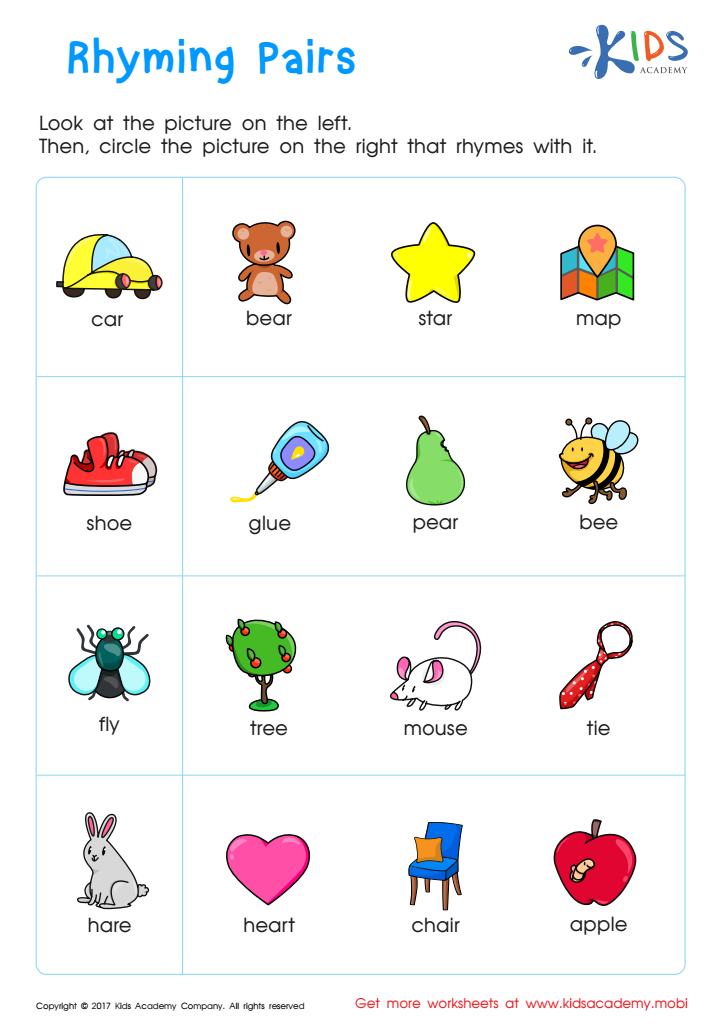
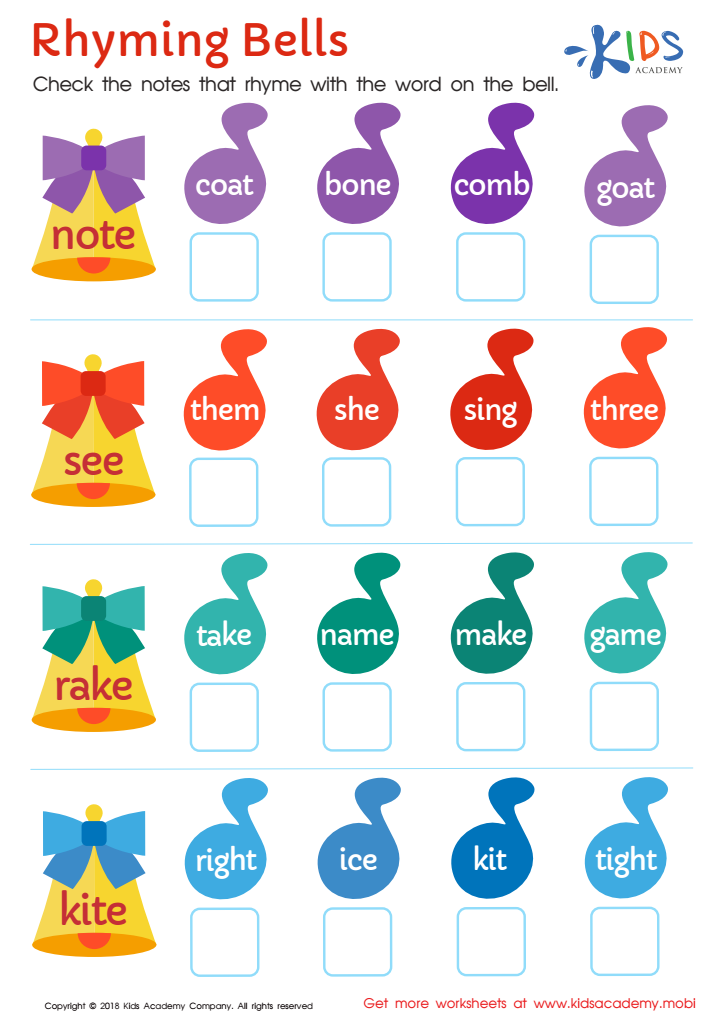
Rhyming Bells Worksheet
This printable worksheet helps students recognize rhyming words. Read a word, then pick the 4 words that rhyme. Look out for words with different spellings but same ending sound. It's a great exercise to improve understanding of rhyming words.
Rhyming Bells Worksheet
Worksheet
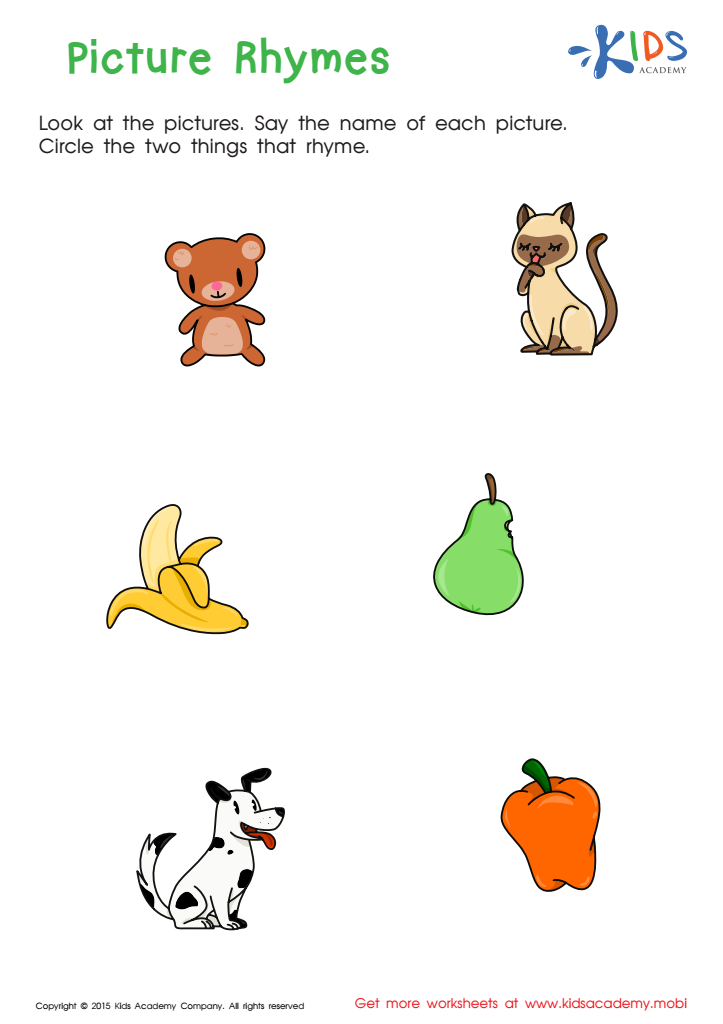
First Words: Picture Rhymes Worksheet
Rhyming helps kids understand language, read and write better. This printable worksheet boosts problem-solving and cognitive skills with vibrant pictures. It teaches kids to identify words, recognize rhymes, complete mental tasks and write words. An extra activity: show them how rhyming words share some of the same letters.
First Words: Picture Rhymes Worksheet
Worksheet
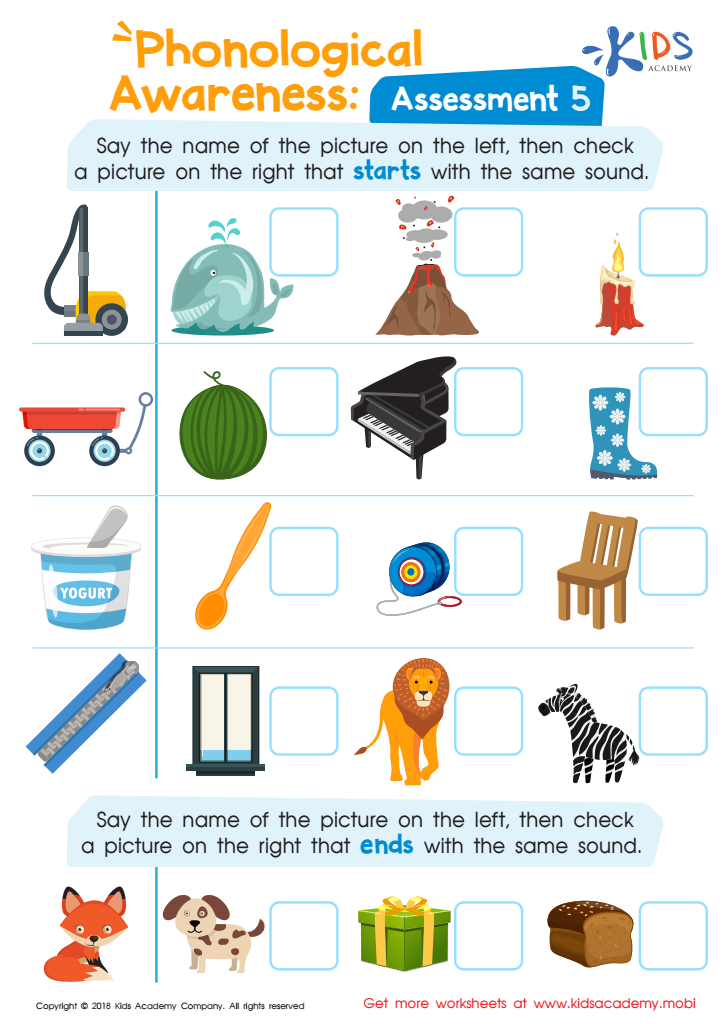
Phonological Awareness: Assessment 5 Worksheet
Repetition is key to success! This worksheet tests kids' ability to match beginning and ending sounds in words. Instruct them to say each word and listen closely to the sounds they make. Focus on the starting sounds for the first four pics, then the last one to hear ending sounds and find the right match!
Phonological Awareness: Assessment 5 Worksheet
Worksheet
Join Kids Academy for Free
Who is primarily going to use this learning content?








Rhyming skills are fundamental in early childhood development and provide numerous educational benefits for children aged 4-6. Parents and teachers should care deeply about nurturing these skills, as they lay the groundwork for strong literacy foundations. Rhyming helps children recognize sound patterns through playful and engaging activities, sensitizing their ears to the nuances of language. This auditory discrimination is critical, as it is closely tied to phonemic awareness—the understanding that words are composed of individual sounds—a skills necessary for successful reading and spelling.
Furthermore, rhyming promotes memory retention and enhances vocabulary. When children hear and produce rhyming words, they expand their lexicon and reinforce memory by making connections between sounds and meanings. Engaging in rhyming activities also often involves simple, repetitive text, which enhances anticipatory skills in story comprehension and predicts future literacy achievement.
Beyond cognitive benefits, rhyming activities foster social interaction and emotional growth. Singing rhyming songs or reciting rhyming poems with peers or adults helps build communication skills and collaborative social bonds, making learning both effective and enjoyable. In conclusion, rhyming is not just fun but a powerful tool that assists in the holistic development of a child, setting the stage for academic success and confident self-expression.








