Sentence structuring Worksheets for Ages 4-6
5 filtered results
-
From - To
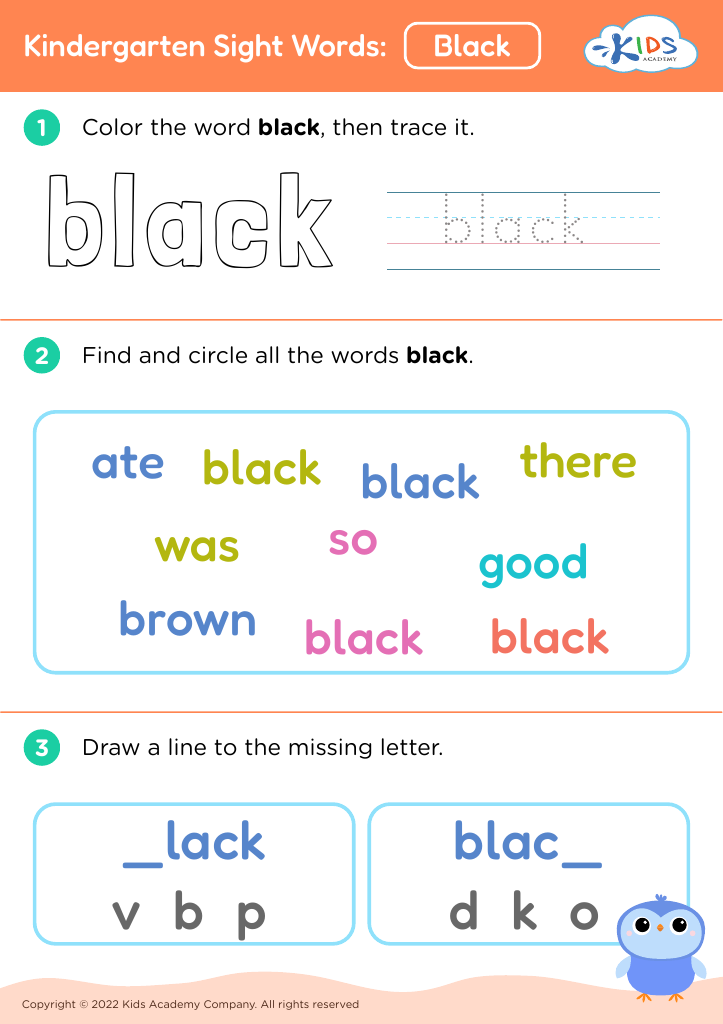
Discover engaging Sentence Structuring Worksheets tailored for ages 4-6 at Kids Academy. Our printable resources are designed to help young learners build essential language skills, cultivating their ability to form coherent and well-structured sentences. Fun and interactive exercises guide children in understanding core elements like nouns, verbs, and simple punctuation, all while boosting their creativity and confidence in writing. Perfect for both classroom use and homeschooling, these worksheets provide an excellent foundation for early literacy. Visit Kids Academy to empower your child’s sentence construction abilities, laying a strong groundwork for their future educational success.
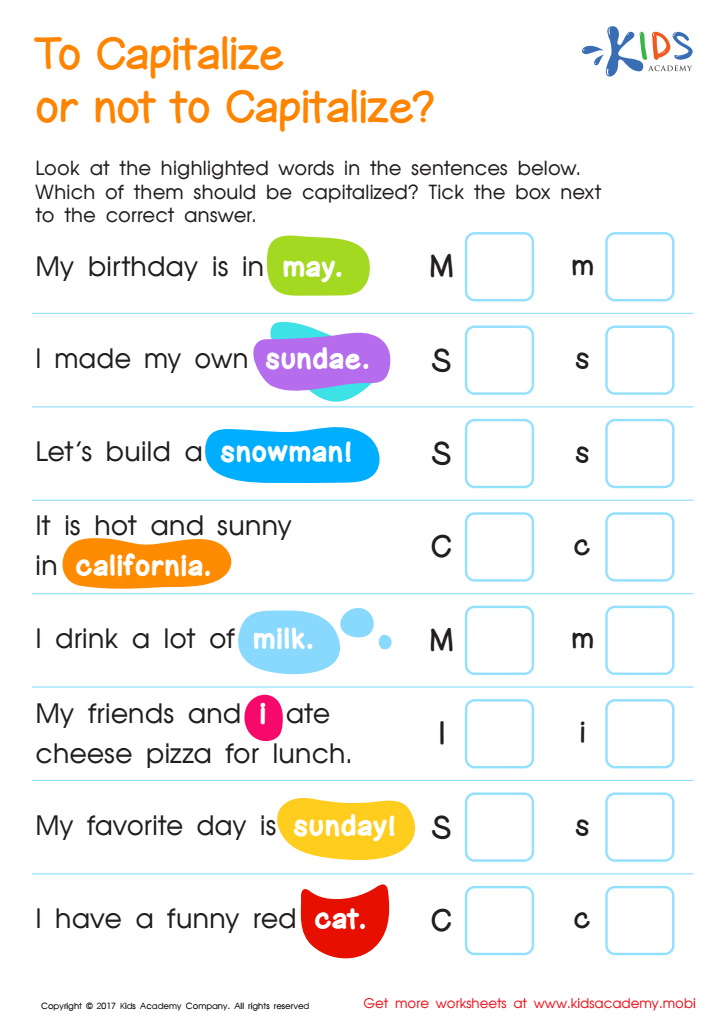
Capitalization: To Capitalize or Not? Printable
 Assign to My Students
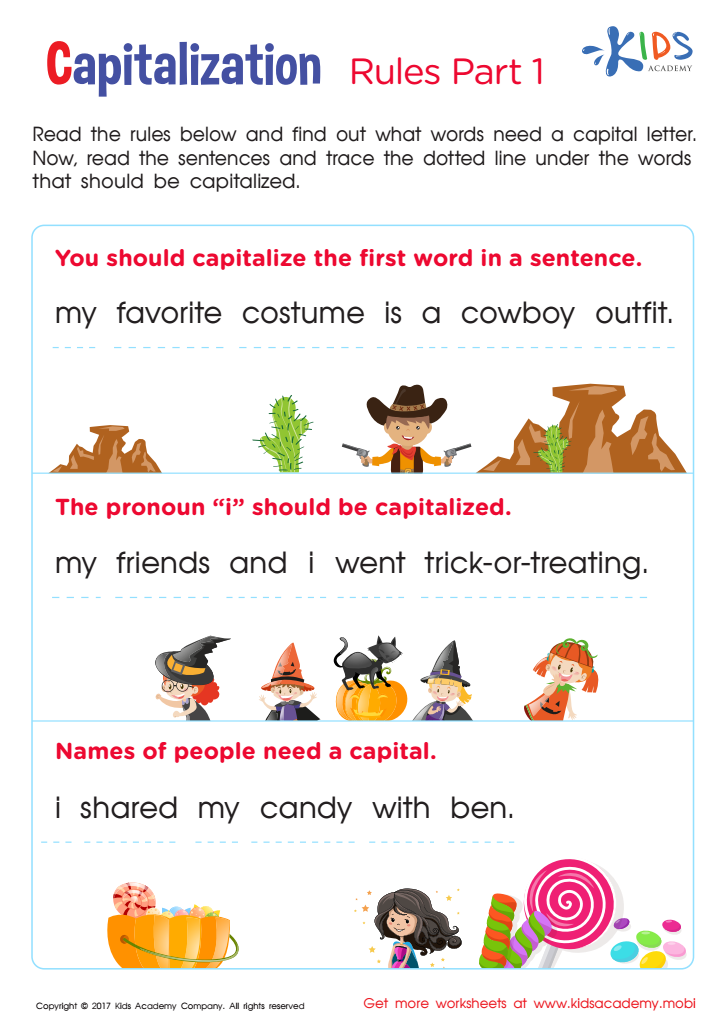
Capitalization Rules: Part 1 Worksheet
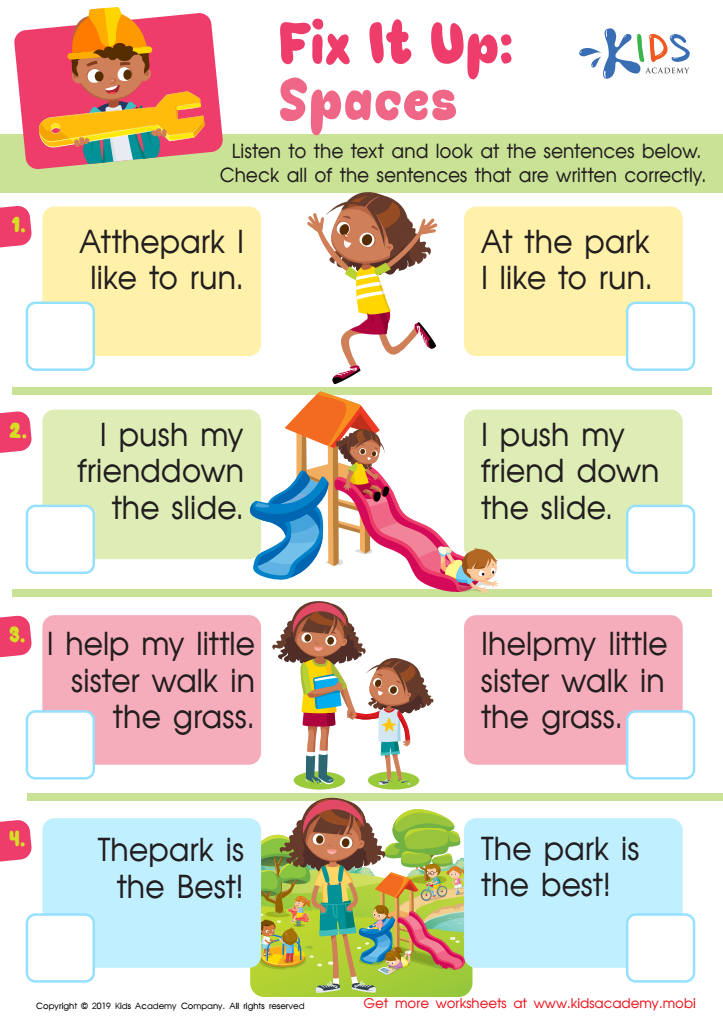
Fix Spaces Worksheet
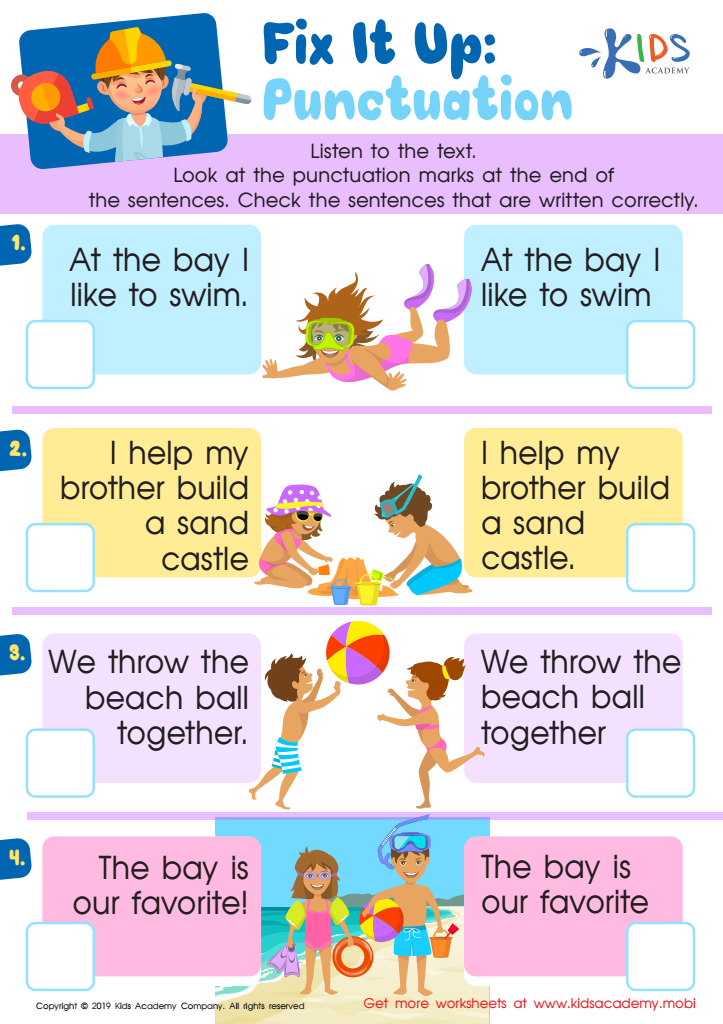
Fix Punctuation Worksheet



.jpg)



.jpg)
Sentence structuring is a fundamental aspect of language development for children ages 4-6, and it's crucial for both parents and teachers to pay close attention to it. At this developmental stage, children are rapidly expanding their vocabulary and beginning to form more complex thoughts. Proper sentence structuring helps them communicate these thoughts clearly and effectively.
Understanding sentence structure lays the foundation for literacy skills essential for future academic success. A child who can construct coherent sentences will find it easier to learn to read and write, as they can grasp the connections between words, phrases, and ideas. Good sentence structuring also aids cognitive development, enhancing a child's ability to think logically and solve problems.
Parents and teachers should care about this aspect because it directly impacts a child's self-expression and confidence. A child who can articulate their thoughts well is more likely to participate in class, engage socially, and feel understood. Poor sentence structuring can lead to misunderstandings and frustration, hampering both academic and social development.
By fostering good sentence structuring skills, parents and teachers equip children with the tools they need for effective communication, laying the groundwork for a lifetime of learning and interaction. Activities like reading together, playing word games, and encouraging storytelling are excellent ways to develop these skills.








