Sound differentiation Worksheets for Ages 4-6
3 filtered results
-
From - To
Discover our engaging Sound Differentiation Worksheets designed for children ages 4 to 6! These interactive resources are perfect for helping young learners identify and differentiate between various sounds, enhancing their phonemic awareness and early literacy skills. Each worksheet features fun activities, including matching sounds to pictures, sorting by sound, and playful exercises that make learning enjoyable. Perfect for home or classroom use, these worksheets support auditory skills essential for reading success. Foster a love for learning while building a solid foundation in sound recognition. Explore our collection today and let your child's linguistic journey begin!
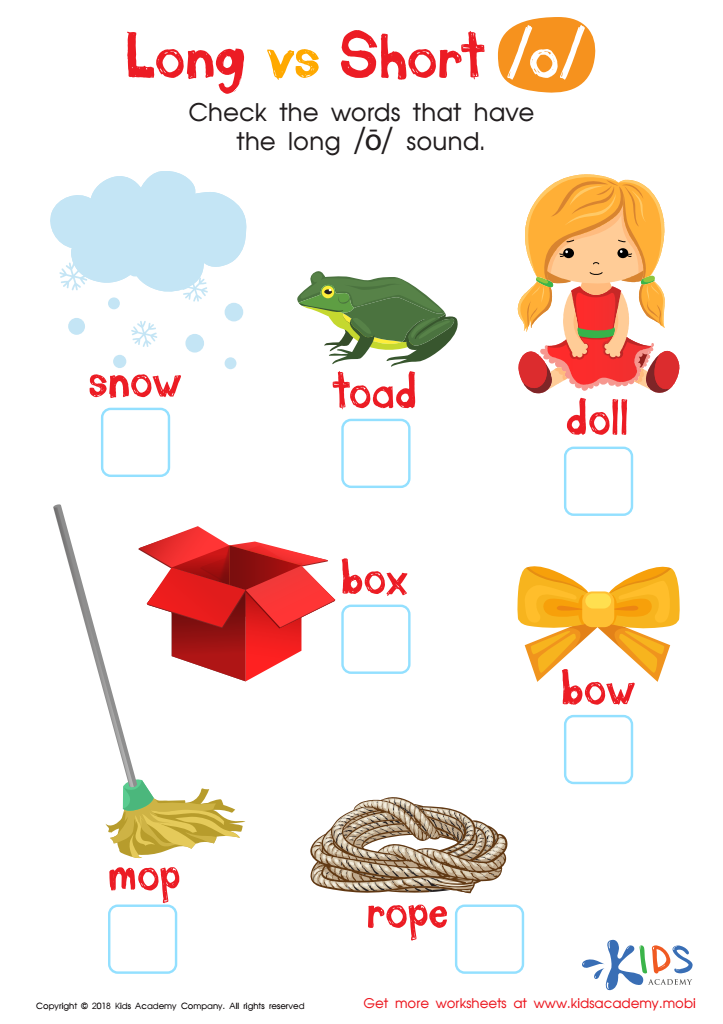
Long vs Short O Reading Worksheet
 Assign to My Students
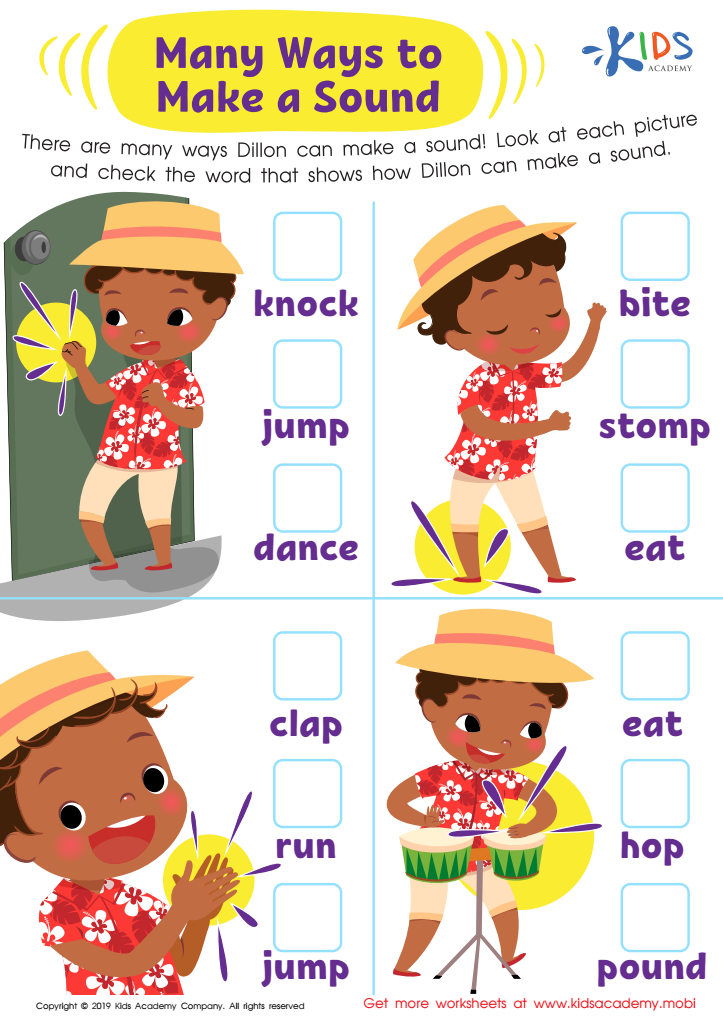
Many Ways to Make a Sound Worksheet
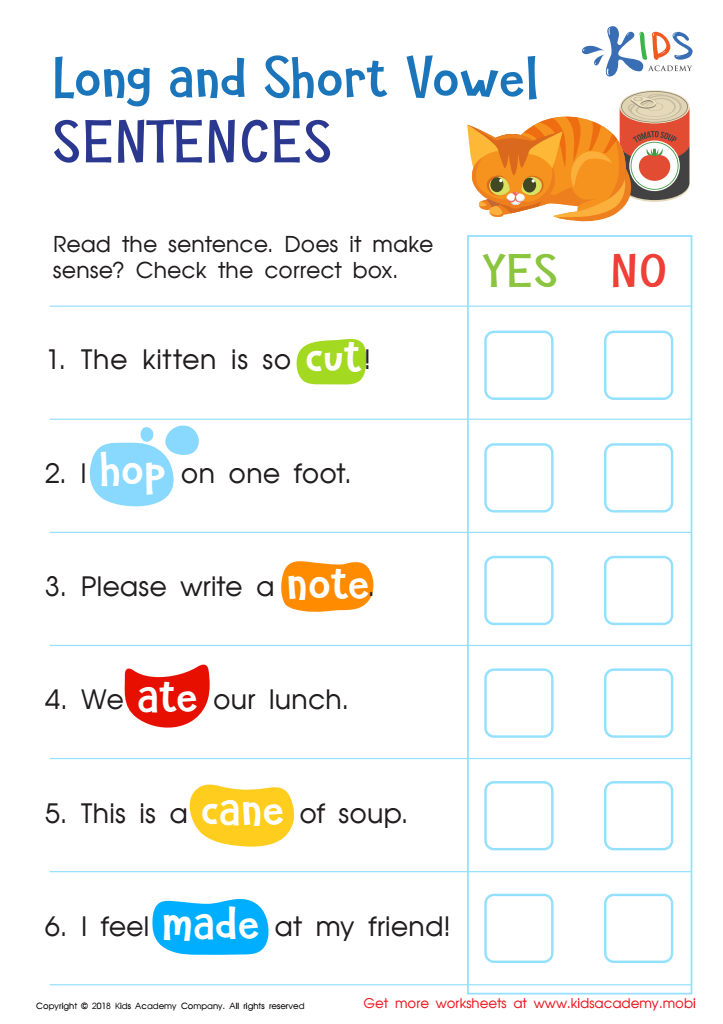
Long and Short Vowel Sentences: Assessment Worksheet






Sound differentiation is a fundamental literacy skill that plays a crucial role in the development of reading and writing abilities for children aged 4-6. During these formative years, children are introduced to the essential sounds of language, known as phonemes. Mastering sound differentiation helps children identify, manipulate, and blend these sounds to form words, laying the groundwork for reading fluency and comprehension.
Parents and teachers should care about sound differentiation because it is directly linked to a child’s success in literacy. Children who struggle with distinguishing between sounds may face challenges when learning to read, leading to frustration and a lack of confidence. By prioritizing sound differentiation, caregivers can support children in developing phonemic awareness, which is critical for tackling more complex literacy concepts later.
Engaging activities such as rhymes, songs, and games focused on sounds can encourage playful and meaningful learning opportunities. Additionally, a strong foundation in sound differentiation helps cultivate a lifelong love of reading, fostering creativity and imagination. Ultimately, emphasizing this skill not only enhances academic performance but also promotes effective communication, vital social skills, and emotional well-being as children grow. Investing in sound differentiation supports children’s holistic development and sets them on a positive educational path.








