Syllable identification Worksheets for Ages 4-6
3 filtered results
-
From - To
Discover our engaging Syllable Identification Worksheets designed specifically for children ages 4-6! These resources are perfect for young learners to develop essential phonetic skills through interactive and enjoyable activities. Our worksheets feature vibrant illustrations, simple exercises, and age-appropriate challenges that make learning about syllables both fun and effective. Children will practice syllable segmentation and blending, enhancing their reading and speaking abilities while building foundational literacy skills. Whether for classroom use or home practice, our worksheets are versatile tools that support early childhood education. Foster a love for language in your child today with our captivating syllable identification resources!
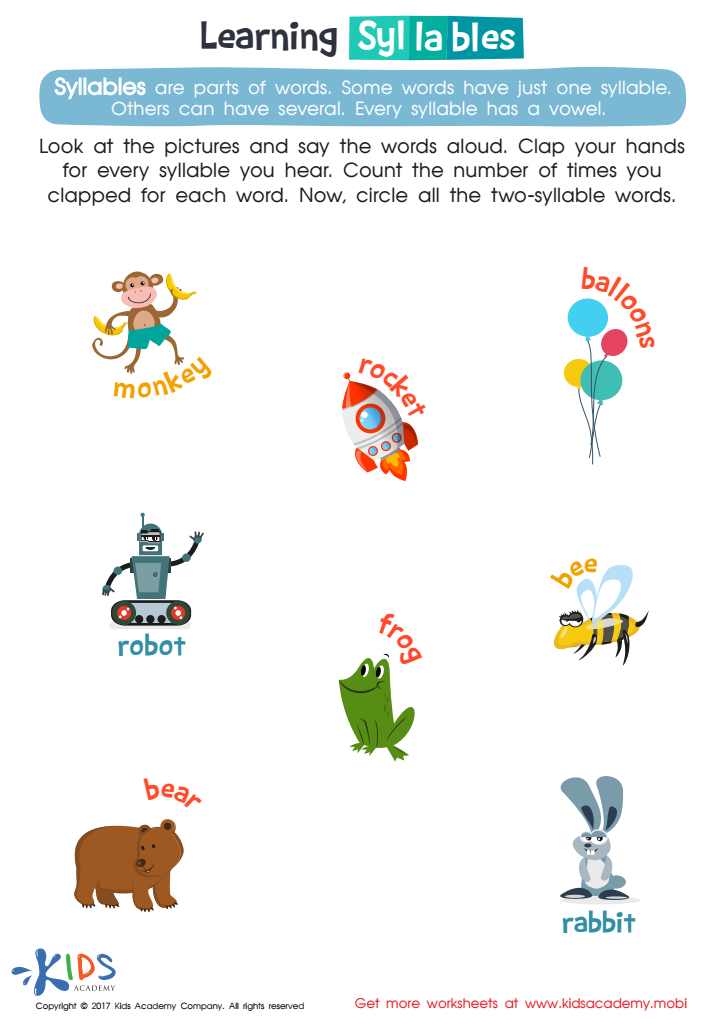
Learning Syllables Word Structure Worksheet
 Assign to My Students
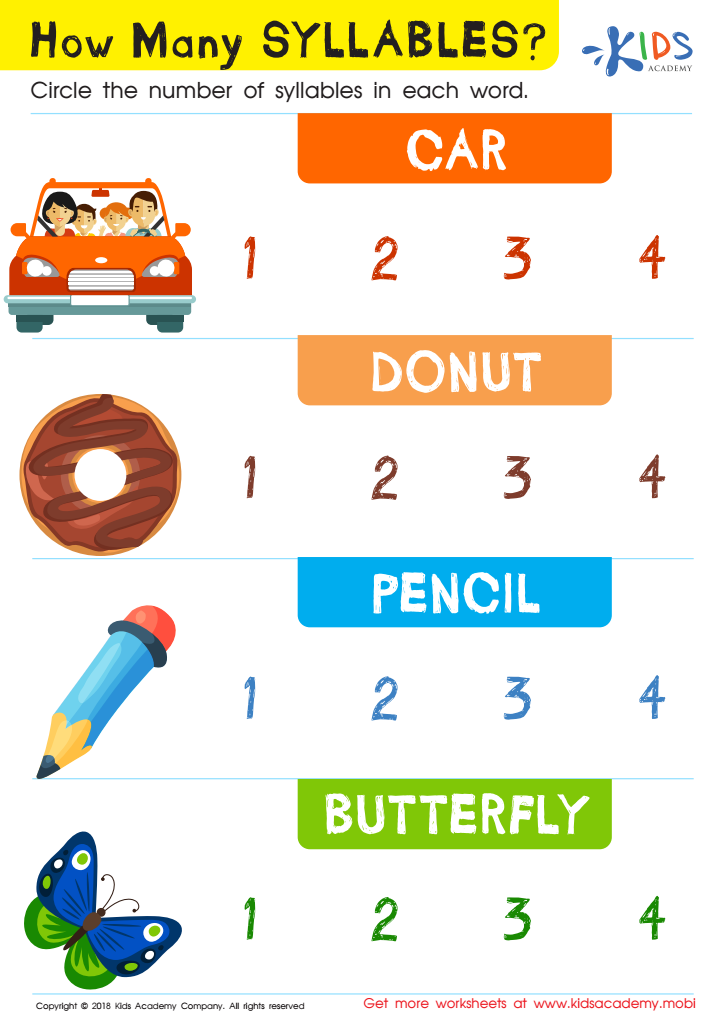
How Many Syllables? Worksheet
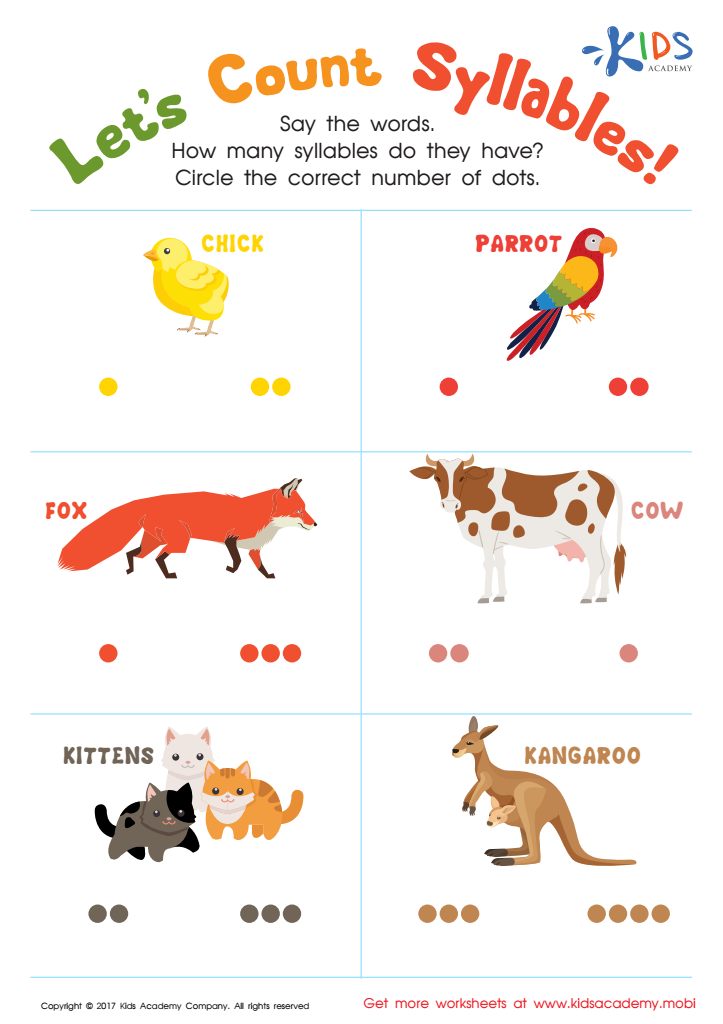
Lets Count Syllables Worksheet







Syllable identification is a crucial skill for young learners aged 4-6 as it lays the foundation for literacy development. Understanding syllables empowers children to decode words, enhancing their reading abilities. When children recognize syllables, they can segment and blend sounds, which improves vocabulary and promotes phonemic awareness—a critical precursor to reading success.
Parents and teachers should care about syllable identification because it cultivates essential language skills. During this developmental stage, children are increasingly exposed to linguistic structures, and solidifying their understanding of syllables can aid spelling, pronunciation, and comprehension. Engaging in syllable-related activities makes learning interactive and enjoyable, fostering a love for language and reading.
Furthermore, mastery of syllable identification can support children in their writing endeavors. It aids in breaking down larger words into manageable parts, ensuring that children feel more confident in their academic pursuits. As vocabulary expands and children become proficient readers, they are more likely to succeed in school and develop communication skills needed for lifelong learning.
In summary, prioritizing syllable identification in early education not only enhances reading and writing skills but also promotes cognitive development and self-confidence in young learners.








