Time-telling skills Worksheets for Ages 4-6
5 filtered results
-
From - To
Unlock your child's potential with our engaging Time-Telling Skills Worksheets for ages 4 to 6! Designed to make learning fun and interactive, these worksheets incorporate colorful visuals and captivating activities that help your little ones understand how to read clocks and express time. Our carefully crafted exercises support early math skills while promoting cognitive development. Perfect for use at home or in the classroom, these resources provide a solid foundation in time-telling that can last a lifetime. Help your child develop essential life skills today with our user-friendly worksheets and watch their confidence grow as they master the concept of time!
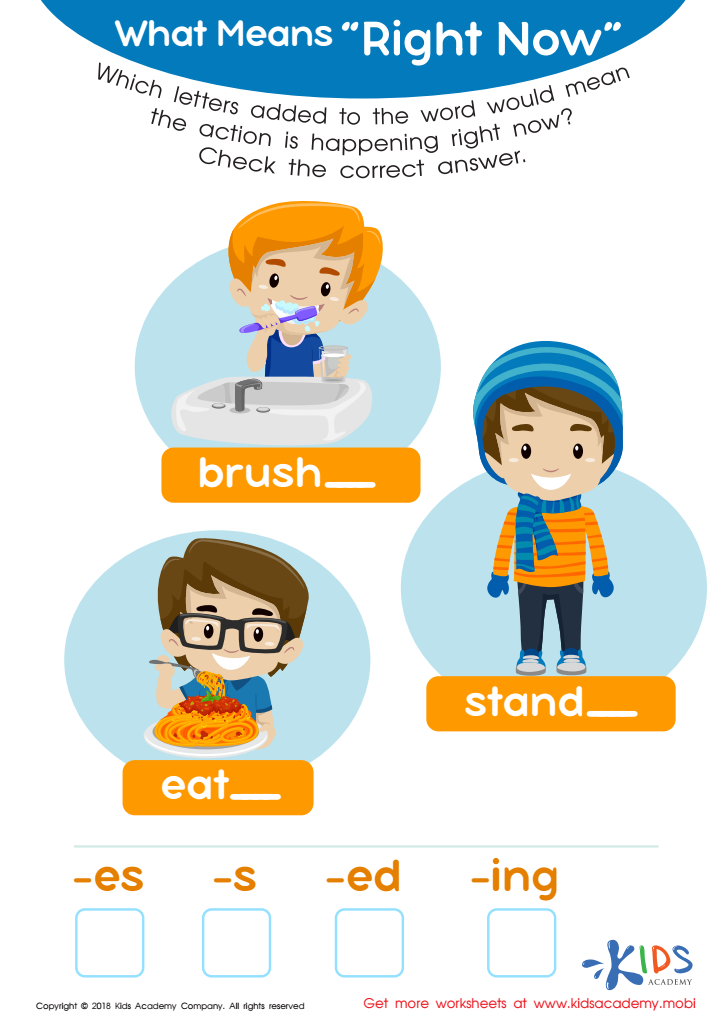
What Means "Right Now" Worksheet
 Assign to My Students
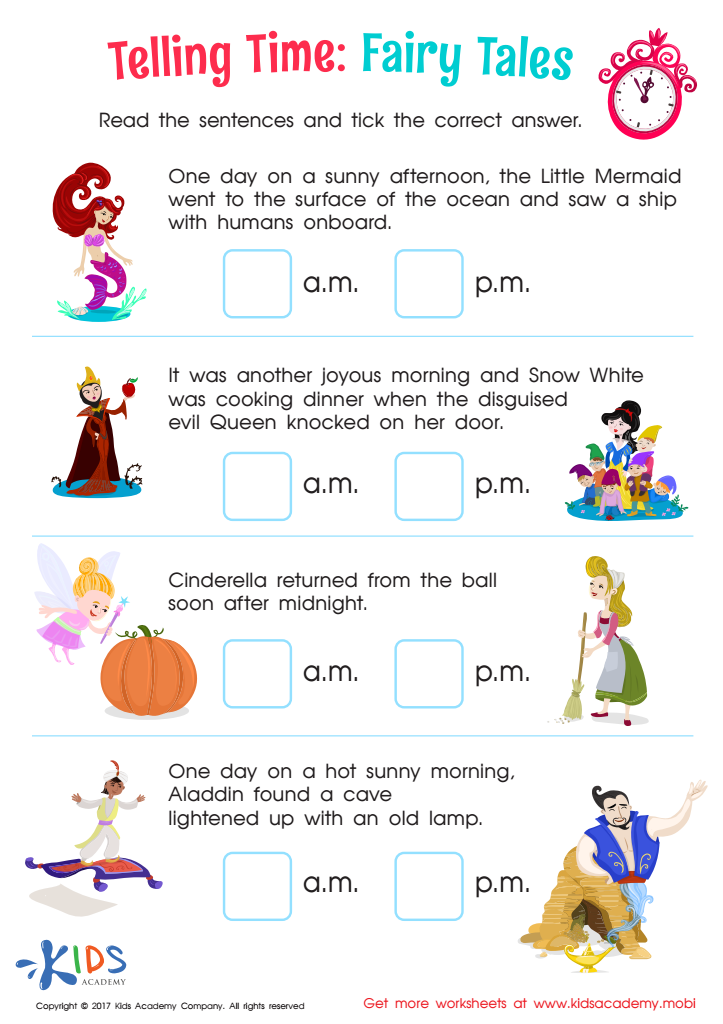
Telling Time: Fairy Tales Worksheet
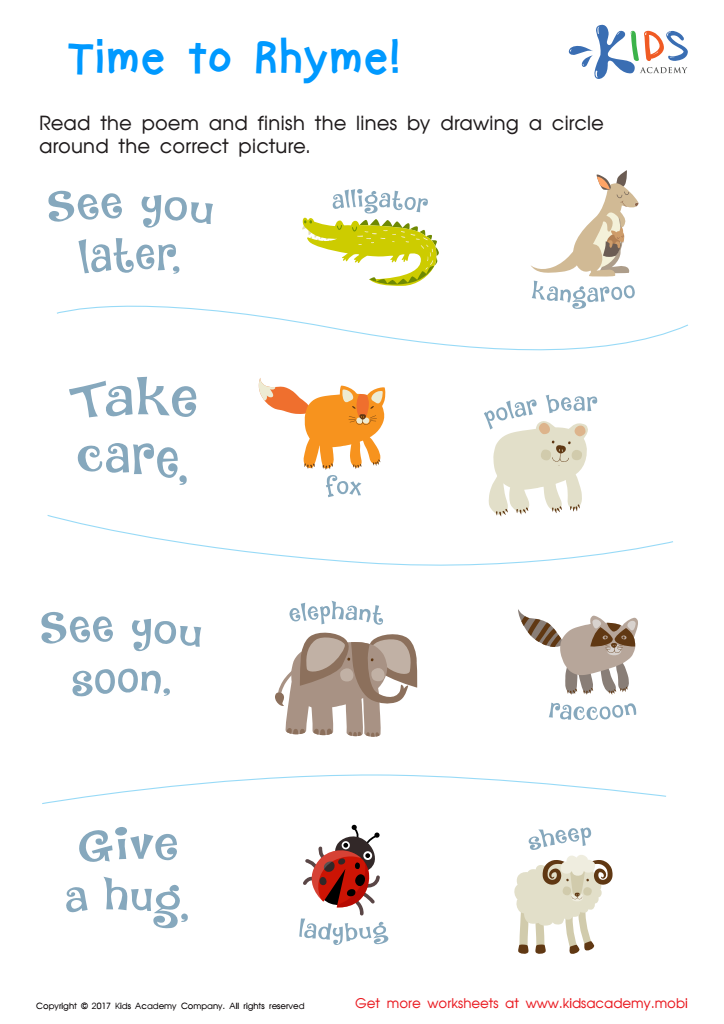
Time to Rhyme Rhyming Worksheet
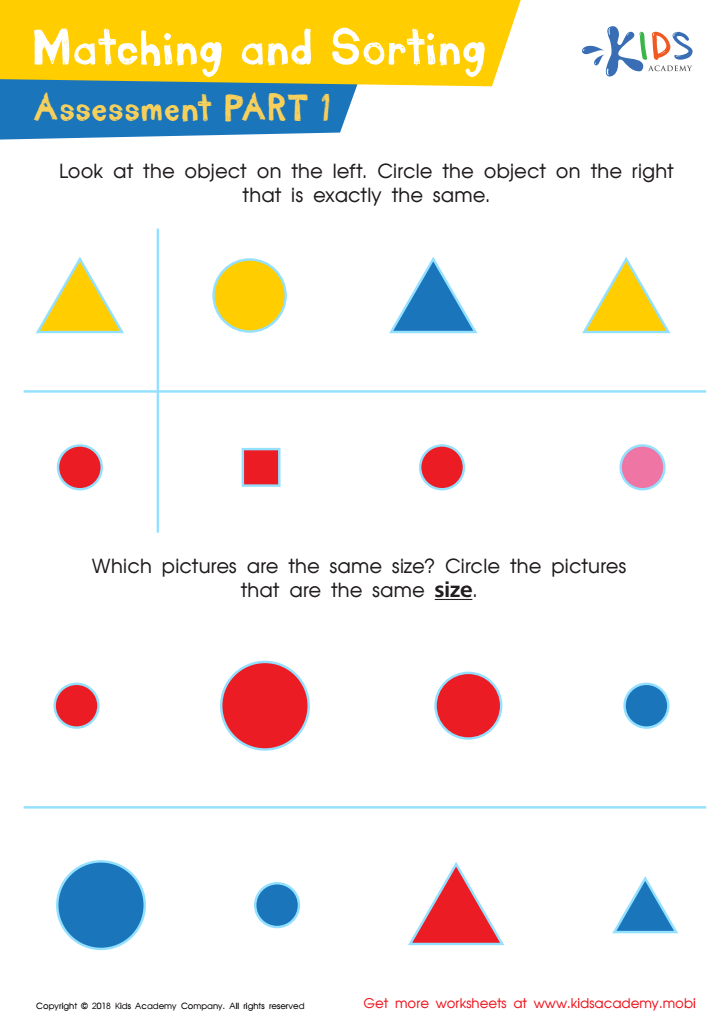
Matching and Sorting for Kindergarten: Assessment 1 Worksheet






Time-telling skills are vital for children ages 4-6 as they lay the foundation for various cognitive, emotional, and social development areas. In early childhood, understanding the concept of time helps children develop a sense of routine and predictability, which contributes significantly to their feelings of security. It enhances their ability to follow schedules and understand transitions throughout the day, fostering essential self-regulation skills.
Moreover, learning to tell time encourages mathematical skill development. It introduces children to basic concepts of counting, number recognition, and intervals, laying the groundwork for future mathematical reasoning. Furthermore, as children start school, time-telling becomes increasingly crucial for managing their own learning, engaging in classroom activities, and developing organizational skills.
Socially and emotionally, grasping time concepts helps children understand the relationship between events, future planning, and patience. For instance, waiting for a birthday or understanding when friends will come to play enhances their communication and interpersonal skills. By supporting the development of time-telling skills, parents and teachers are equipping young learners with the tools to navigate their daily lives more confidently and independently, fostering a sense of autonomy that will benefit them well beyond early childhood.








