Understanding chess rules Worksheets for Ages 4-6
7 filtered results
-
From - To
Introduce young minds to the exciting world of chess with our "Understanding Chess Rules Worksheets for Ages 4-6." Tailored specifically for early learners, these engaging worksheets simplify the basic rules of chess through fun, interactive activities. With vibrant illustrations and easy-to-follow instructions, your child will quickly grasp game fundamentals, such as piece movements, basic strategies, and essential rules. Perfect for fostering critical thinking, problem-solving skills, and cognitive development, these worksheets provide a solid foundation for young chess enthusiasts. Spark your child's interest in chess and watch their skills grow as they master the game, one worksheet at a time.
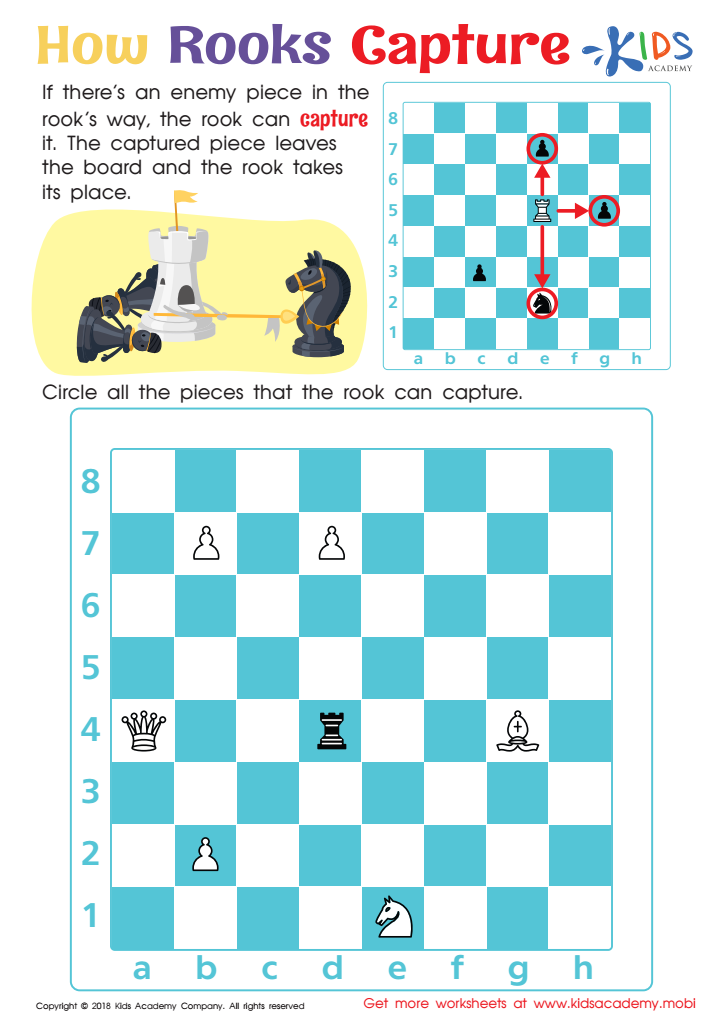
How Rooks Capture Worksheet
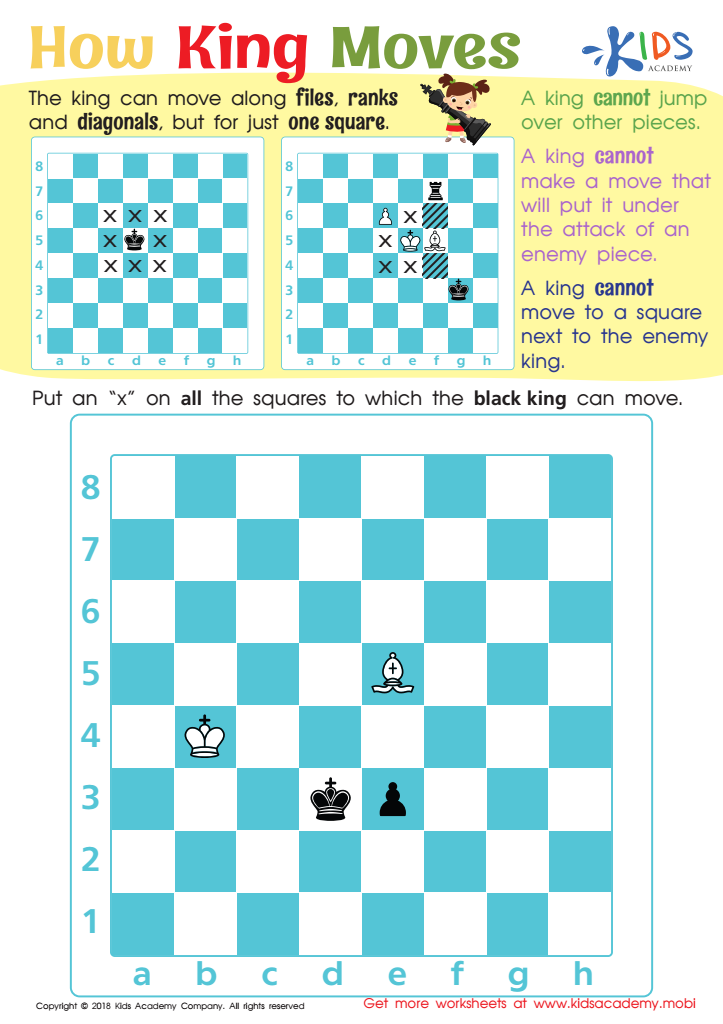
How King Moves Worksheet
 Assign to My Students
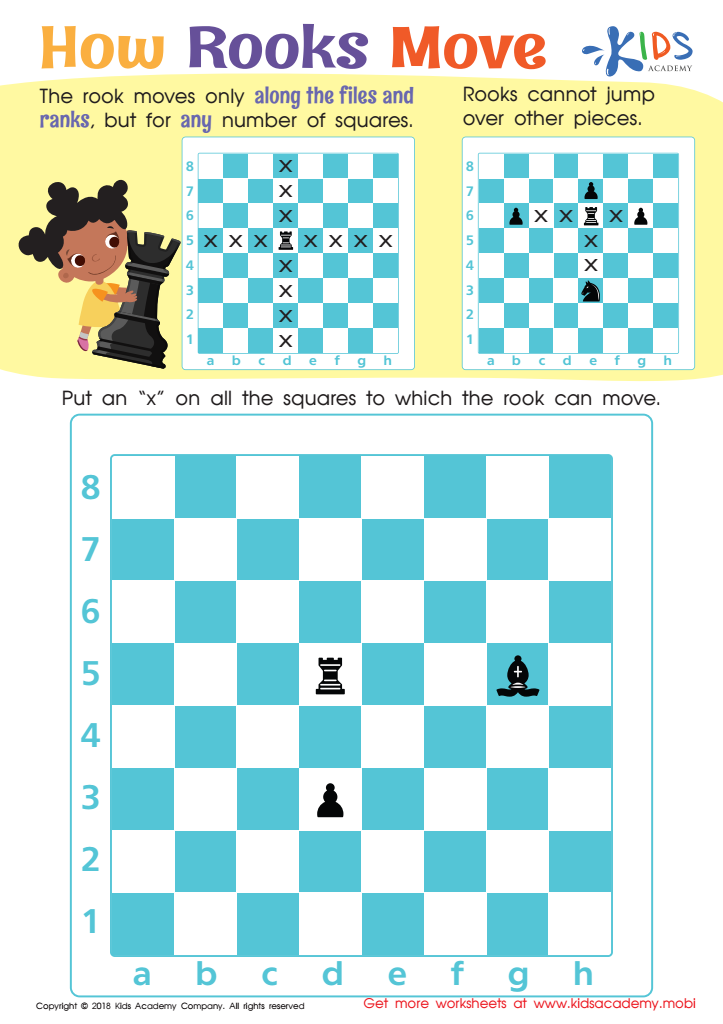
How Rooks Move Worksheet
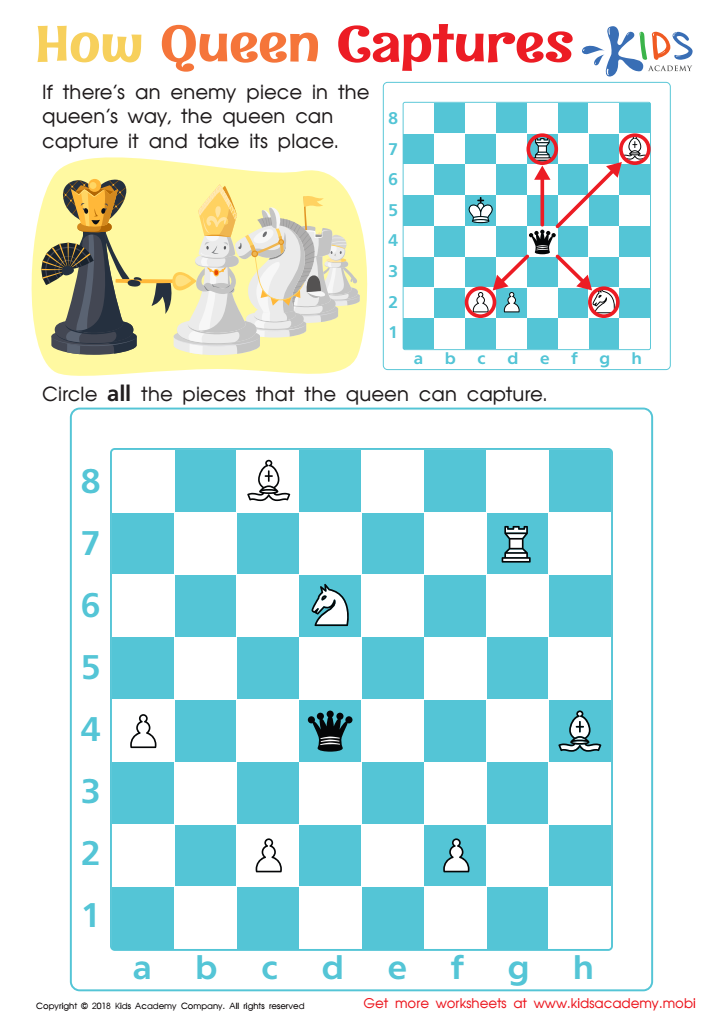
How Queen Captures Worksheet
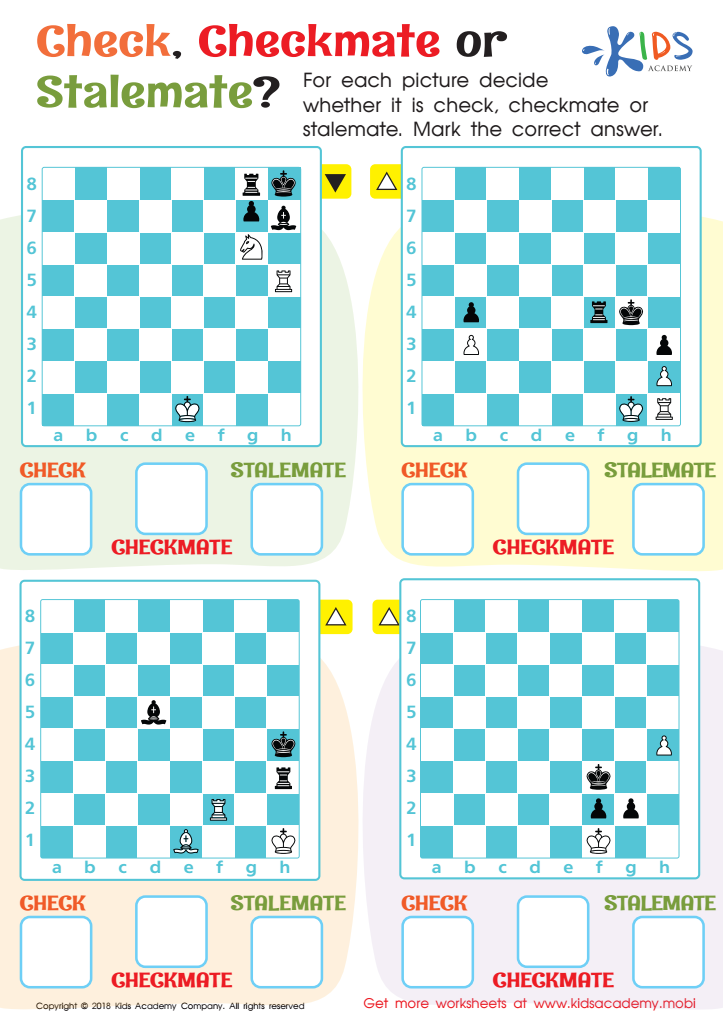
Check. Checkmate or Stalemate? Worksheet
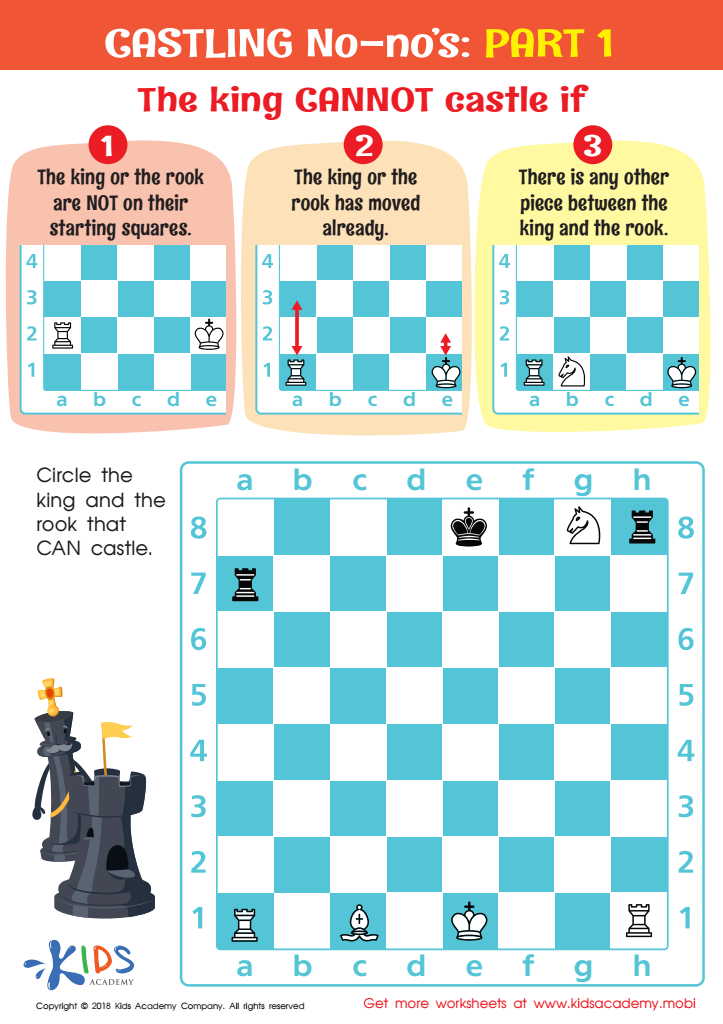
Castling No–no's: Part 1 Worksheet
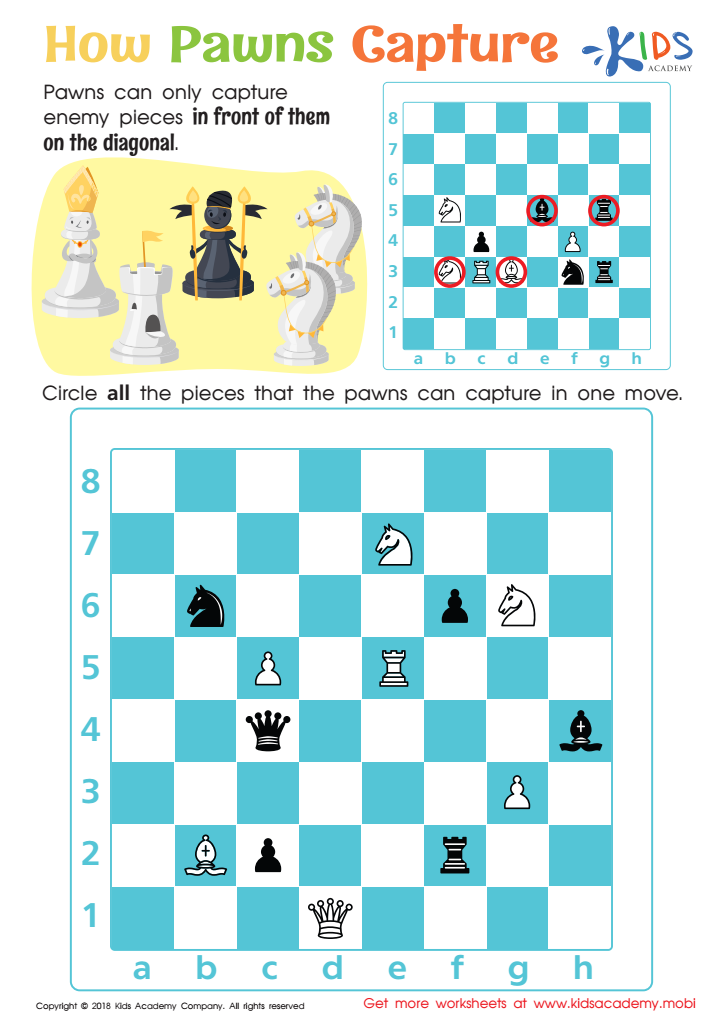
How Pawns Capture Worksheet







Introducing chess to children aged 4-6 can offer numerous cognitive and developmental benefits. At this early age, young minds are incredibly receptive and capable of learning new skills quickly, making it a perfect time to introduce this strategic game. Chess promotes critical thinking from a young age, helping children develop problem-solving skills as they consider various moves and their potential outcomes. This, in turn, fosters patience and discipline, as young kids learn to take their time to think several steps ahead.
Furthermore, understanding and playing chess helps improve memory. The game requires recalling the positions of various pieces, knowing how each moves, and thinking about past games for better strategies in future ones. These memory exercises can be particularly beneficial during early childhood, when cognitive foundations are still being built.
Socially, chess can serve as a tool for developing better communication and sportsmanship. As children play with peers or family members, they learn to articulate their thoughts and understand the importance of fair play.
Lastly, early exposure to chess can instill a love for lifelong learning. The combination of patience, strategic thought, and careful planning can become valuable habits extending well beyond the chessboard. For these reasons, parents and teachers should see the significant advantages in teaching the rules of chess to young children.








