Understanding citizenship Worksheets for Ages 4-6
6 filtered results
-
From - To
Understanding Citizenship Worksheets for Ages 4-6 help young children grasp the basics of good citizenship through engaging activities and easy-to-understand concepts. These worksheets from Kids Academy introduce essential lessons on community roles, responsibilities, and the importance of rules and laws. Designed specifically for young learners, they make earning about being a good citizen fun and accessible. Activities include coloring pages, matching exercises, and simple questions that encourage kids to think about how they can contribute to their community. Perfect for both classroom and home use, these worksheets lay the foundation for a lifetime of responsible and active citizenship.
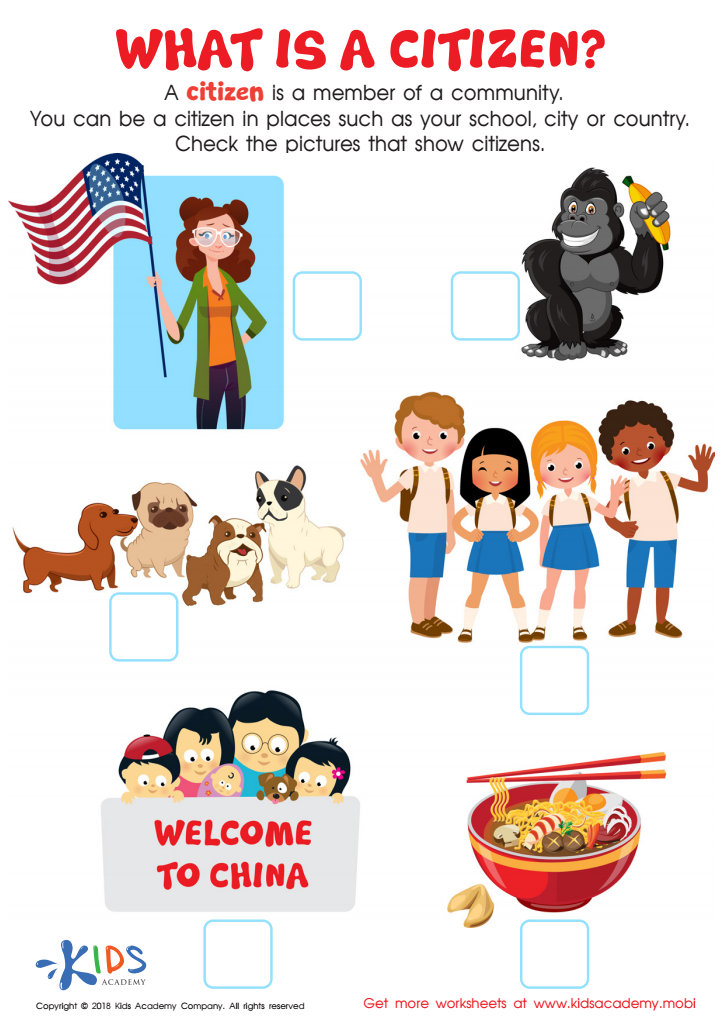
What is a Citizen? Worksheet
 Assign to My Students
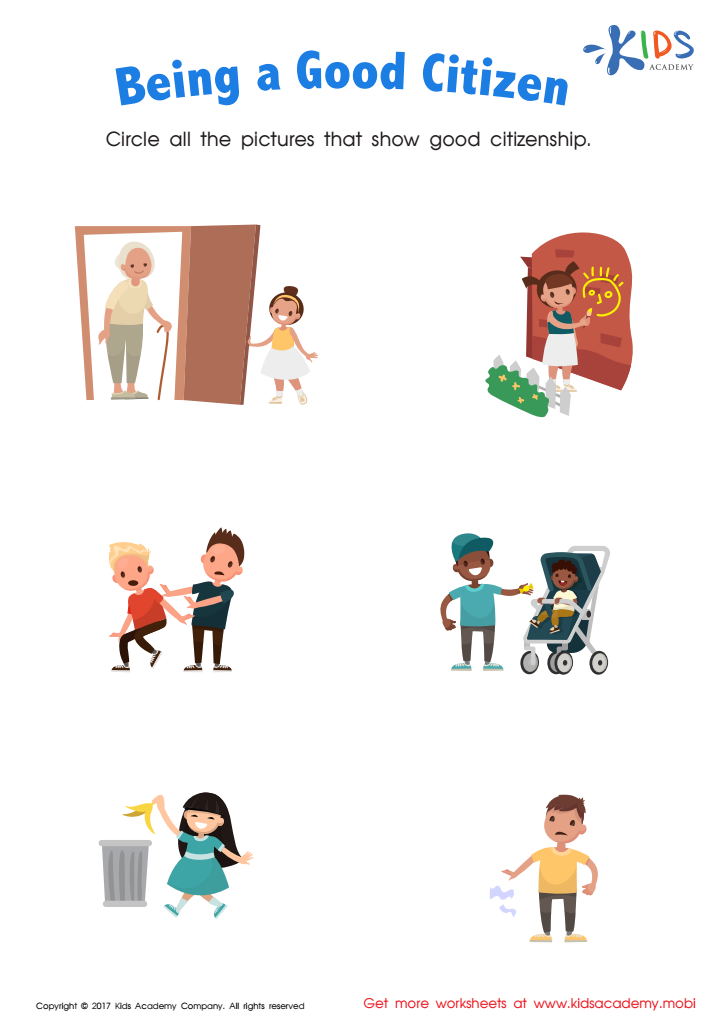
Being a Good Citizen Printable
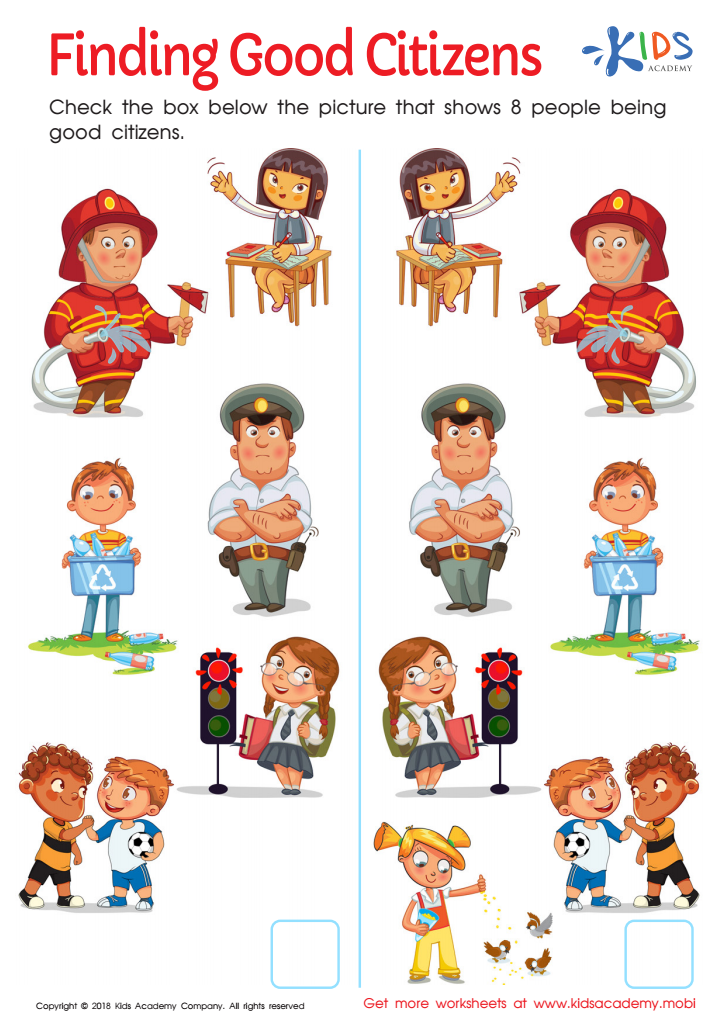
Finding Good Citizens Worksheet
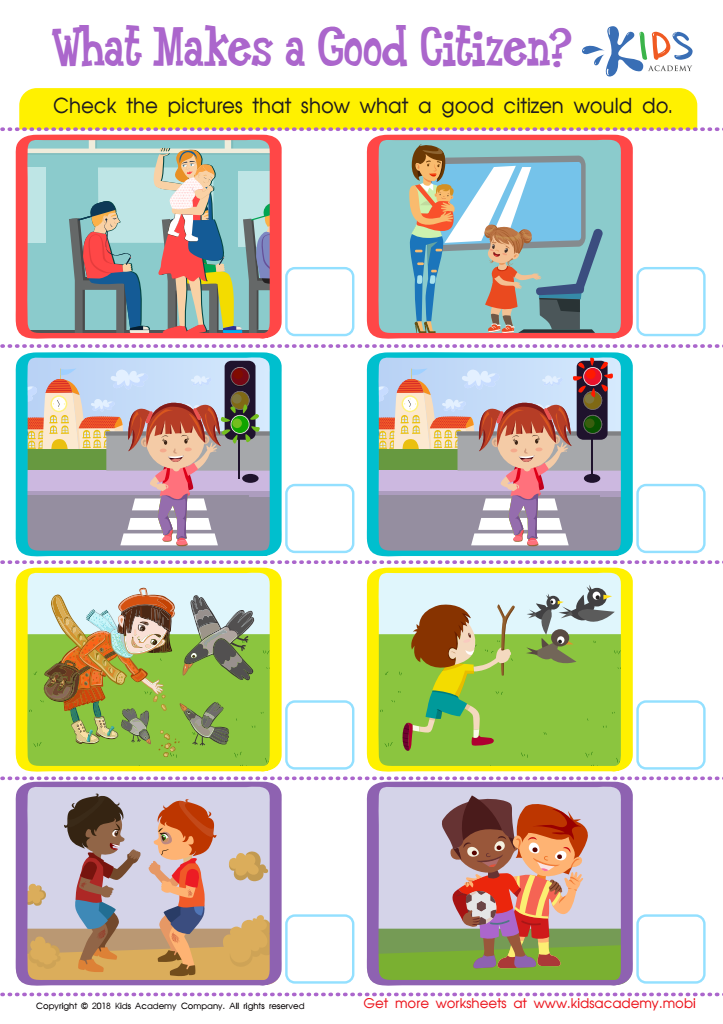
What Makes a Good Citizen? Worksheet
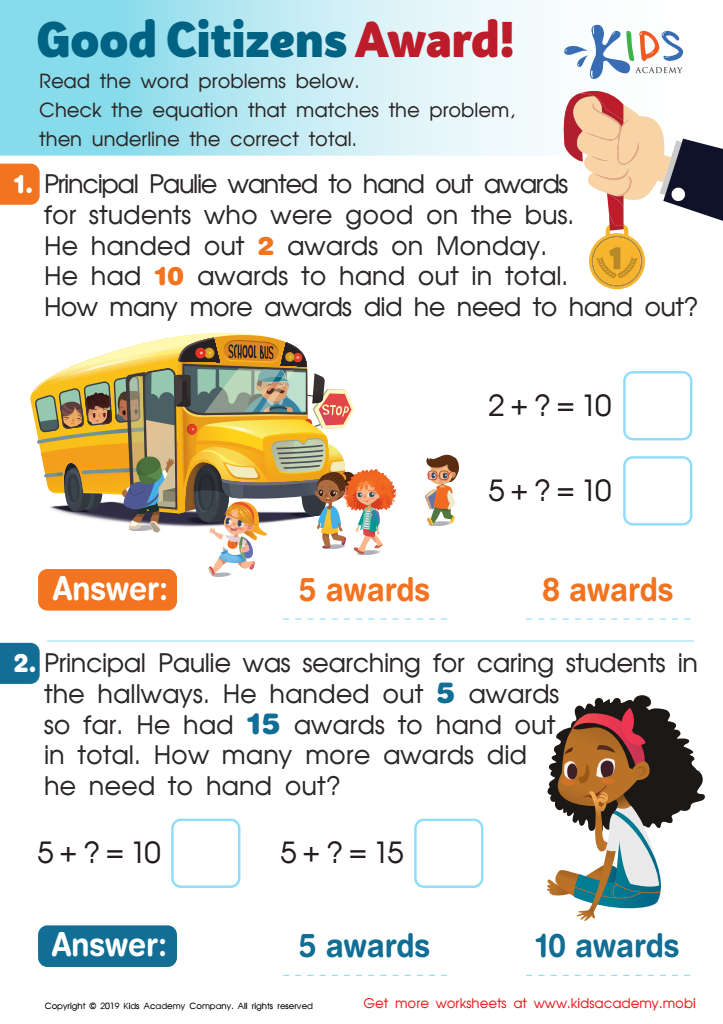
Good Citizens Award! Worksheet
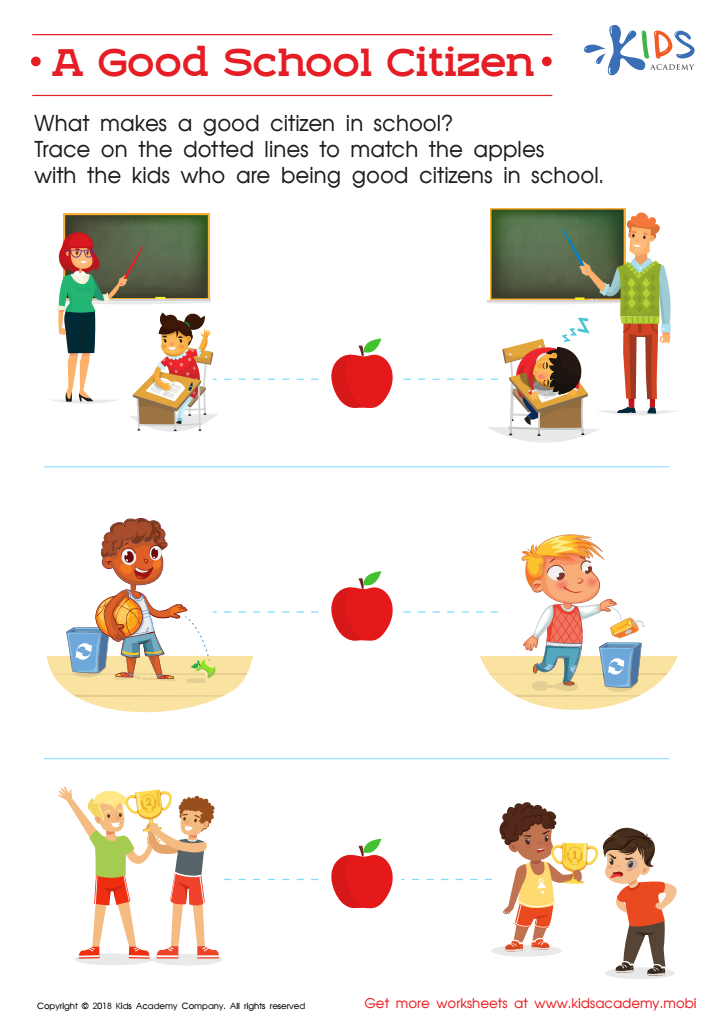
A Good School Citizen Worksheet







Understanding citizenship for children aged 4-6 is crucial as it lays the groundwork for developing responsible, community-minded individuals. At this tender age, kids are highly impressionable, and teaching them the basics of citizenship fosters values such as respect, empathy, and cooperation.
Firstly, understanding citizenship helps children grasp the importance of rules and fairness, which is essential for harmonious social interactions. It teaches them to respect others' rights and understand their own responsibilities within a group, be it family, classroom, or community. These early lessons in responsibility and fairness promote a foundation for ethical behavior in adulthood.
Furthermore, instilling values of citizenship stimulates a sense of belonging and community involvement. Children who learn these concepts early are more likely to grow into proactive members of their communities, willing to contribute and collaborate. It encourages them to appreciate diversity, leading to more inclusive attitudes.
Moreover, early lessons in citizenship can foster critical thinking and decision-making skills. Children learn to communicate their ideas, listen to others, and compromise, all of which are vital skills for personal and professional success later in life.
In summary, understanding citizenship at a young age equips children with essential social skills and a values-based framework, forming the bedrock of their development as conscientious, engaged individuals.








