Understanding currency Worksheets for Ages 4-6
5 filtered results
-
From - To
Explore our engaging "Understanding Currency Worksheets" designed for children ages 4 to 6! These fun, interactive resources help young learners grasp basic financial concepts through colorful activities and relatable scenarios. Each worksheet promotes essential skills like counting, sorting, and recognizing different coins and bills. With simple explanations and playful illustrations, kids will enjoy learning about money while developing their math abilities. Perfect for preschool and kindergarten classrooms or at-home learning, these worksheets make financial literacy accessible and entertaining. Start nurturing your child's understanding of currency today and lay the foundation for responsible money habits in the future!
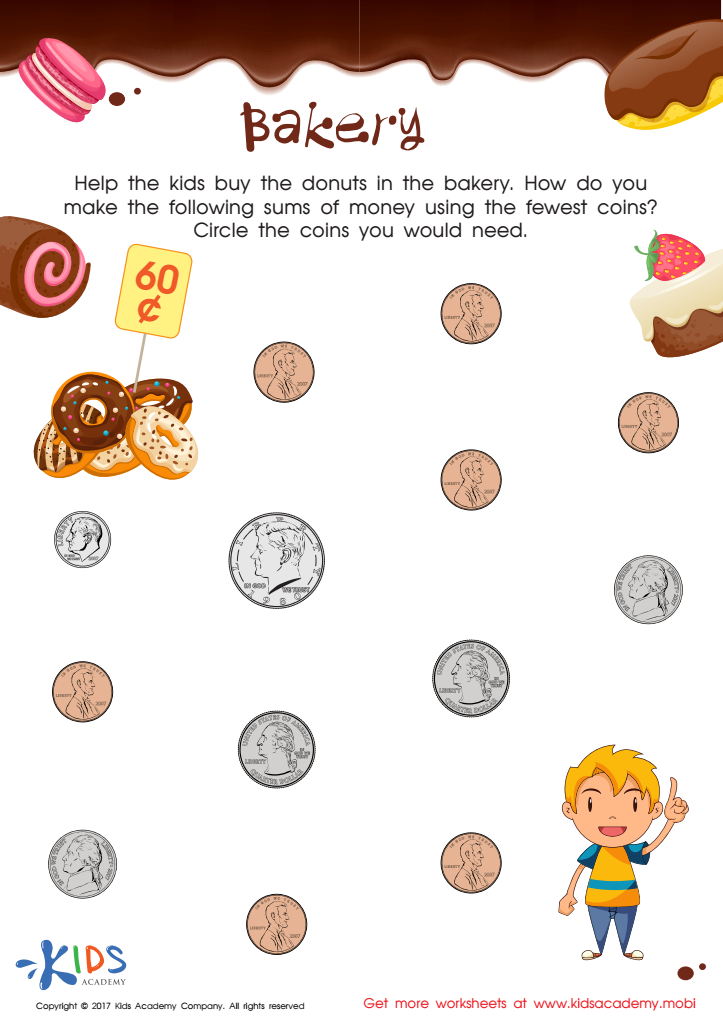
Counting Coins Worksheet
 Assign to My Students
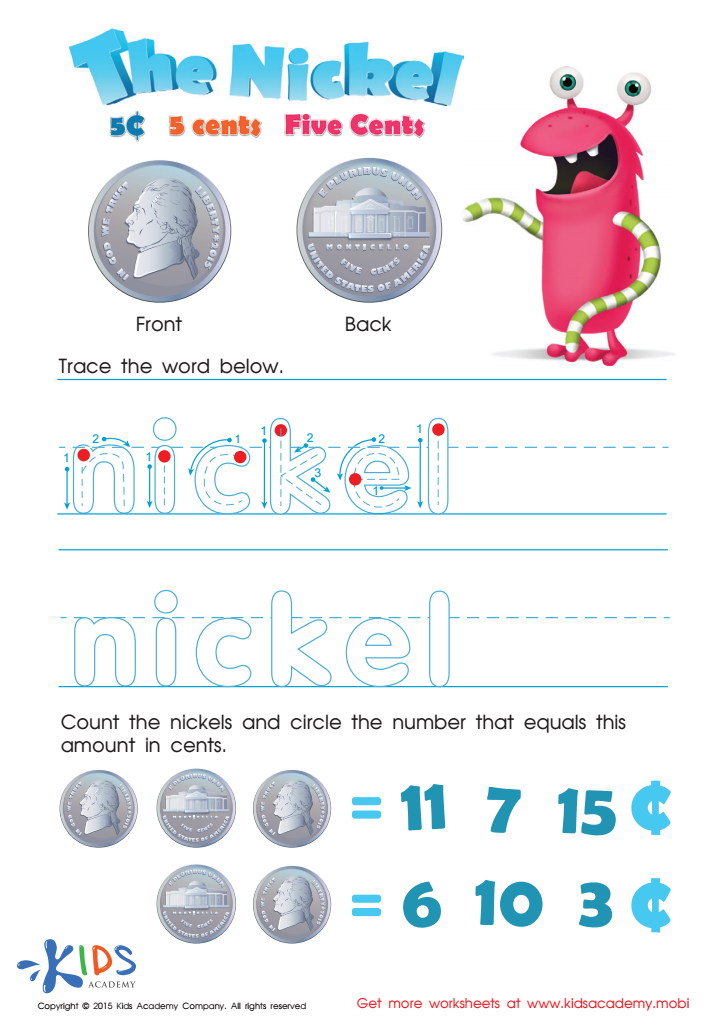
Five Cents or the Nickel Money Worksheet
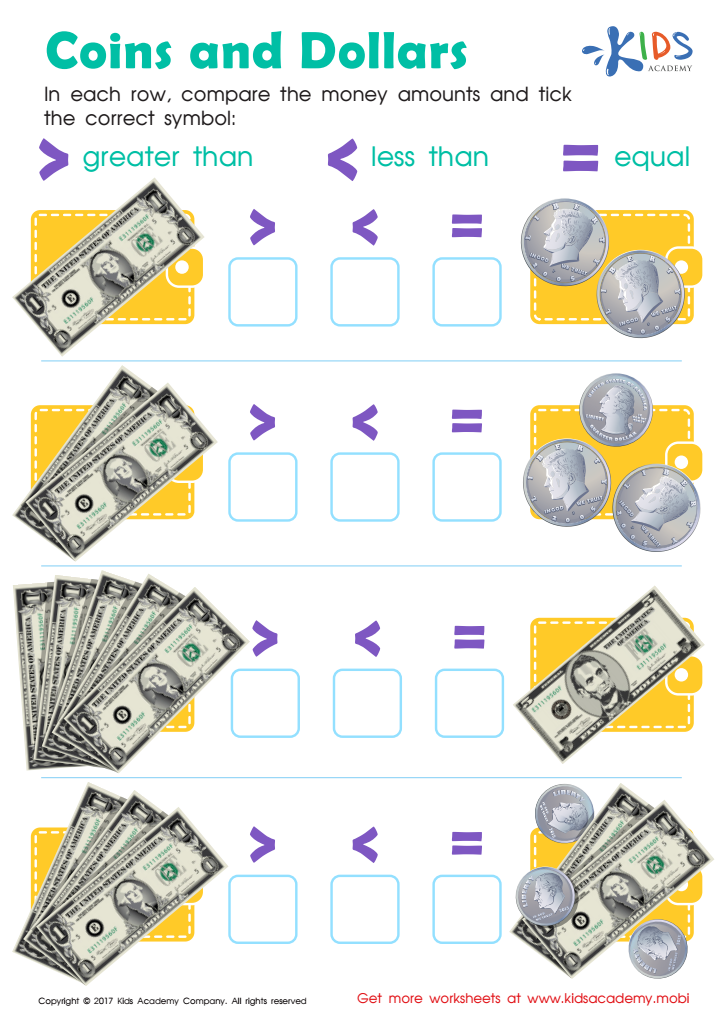
Money: Coins Dollars Printable
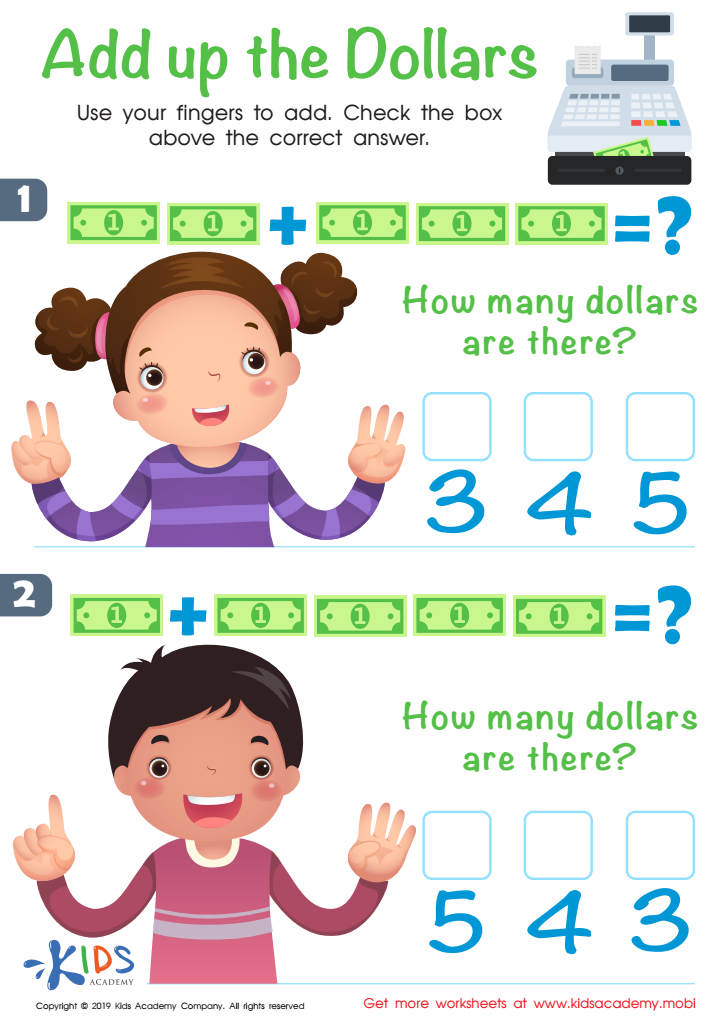
Add up the Dollars Worksheet






Understanding currency is an essential skill for children ages 4-6, as it lays the groundwork for financial literacy. At this developmental stage, children are naturally curious about the world around them, which presents an opportune moment to introduce the concept of money. Engaging with currency helps children grasp values, counting, and basic math skills through practical applications.
When parents and teachers incorporate playful activities—such as playing store or using toy money—they provide a hands-on learning experience that makes math concepts tangible and enjoyable. This early exposure builds a child's confidence in handling money and teaches them about exchanging goods and services.
Furthermore, understanding currency fosters essential life skills like making choices, developing budgets, and recognizing the difference between needs and wants. It also promotes social skills, as children learn to interact respectfully with peers while playing financial games.
Additionally, as children grow, foundations built during these early years will facilitate more complex financial discussions and practices, such as saving, spending wisely, and preparing for real-world economic situations. By prioritizing currency understanding, parents and teachers equip children with lifelong skills that extend beyond arithmetic, fostering responsible habits that will benefit them in the future.








