Understanding light sources Worksheets for Ages 4-6
4 filtered results
-
From - To
Explore our "Understanding Light Sources Worksheets" designed specifically for children ages 4-6! These engaging and educational worksheets introduce young learners to various light sources, fostering curiosity about the world around them. Through fun activities and colorful illustrations, children will discover natural and artificial light sources, such as the sun, lamps, and flashlights. Our worksheets encourage hands-on learning while developing essential skills in reasoning and critical thinking. Perfect for use in the classroom or at home, these resources provide an excellent way for young students to ignite their imagination and gain a foundational understanding of light in an enjoyable way.
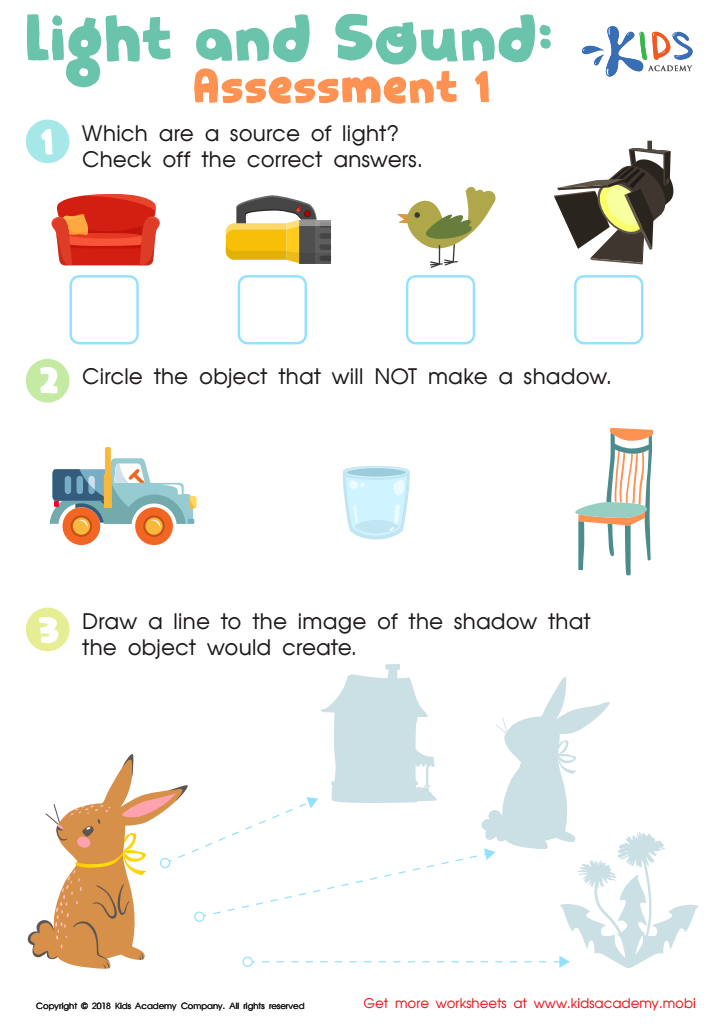
Light and Sound: Assessment 1 Worksheet
 Assign to My Students
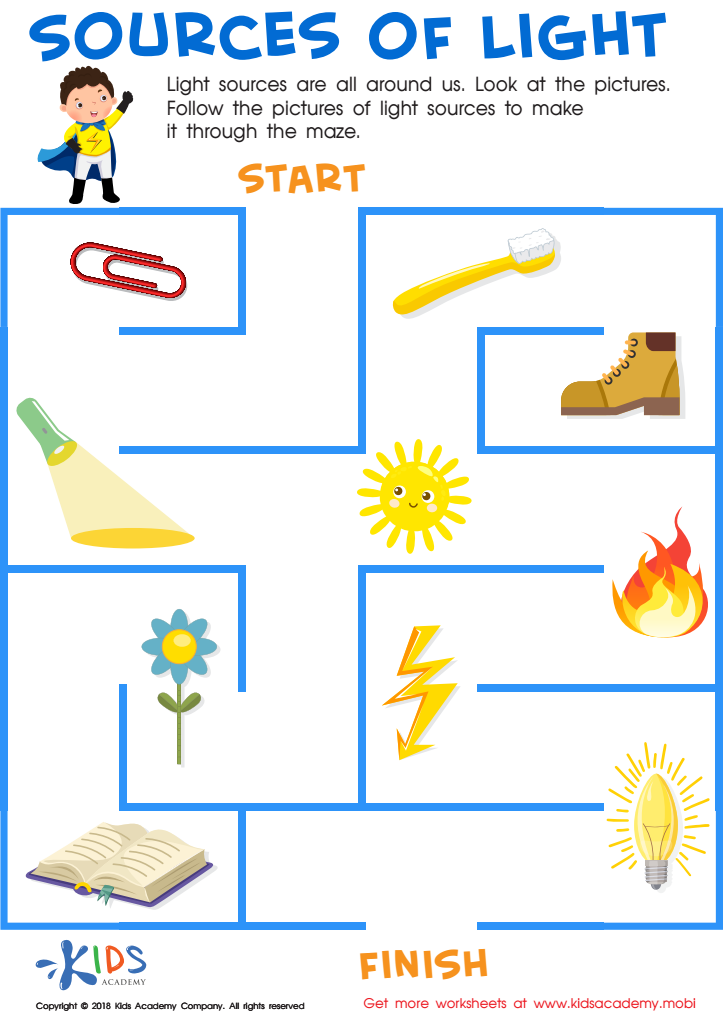
Sources of Light Worksheet
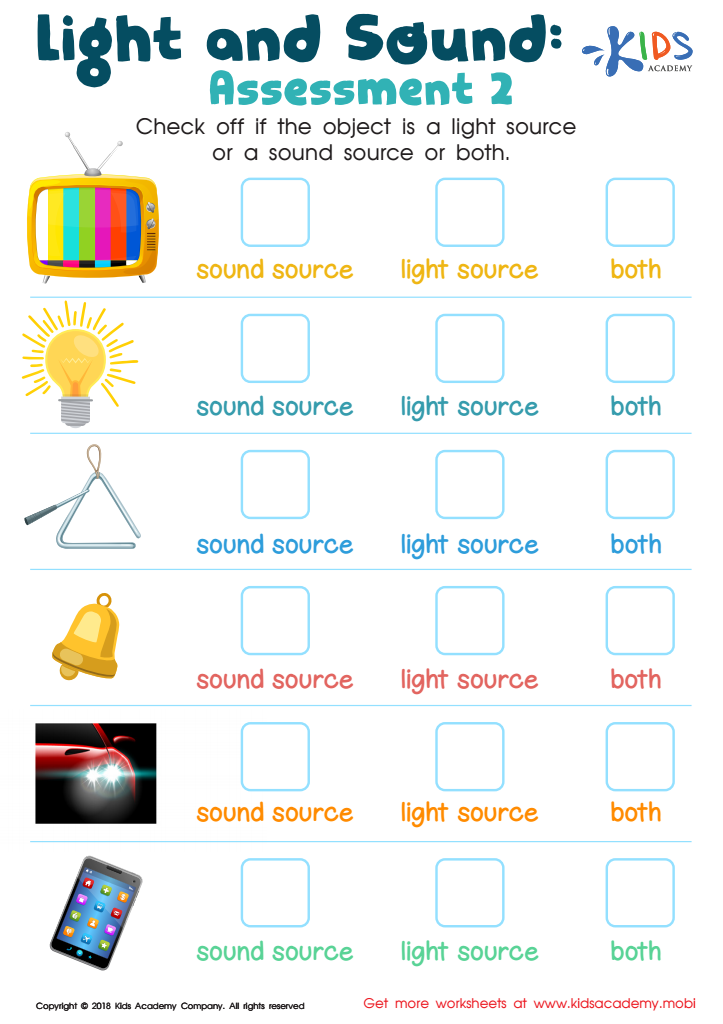
Light and Sound: Assessment 2 Worksheet
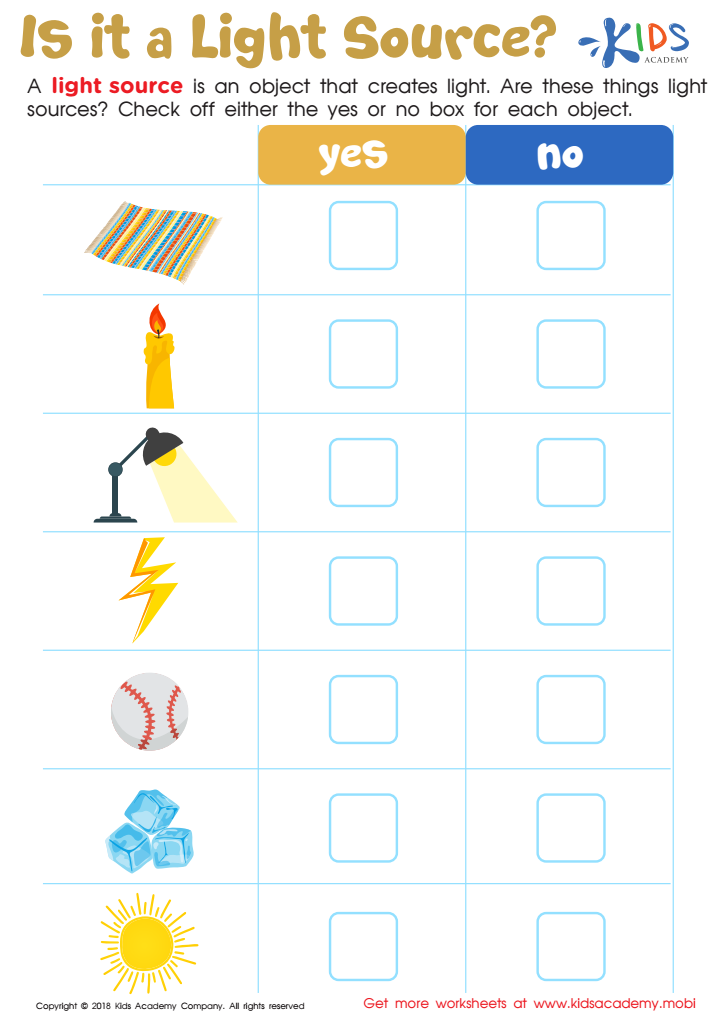
Is It a Light Source? Worksheet





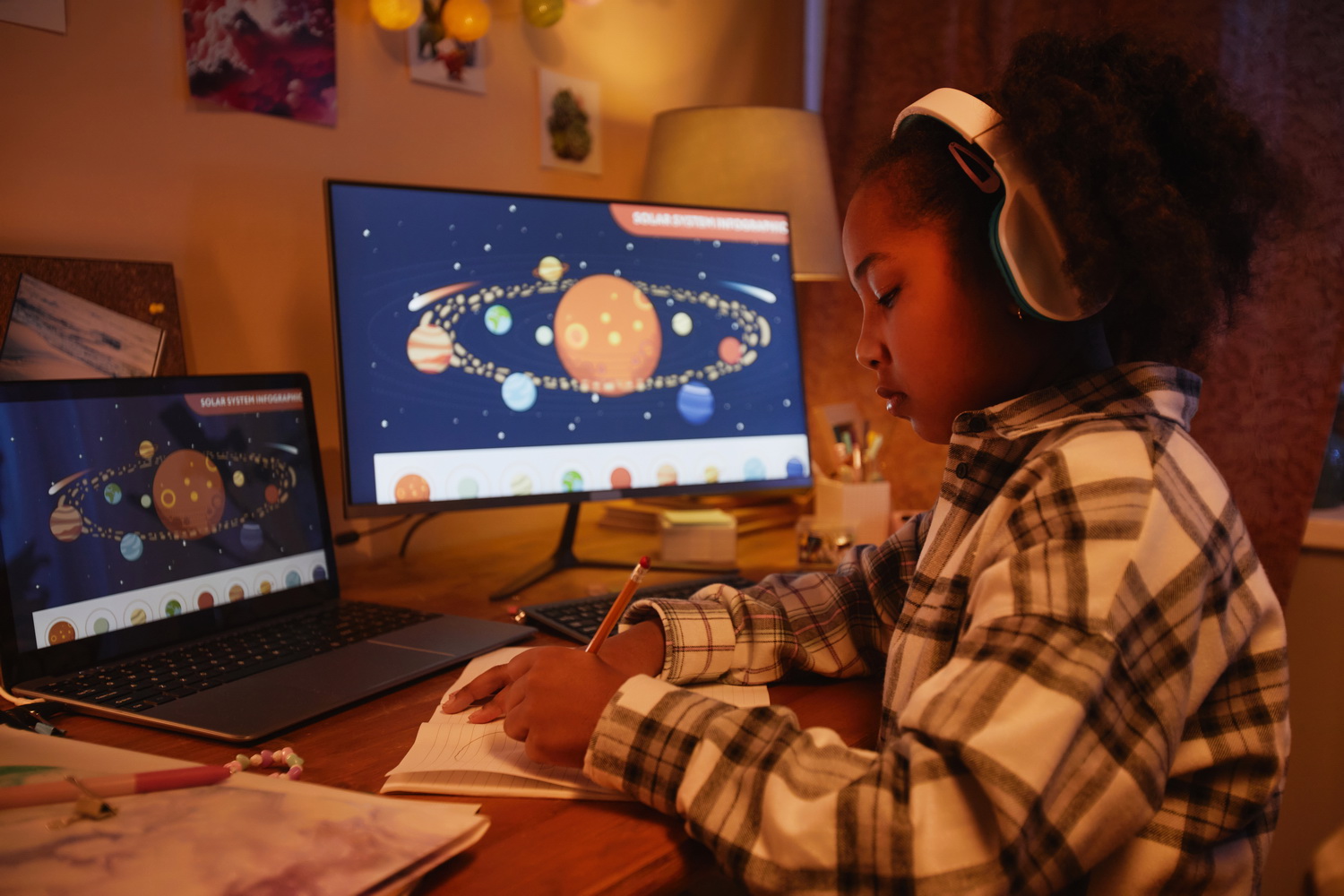


Understanding light sources is essential for children aged 4-6 as it lays the foundation for their scientific literacy and curiosity. At this early age, children are naturally inquisitive and eager to explore the world around them. Introducing concepts of light assists in developing important cognitive skills such as observation, reasoning, and critical thinking.
Parents and teachers should care because learning about light sources helps children make meaningful connections to their environment. For instance, understanding the difference between natural light (like the sun) and artificial light (like lamps) helps children appreciate nature and technology. This knowledge fosters a sense of wonder and encourages interactive play-based learning through experiments like shadow play or exploring how light travels.
Moreover, discussions about light can integrate other skills and concepts, such as colors, reflection, and safety (like the importance of sunlight). By investigating light sources together, parents and teachers can promote communication skills and collaborative learning, creating a rich dialogue that nurtures language development.
In summary, teaching children about light sources not only piques their curiosity but also supports a holistic development approach that incorporates learning, exploration, and critical thinking—crucial skills as they embark on their educational journey.








