Understanding sequence Worksheets for Ages 4-6
5 filtered results
-
From - To
Introduce young learners to the fundamental concept of sequencing with our engaging worksheets designed for ages 4-6. At Kids Academy, we understand the importance of building early learning skills through fun and interactive activities. Our "Understanding Sequence Worksheets" provide a variety of exercises, from identifying patterns to arranging stories in the correct order. These worksheets foster critical thinking, encourage logical reasoning, and enhance problem-solving skills in a playful manner that keeps children captivated. Perfect for parents and educators looking for effective tools to support early childhood development, our sequence worksheets are an invaluable resource for fostering young minds.
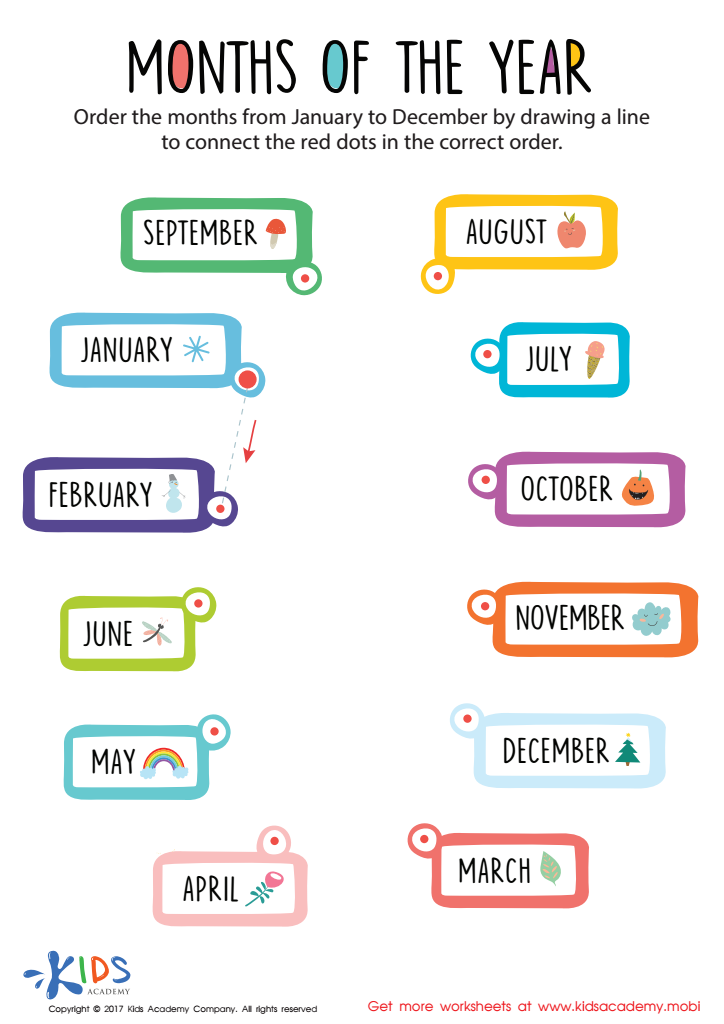
Months of the Year Worksheet
 Assign to My Students
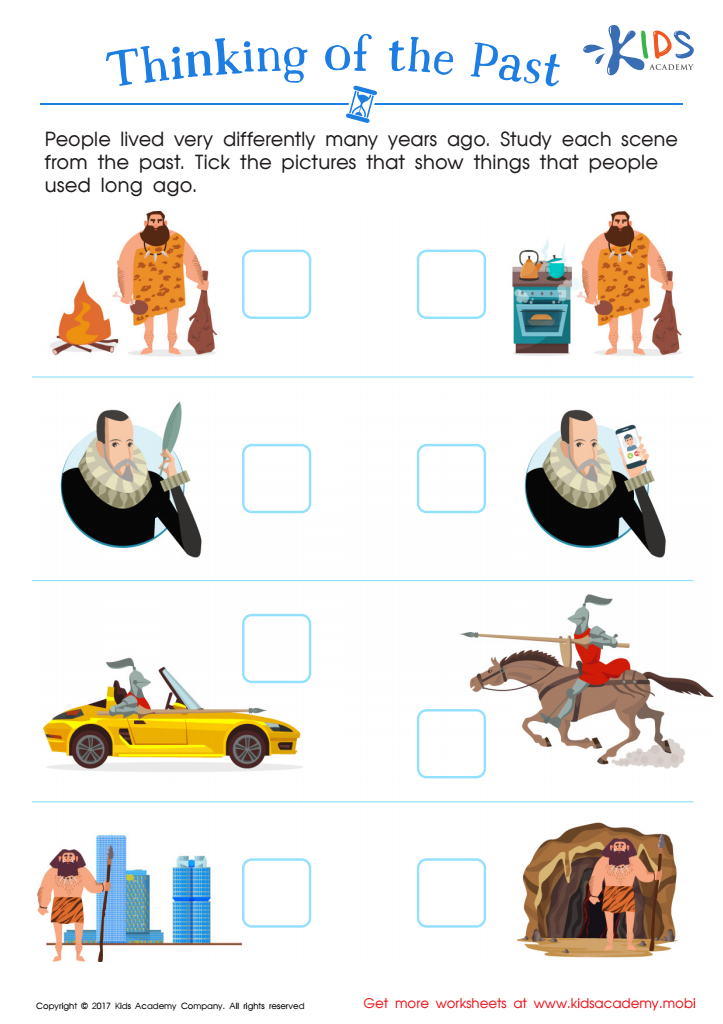
Thinking Past Printable
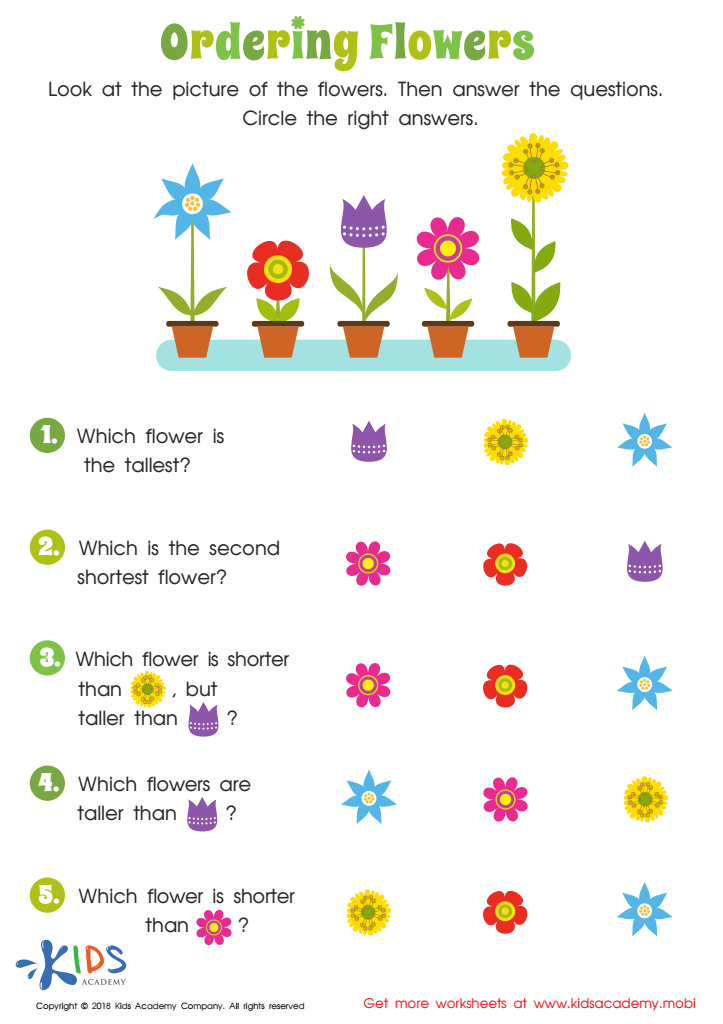
Ordering Flowers Worksheet
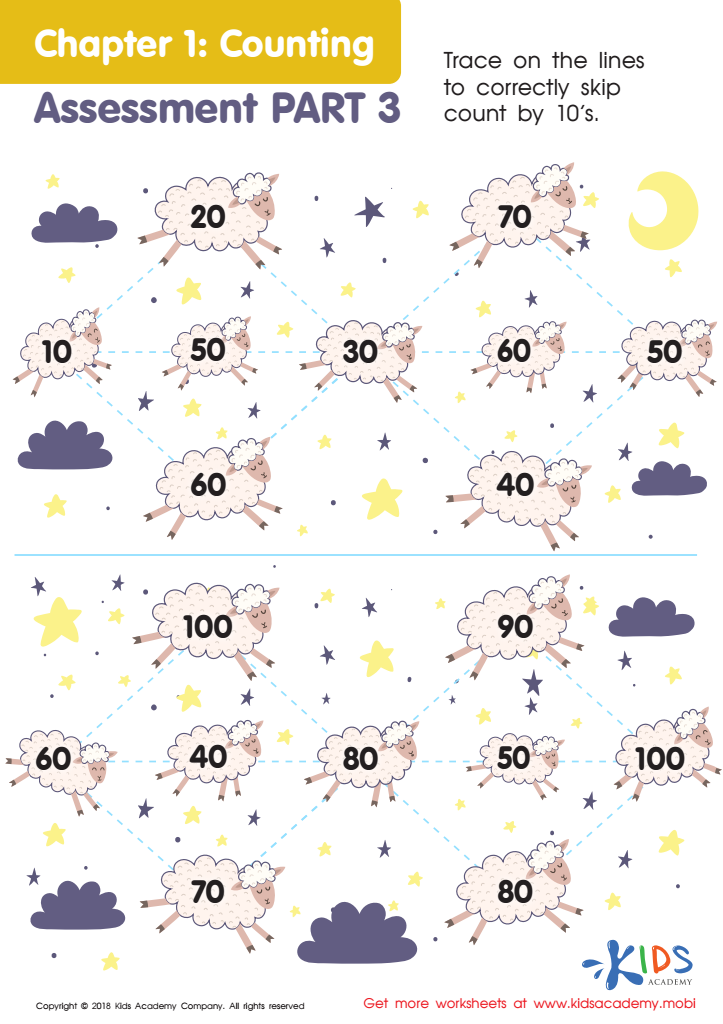
Counting: Assessment 3 Worksheet







Understanding sequences is essential for young children ages 4-6 as it forms a foundation for various developmental and academic skills. Sequencing – the ability to understand the order of events – is vital for early literacy, where children begin to grasp how stories progress from beginning to end. This underpins their comprehension skills, critical for reading development.
In math, sequencing is equally important. Recognizing numerical order, patterns, and relationships between numbers sets the groundwork for more complex mathematical concepts they'll encounter in later years. For example, counting in the correct order or understanding simple patterns like alternating shapes are basic forms of sequencing.
Moreover, the ability to sequence helps children with daily routines, fostering a sense of predictability and security. They learn that tasks are done in a specific order, like getting dressed or washing hands before eating. This boosts their independence and organizational skills.
Socially and cognitively, understanding sequences aids in problem-solving and logical thinking, because it helps children predict outcomes and understand cause-and-effect relationships.
By encouraging the development of sequencing skills through stories, matching games, or simple routines, parents and teachers provide children with critical tools for navigating not just academics but also daily life. Investing in this fundamental skill supports a child's holistic development, directly impacting their future learning and behaviors.








