Visual discrimination skills Worksheets for Ages 4-6
7 filtered results
-
From - To
Enhance your child's cognitive development with our Visual Discrimination Skills Worksheets tailored for ages 4-6. These engaging and colorful printable worksheets focus on improving children's ability to recognize differences and similarities in shapes, patterns, and objects. Perfect for early learners, they promote critical thinking, attention to detail, and fine motor skills. Our expertly designed activities make learning enjoyable, helping young minds prepare for more complex tasks in school. Ideal for parents and educators, these worksheets provide a fun, effective way to build a strong foundation in visual discrimination. Empower your child's learning journey with Kids Academy!
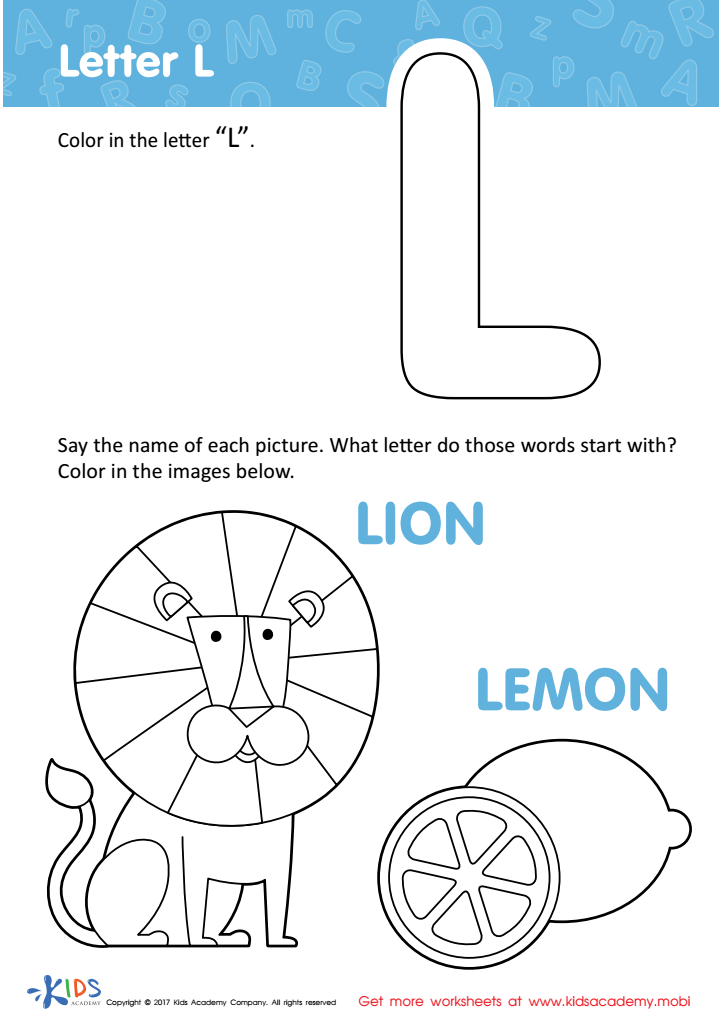
Letter L Coloring Sheet
 Assign to My Students

Find Uppercase Letters A, B, and C Worksheet
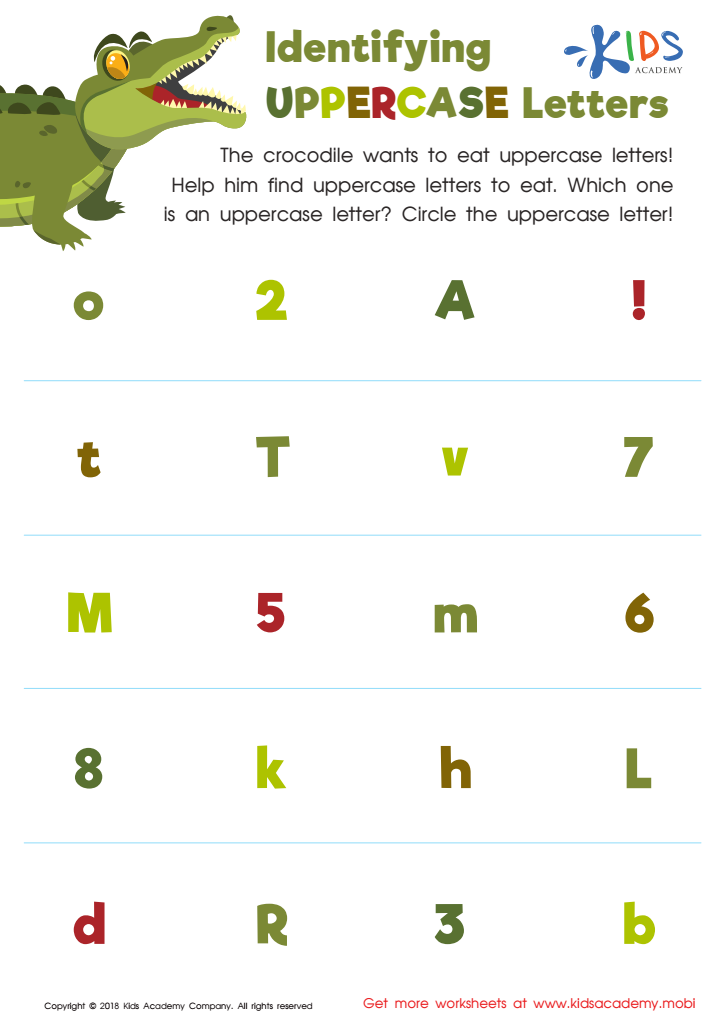
Identifying Uppercase Letters Worksheet
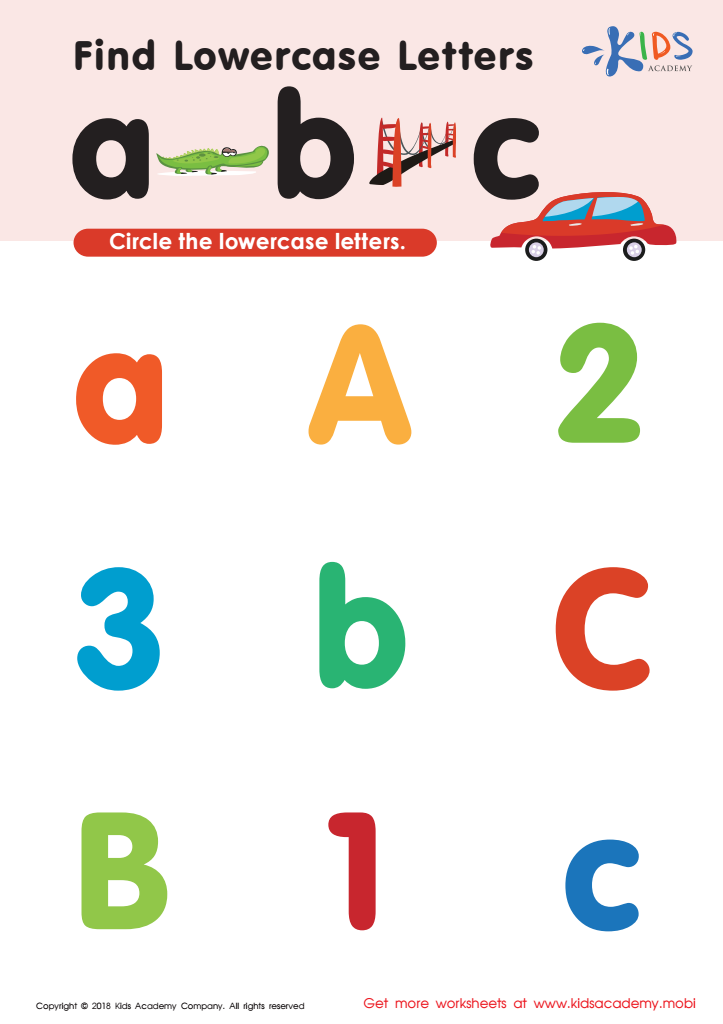
Find lowercase letters a b c Worksheet
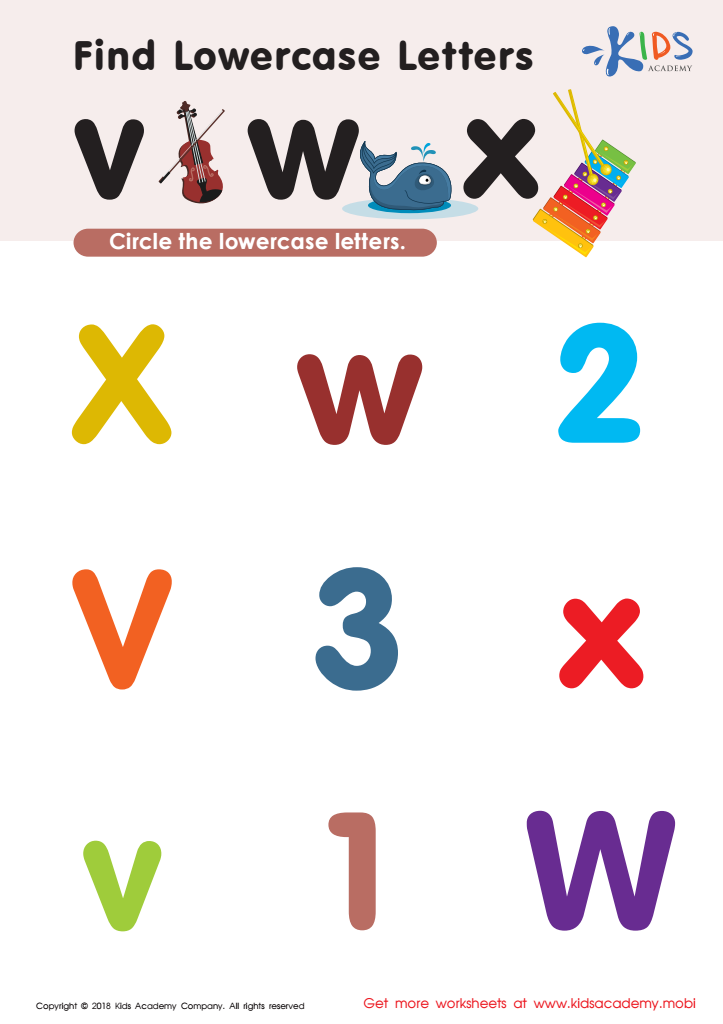
Find Lowercase Letters v w x Worksheet
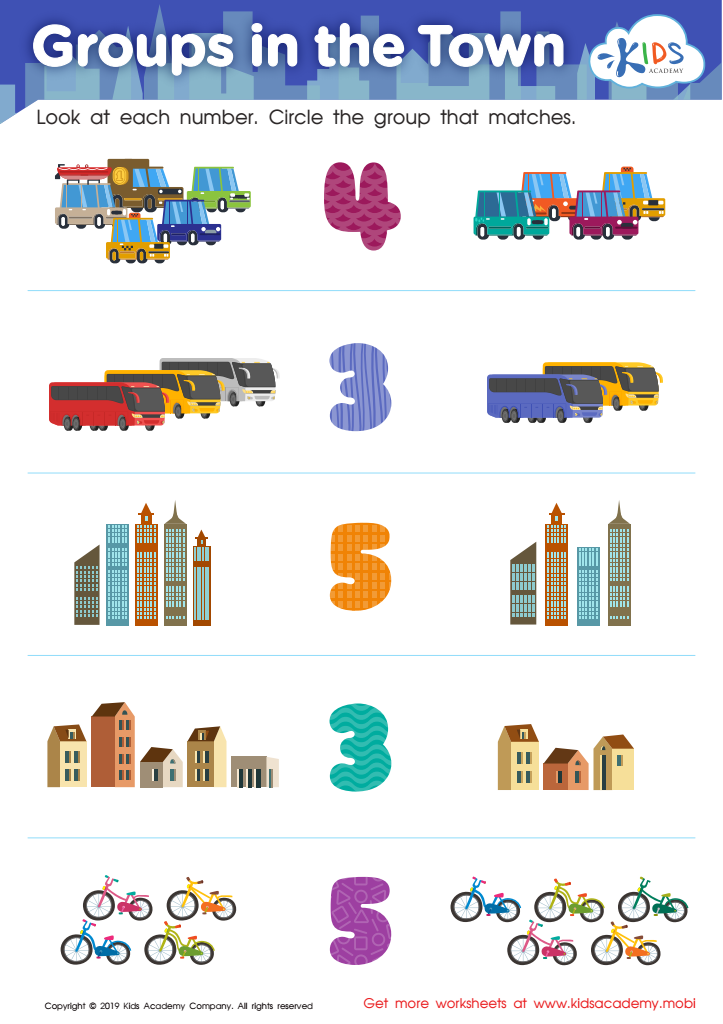
Groups in the Town Worksheet
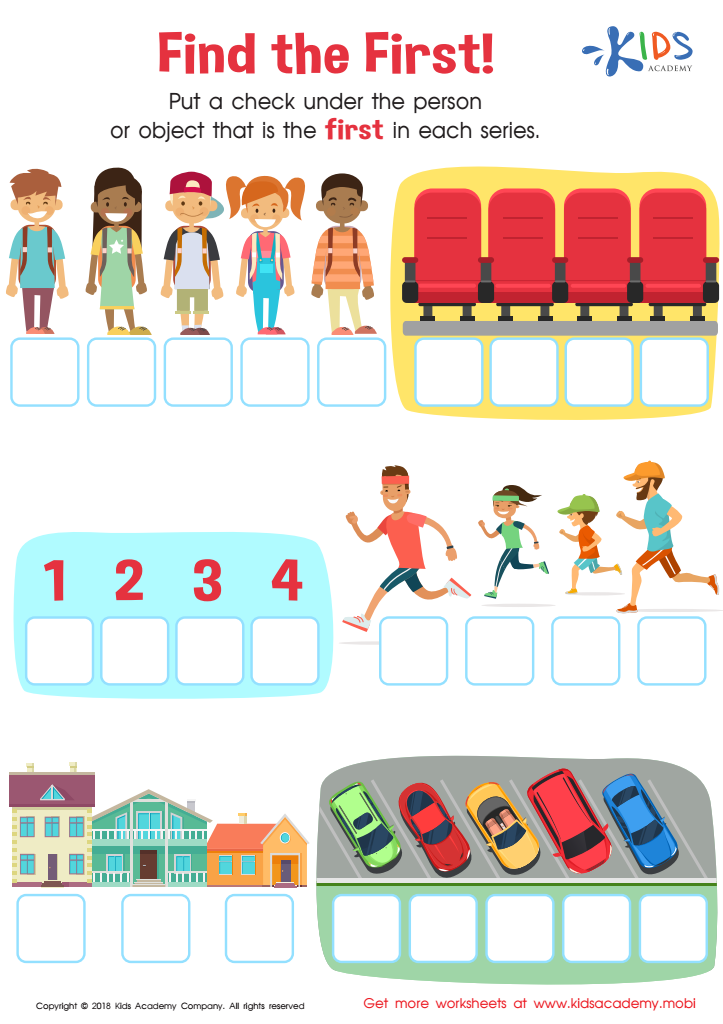
Find the First! Worksheet








Visual discrimination skills are essential for children aged 4-6 because they form the foundation for later academic and daily life success. For this age group, these skills foster the ability to notice and differentiate between visual stimuli, which is crucial for learning to read, write, and navigate their environment confidently.
When children improve their visual discrimination skills, they can more easily distinguish between similar letters and shapes, which aids in recognizing and writing the alphabet. For instance, telling the difference between 'b' and 'd' or 'p' and 'q' becomes manageable, thus enhancing reading fluency and reducing common literacy issues. These skills also play a crucial role in mathematics, where understanding different numbers and symbols is necessary for basic computations.
In addition to academic benefits, well-developed visual discrimination skills help children with everyday tasks such as identifying items in a cluttered environment, recognizing traffic signs, and matching socks or shoes. Improved ability in these areas fosters independence and boosts self-confidence.
Parents and teachers should actively support the development of visual discrimination skills through playful and engaging activities such as puzzles, sorting games, matching exercises, and hands-on learning. By prioritizing these skills, adults set young children on a path toward achieving their full potential academically and in their daily lives.








