Filters

56 filtered results

Clear all filters
Favorites
With answer key
Interactive

56 filtered results

Difficulty Level

Grade


Check out this FREE "Vocabulary Building" Trial Lesson for age 4-6!

Animal Habitats

Favorites
With answer key
Interactive
  • 4-6
  • Vocabulary Building
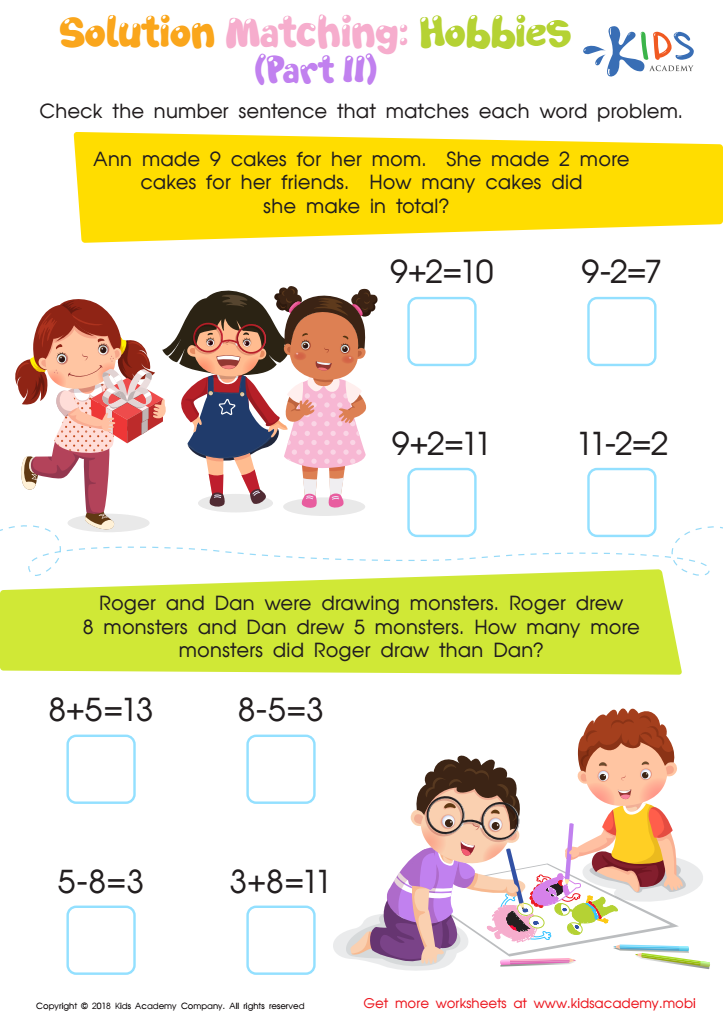
Solution Matching: Hobbies. Part 2 Worksheet

Solution Matching: Hobbies. Part 2 Worksheet

This fun printable worksheet has word problems featuring hobbies your children enjoy! With your child, read through each problem, understanding the numbers and key phrases indicating addition or subtraction. Then, match the correct equation with the solution by checking the box. Math problems are more enjoyable to solve when they’re realistic and engaging!
Solution Matching: Hobbies. Part 2 Worksheet
Worksheet
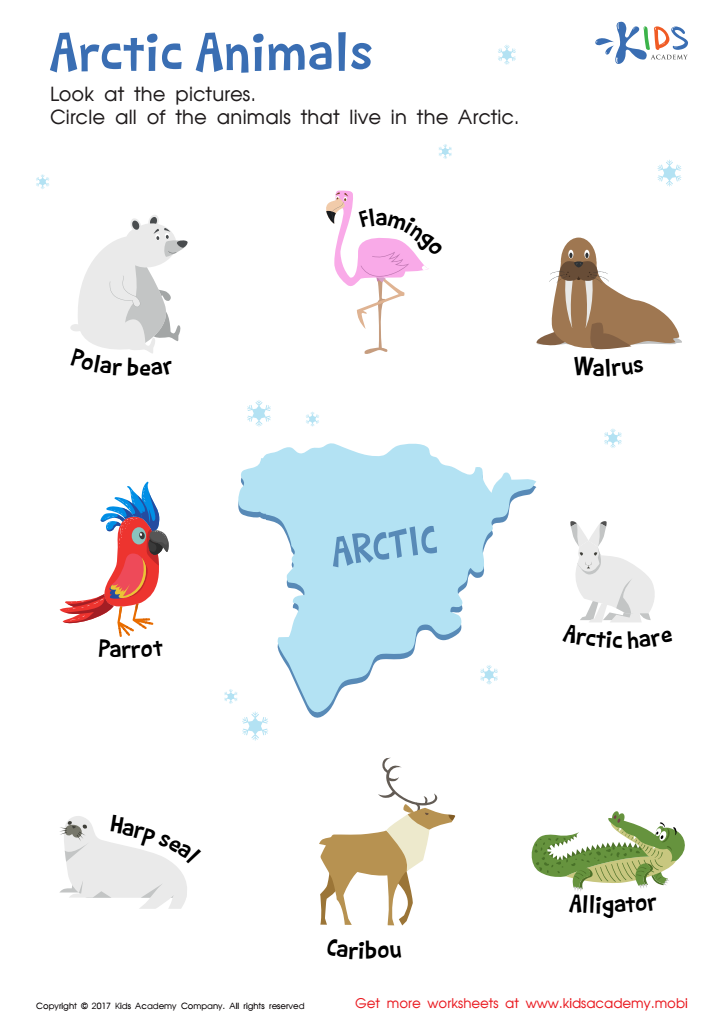
Arctic Animals Worksheet

Arctic Animals Worksheet

Kids love animals and this worksheet is a great way to teach them where they live. It reinforces classification skills and introduces new animals, like the Arctic hare. Use it to discuss the Arctic climate and how these animals live, then ask your child where other animals live to keep the conversation going.
Arctic Animals Worksheet
Worksheet
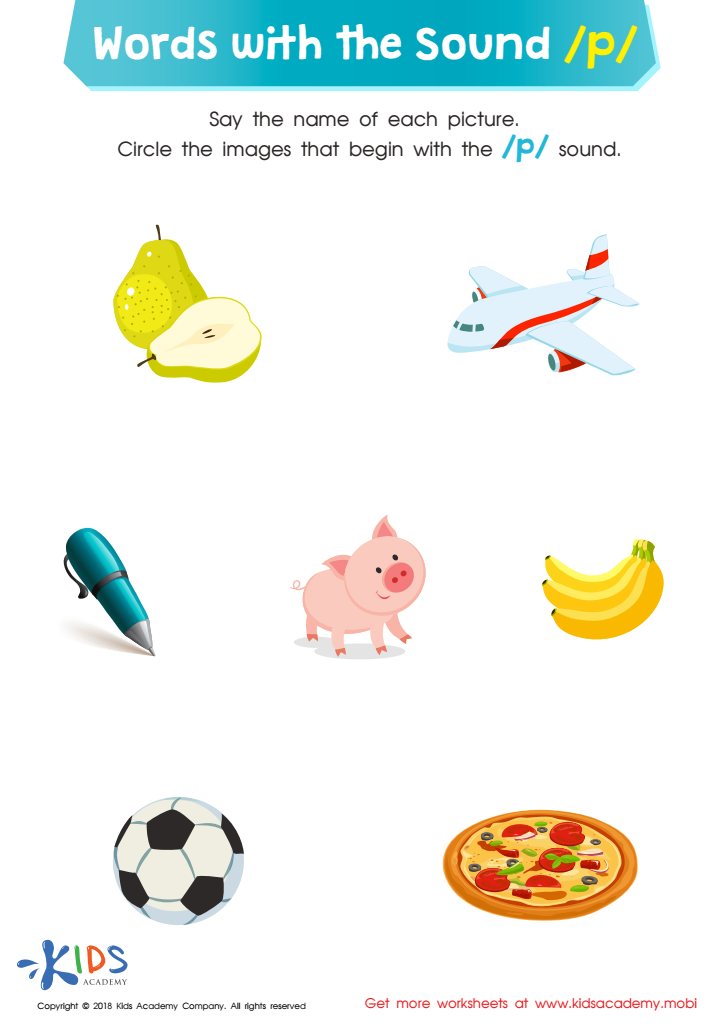
Words with sound p Reading Worksheet

Words with sound p Reading Worksheet

Working on this fun worksheet? Name each picture aloud and listen carefully before circling those that start with the letter «p»! Pizza, pig, plane, or banana - practice phonics to help your child recognize the letter «p» sound for successful early reading and decoding!
Words with sound p Reading Worksheet
Worksheet
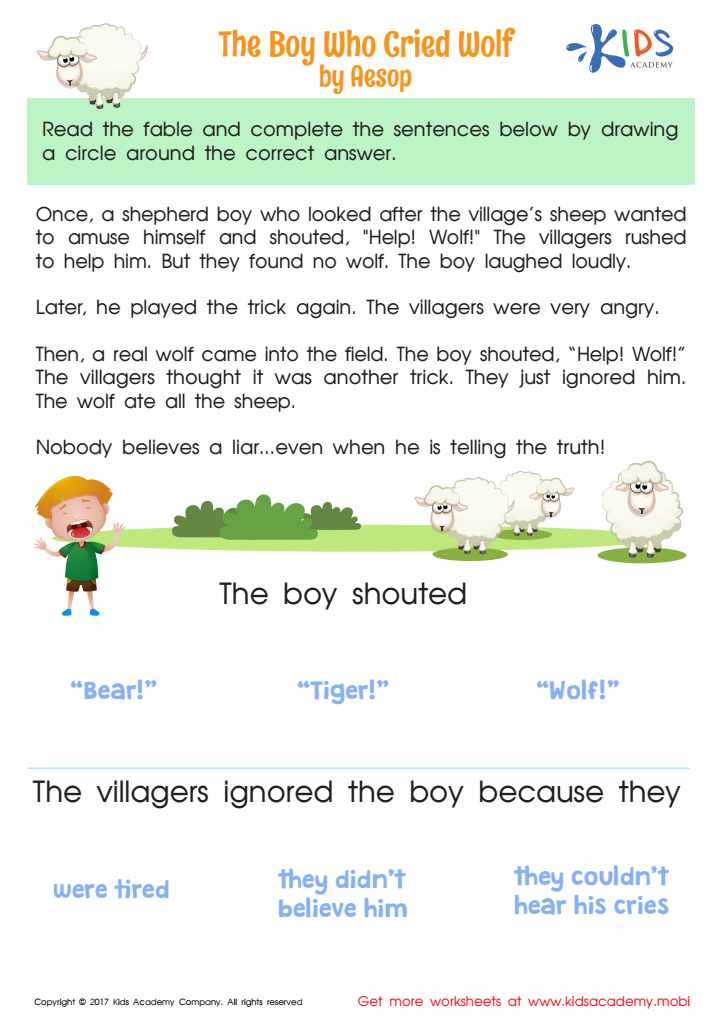
Worksheet: The Boy Who Cried Wolf

The Boy Who Cried Wolf Worksheet

Test your child's reading comprehension with The Boy Who Cried Wolf worksheet. Read the fable, then answer the questions. Use the text to help your child check their answers are correct. Boost reading skills in a fun, interactive way!
The Boy Who Cried Wolf Worksheet
Worksheet
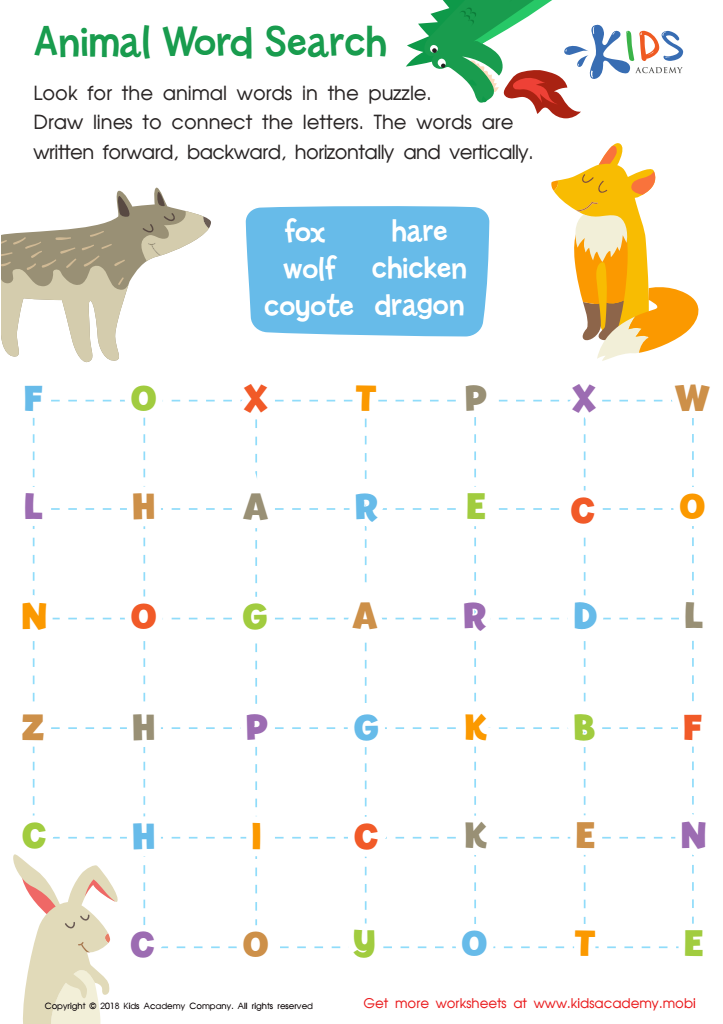
Animal Word Search Worksheet

Animal Word Search Worksheet

Students can have fun and strengthen spelling and vocabulary skills with this word search worksheet. Search for animal words and circle the letters in the puzzle. Words can be found forwards, backwards, horizontally or vertically, providing a great challenge to foster critical thinking skills. An enriching activity for all ages!
Animal Word Search Worksheet
Worksheet
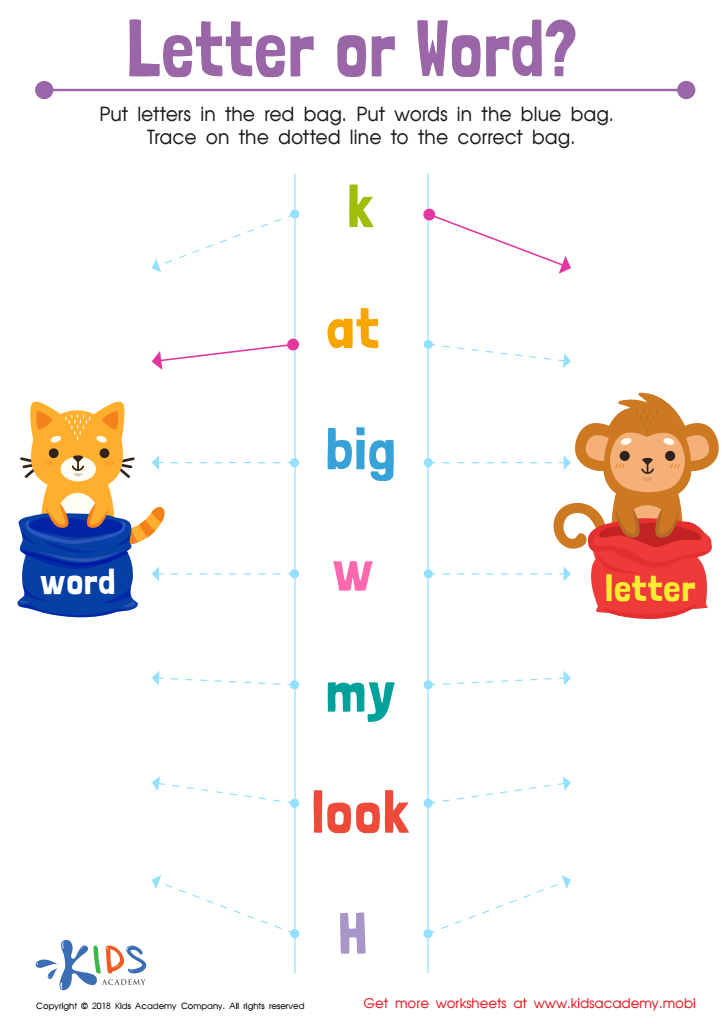
Letter or Word? Worksheet

Letter or Word? Worksheet

Help your kids differentiate between words and letters. If they can recite their alphabets and identify common words, this tracing sheet will be a breeze. Have them trace on the dotted lines to place the letters in the red bag with the kitten, and the words in the blue bag with the monkey.
Letter or Word? Worksheet
Worksheet
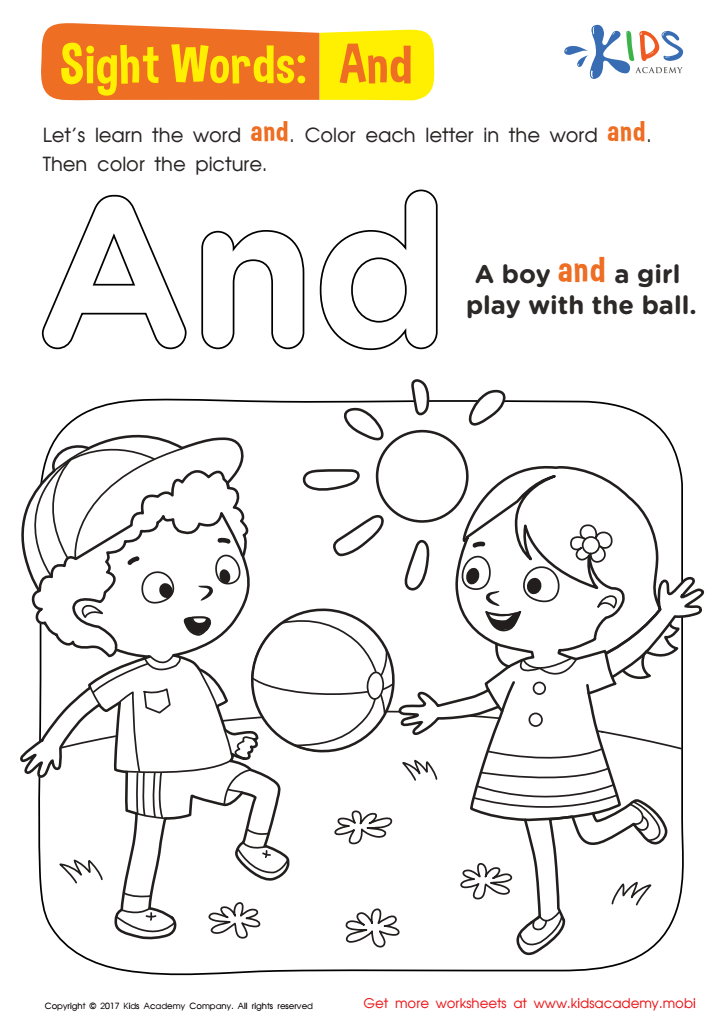
And Worksheet Sight Words Worksheet

And Worksheet Sight Words Worksheet

Help your child get a jumpstart on reading with sight words! Print out this fun worksheet and get your child to read the sentence. Point out the word "and", then color the word and enjoy the rest of the scene! It's a great way to introduce sight words and get their early reading skills going!
Download (PDF)
Assign to My Students
And Worksheet Sight Words Worksheet
Worksheet
Independence Day: Drummer
Independence Day: Drummer Coloring Page for Kids
Worksheet


... 2 3

Vocabulary building for children aged 4-6 is crucial for their overall development. During these formative years, children experience rapid brain growth, which greatly impacts their language acquisition. Rich vocabulary skills lay the foundation for effective communication, literacy, and critical thinking.

When parents and teachers invest time in enhancing children’s vocabulary, they facilitate better comprehension skills. With a robust vocabulary, children are more likely to understand complex ideas and follow instructions, aiding their performance in school and social interactions. Furthermore, a strong vocabulary is linked to increased reading proficiency. Children with a rich bank of words are better equipped to decode texts and grasp meanings, fostering a love for reading that can last a lifetime.

Additionally, vocabulary skills are connected to emotional development. By learning new words, children can more effectively express their feelings and thoughts, leading to improved social interactions and emotional intelligence. Engaging in conversations, reading diverse books, and playing word games are effective ways to enrich vocabulary. Ultimately, building vocabulary in early childhood fosters academic success and empowered, confident communicators ready to navigate the world. Parents and teachers who prioritize vocabulary building play a vital role in shaping not just language skills, but holistic development in young children.