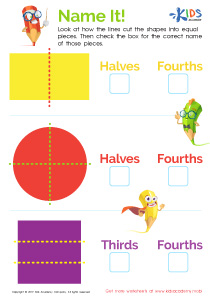
Basic geometry knowledge 2D Shapes Worksheets for Ages 4-6
3 filtered results
-
From - To
Explore our "Basic Geometry Knowledge 2D Shapes Worksheets" designed for children ages 4-6! These engaging, printable worksheets focus on foundational understanding of 2D shapes, including circles, squares, triangles, and rectangles. Perfect for young learners, our activities enhance shape recognition, encourage creative thinking, and build essential problem-solving skills. Each worksheet is crafted to foster curiosity and confidence in math, making learning both fun and interactive. Ideal for homeschooling or classroom use, these resources support early childhood education with colorful illustrations and easy-to-follow instructions. Enhance your child's geometric knowledge and lay a strong foundation for future math skills today!
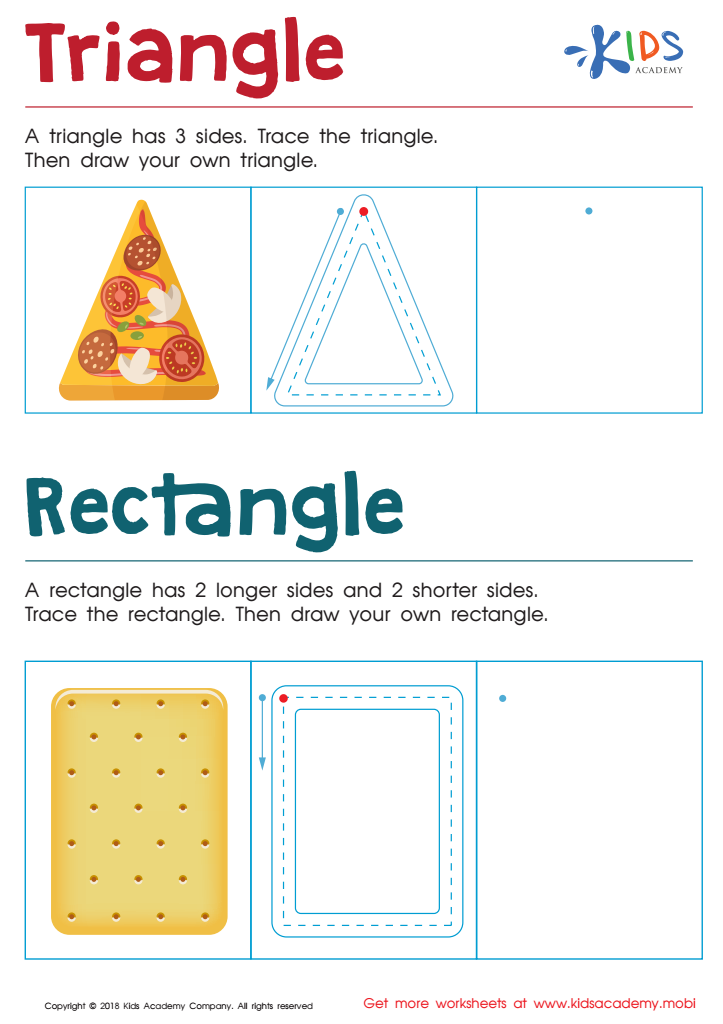
Triangle Rectangle Worksheet
 Assign to My Students


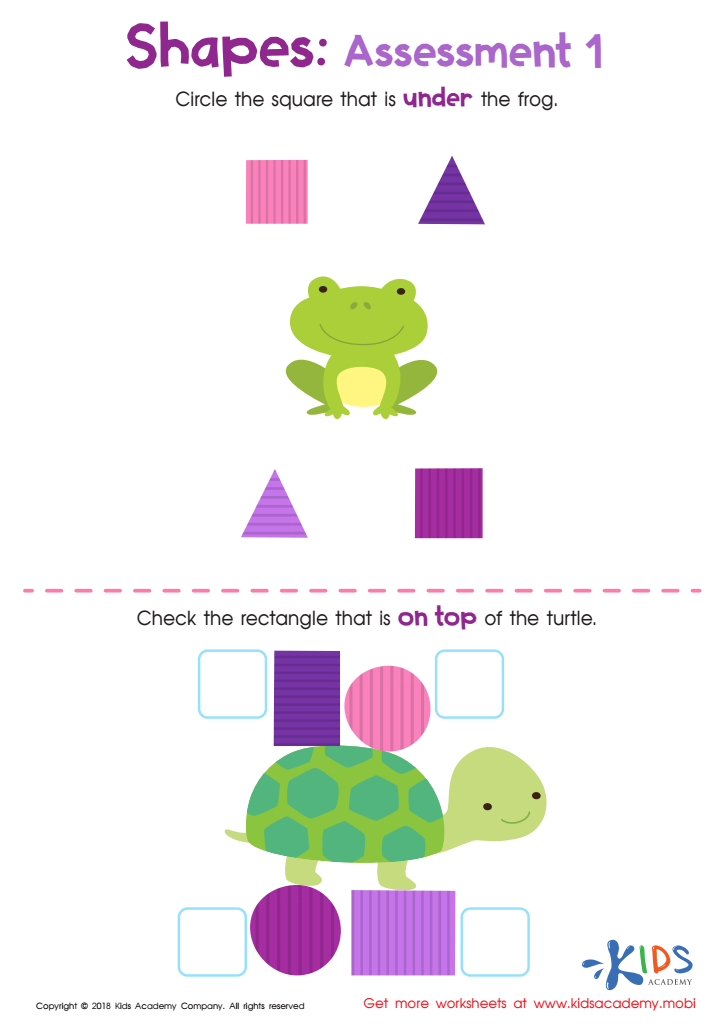
Geometry – Assessment 1 Worksheet
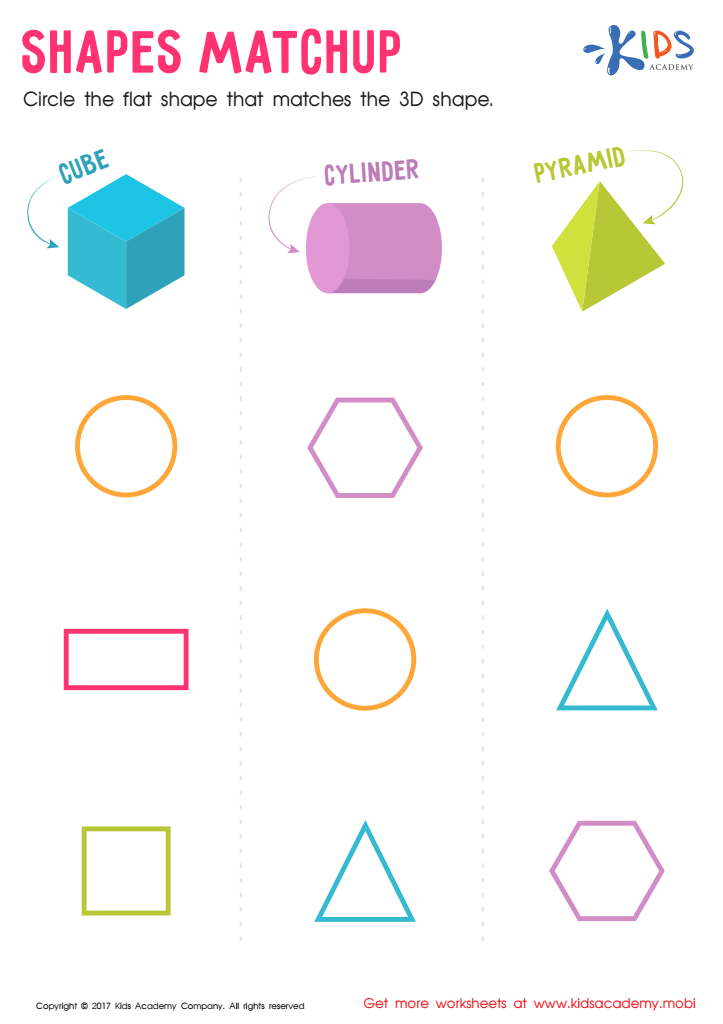
Shapes Matchup Worksheet








Basic geometry knowledge, particularly understanding 2D shapes, is crucial for children aged 4-6 as it forms the foundation for their mathematical learning and cognitive development. At this early stage, children are naturally curious about the world around them, and shapes are everywhere—they can be found in buildings, nature, and everyday objects. By introducing concepts like circles, squares, triangles, and rectangles, parents and teachers nurture children’s observational skills and help them categorize the world.
Moreover, learning 2D shapes enhances spatial awareness, which is essential for future skills in geometry, science, and even art. Shape recognition promotes problem-solving abilities as children learn to identify relationships, patterns, and differences. Engaging with shapes also fosters fine motor skills through activities like drawing, cutting, and building, thereby supporting overall developmental growth.
Early exposure to geometry sets the stage for more complex mathematical concepts later in education, making it easier for children to grasp topics like area, perimeter, and geometry in three dimensions. Ultimately, understanding 2D shapes strengthens children’s critical thinking abilities and gain confidence in their mathematical skills, leading to a smoother transition into formal schooling where math becomes more integral to learning. Parents and teachers should actively engage children in shape-related activities to support this fundamental learning.