Pattern recognition 2D Shapes Worksheets for Ages 4-6
3 filtered results
-
From - To
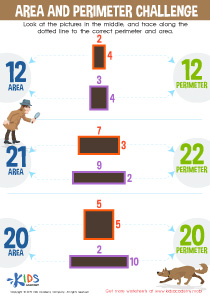
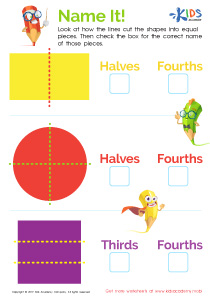
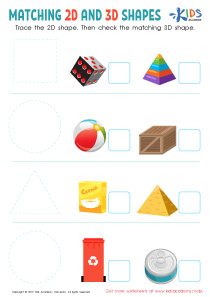
Discover our engaging Pattern Recognition 2D Shapes Worksheets tailored for children ages 4-6! These interactive activities are designed to help young learners identify, compare, and analyze 2D shapes through fun patterns. As kids explore circles, squares, triangles, and more, they’ll develop essential cognitive skills, boost their creativity, and enhance their visual perception. Ideal for home or classroom use, each worksheet delivers a blend of educational fun, supporting early numeracy and geometry concepts. Encourage a love for learning and empower your child to recognize shapes and patterns while enjoying a playful approach to foundational math skills! Perfect for parents and educators alike.
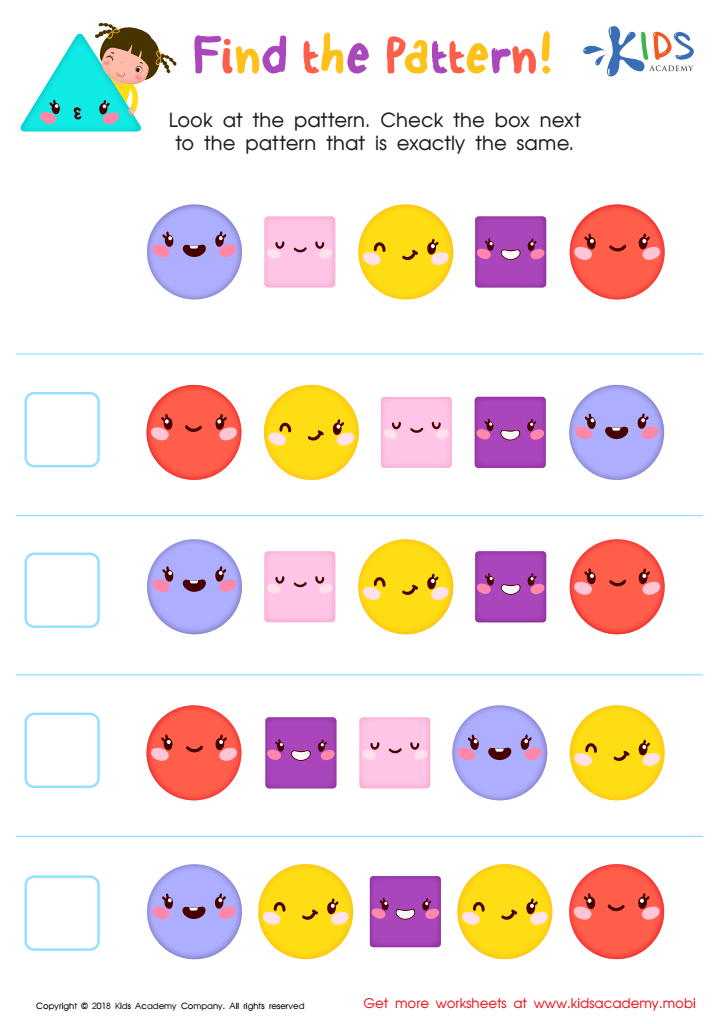
Find the Pattern Worksheet
 Assign to My Students


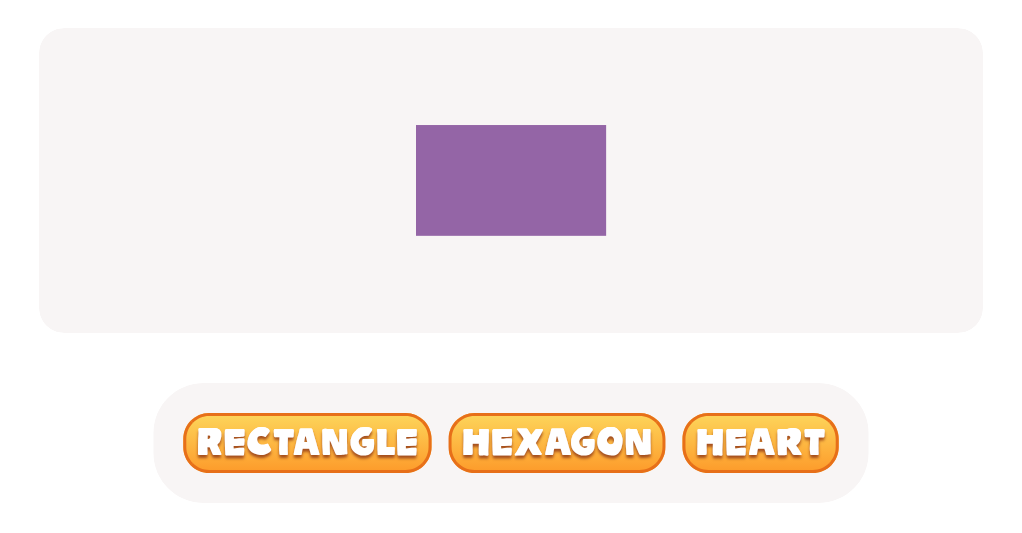


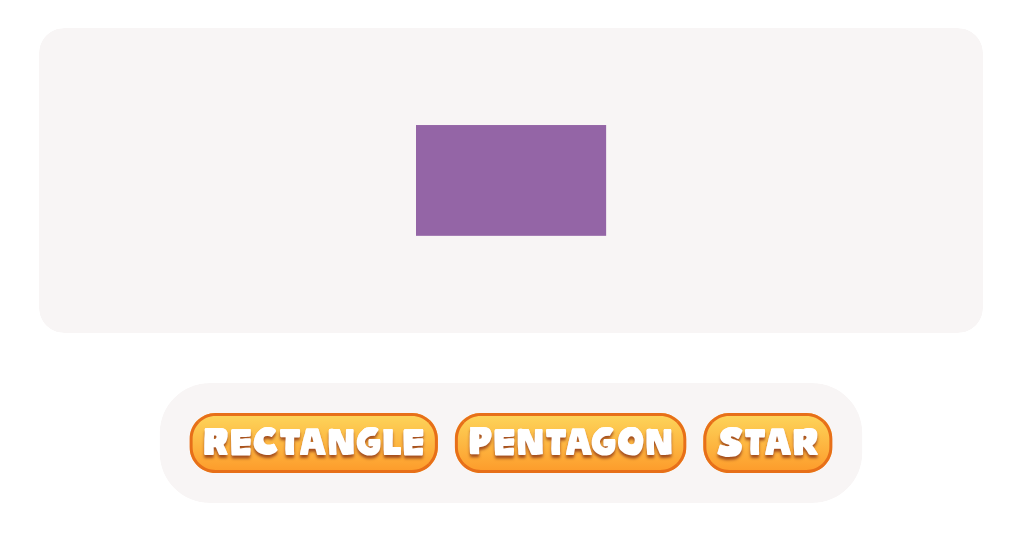
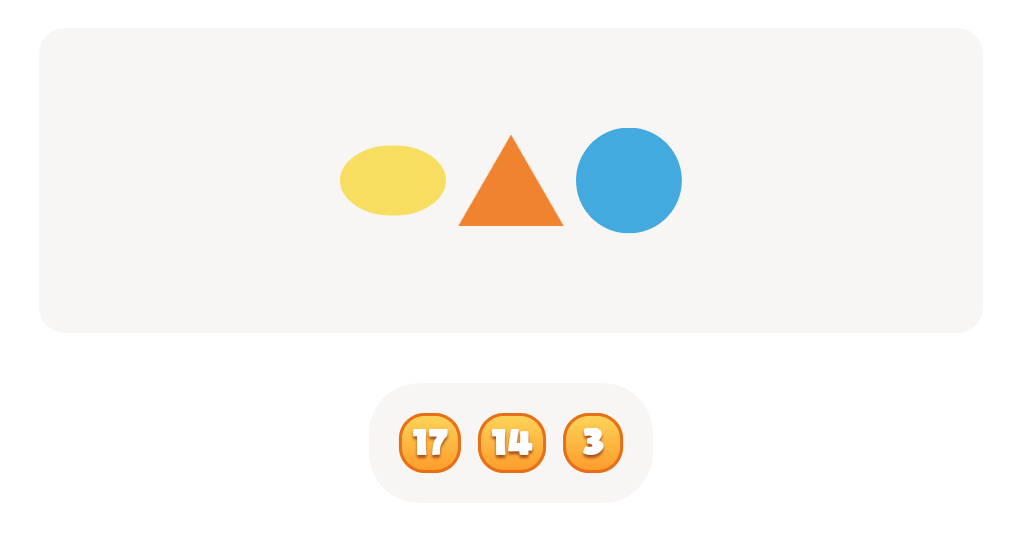
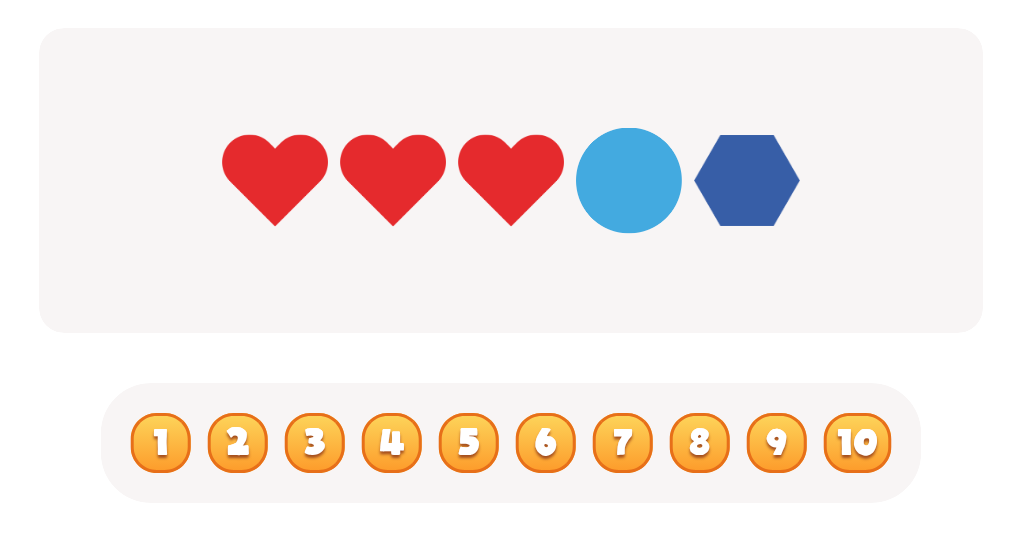

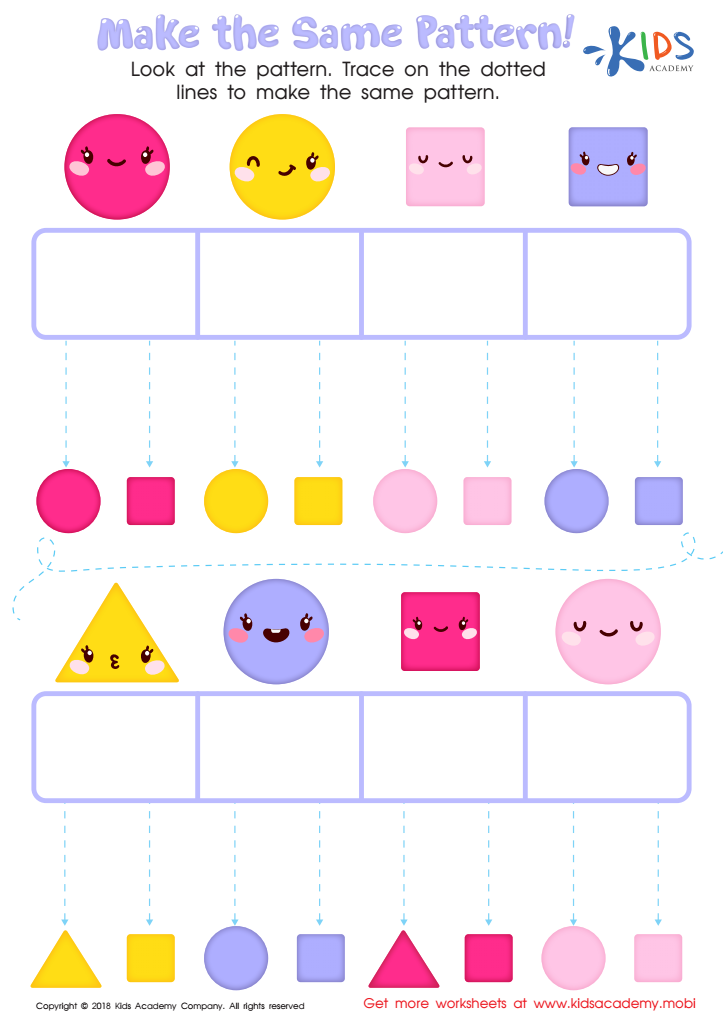
Make the Same Pattern Worksheet
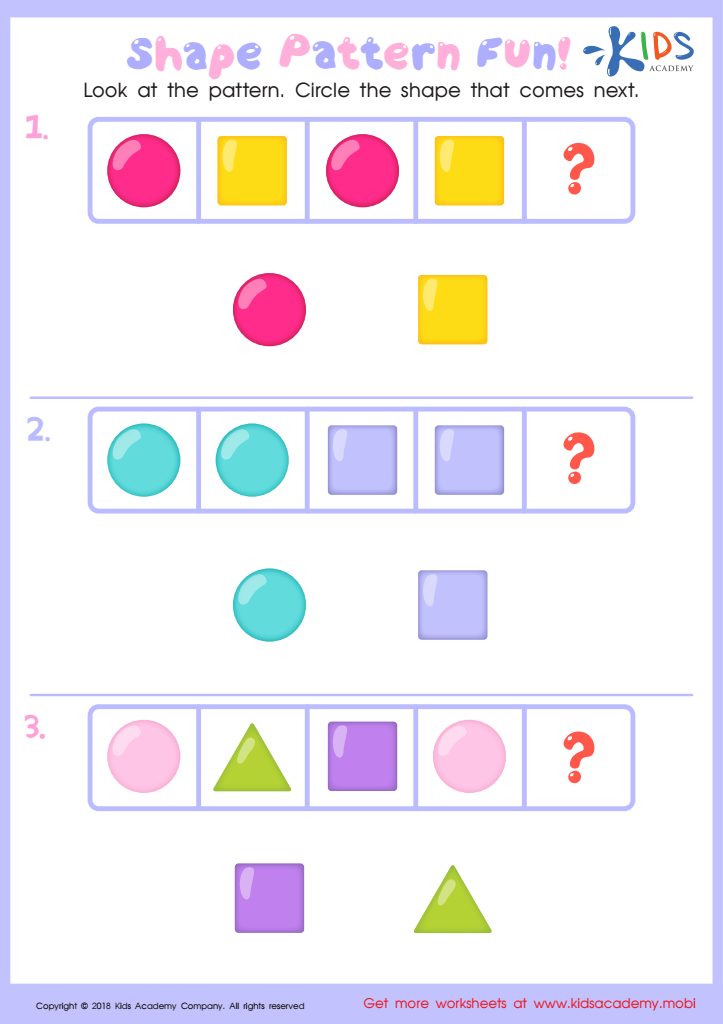
Shape Pattern Fun Worksheet








Pattern recognition and understanding 2D shapes are essential skills for children aged 4-6, laying the foundation for their cognitive development and future learning. Engaging with patterns enhances critical thinking and problem-solving abilities. When children identify and create patterns, they boost their observational skills and learn to make connections, fostering a sense of order and organization in their thinking.
Furthermore, recognizing 2D shapes is vital for mathematical understanding. It introduces concepts such as symmetry, dimensions, and spatial awareness. By distinguishing shapes like circles, squares, and triangles, children learn to classify and categorize objects in their environment, which aids in their expressive and receptive language skills.
In a world increasingly driven by technology and visual information, the ability to identify patterns and shapes enhances visual literacy, which is crucial for future learning in math, science, and arts. Moreover, these skills contribute to overall academic achievement and confidence, as children see themselves as capable learners.
Finally, parents and teachers play a crucial role in this development by incorporating playful activities, games, and discussions around patterns and shapes into daily routines. This not only reinforces learning but also builds a loving and supportive learning environment. Engaging in these skills can promote joy and curiosity in young children, which are key for long-term success.