Shape Recognition 2D Shapes Worksheets for Ages 4-6 - Page 2
32 filtered results
-
From - To
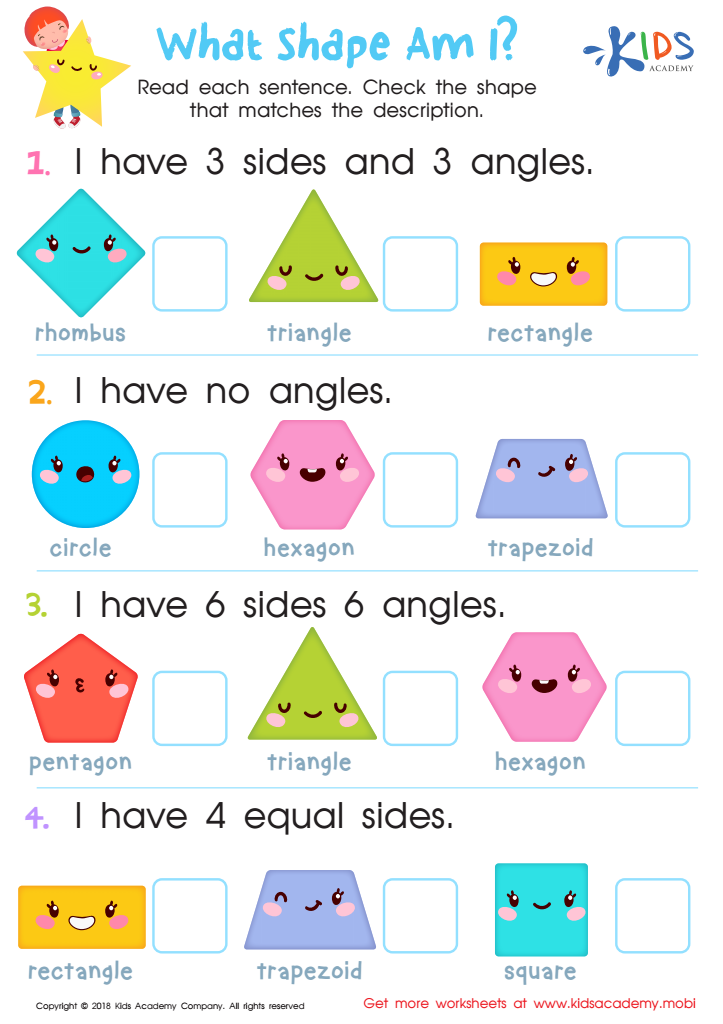
What Shape Am I? Worksheet
 Assign to My Students


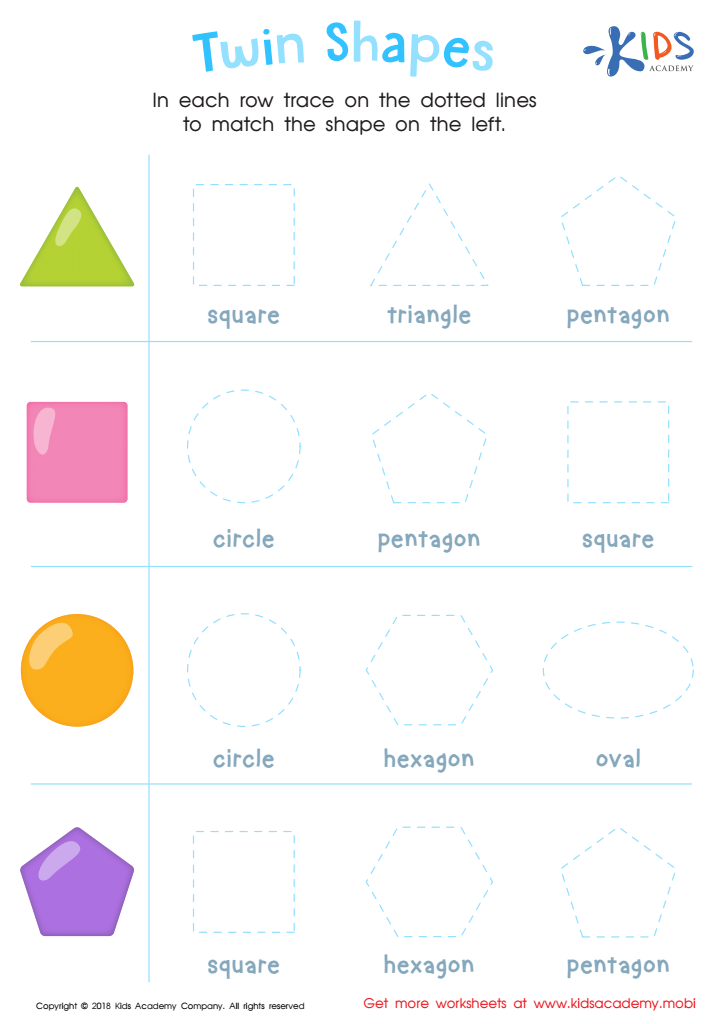
Twin Shapes Dot-to-Dot Worksheet
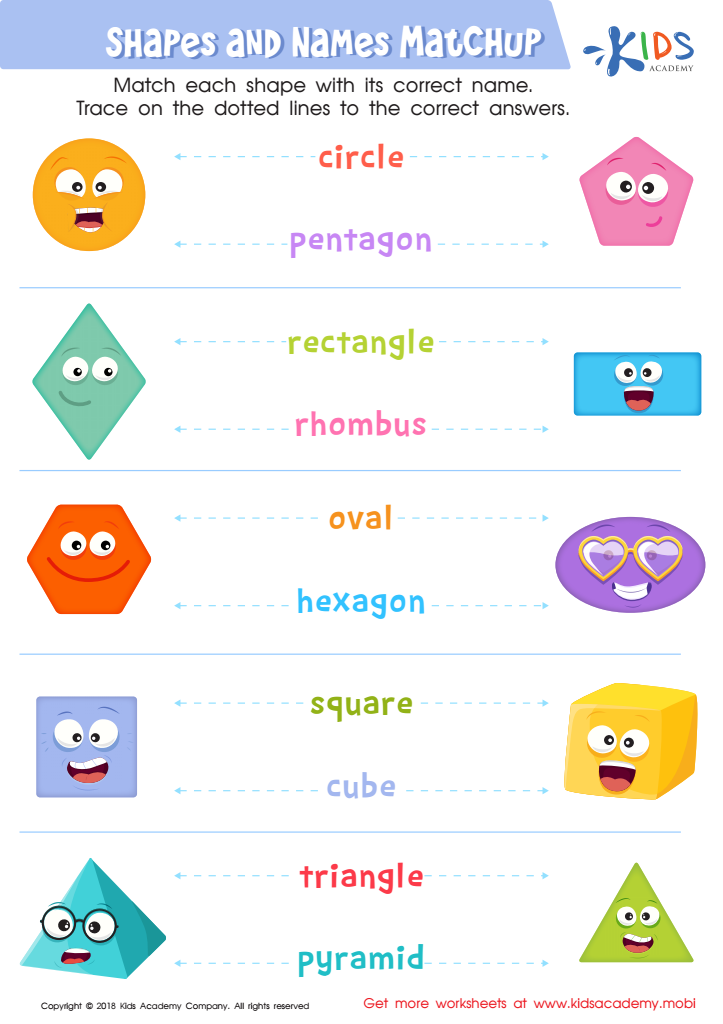
Shapes and Names Matchup Worksheet
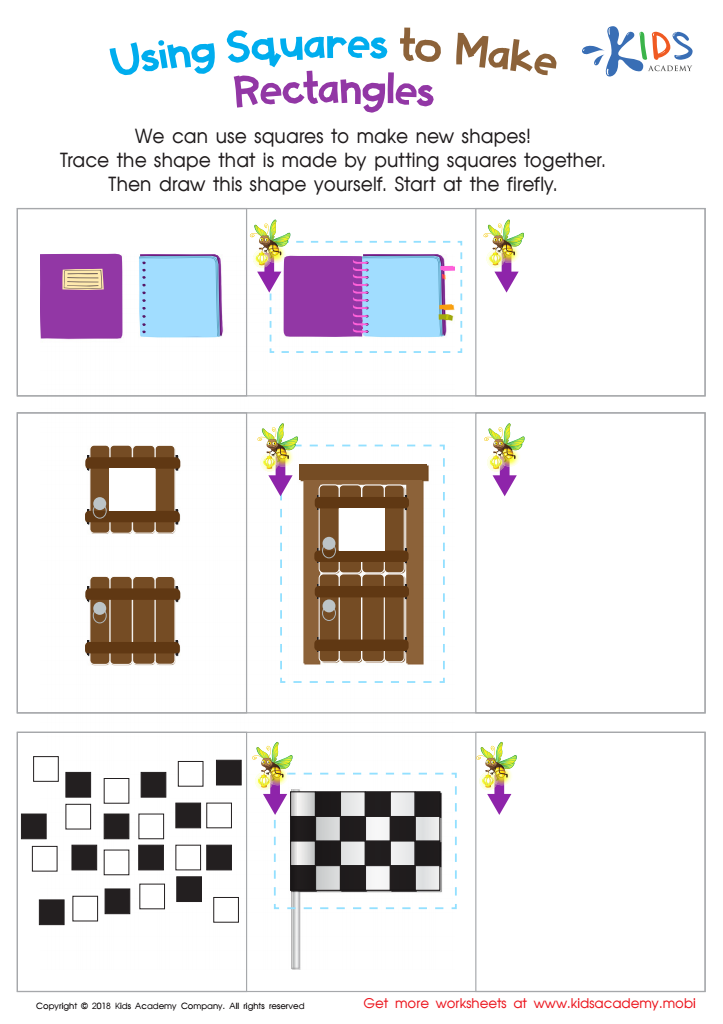
Using Squares to Make Rectangles Worksheet
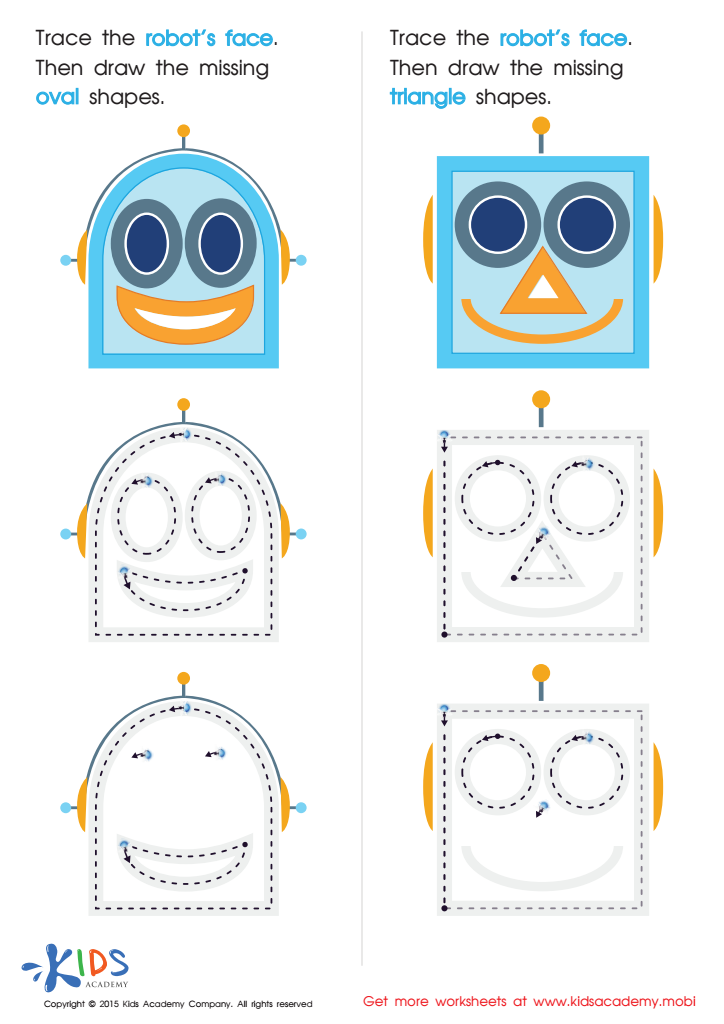
Drawing Ovals And Triangles with Fun Printable
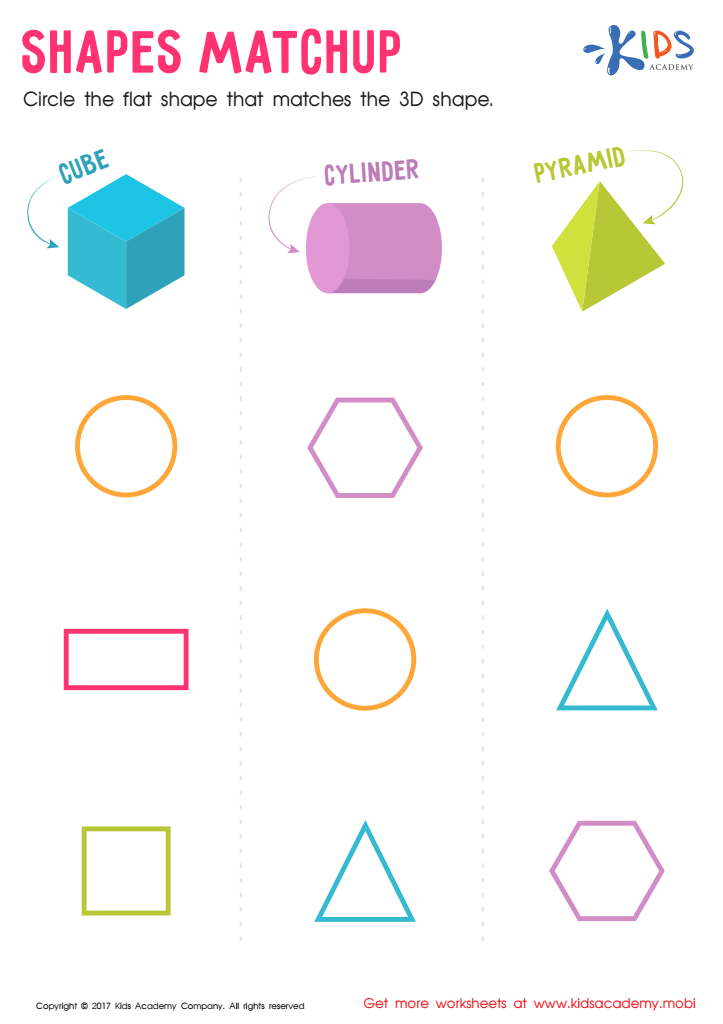
Shapes Matchup Worksheet
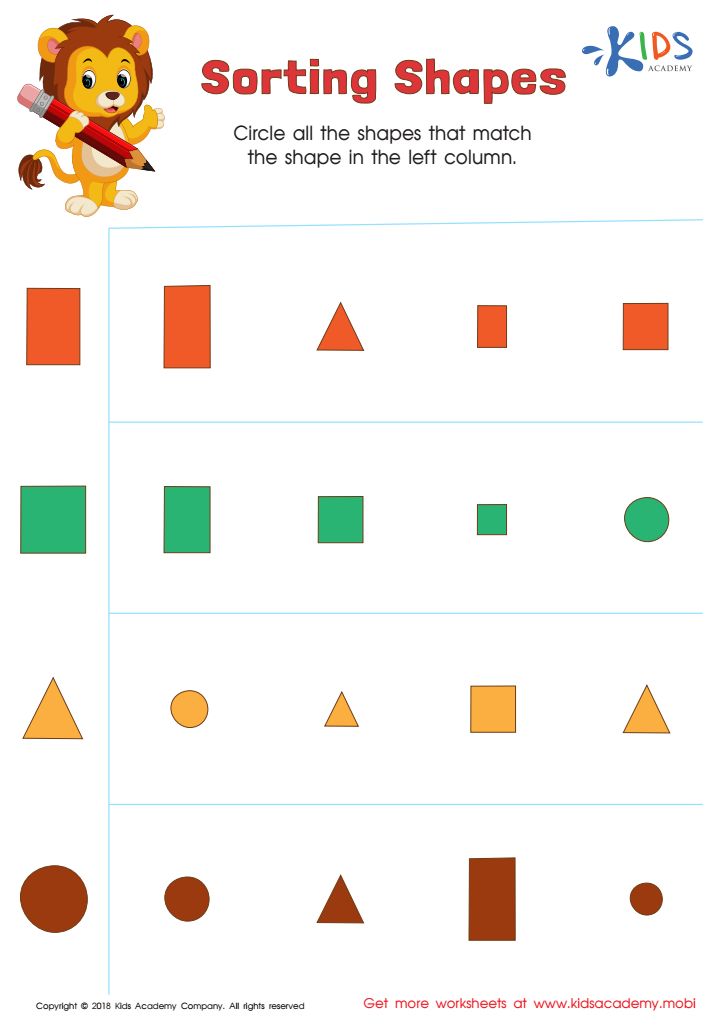
Sorting Shapes - Part 2 Worksheet
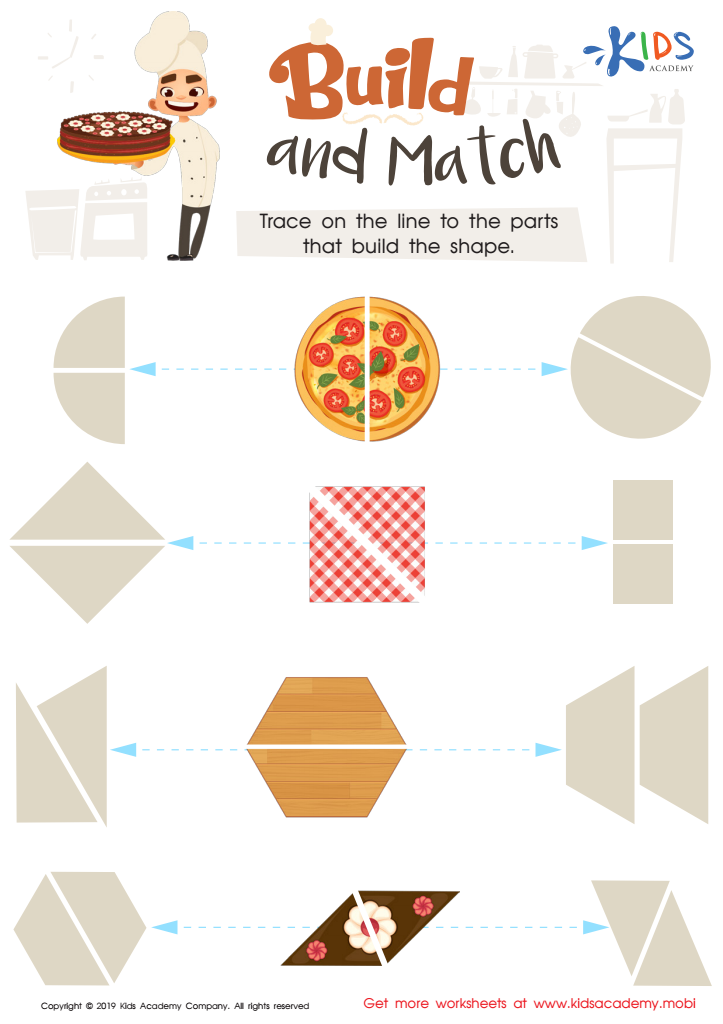
Build and Match Worksheet








Shape recognition is a fundamental cognitive skill that children aged 4-6 should develop because it lays the groundwork for advanced mathematical understanding, language development, and visual perception. At this early age, introducing children to 2D shapes, such as circles, squares, triangles, and rectangles, helps in pattern recognition and spatial awareness. These skills are crucial for solving puzzles, understanding geometry, and improving problem-solving abilities later in life.
Parents and teachers should focus on 2D shapes because they are among the first visual patterns that young children encounter and can learn to identify quickly. Recognizing these shapes aids not only in mathematical competency but also in reading and writing. For example, the ability to differentiate shapes boosts a child's understanding of letter and number formation, which are essentially made up of various shapes and lines.
Moreover, shape recognition supports everyday life skills. Children learn to sort objects by shape, which reinforces categorization and organizational skills. Learning about shapes in early childhood can also enhance a child’s environment interaction, enabling them to better describe and engage with the world around them, fostering their observational and descriptive vocabulary.
Thus, for holistic cognitive and social development, incorporating shape recognition into early education is invaluable and equips children with the necessary tools for future academic and life success.