Vocabulary enhancement 2D Shapes Worksheets for Ages 4-6
6 filtered results
-
From - To
Enhance your child's vocabulary and shape recognition with our engaging 2D Shapes Worksheets designed for ages 4-6! These interactive worksheets focus on essential vocabulary related to geometric shapes, helping young learners grasp concepts like circle, square, triangle, and more. Each activity encourages creativity and critical thinking while reinforcing shape identification and pronunciation. Fun exercises, colorful illustrations, and easy-to-follow instructions make learning enjoyable and effective. Perfect for at-home or classroom use, our worksheets provide a solid foundation for early math skills, ensuring that children not only recognize shapes but also understand their names and characteristics. Empower your child's learning journey today!
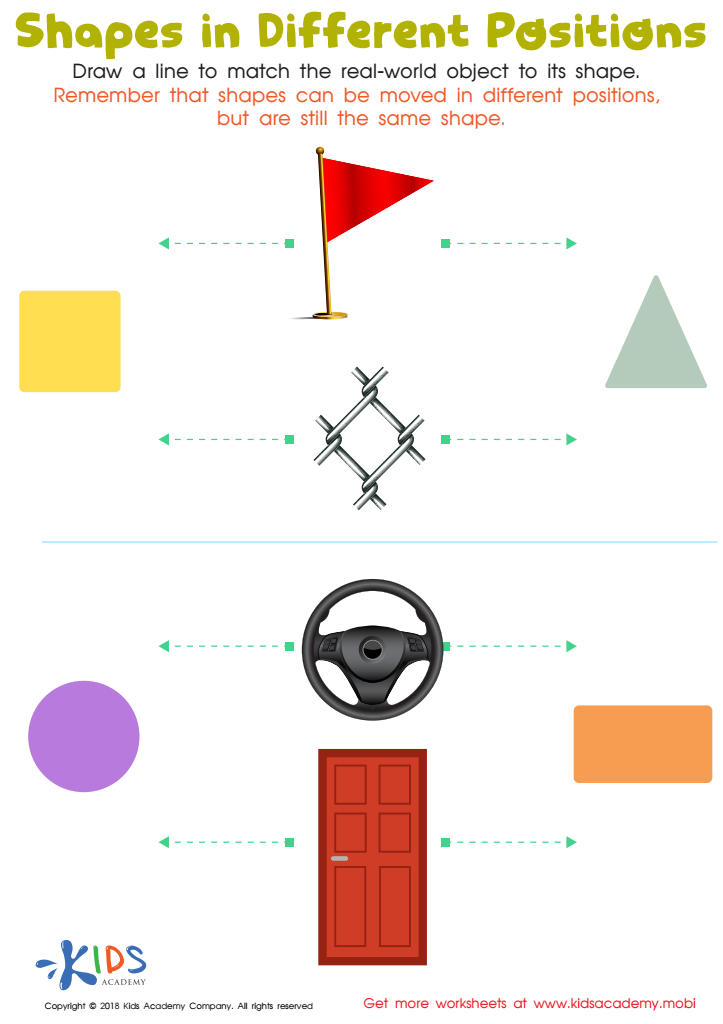
Shapes in Different Positions Worksheet
 Assign to My Students

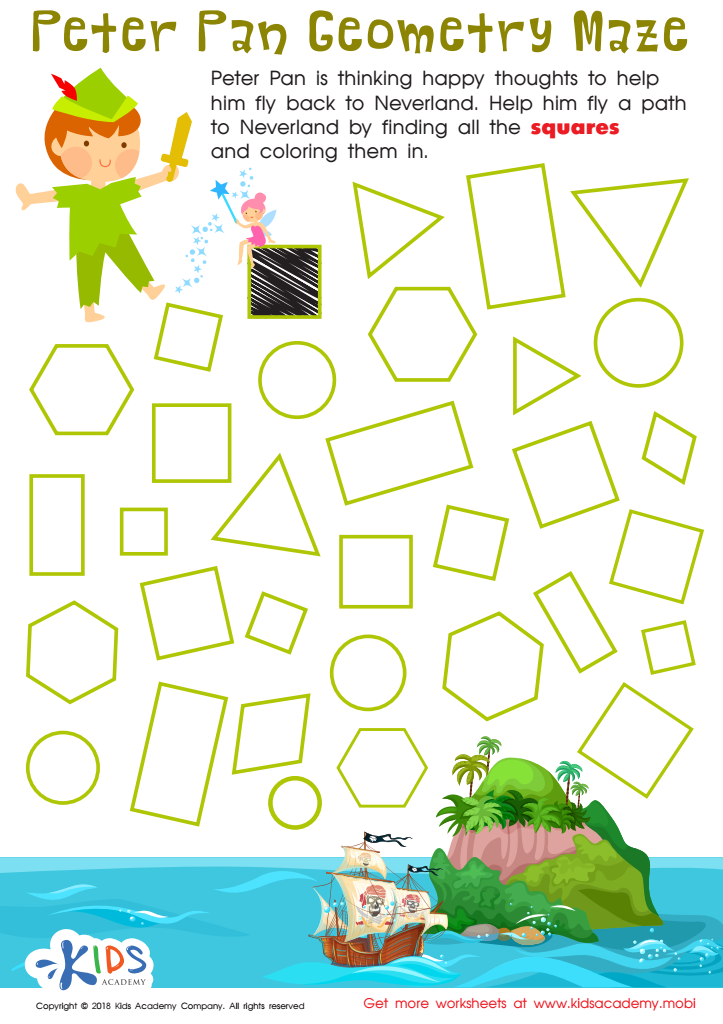
Peter Pan Worksheet
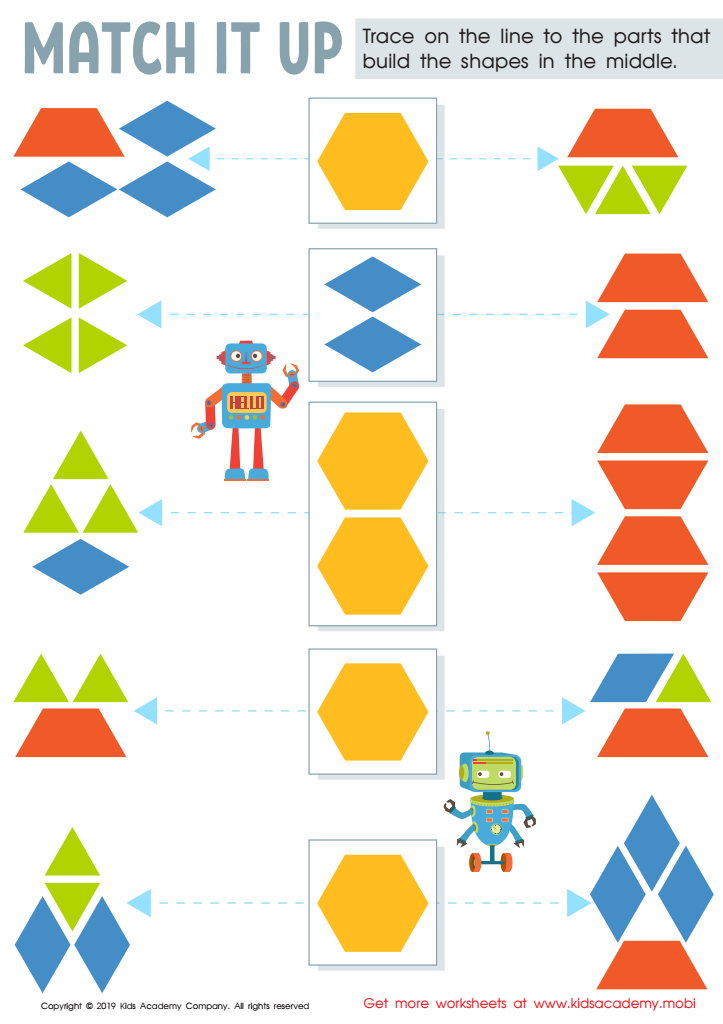
Match It up Worksheet
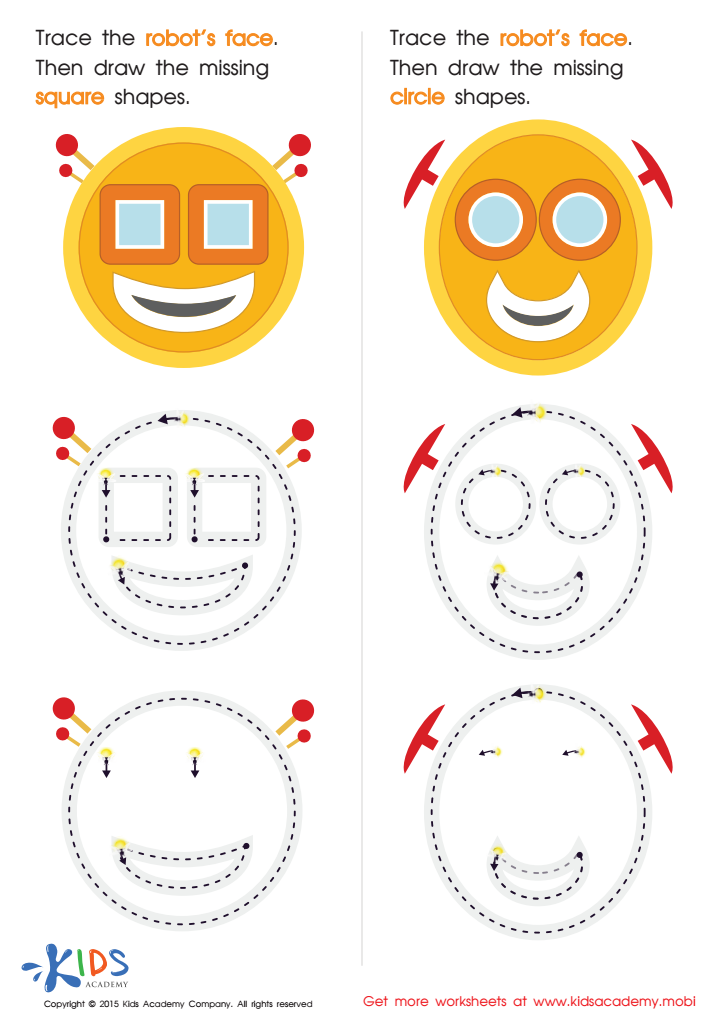
Practicing to Draw Circles And Squares Printable
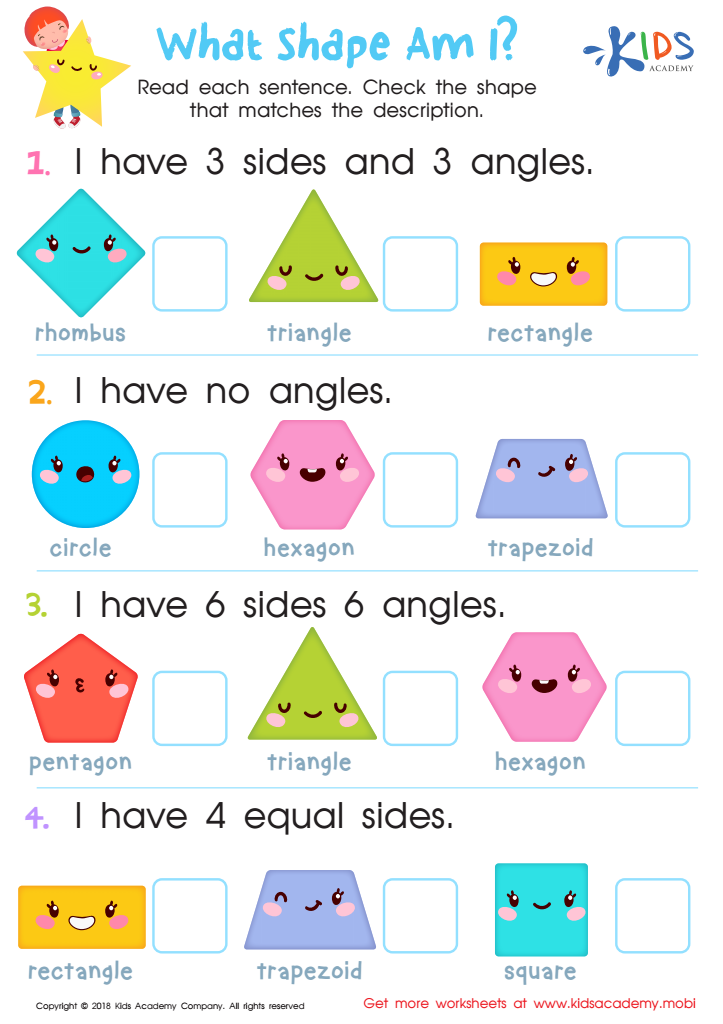
What Shape Am I? Worksheet
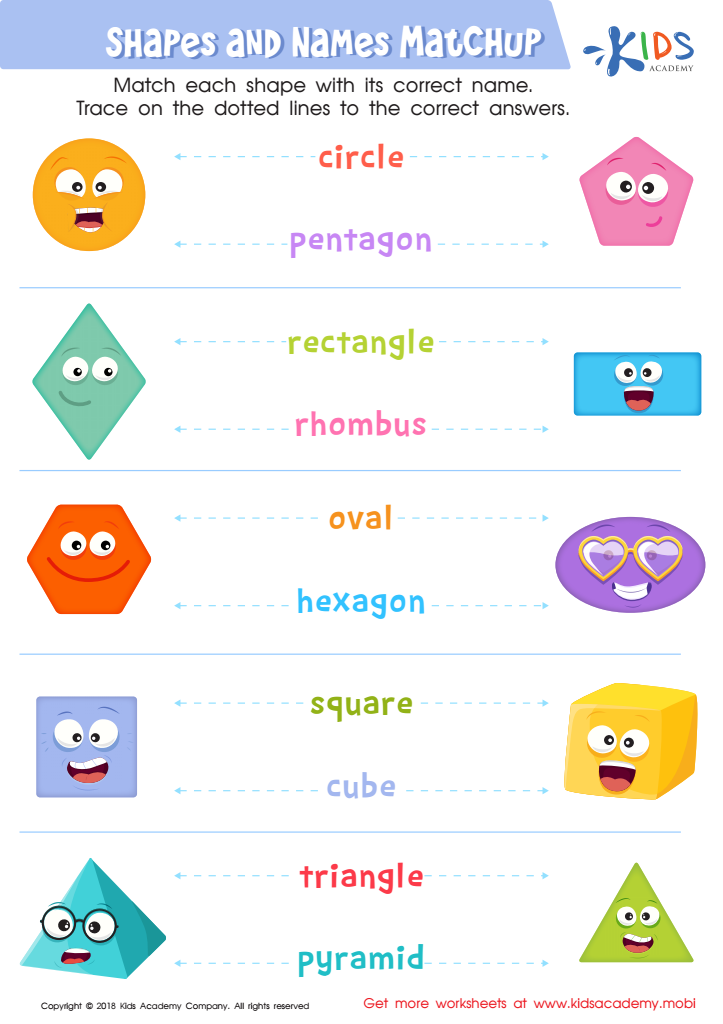
Shapes and Names Matchup Worksheet








Vocabulary enhancement around 2D shapes for ages 4-6 is crucial for early childhood development. First, mastering shape vocabulary helps young children describe and identify the objects in their world, enhancing their observational skills. This lays a foundational understanding of geometry, a vital area in mathematics, fostering numerical literacy necessary for more complex concepts as they progress in their education.
Additionally, engaging with shape vocabulary boosts cognitive development. Children learn to categorize shapes based on attributes like sides and angles, promoting critical thinking and reasoning skills. Furthermore, discussions around shapes and their properties encourage language development, allowing children to express thoughts, ask questions, and communicate effectively. This is also essential for developing early literacy skills that will support reading and writing later on.
Moreover, teachers and parents can use shape-based activities to create an interactive learning environment. Hands-on experiences, play, and storytelling involving shapes make learning fun and memorable, facilitating deeper understanding. By emphasizing shape vocabulary, we equip children not only with essential mathematical concepts but also with language skills, confidence, and the ability to engage with their environment meaningfully. सही Knowledge of shapes supports lifelong learning and cognitive flexibility necessary for future academic and personal success.