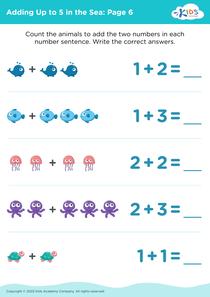
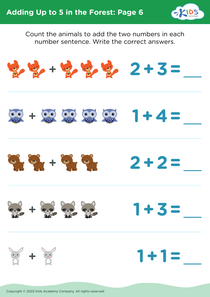
Animal recognition Adding at the Zoo Worksheets for Ages 4-6
43 filtered results
-
From - To
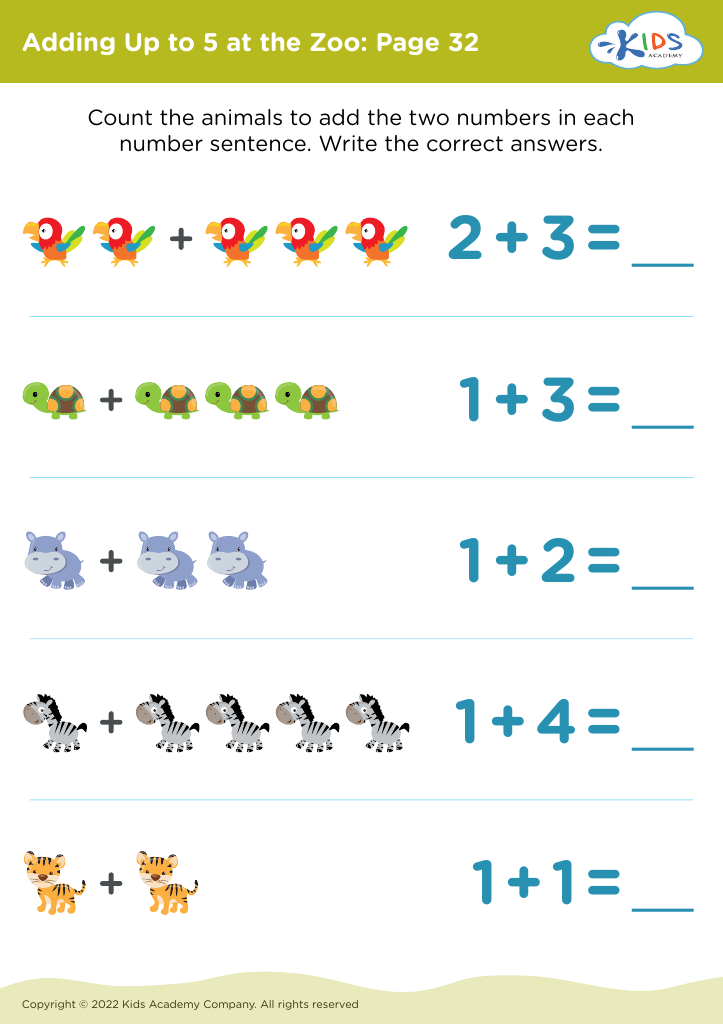
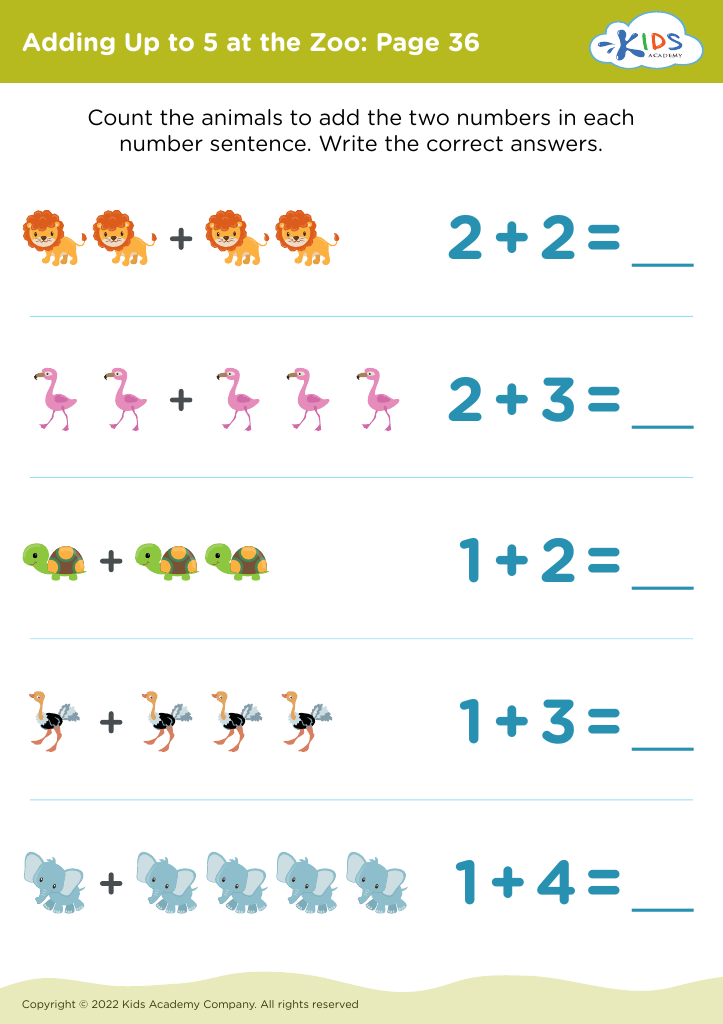
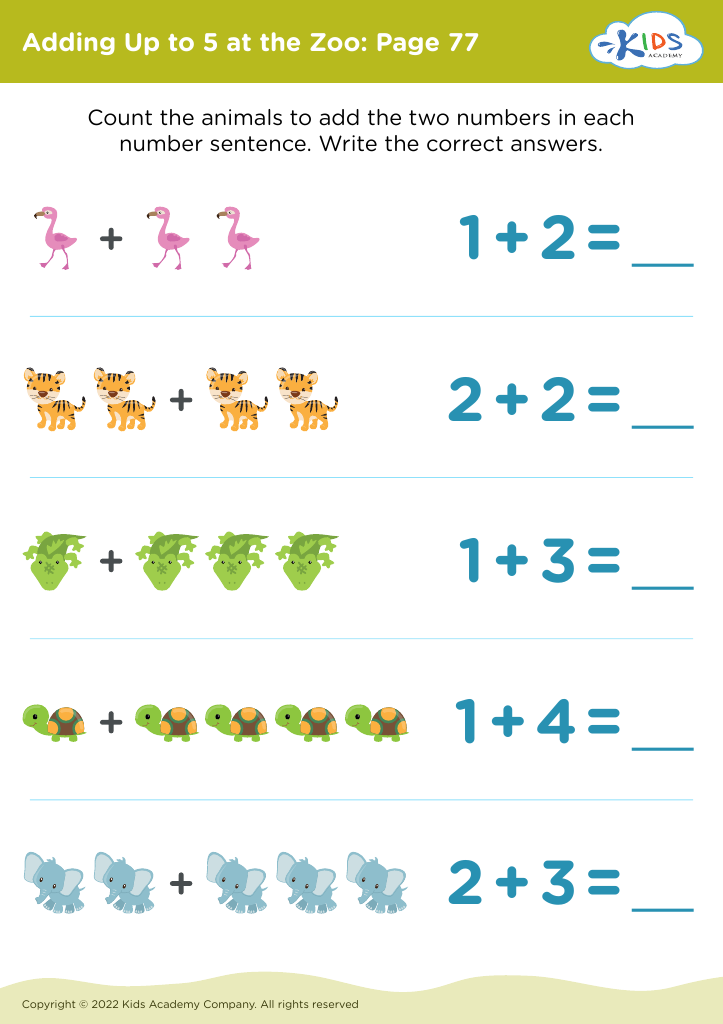
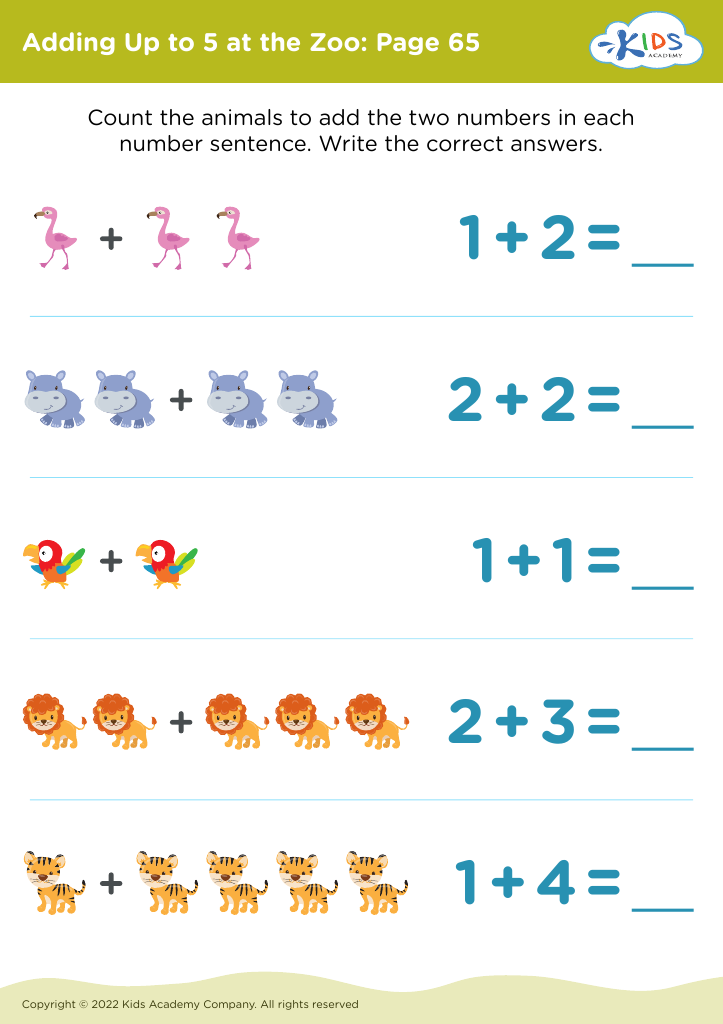
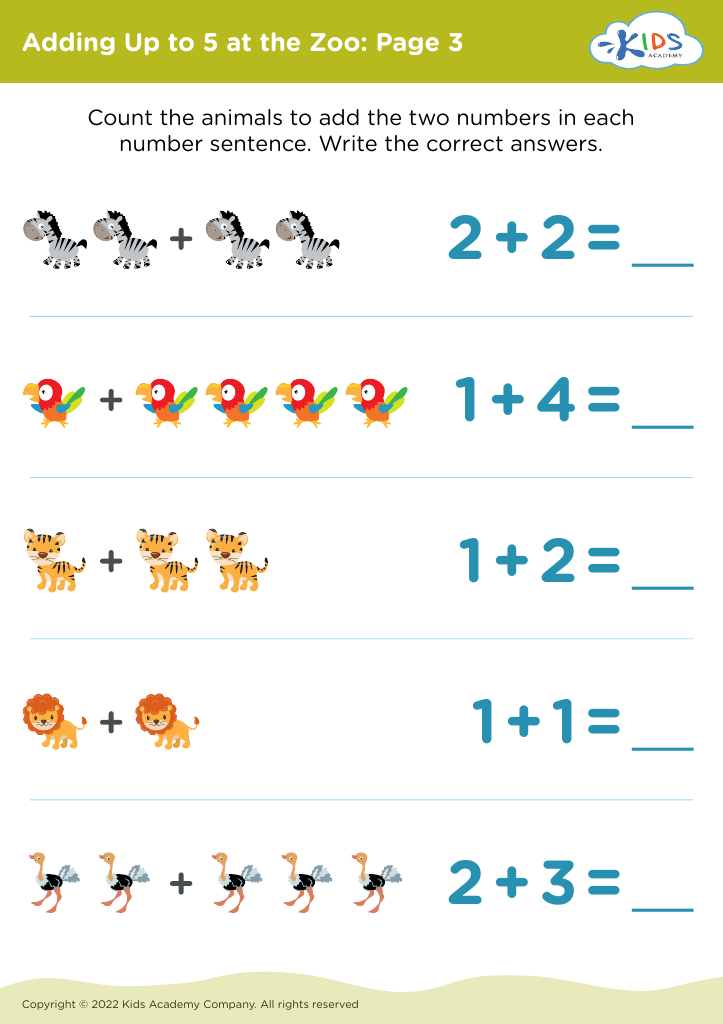
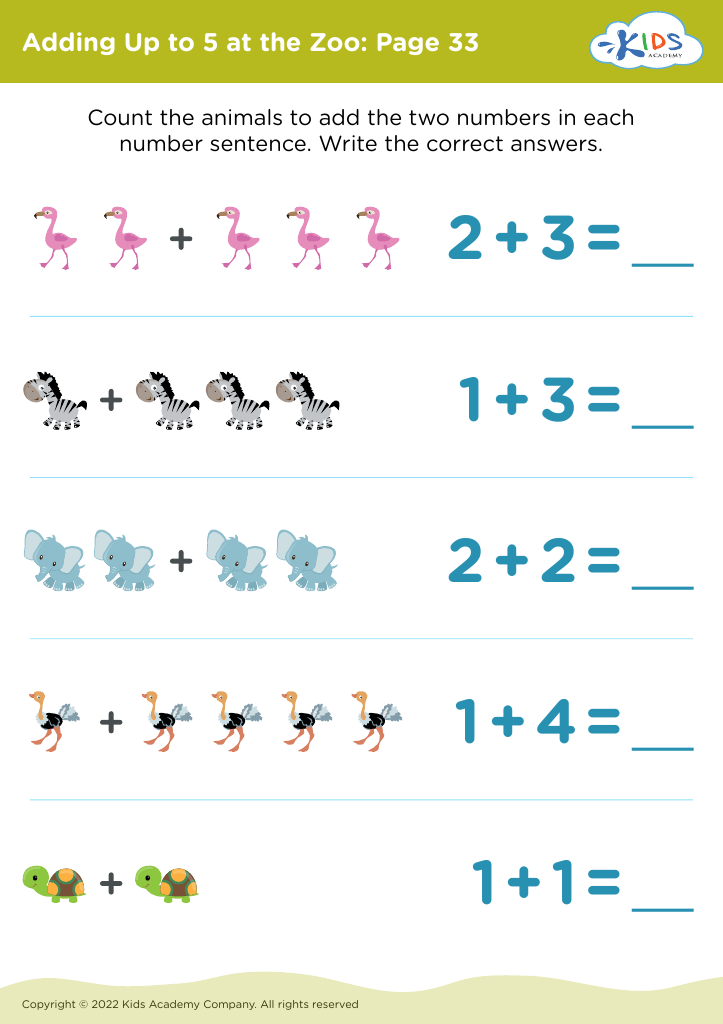
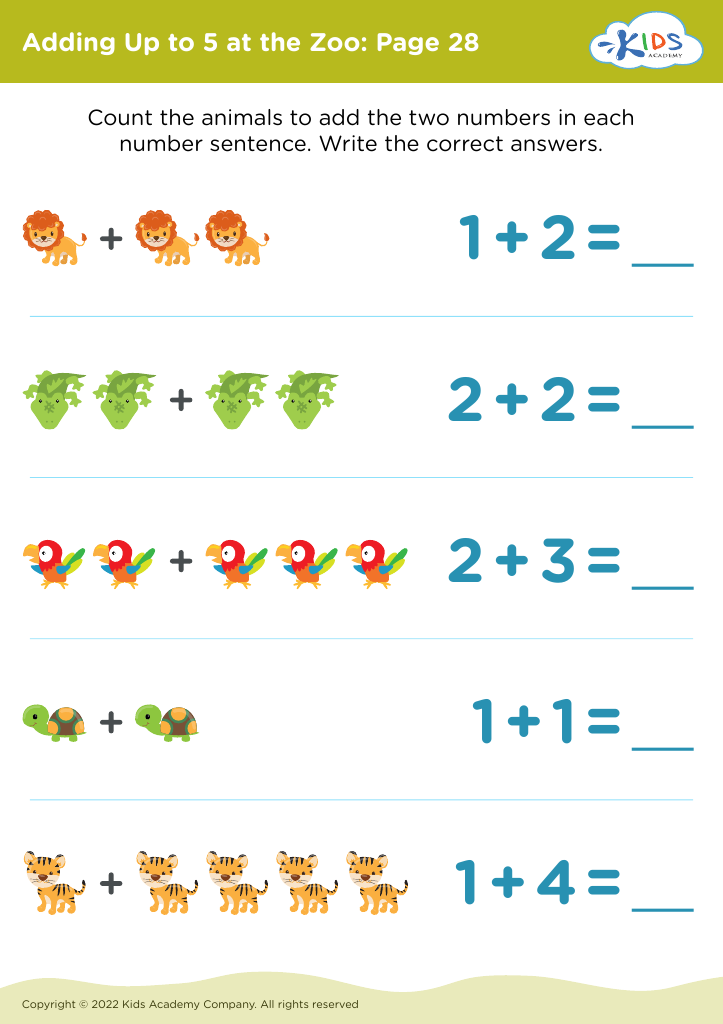
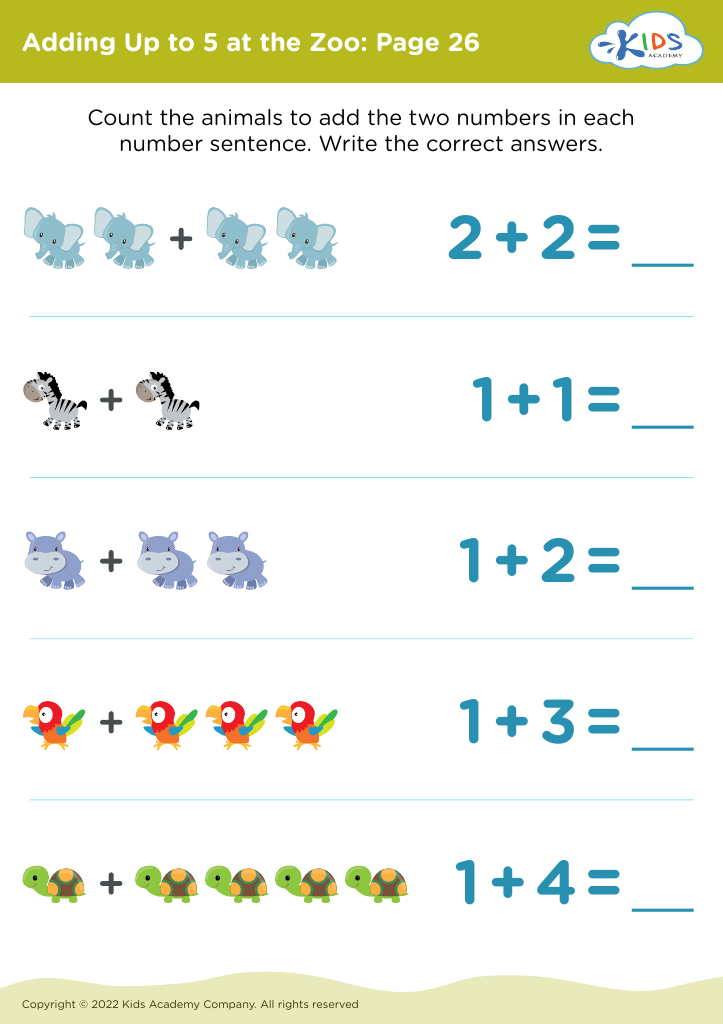
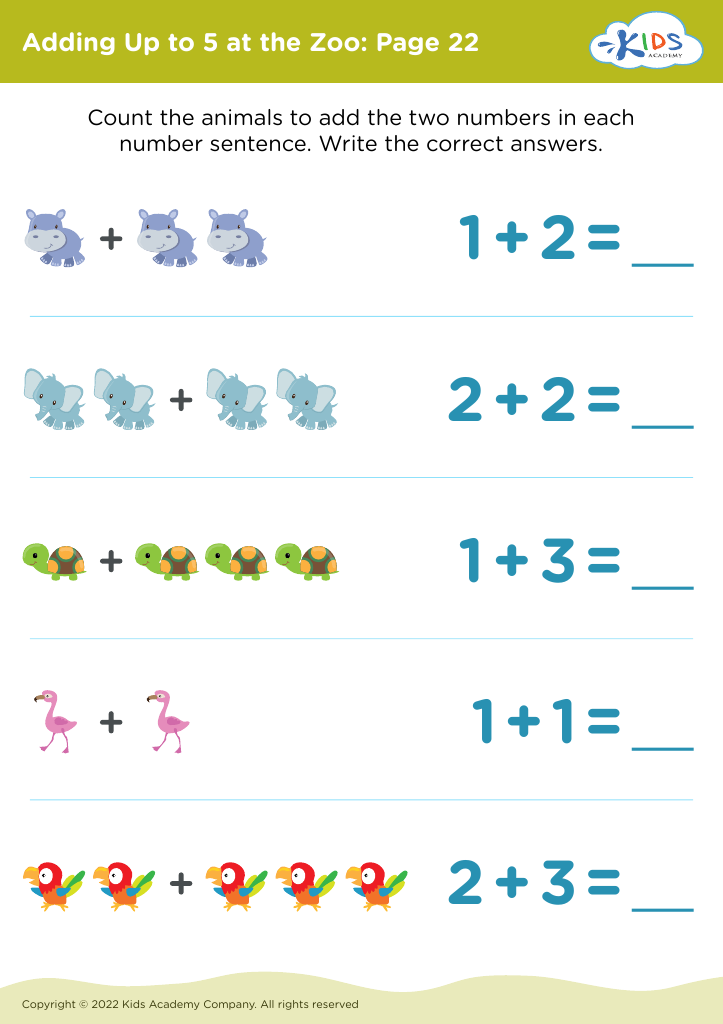
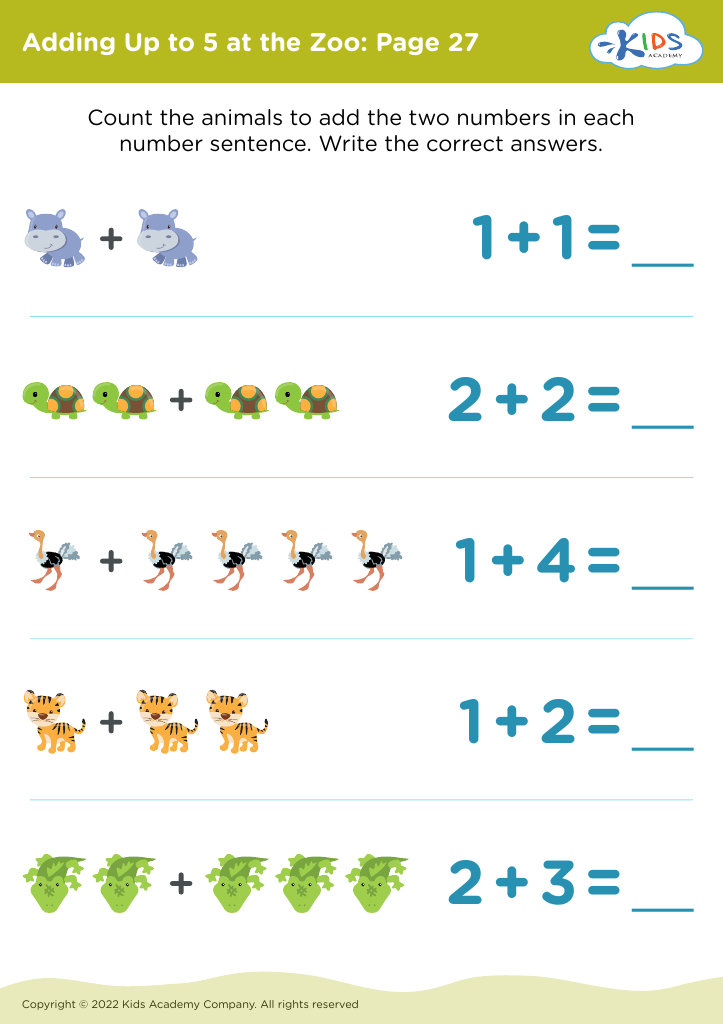
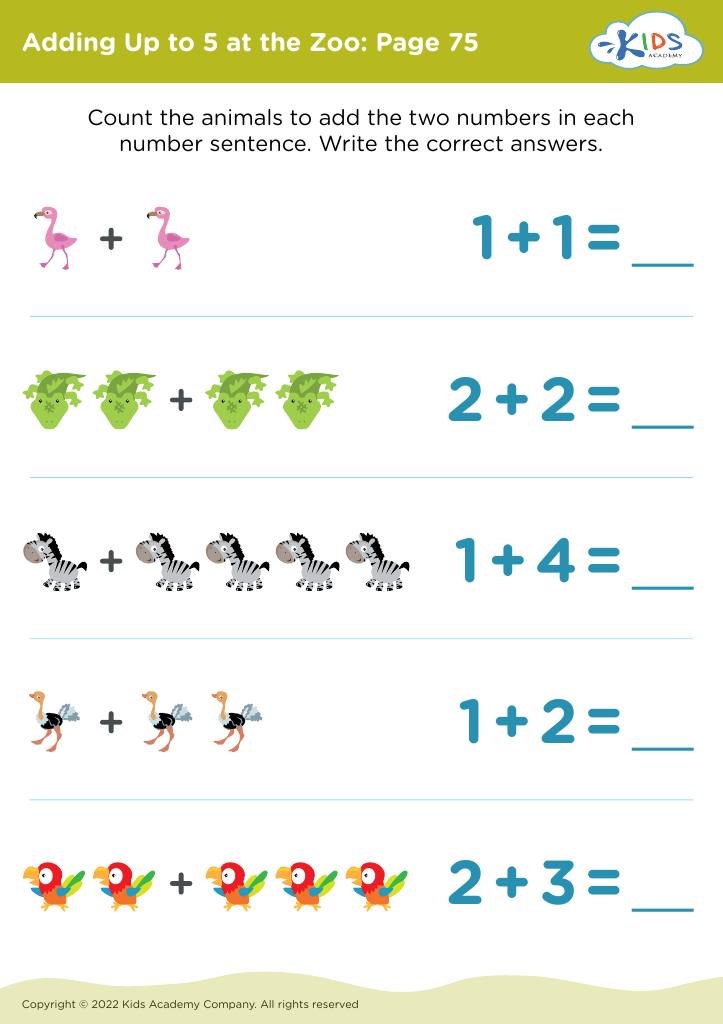
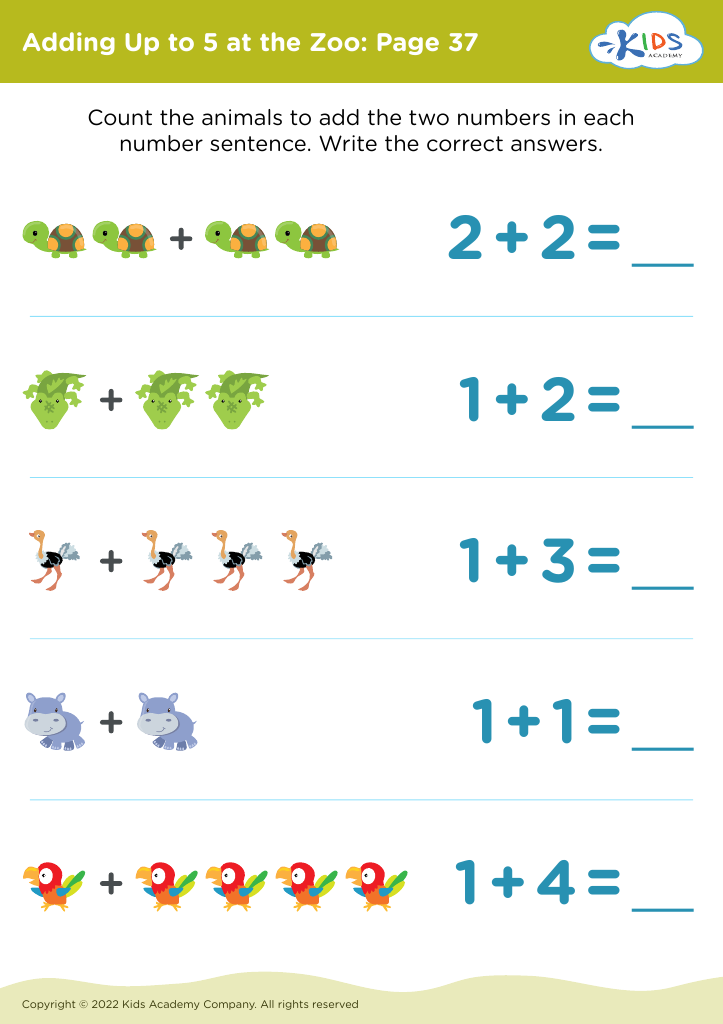
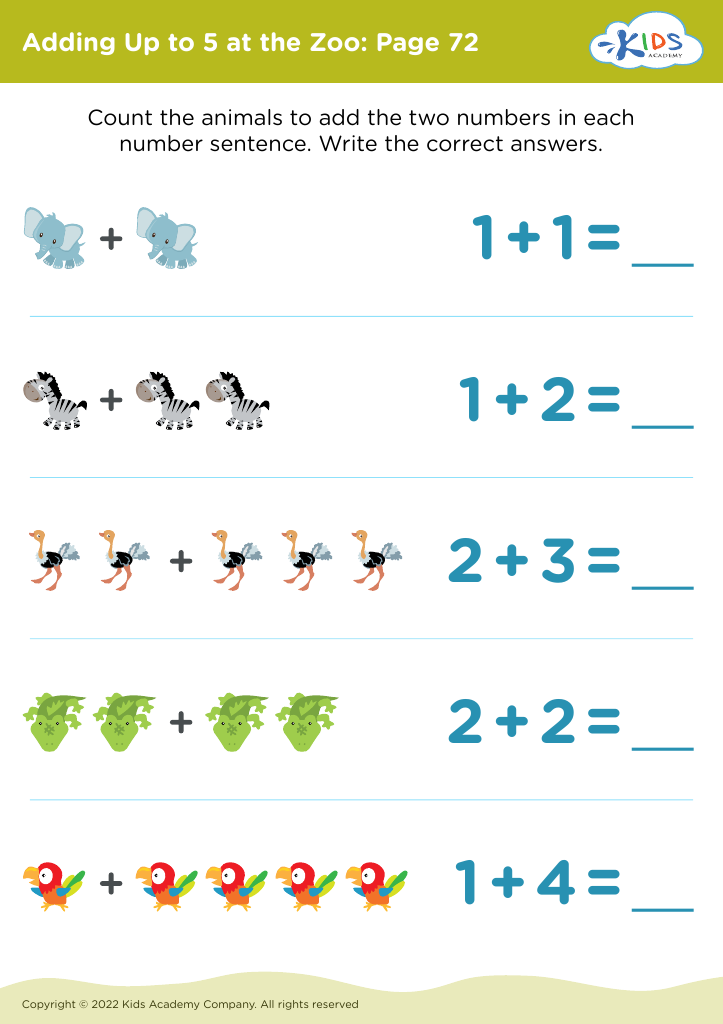
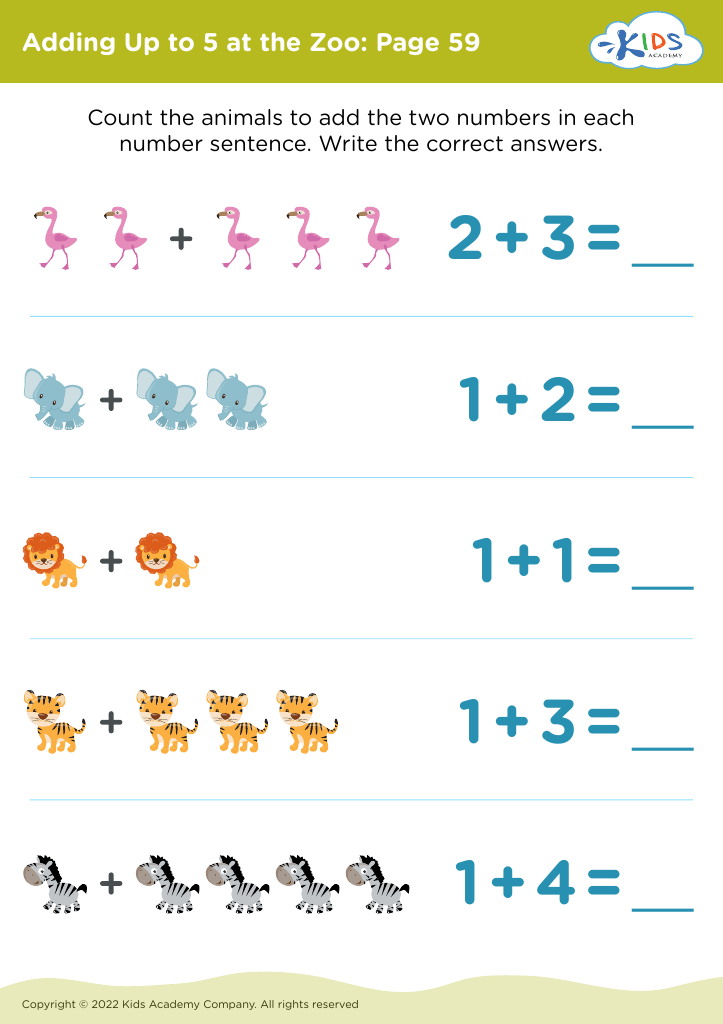
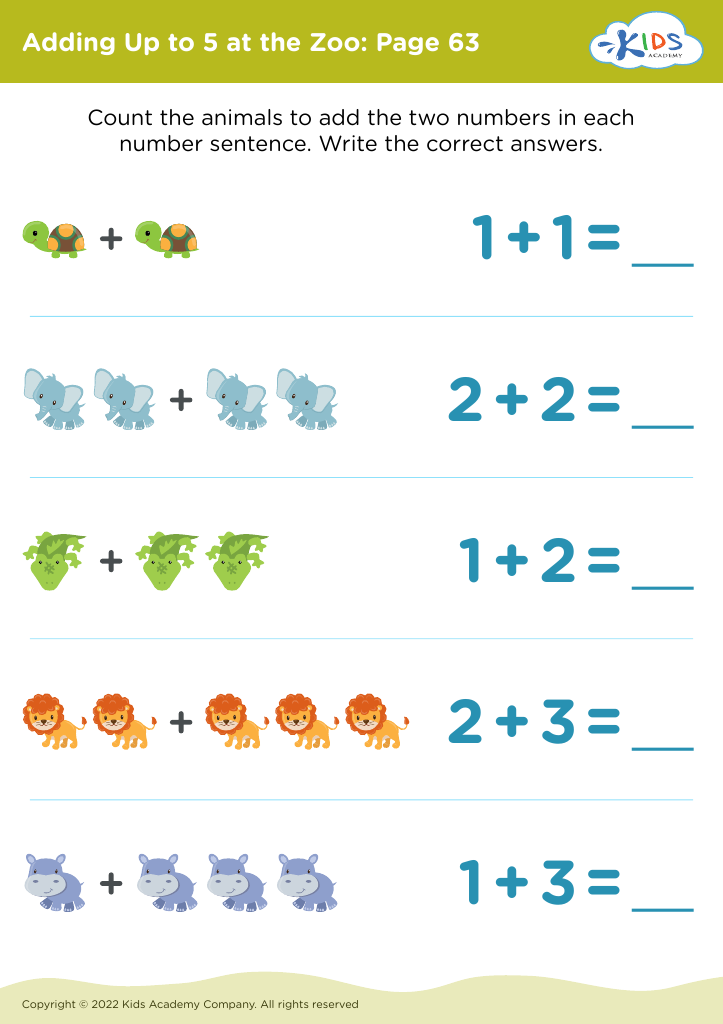
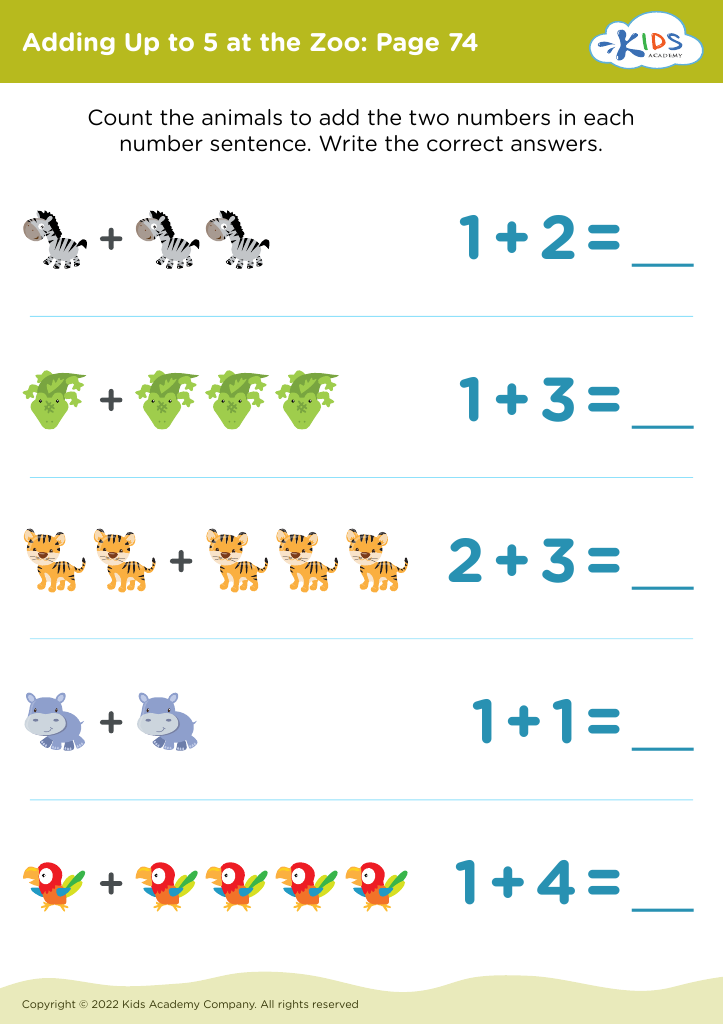
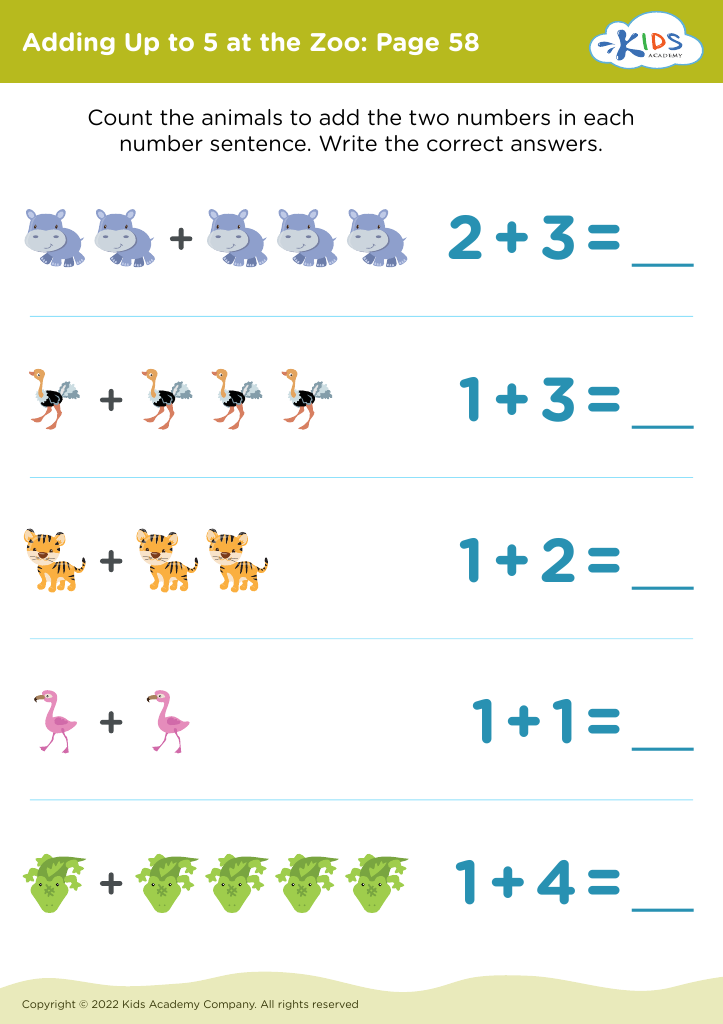
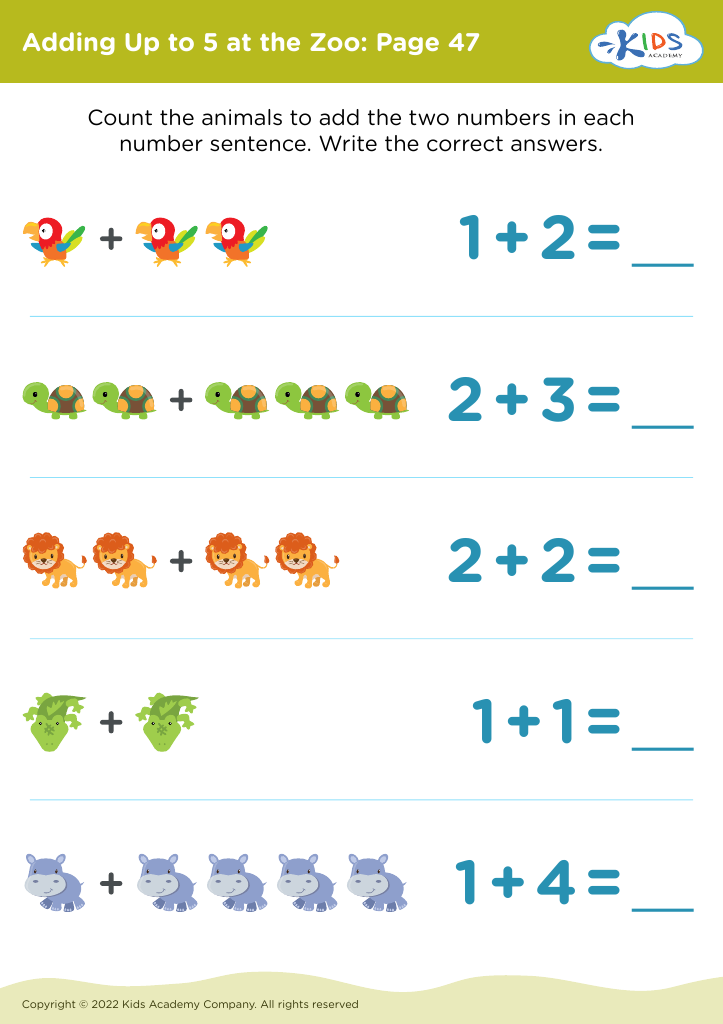
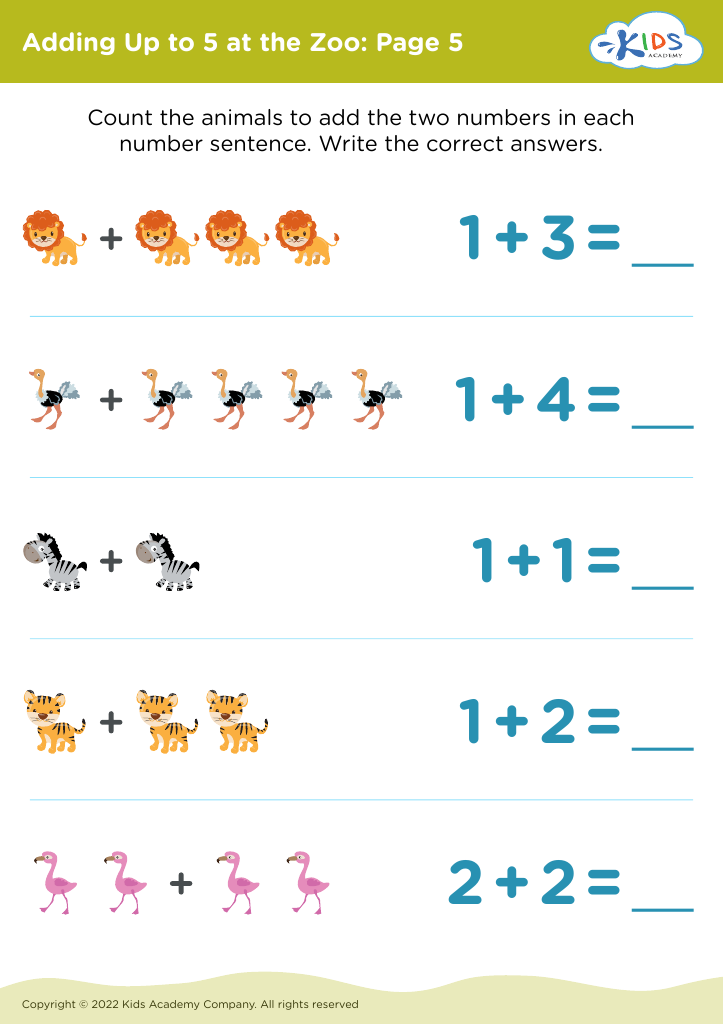
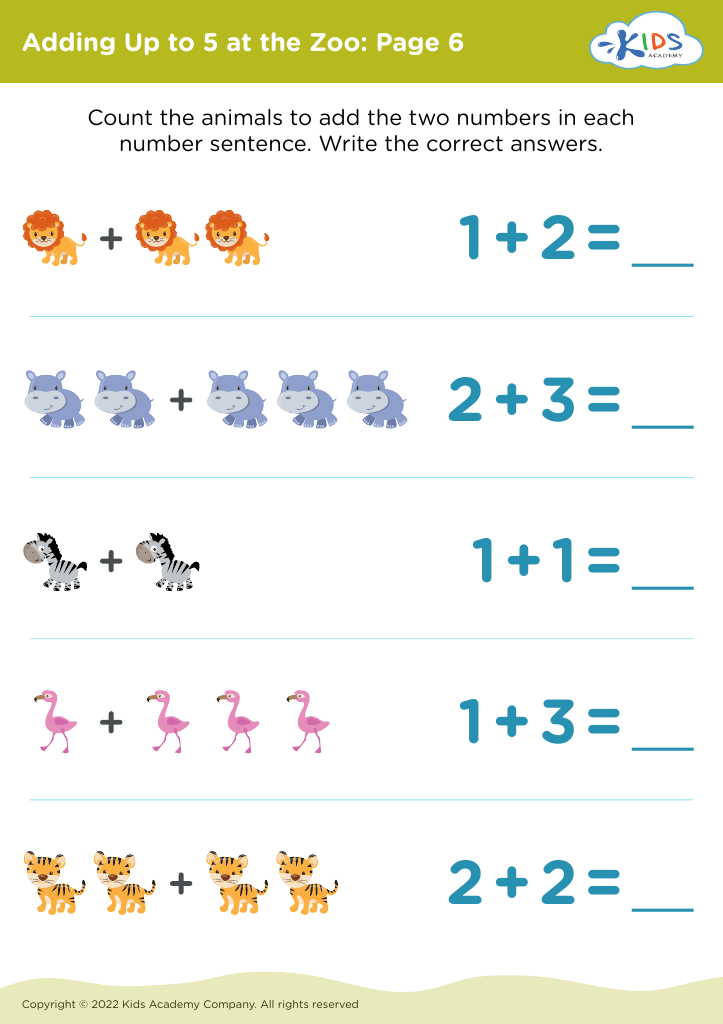
Discover the fun and educational "Animal Recognition Adding at the Zoo Worksheets" designed specifically for children aged 4-6. These engaging worksheets combine basic addition skills with exciting animal themes, capturing young learners' imaginations while reinforcing essential math concepts. Young children can explore counting and addition through their favorite zoo animals, making learning both enjoyable and memorable. With colorful visuals and age-appropriate exercises, these worksheets encourage critical thinking and help develop early math skills in a playful environment. Perfect for homeschooling, classroom activities, or educational playtime, these worksheets are a delightful way to enhance learning at an early age!
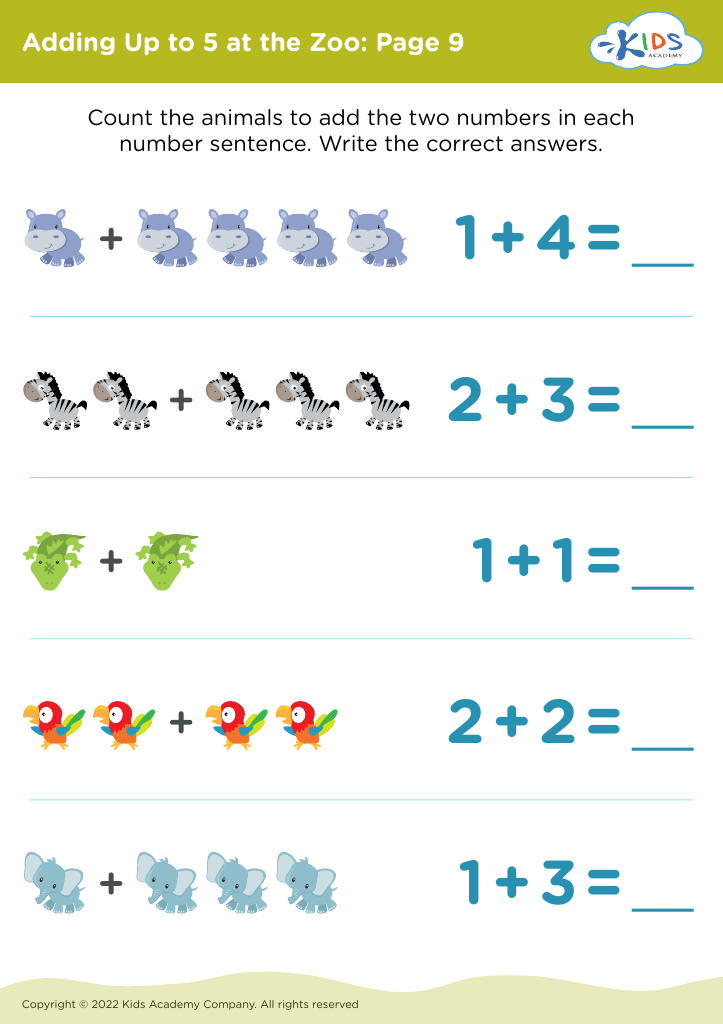
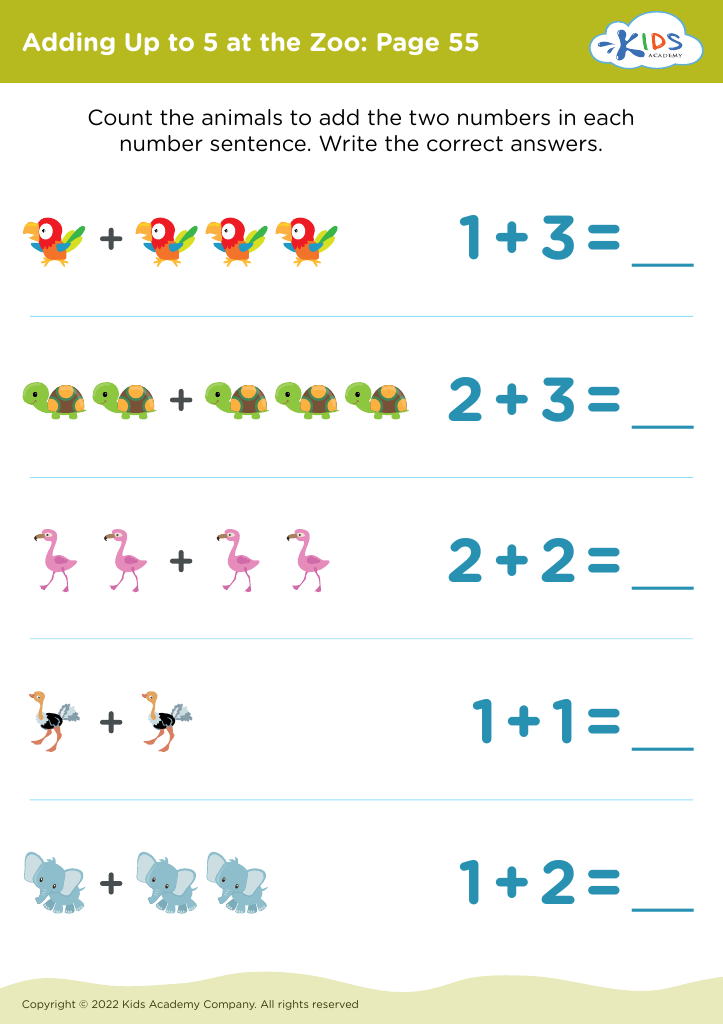
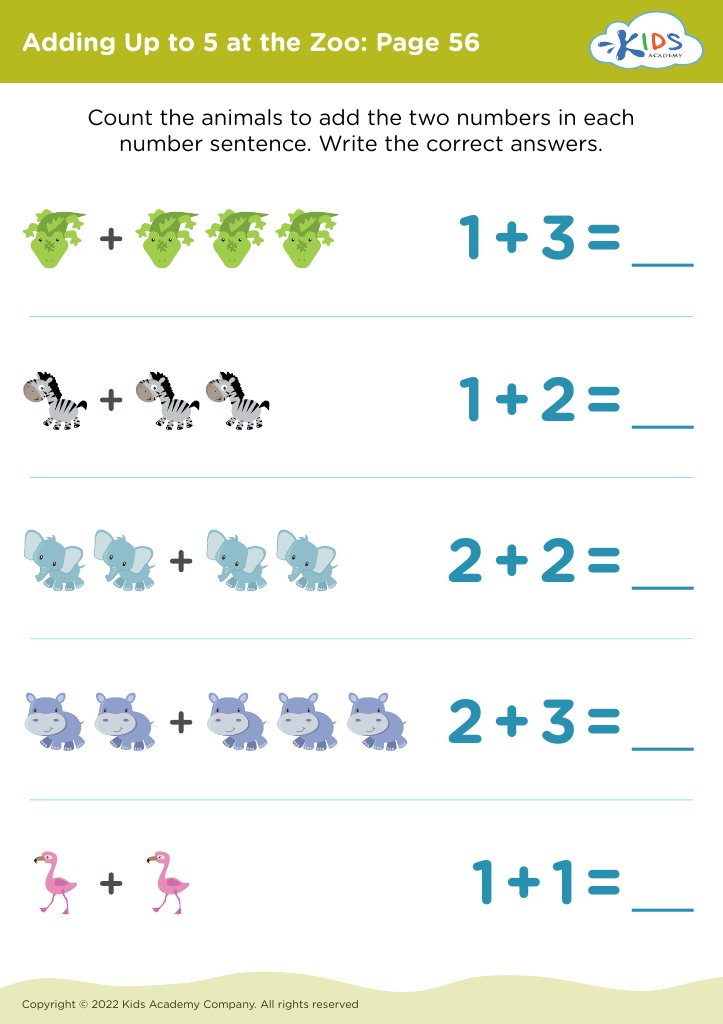
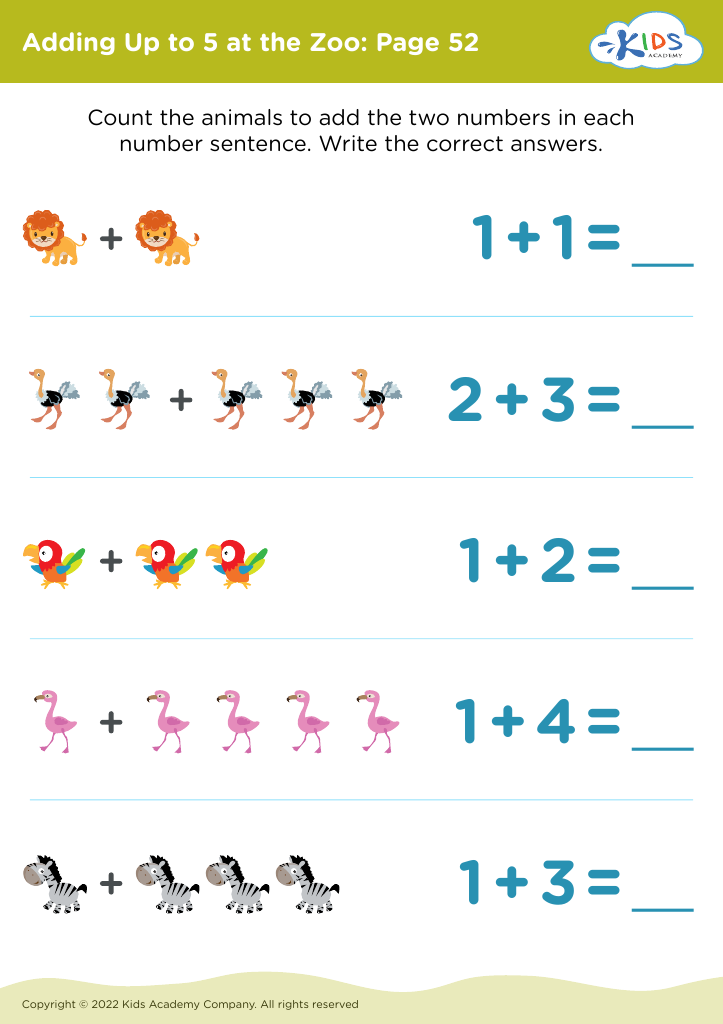



Animal recognition activities, like visiting a zoo, are vital for children aged 4-6 for several reasons. First, such experiences stimulate curiosity and promote learning about the natural world. By identifying various animals, children enhance their observational skills and develop a deeper understanding of biology and ecology.
Moreover, recognizing animals fosters language development. As children learn animal names and descriptions, they expand their vocabulary and improve communication skills. Teachers and parents can facilitate discussions about different species, habits, and habitats, making learning interactive and engaging.
Social-emotional growth is another significant benefit. Feasting one’s eyes on live animals encourages empathy and compassion. Children learn to appreciate different life forms, which nurtures respect for nature and contributes to their emotional intelligence.
Additionally, zoo visits promote physical activity and sensory experiences. Kids engage with the environment, stimulating their senses through sights, sounds, and even smells. This multisensory approach enhances cognitive development, reinforcing memory through direct interaction.
In essence, animal recognition at the zoo is a fun, educational, and impactful activity that supports overall development, making it essential for parents and teachers to encourage and facilitate these experiences.