Counting practice Adding on the Farm Worksheets for Ages 4-6 - Page 3
54 filtered results
-
From - To
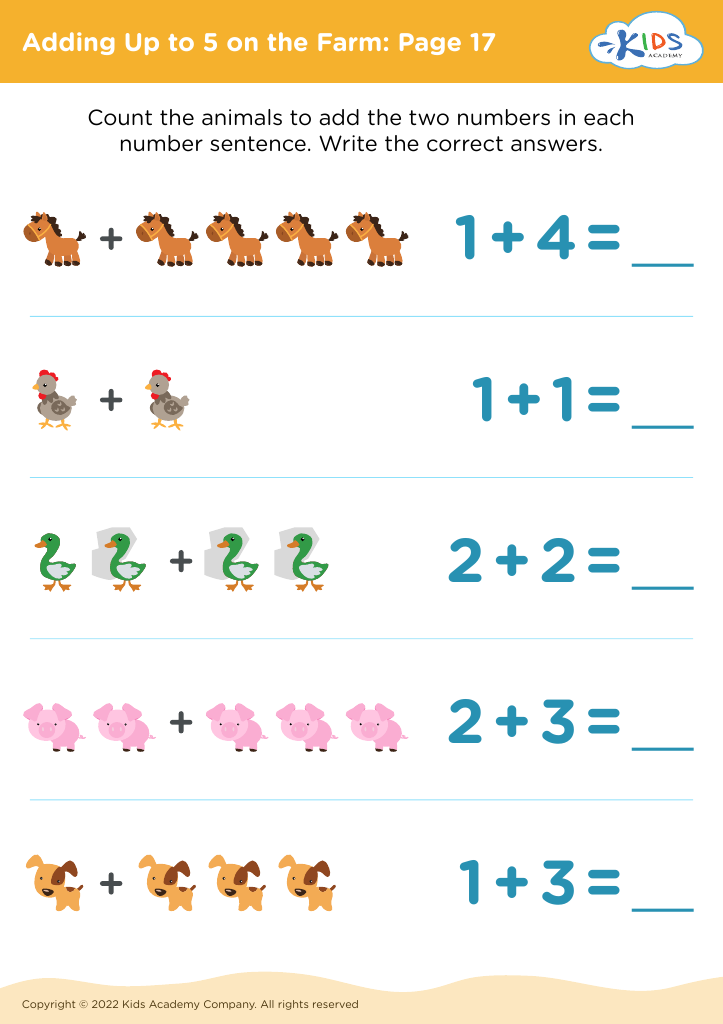
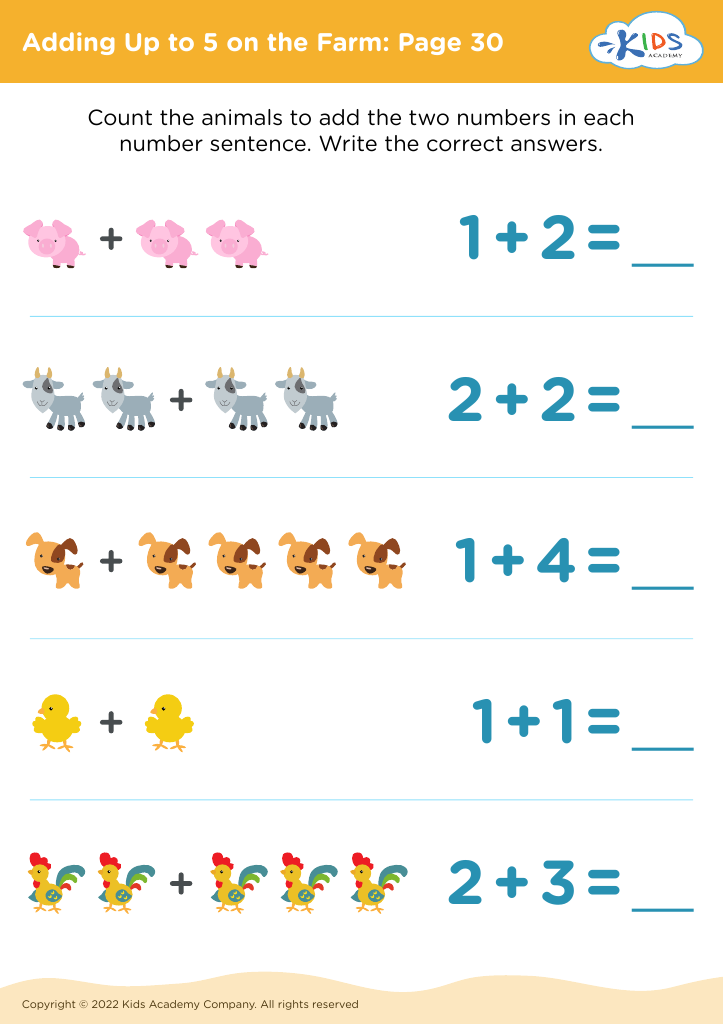
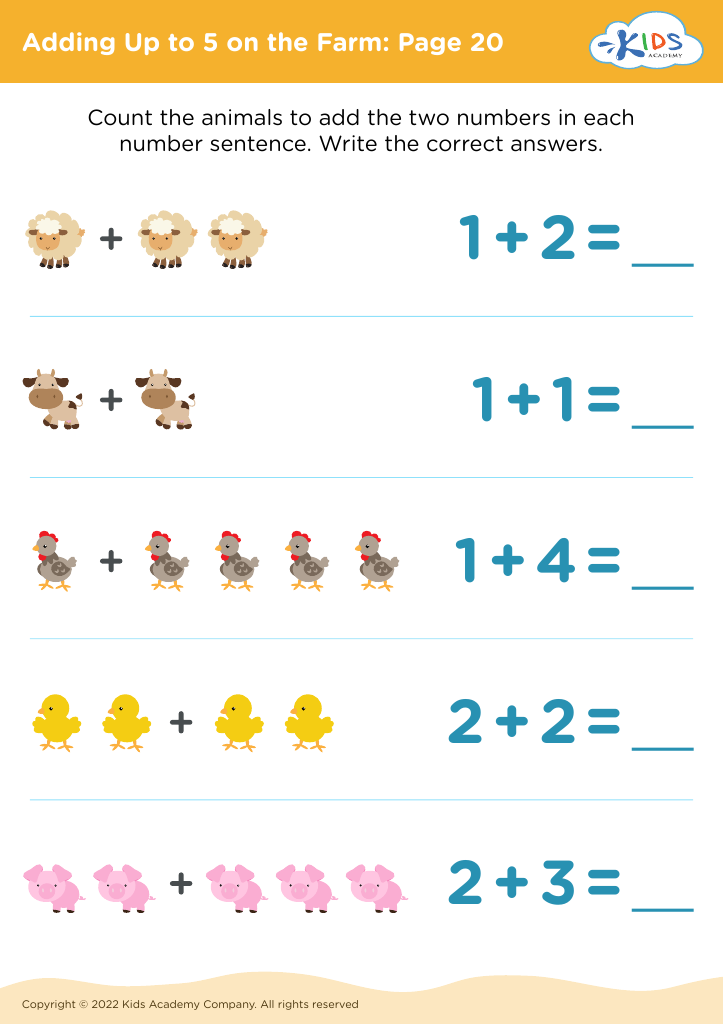
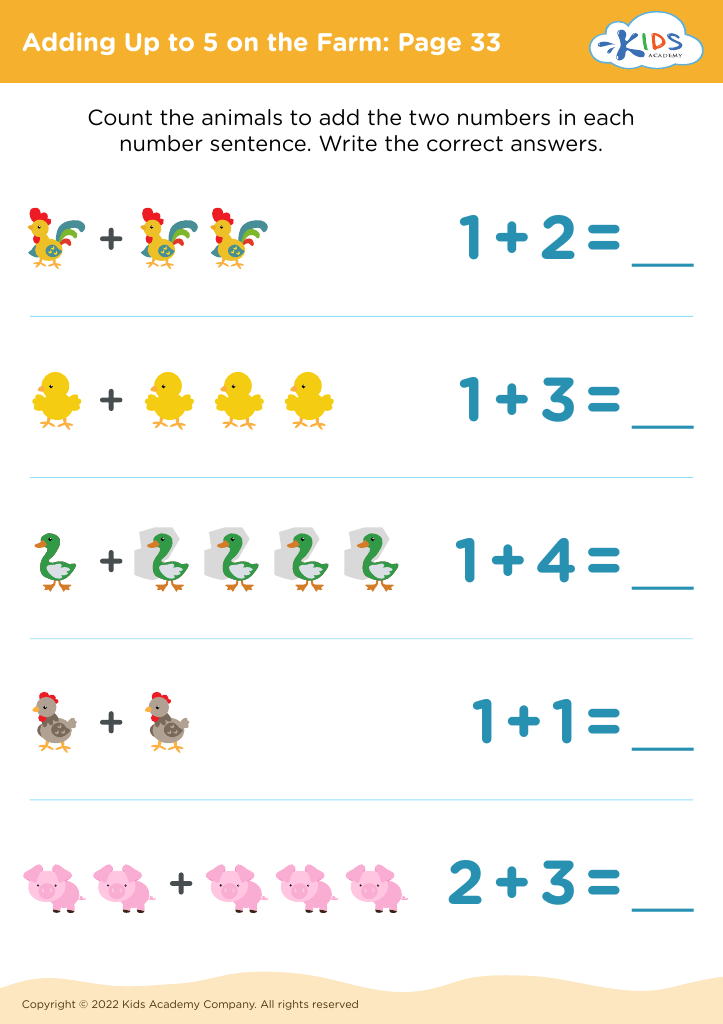
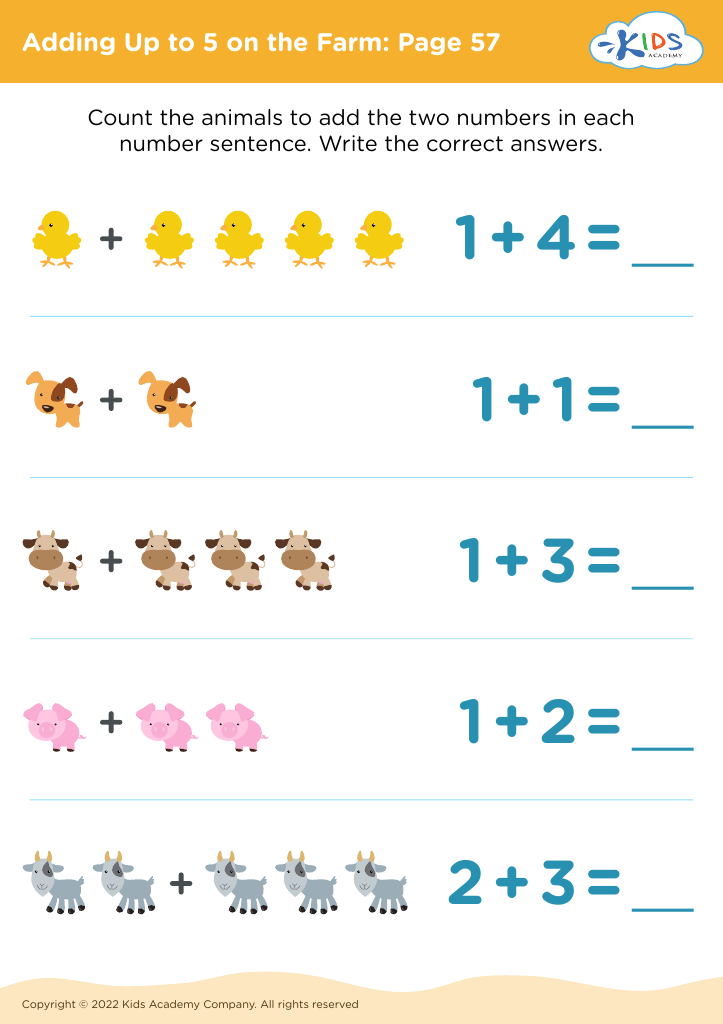
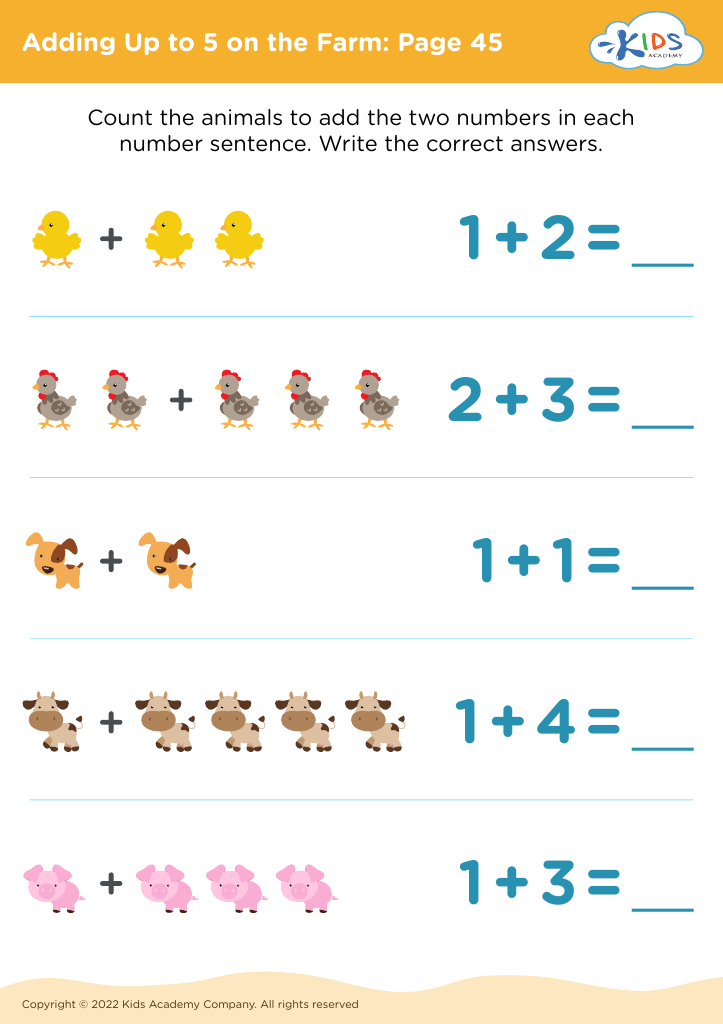



Counting practice, like Adding on the Farm, is essential for children ages 4-6 because it lays the foundation for essential math skills while making learning engaging and relatable. At this young age, children's minds are highly receptive, and they learn best through play and practical activities.
Using themes such as life on a farm captures children's interest as they are often fascinated by animals and farm life. This thematic approach contextualizes math concepts, making them easier to understand and remember. By counting animals, crops, or other farm-related items, children can develop number recognition, one-to-one correspondence, and basic addition skills in a natural and enjoyable way.
Moreover, these practices go beyond just numerical literacy. They enhance problem-solving abilities, critical thinking, and cognitive development. Early exposure to counting and addition supports a smoother transition to more advanced math concepts in later years and boosts overall academic confidence.
Lastly, collaborative activities, such as role-playing a farmer, encourage social interaction and language development. They teach children to follow directions, share, and communicate effectively. Therefore, incorporating counting practice into a child's daily routine is crucial. It transforms abstract numbers into tangible, fun experiences, fostering a love for learning and a strong mathematical foundation.