Animal identification Adding Up to 5 Worksheets for Ages 4-6 - Page 2
27 filtered results
-
From - To





.jpg)

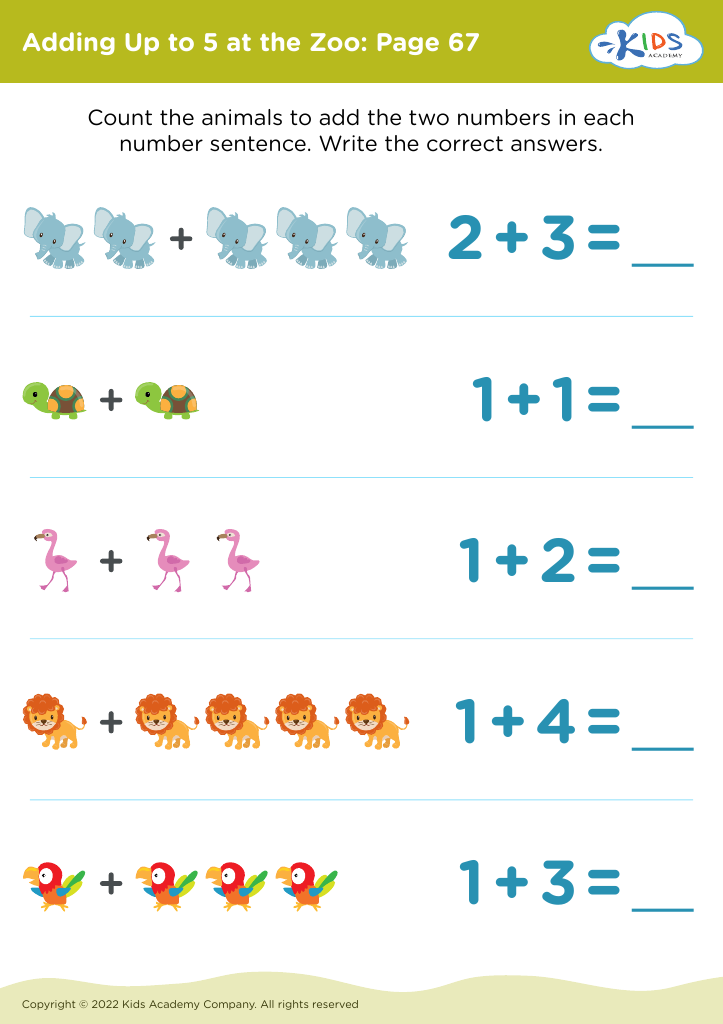
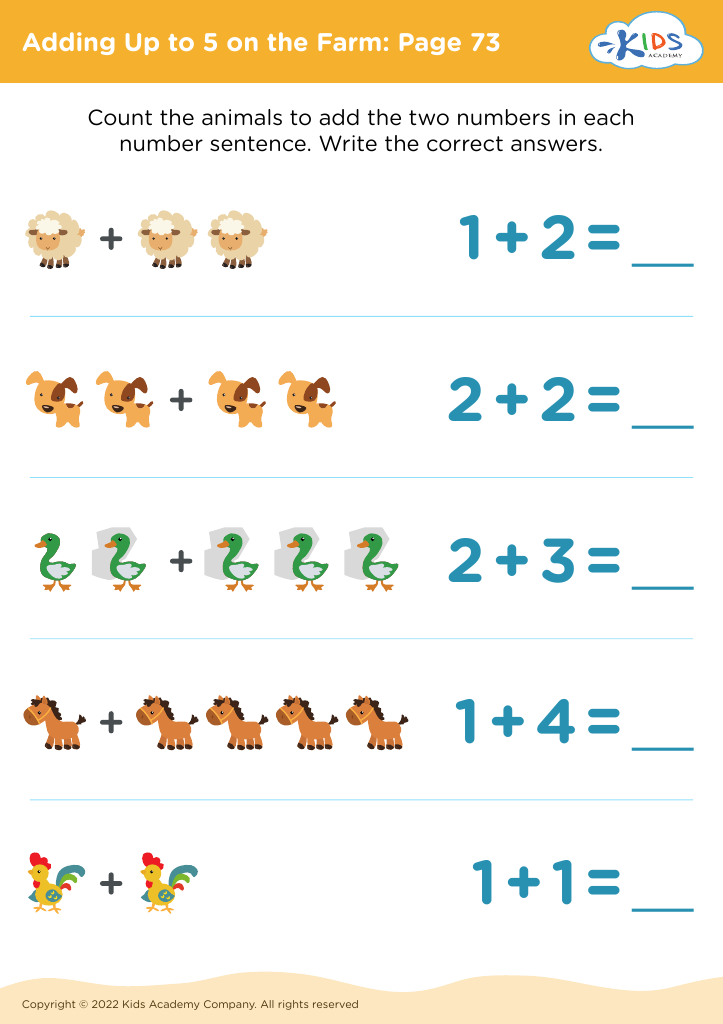
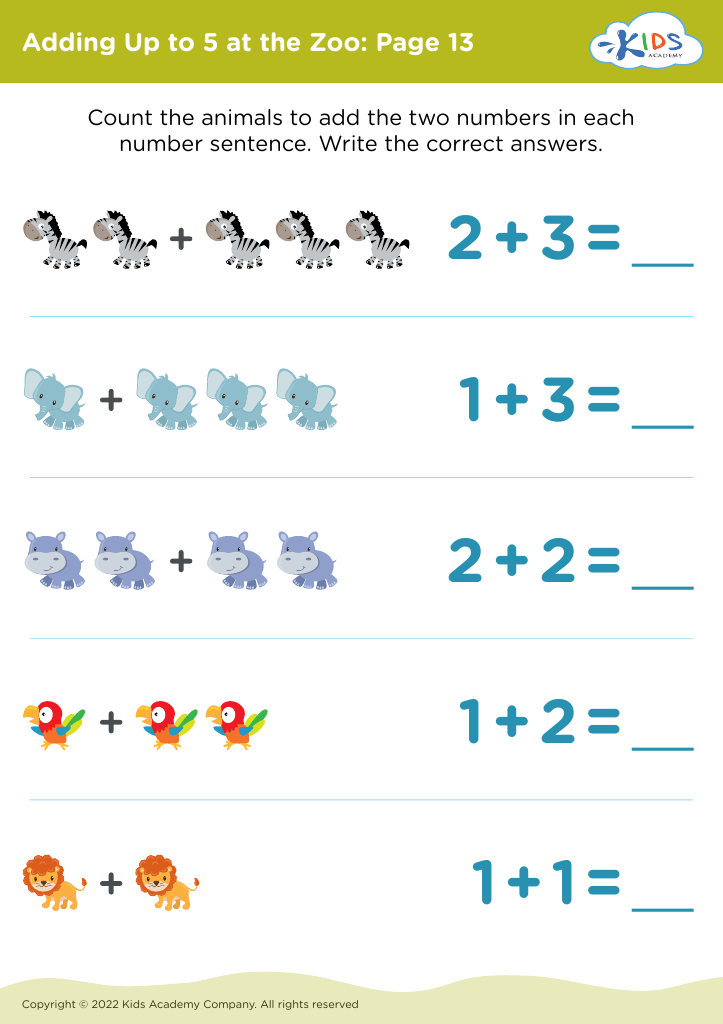
Animal identification paired with basic math skills, specifically adding up to 5, is an essential educational activity for children aged 4-6. At this developmental stage, young children are building foundational cognitive skills, and combining animal identification with math exercises caters to their curiosity and enthusiasm for learning.
Firstly, associating numbers with objects or animals makes abstract concepts like addition more tangible and understandable. When children see five ducks or three cats, it helps them visualize and grasp what adding these numbers means, making mathematical principles less intimidating.
Secondly, this activity hones multiple skills simultaneously. Animal identification sharpens observational abilities, expands vocabulary, and encourages children to engage with the natural world. When these learning experiences are linked with basic arithmetic, it reinforces both numerical skills and general knowledge.
Furthermore, it also fosters an interactive and enjoyable learning environment. Children at this age learn best through play and hands-on activities. Engaging them with images or models of animals captures their interest and keeps them motivated to solve simple math problems, promoting a positive attitude towards learning.
Lastly, involvement of parents or teachers in these activities adds emotional support, nurtures confidence, and strengthens the bond between learner and educator. The holistic approach of intertwining animal identification with math enhances overall educational growth, making this hybrid learning particularly compelling for young minds.








