Basic Math understanding Adding Up to 5 Worksheets for Ages 4-6
7 filtered results
-
From - To
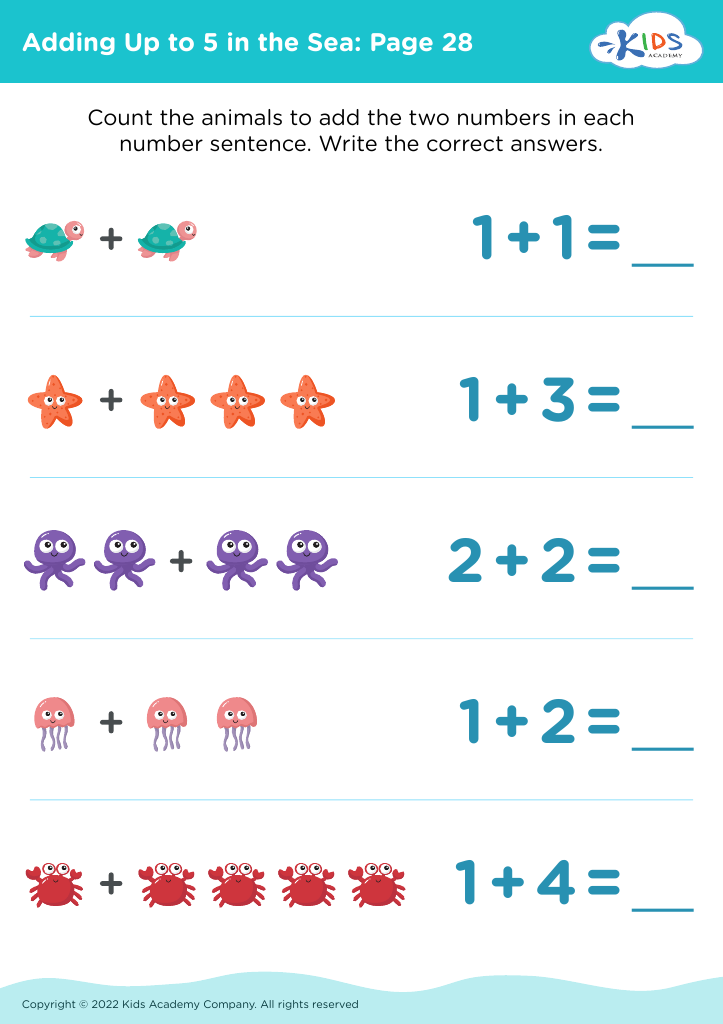
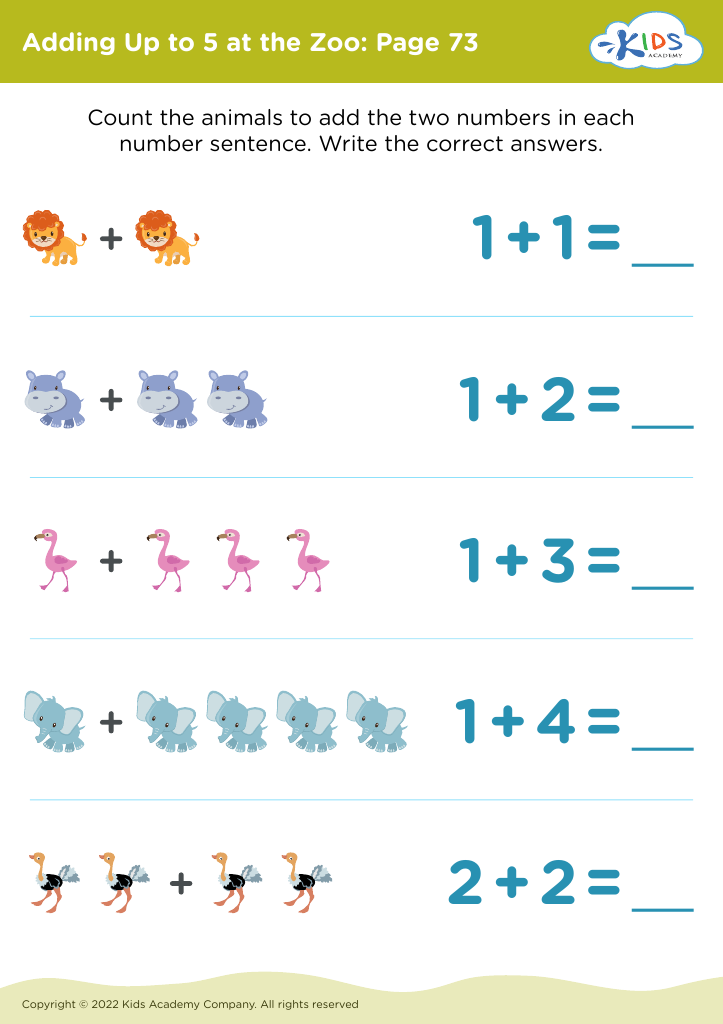
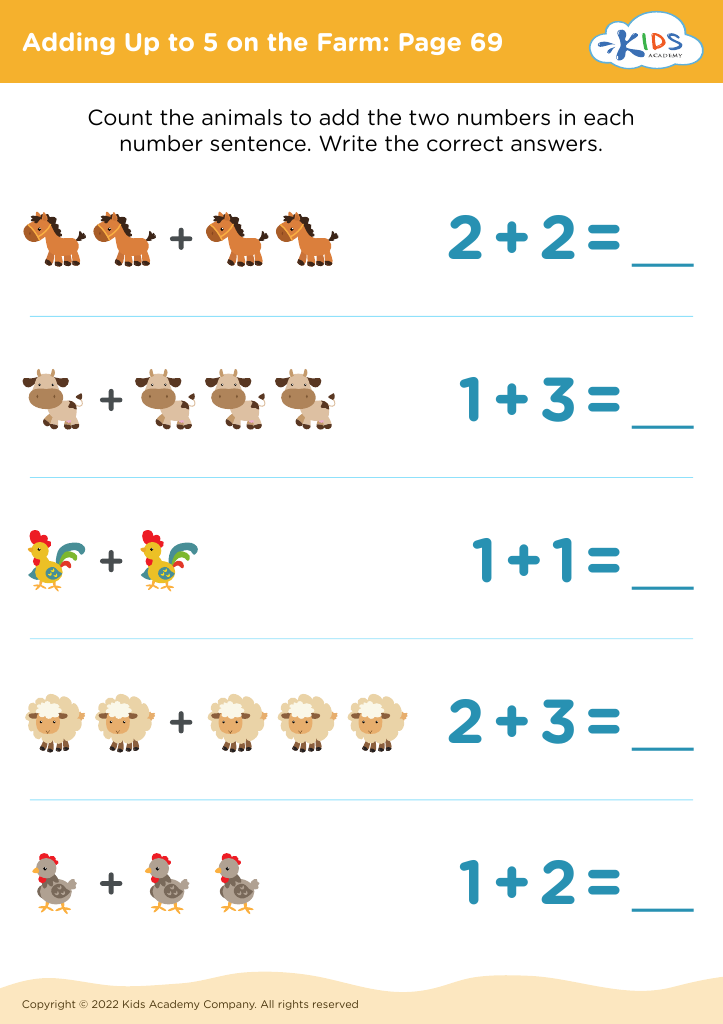
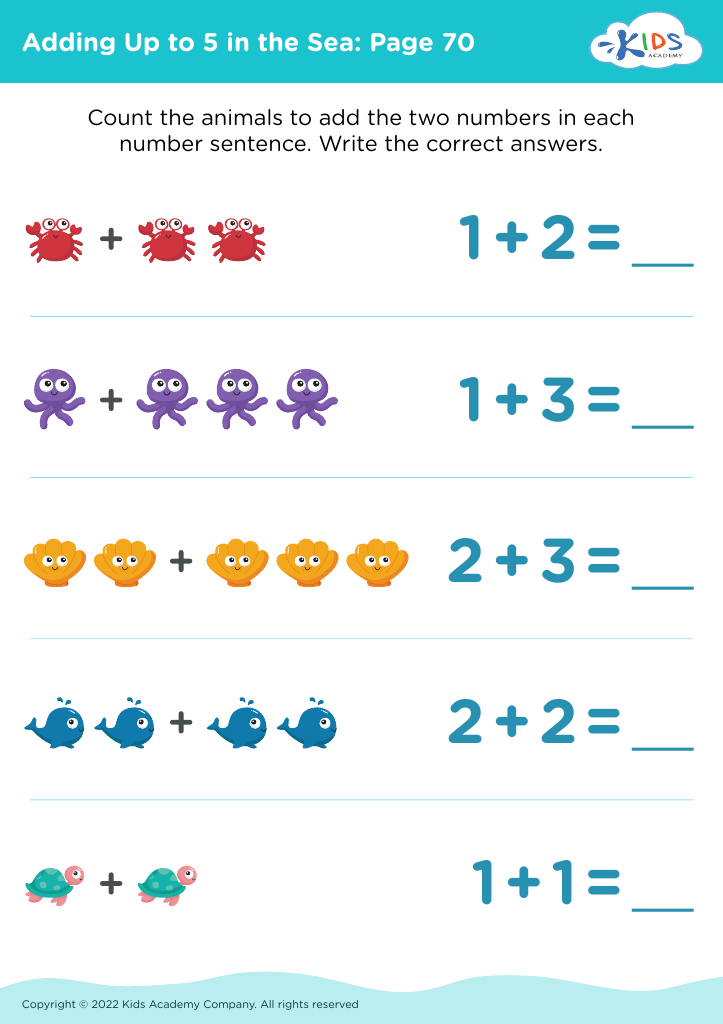
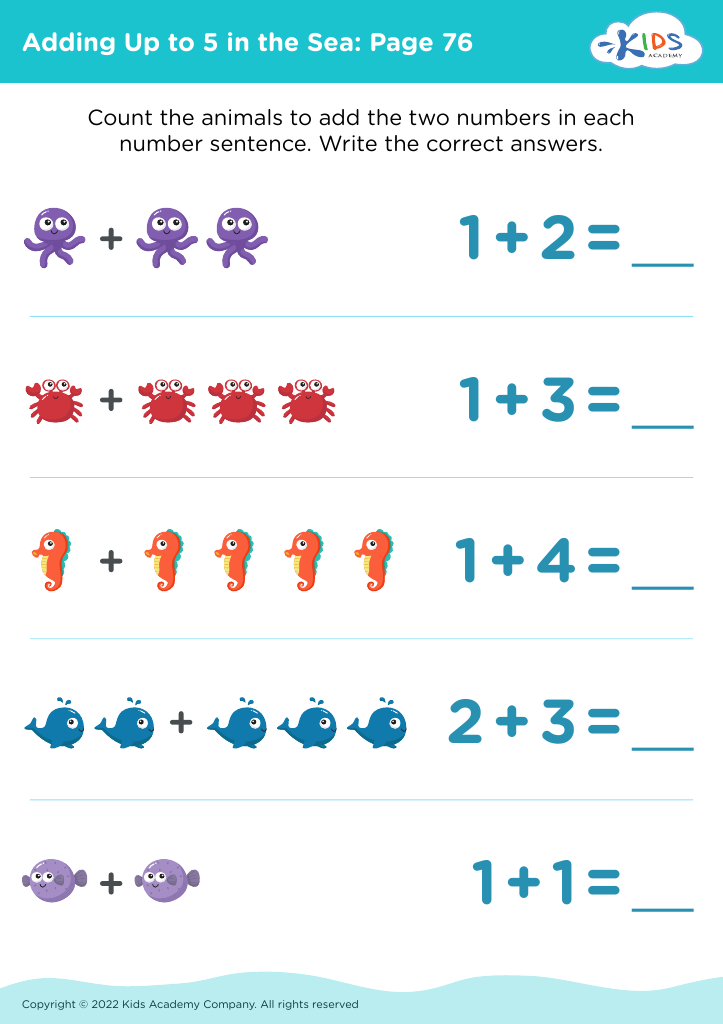
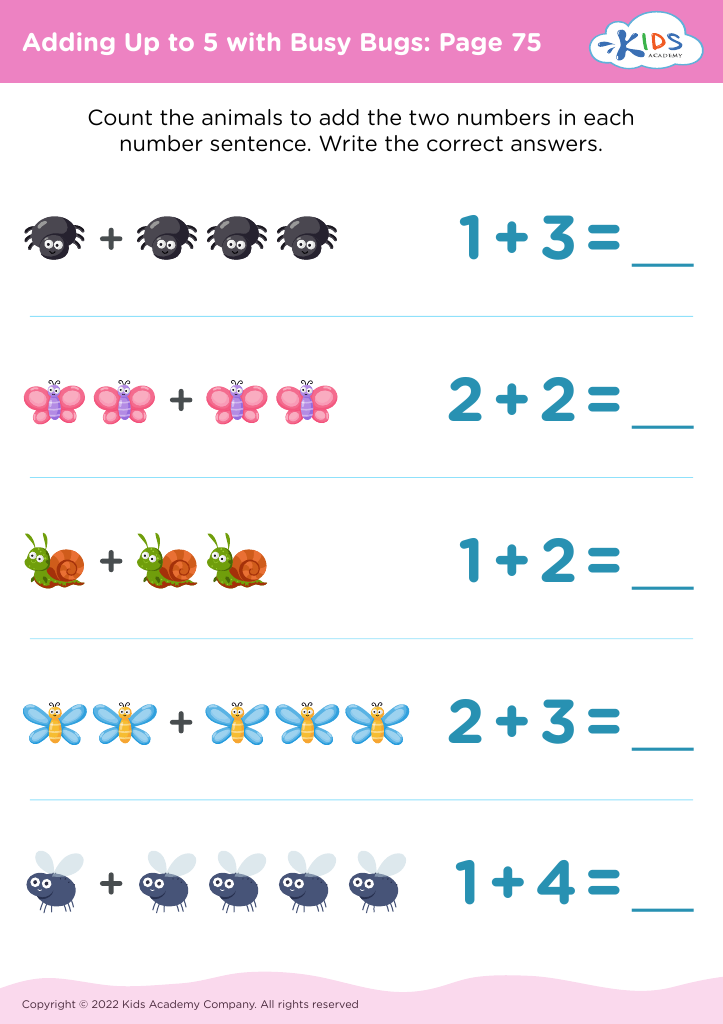
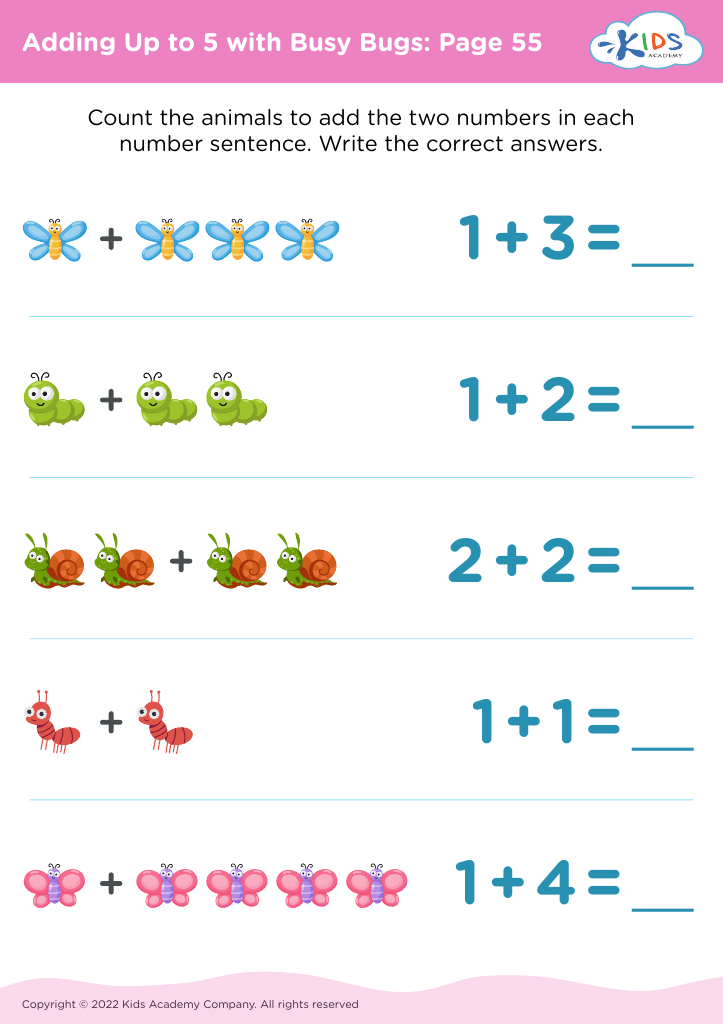
Introduce your little learners to the world of math with our "Basic Math Understanding: Adding Up to 5" worksheets tailored for ages 4-6. Designed to make early math fun and engaging, these worksheets help children grasp foundational concepts of addition through colorful visuals and intuitive exercises. Each activity encourages hands-on learning, helping kids develop counting skills, number recognition, and problem-solving abilities. Ideal for classroom use or at-home practice, these resources are perfect for nurturing confidence in young learners as they embark on their math journey. Download our worksheets today and watch your child's math skills blossom with ease and enthusiasm!




%20(1).jpg)



Understanding basic math, particularly the skill of adding up to 5, is crucial for children aged 4-6. This foundational knowledge not only lays the groundwork for more advanced math concepts but also fosters critical thinking skills that are essential in everyday life. At this developmental stage, children are naturally curious and eager to explore numbers, making it an ideal time for learning.
Firstly, mastering simple addition enhances cognitive development. When children grasp the concept of addition, they begin to understand quantity and relationships between numbers—a skill they will utilize in various aspects of learning and problem solving. Second, engagement in math activities encourages social interaction. Group activities involving addition promote teamwork, communication, and sharing, teaching kids how to work collaboratively to reach a solution.
Furthermore, early math skills contribute to confidence. Children who feel comfortable with basic operations are likely to embrace learning challenges as they progress to higher levels of math. This sense of achievement fosters a positive attitude toward education overall.
Lastly, integrating fun math activities at home or in the classroom builds a strong link between school and real life, showcasing how math is relevant. Therefore, parents and teachers should prioritize teaching basic addition to cultivate a love for learning from a young age.








