Enhancing focus Adding Up to 5 Worksheets for Ages 4-6
4 filtered results
-
From - To
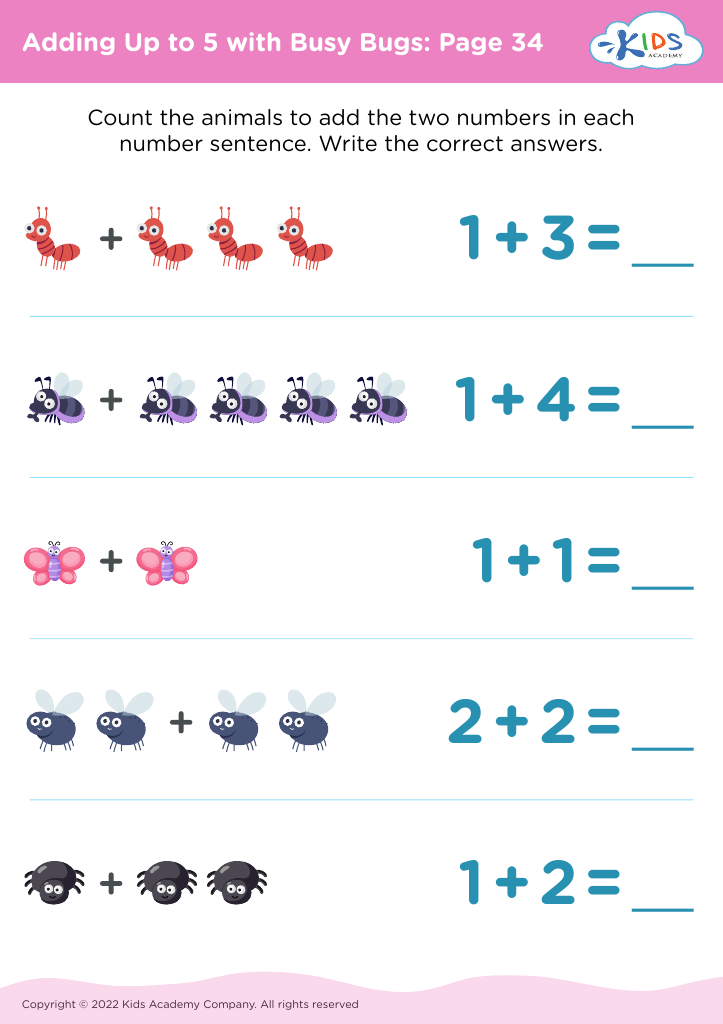
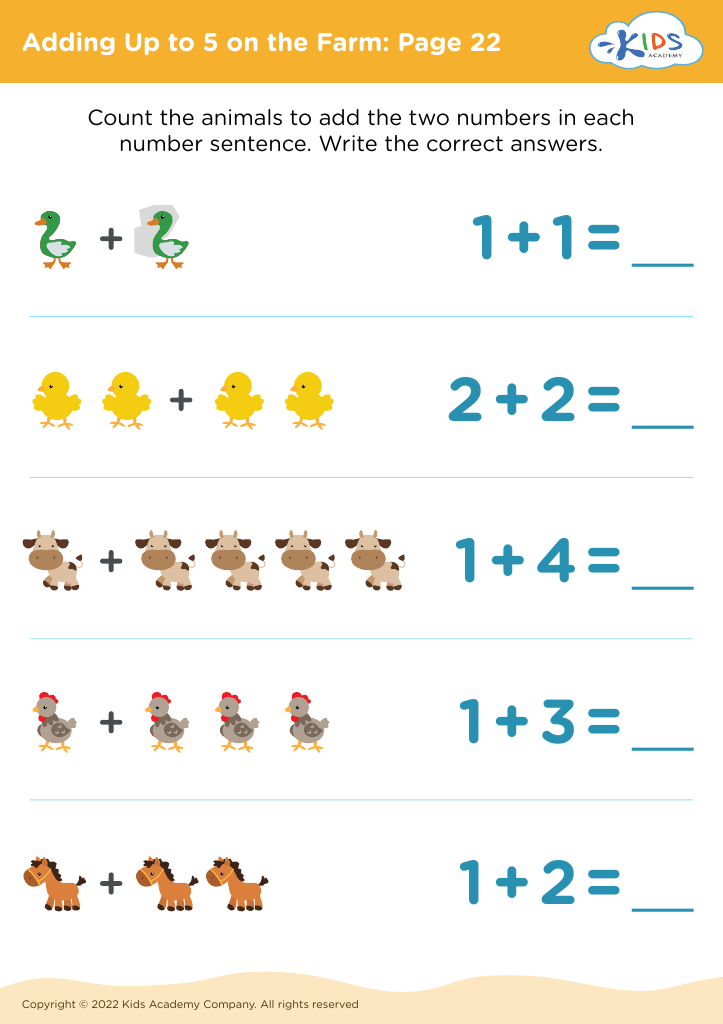
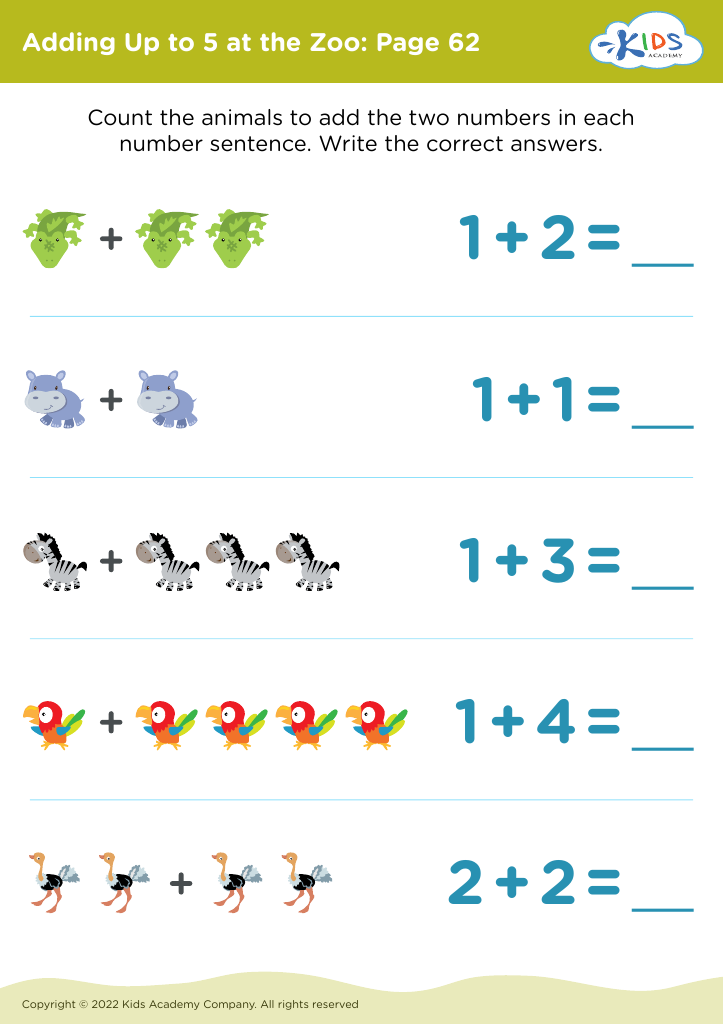
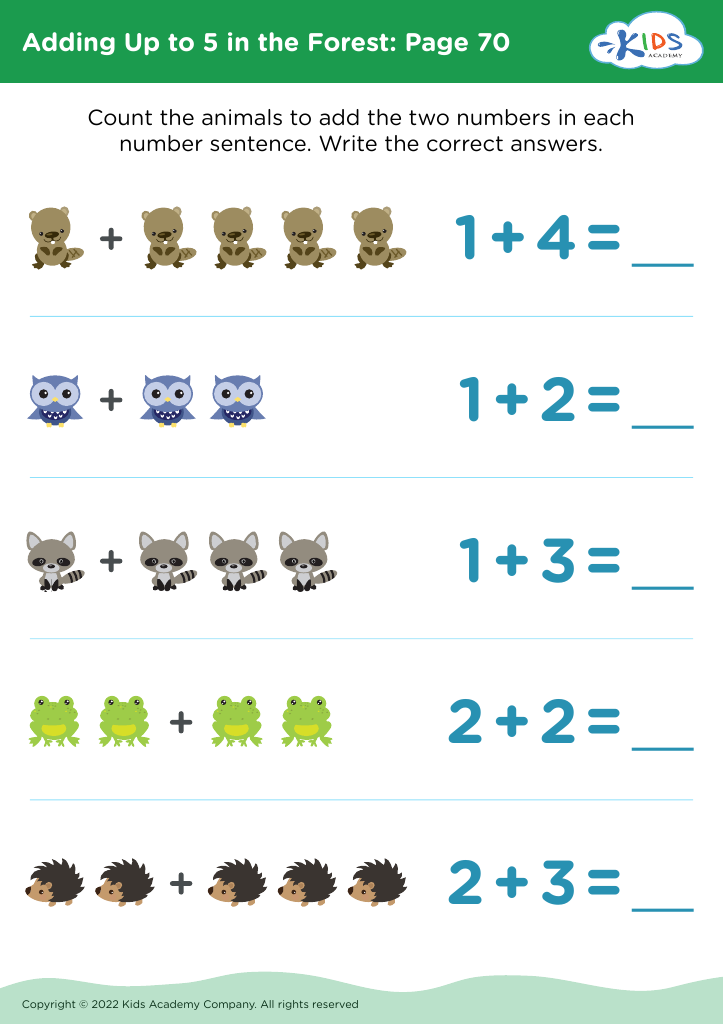
Introducing our "Enhancing Focus: Adding Up to 5 Worksheets" designed specifically for ages 4-6! These engaging resources help young learners develop foundational math skills while sharpening their concentration. Each worksheet features colorful illustrations and fun activities, making learning joyful and interactive. Children will practice simple addition with numbers up to 5, enhancing their number recognition and problem-solving abilities. The structured format encourages focus and attention, vital for early learning. Foster a love of math in your child’s education with our enjoyable worksheets, tailored to boost both their arithmetic skills and their ability to concentrate. Download and watch them thrive today!


.jpg)





Enhancing focus in young learners, particularly while introducing foundational math skills like Adding Up to 5, is crucial for their cognitive development. For children aged 4-6, the ability to concentrate is a key predictor of academic success. Strengthening focus helps them to engage more deeply with math concepts, laying a strong groundwork for future learning.
Moreover, arithmetic involving small numbers, such as adding up to 5, serves as an accessible entry point into the world of mathematics. Mastering this skill promotes confidence in problem-solving, fostering a positive attitude towards math. Teachers and parents can enhance this focus through interactive activities and games that make learning fun and engaging, transforming potentially dull exercises into enjoyable learning experiences.
Additionally, promoting sustained attention during these formative years supports the development of important executive function skills, vital for self-regulation and goal-setting. When children practice and succeed in focused tasks, they gain essential life skills that extend beyond academics. In short, investing in enhancing focus while teaching basic math helps children build confidence, instills a love for learning, and prepares them for more complex concepts in the future.








