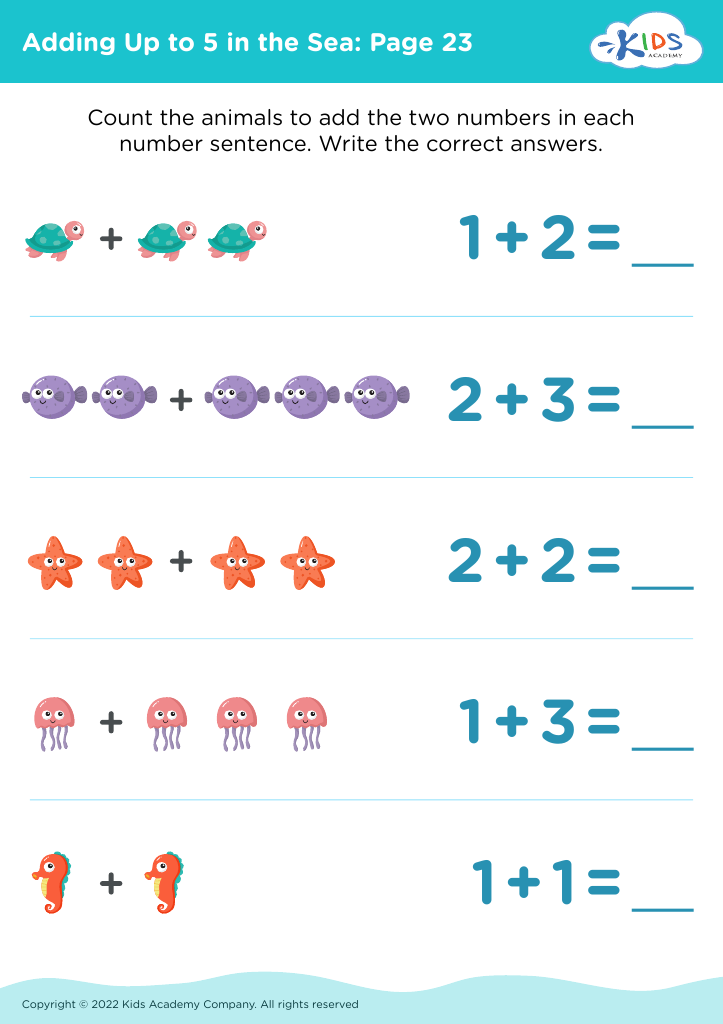
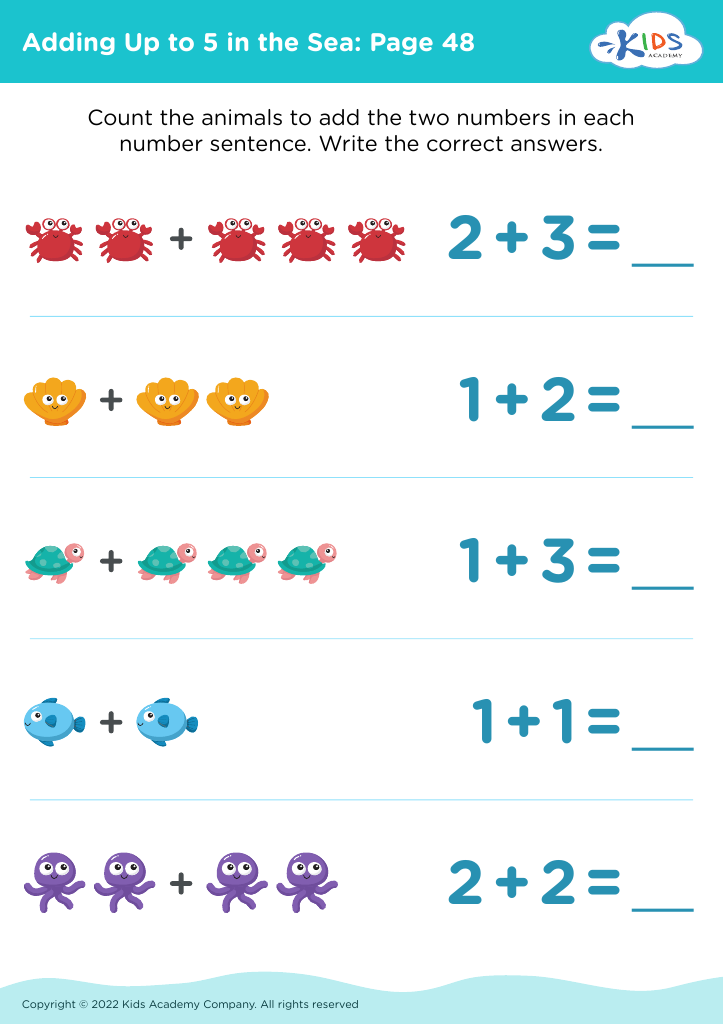
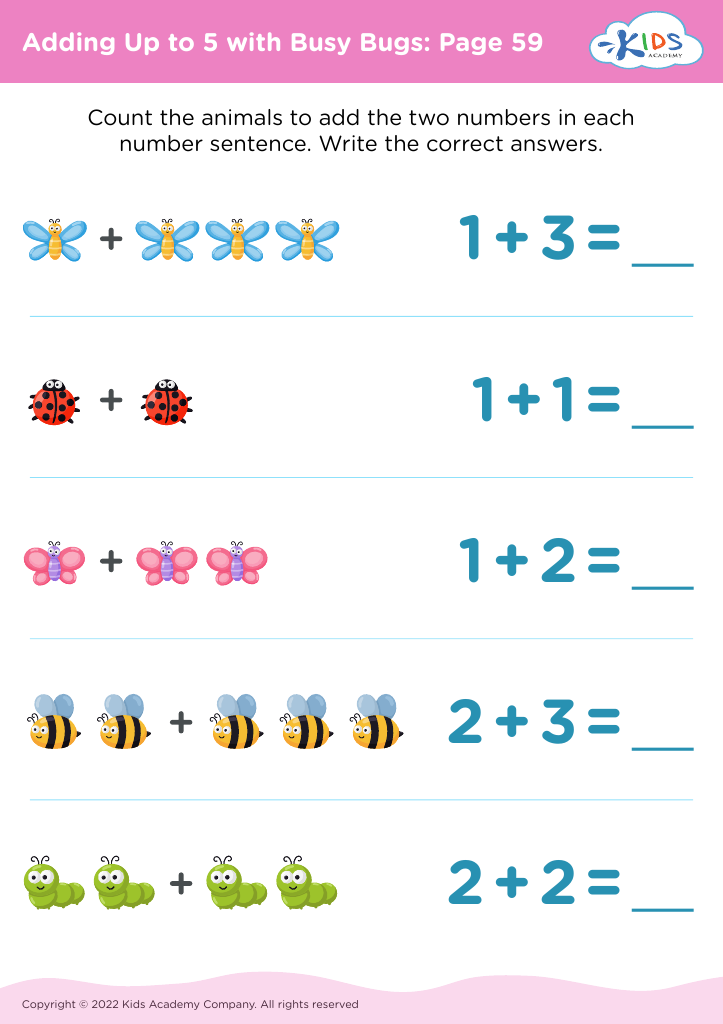
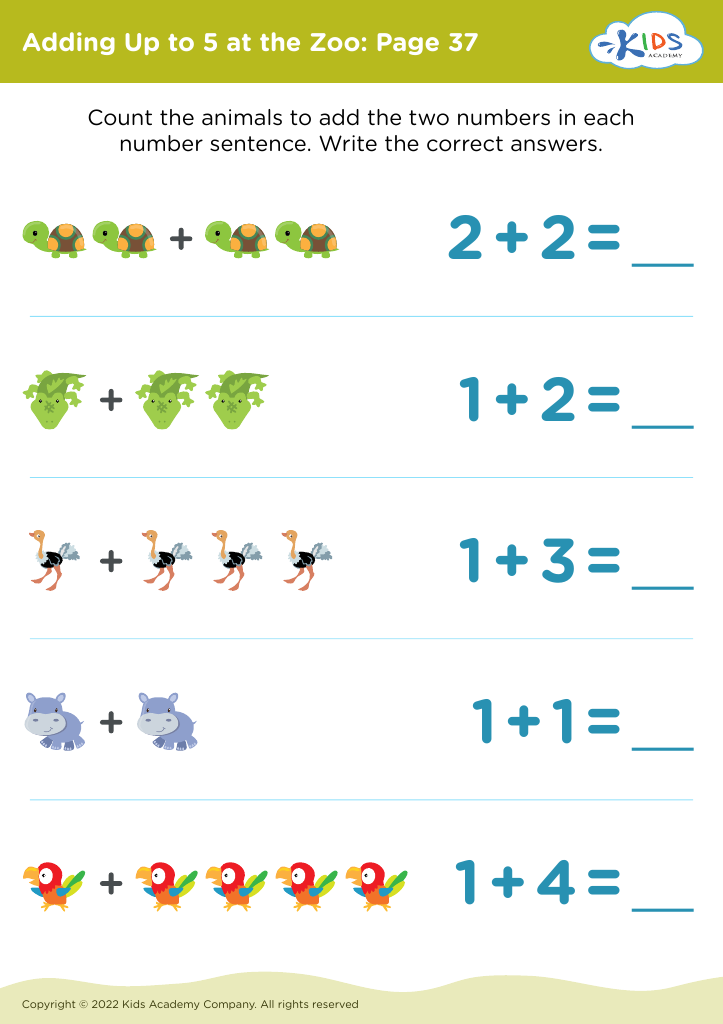
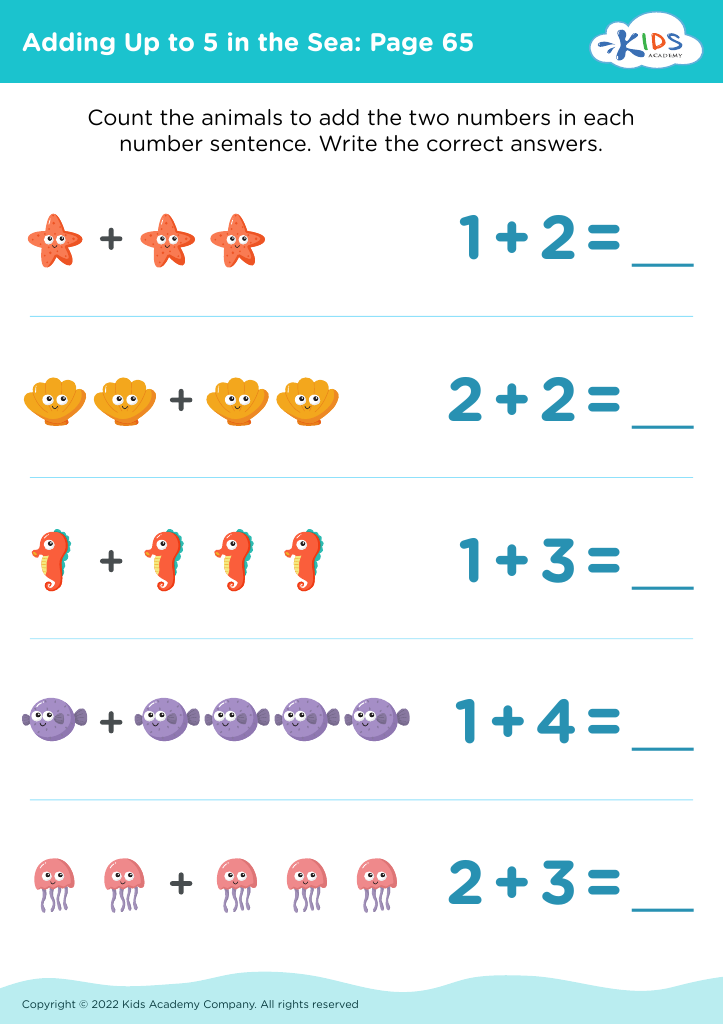
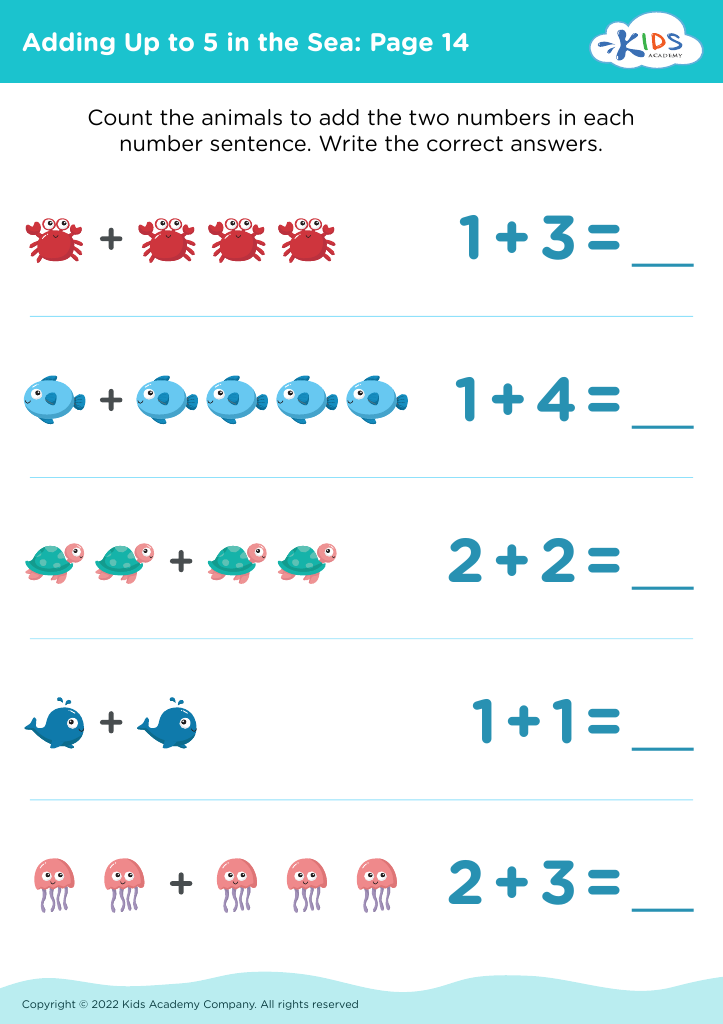
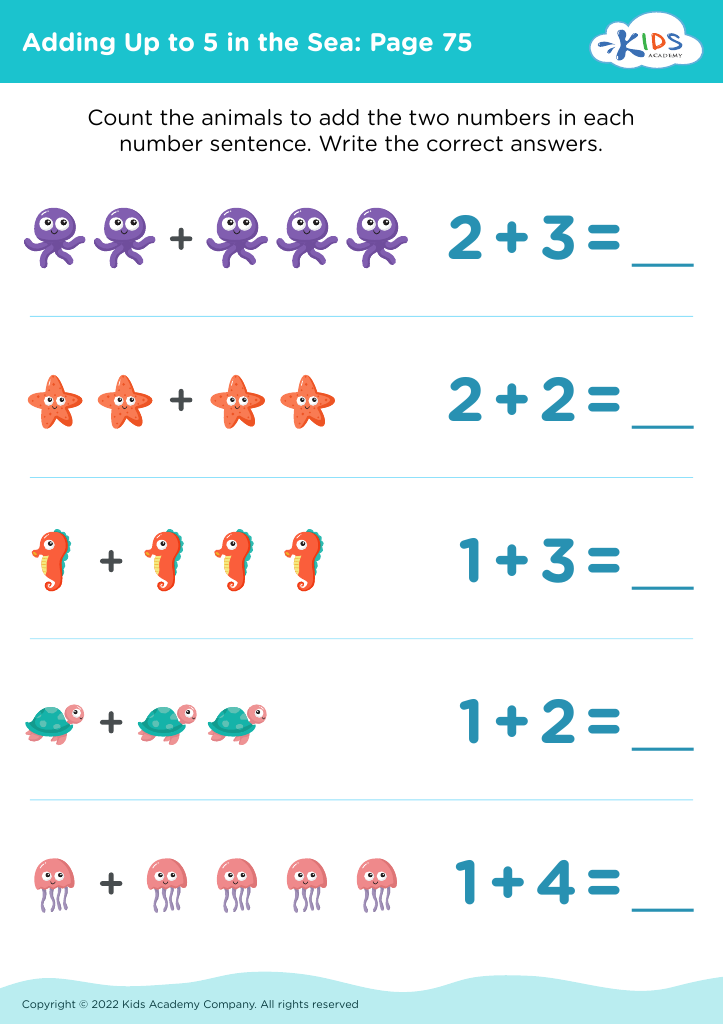
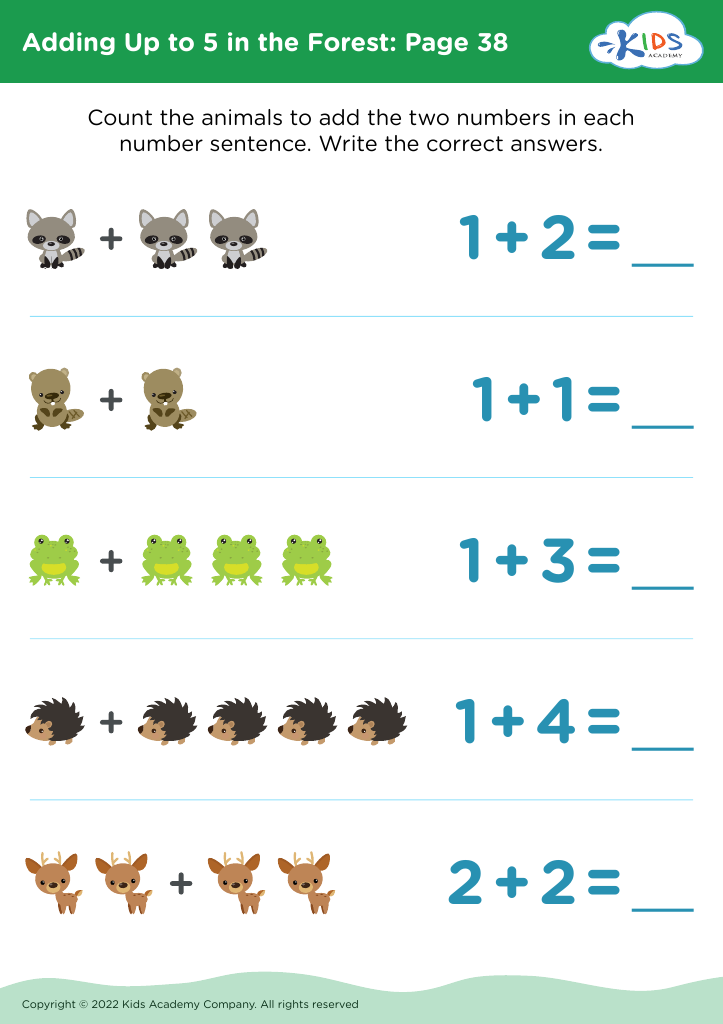
Discover our "Fine Motor Skills (Writing) Adding Up to 5 Worksheets" designed for children ages 4-6! These engaging worksheets combine exciting mathematical concepts with essential fine motor skill development. Perfectly tailored for early learners, these activities help children practice writing numbers while mastering addition problems up to 5. Each worksheet features fun visuals and clear instructions, ensuring that young minds remain captivated and motivated while learning. By integrating fine motor skills with foundational math, children enhance hand-eye coordination and dexterity alongside their computational abilities. Foster a love for learning and set the stage for future success in math with these dynamic worksheets!
Check out this FREE Trial Lesson on Adding Up to 5 for age 4-6!

L

Favorites
With answer key
Interactive
  • 4-6
  • Fine motor skills (writing)
  • Adding Up to 5
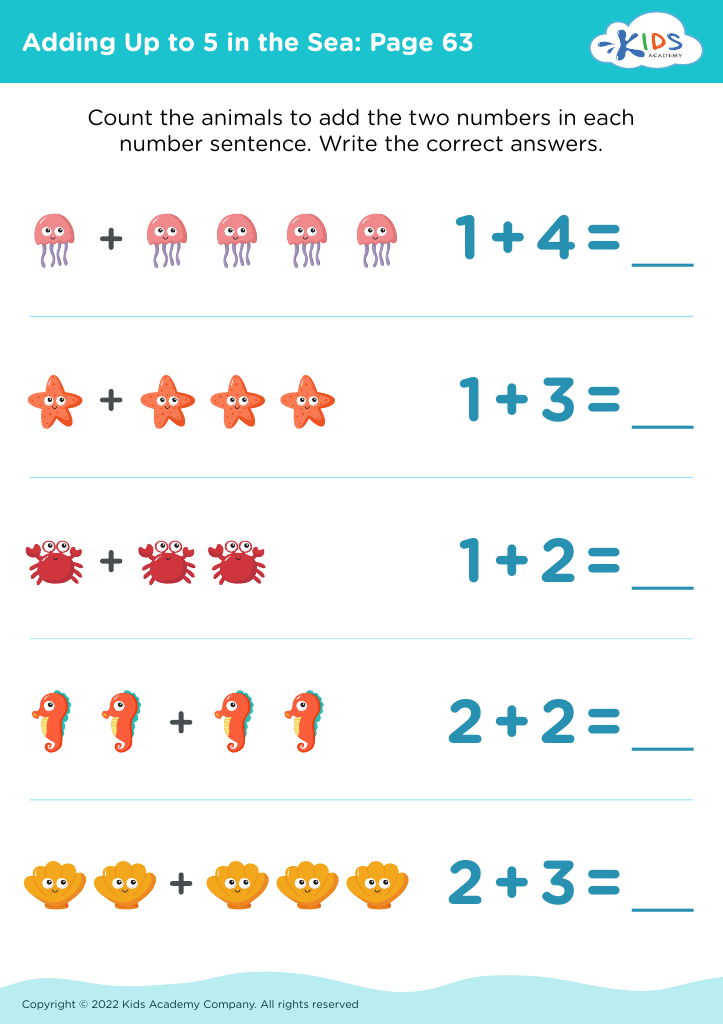
Adding Up to 5 in the Sea: Page 63
Worksheet
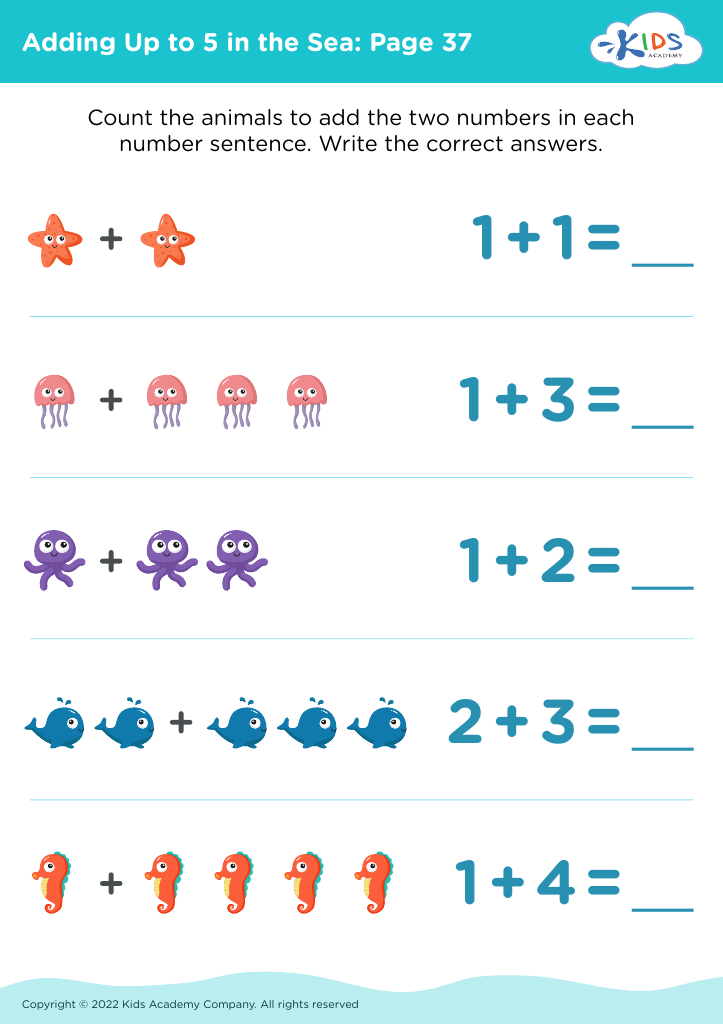
Adding Up to 5 in the Sea: Page 37
Worksheet
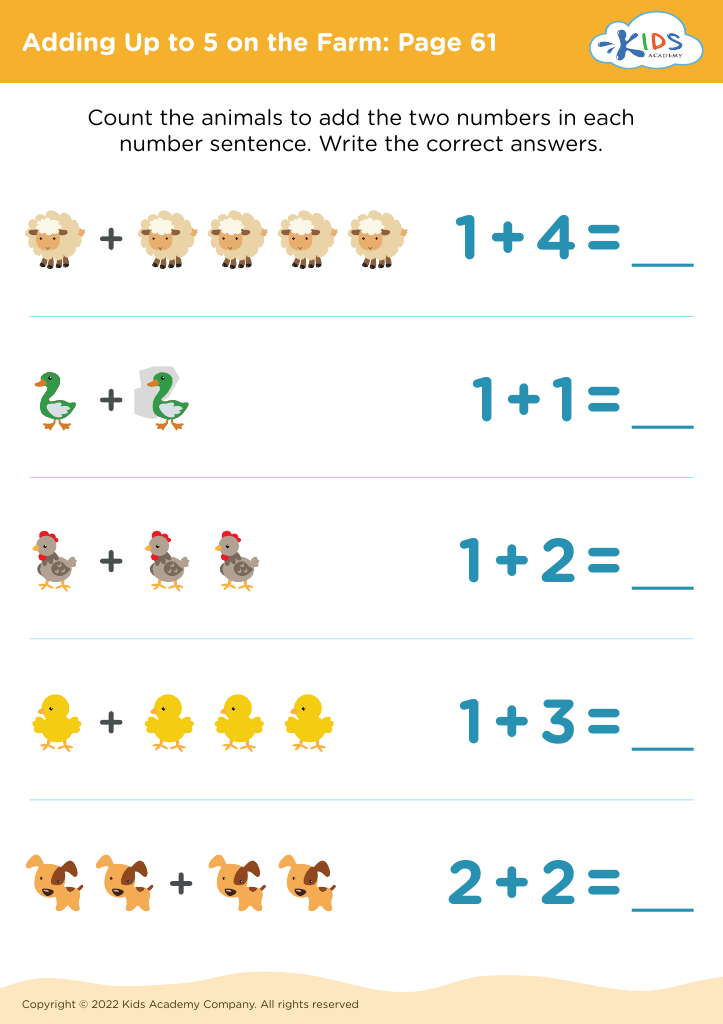
Adding Up to 5 on the Farm: Page 61
Worksheet
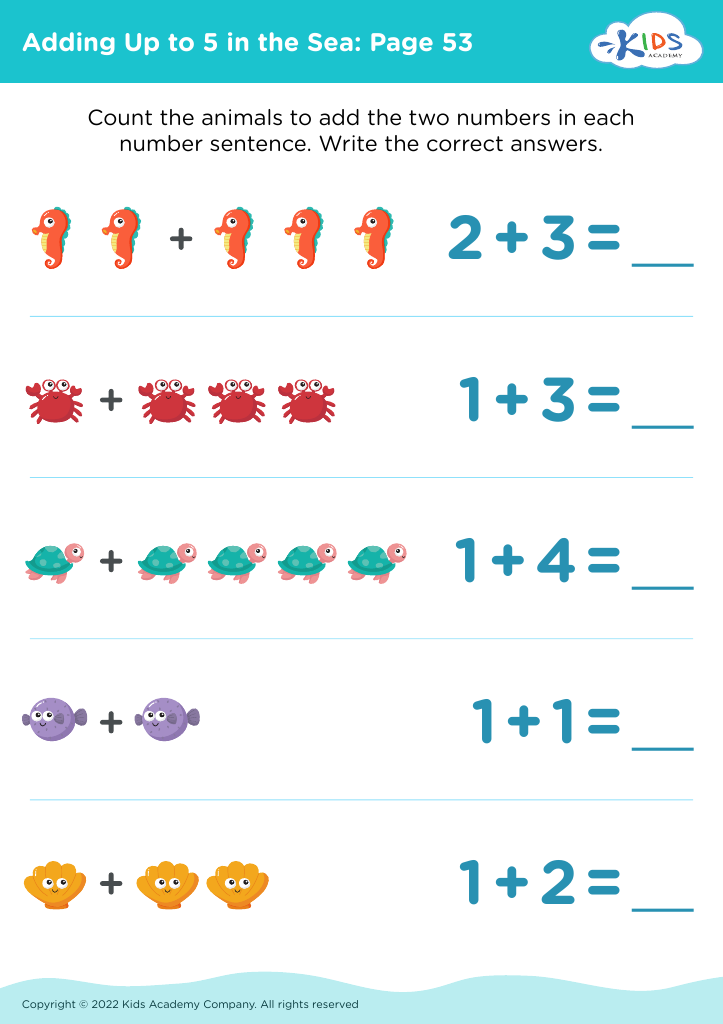
Adding Up to 5 in the Sea: Page 53
Worksheet
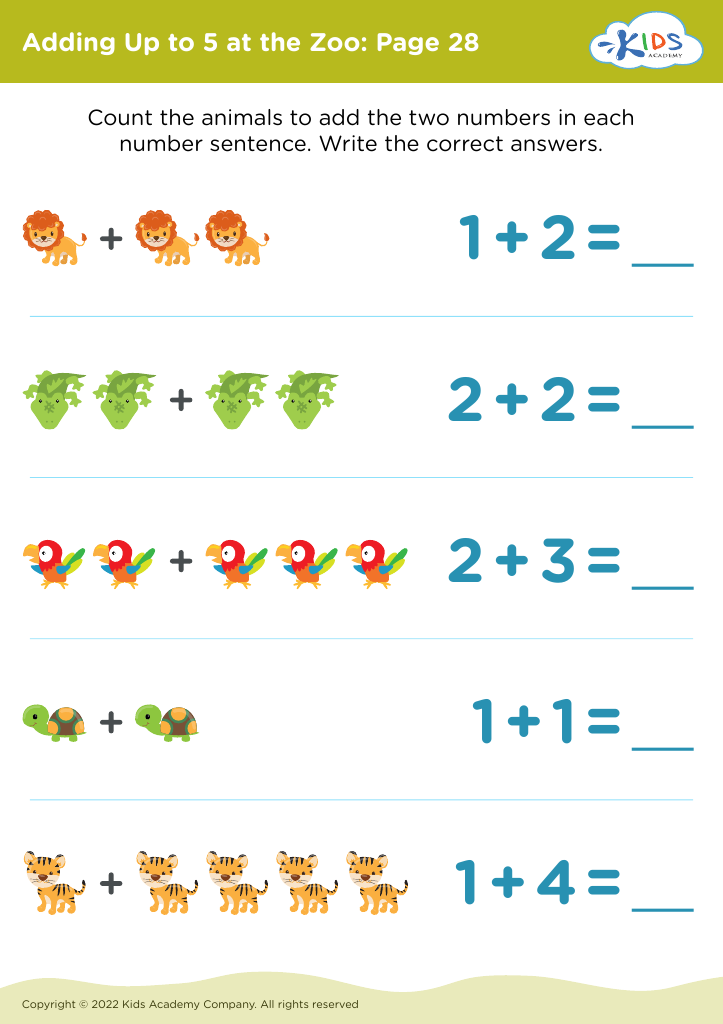
Adding Up to 5 at the Zoo: Page 28
Worksheet
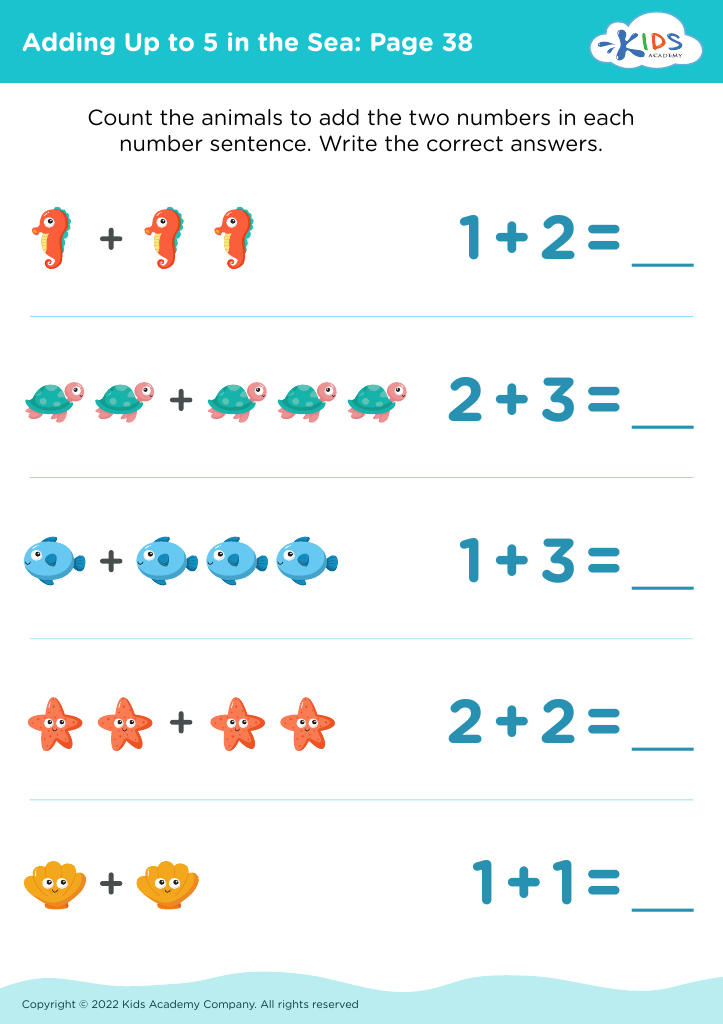
Adding Up to 5 in the Sea: Page 38
Worksheet
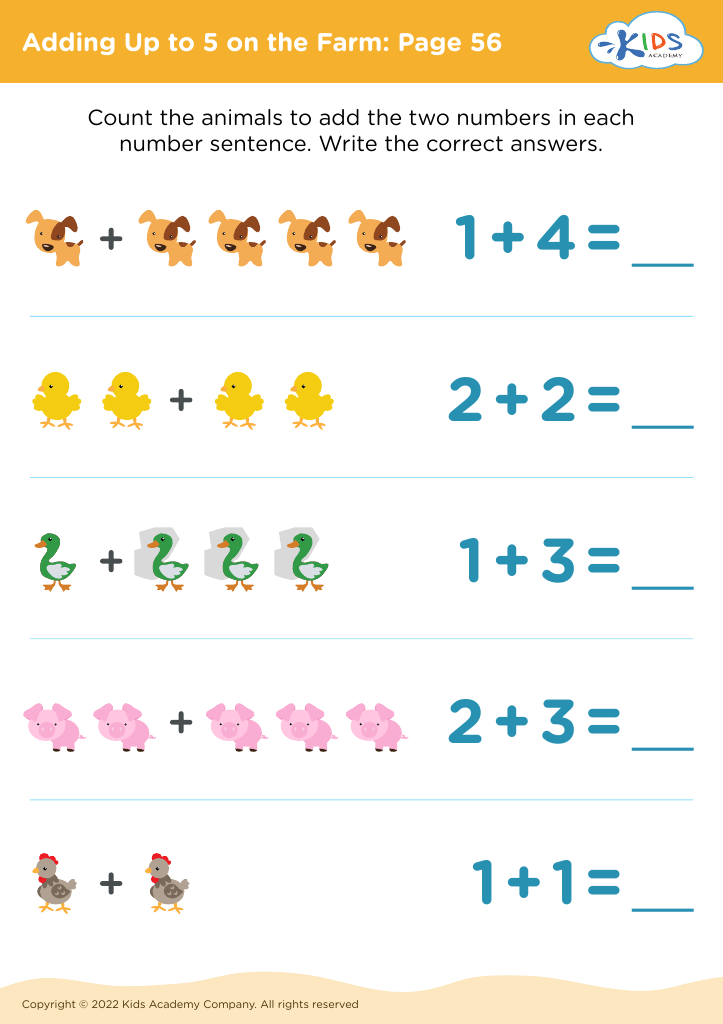
Adding Up to 5 on the Farm: Page 56
Worksheet
Adding Up to 5 in the Sea: Page 23
Worksheet
Adding Up to 5 in the Sea: Page 48
Worksheet
Adding Up to 5 with Busy Bugs: Page 59
Worksheet
Adding Up to 5 at the Zoo: Page 37
Worksheet
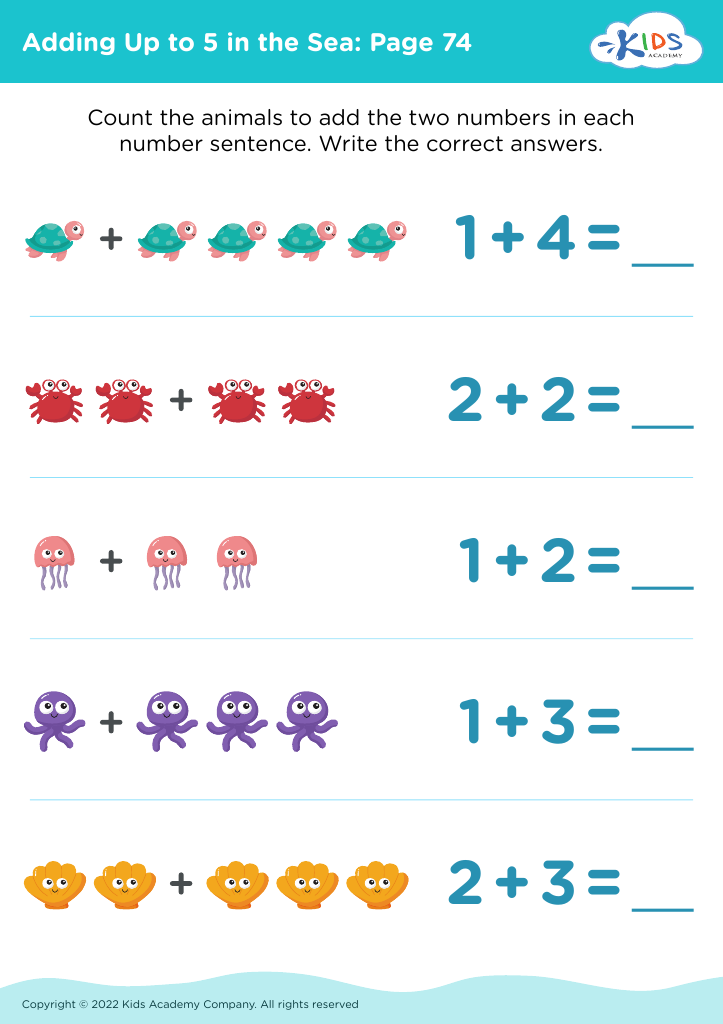
Adding Up to 5 in the Sea: Page 74
Worksheet
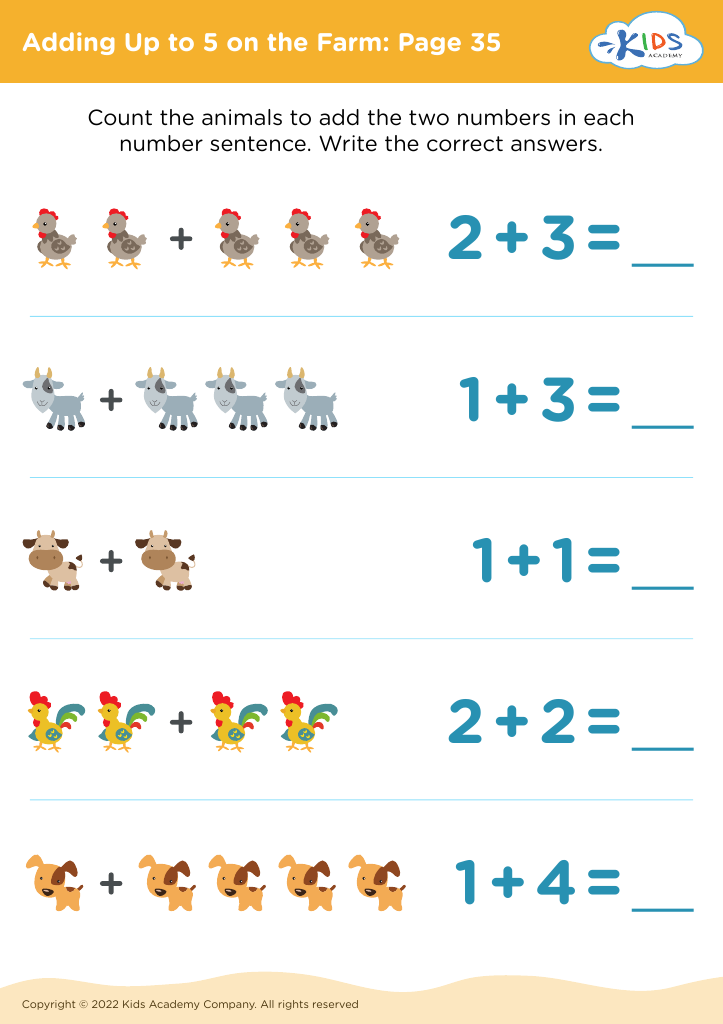
Adding Up to 5 on the Farm: Page 35
Worksheet
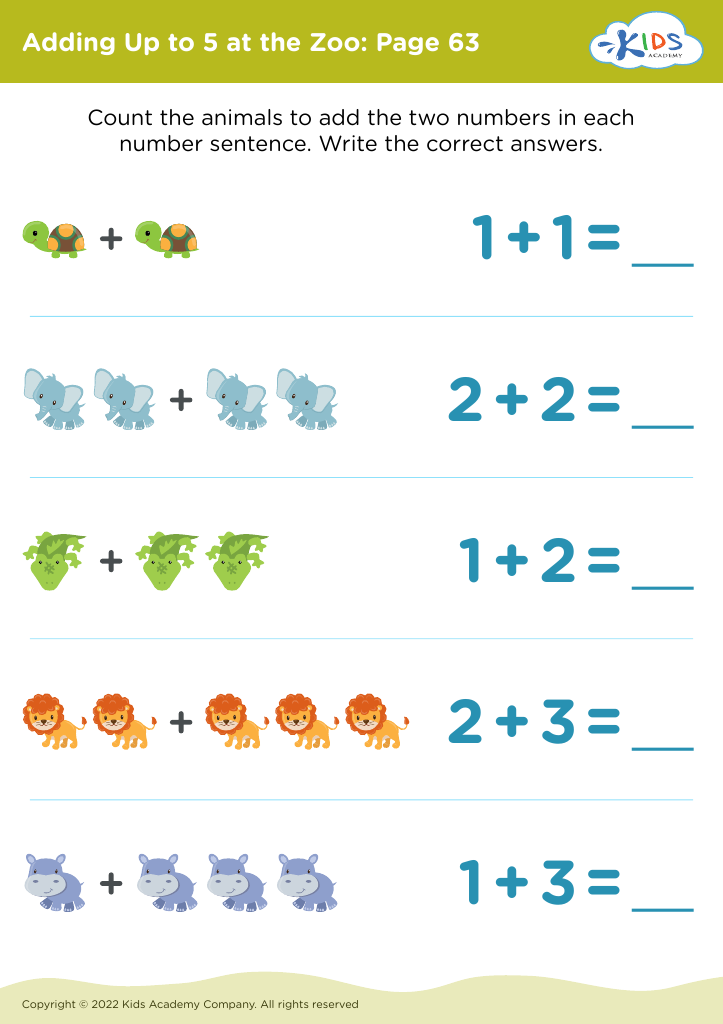
Adding Up to 5 at the Zoo: Page 63
Worksheet
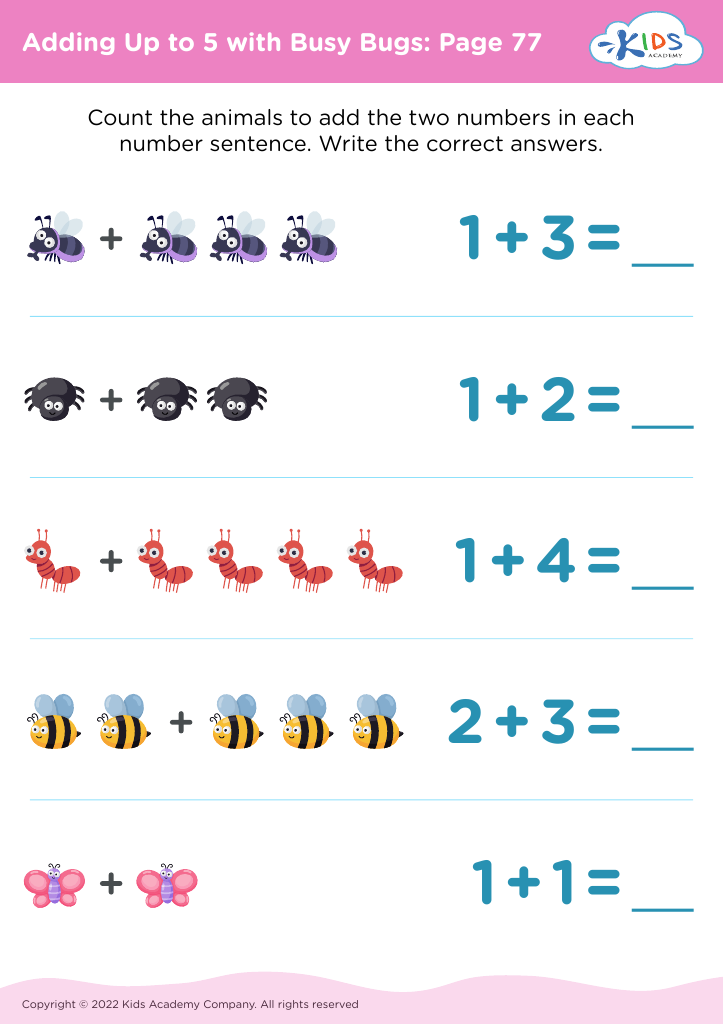
Adding Up to 5 with Busy Bugs: Page 77
Worksheet
Adding Up to 5 in the Sea: Page 65
Worksheet
Adding Up to 5 in the Sea: Page 14
Worksheet
Adding Up to 5 in the Sea: Page 75
Worksheet
Adding Up to 5 in the Forest: Page 38
Worksheet
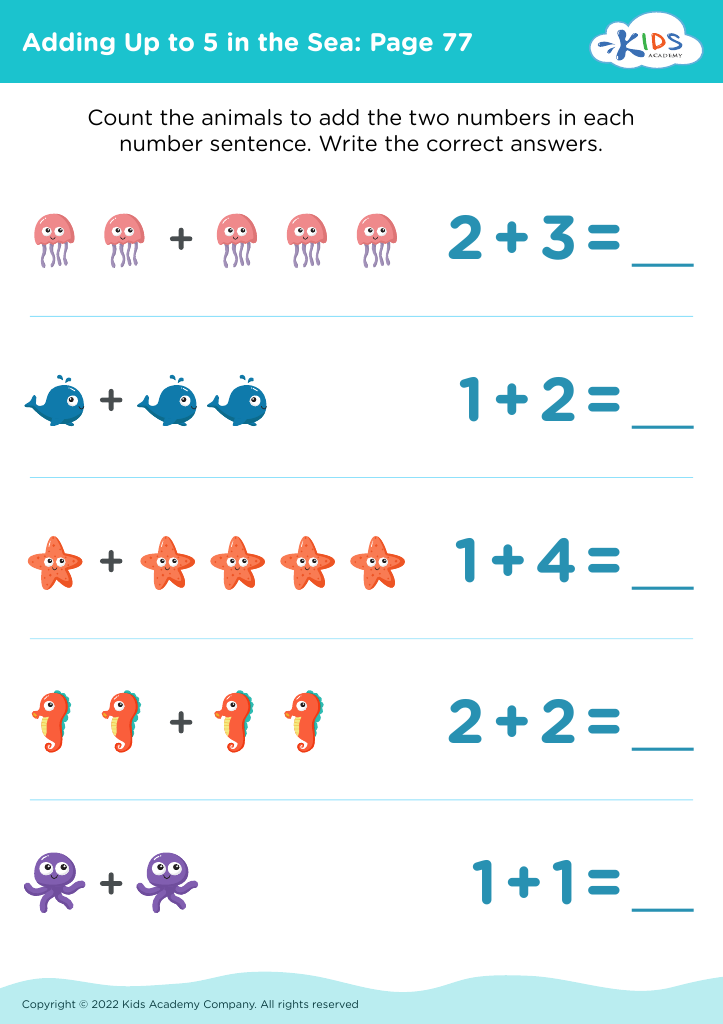
Adding Up to 5 in the Sea: Page 77
Worksheet
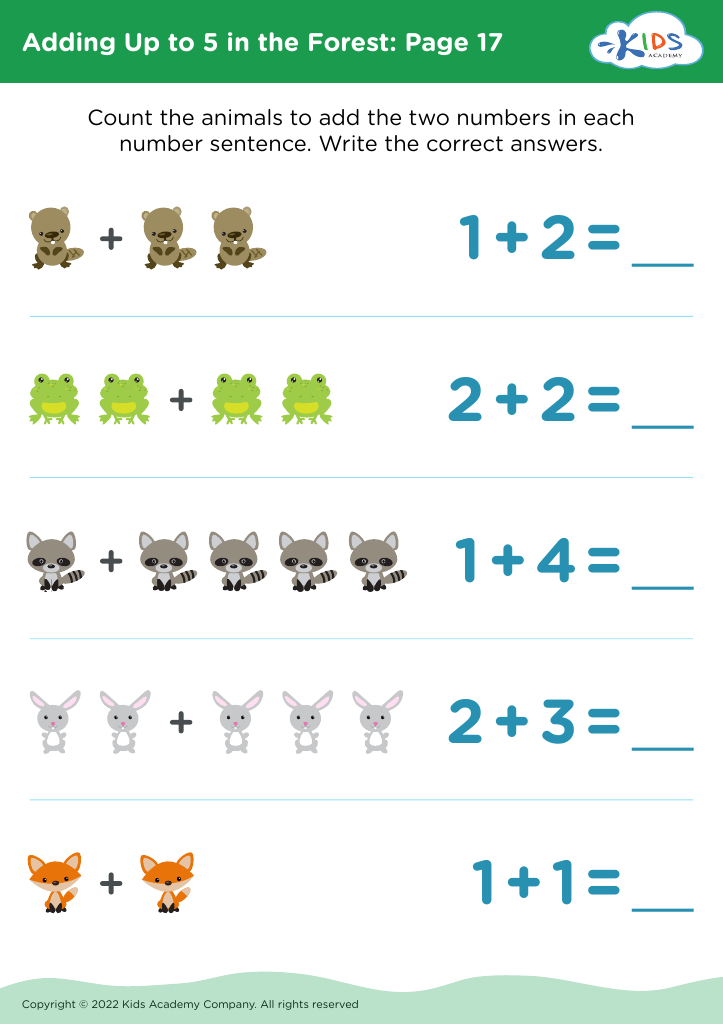
Adding Up to 5 in the Forest: Page 17
Worksheet
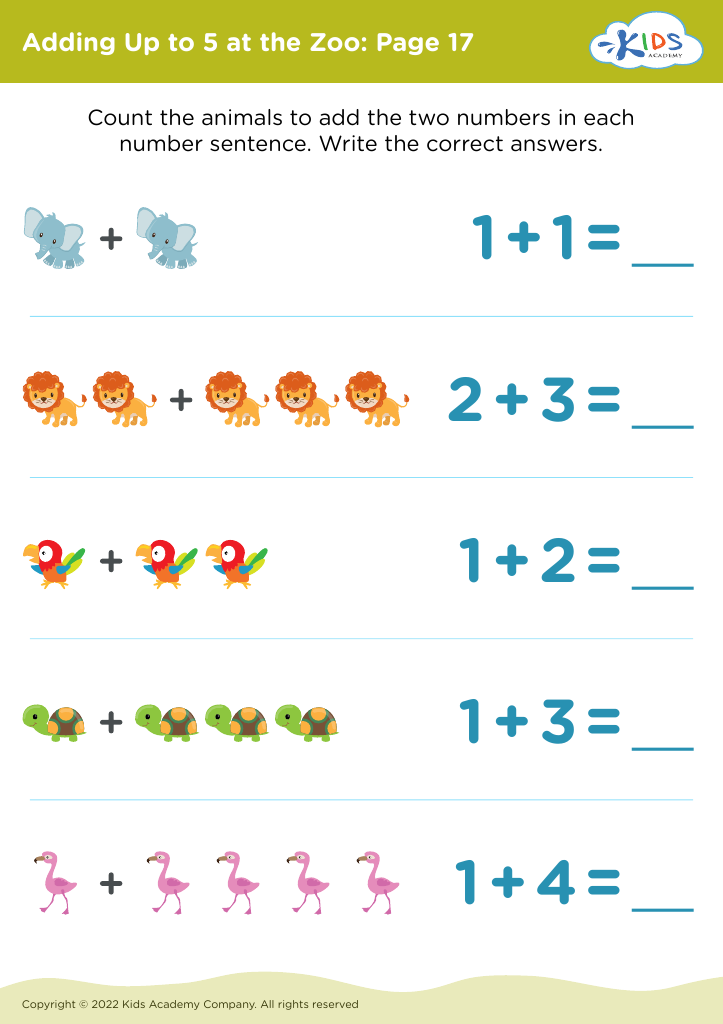
Adding Up to 5 at the Zoo: Page 17
Worksheet
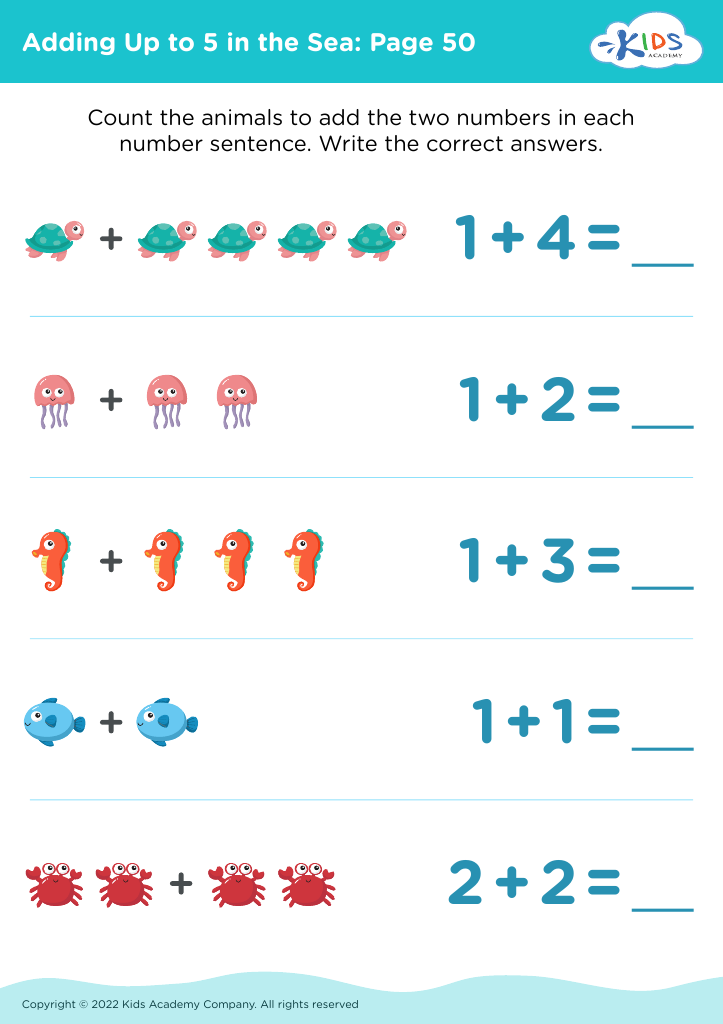
Adding Up to 5 in the Sea: Page 50
Worksheet
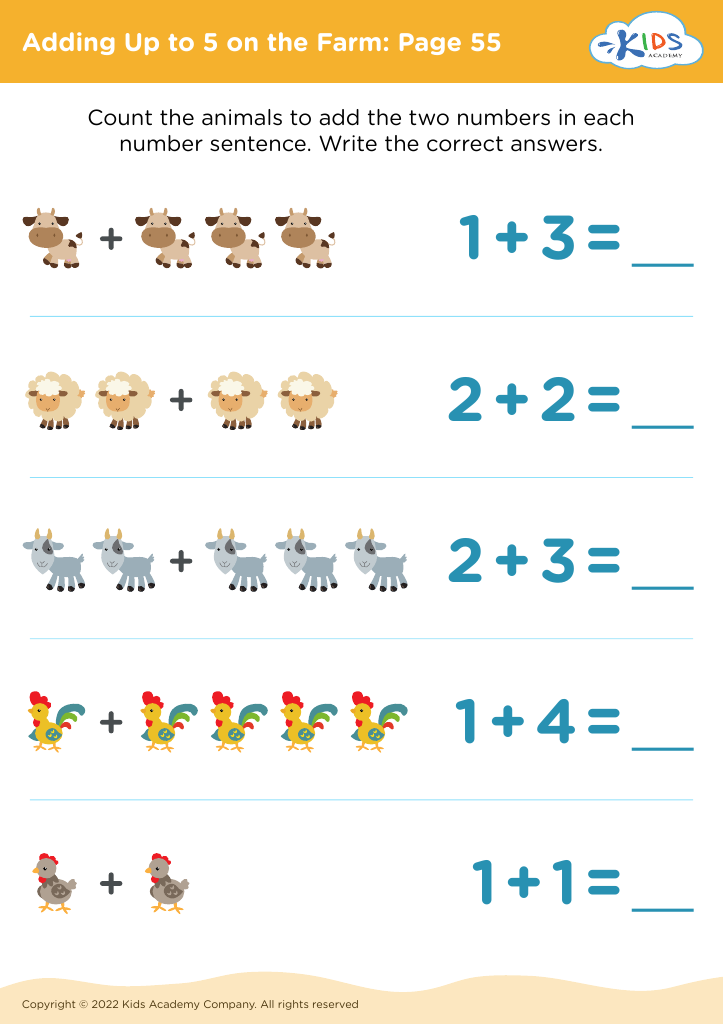
Adding Up to 5 on the Farm: Page 55
Worksheet


Fine motor skills are vital for young children's development, particularly in the critical ages of 4 to 6. At this stage, children are not only learning to manipulate tools like crayons and scissors, but they are also starting to engage in early math concepts, such as adding up to 5. The connection between fine motor skills and learning is profound, encompassing both academic and daily life competencies.

Firstly, strong fine motor skills enable children to write clearly. As they learn to hold a pencil correctly and form letters, they gain confidence in their ability to express themselves through writing. This early practice fosters literacy skills that are foundational for future learning.

Moreover, developing fine motor skills helps enhance children's ability to perform tasks that require precision, improving their capability to solve simple math problems like adding numbers. Engaging in activities that involve counting and manipulating physical objects can solidify these early math concepts while simultaneously boosting hand-eye coordination and dexterity.

Ultimately, parents and teachers should care about fine motor skills, as they lay the groundwork for successful academic journeys and everyday tasks. Supporting skills in this area helps nurture confident, capable learners who can tackle challenges both in school and beyond.