Nature appreciation Adding Up to 5 Worksheets for Ages 4-6
5 filtered results
-
From - To
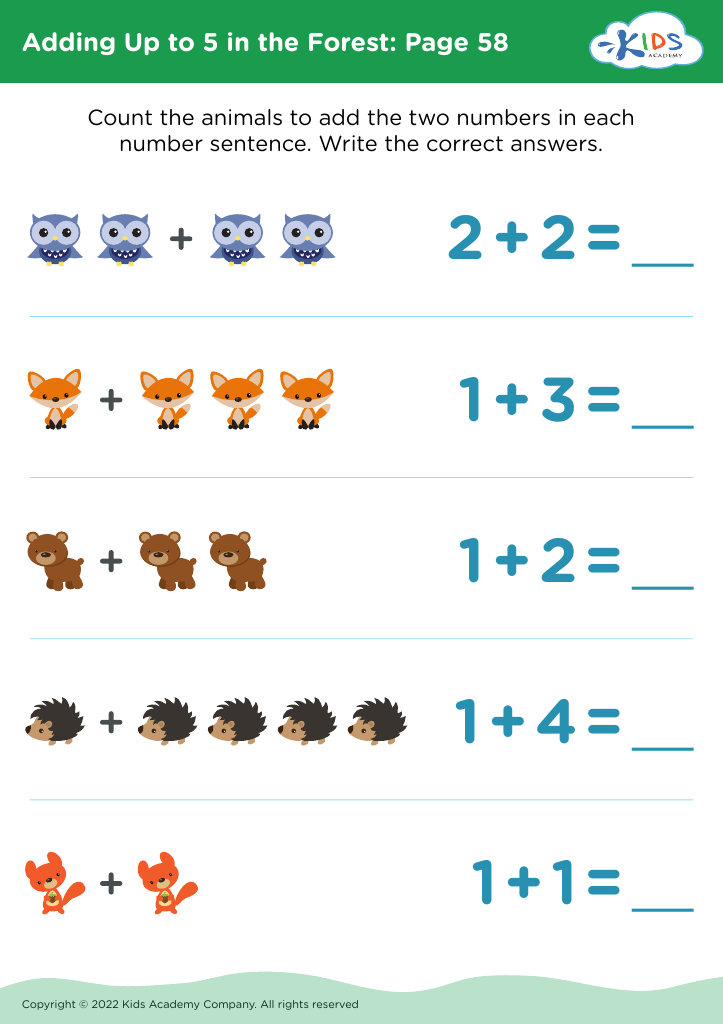
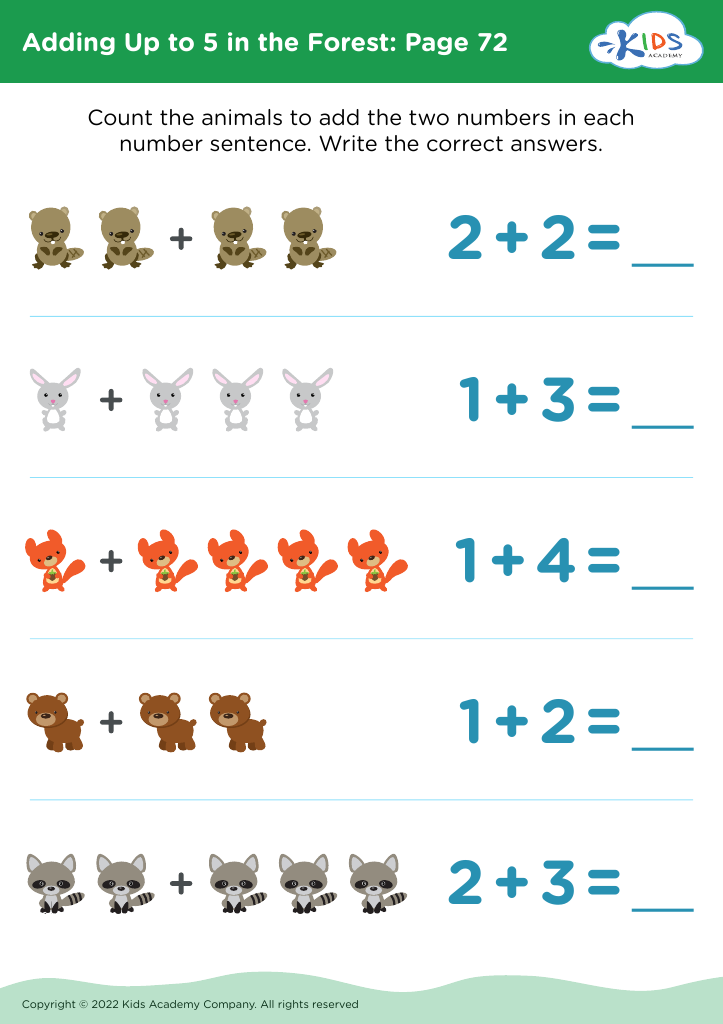
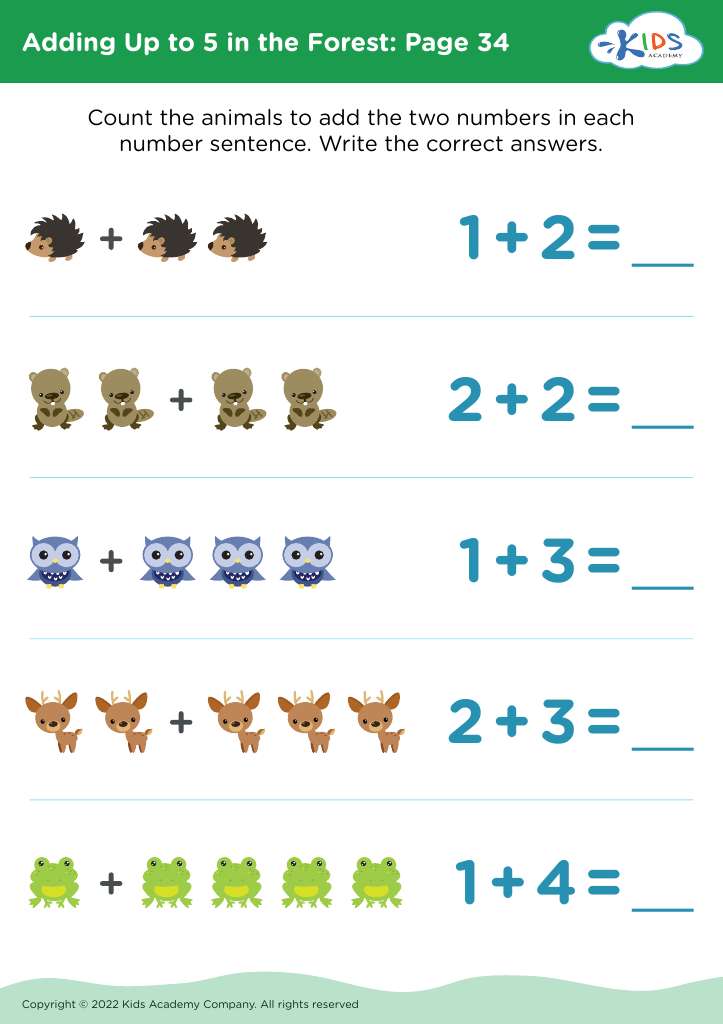
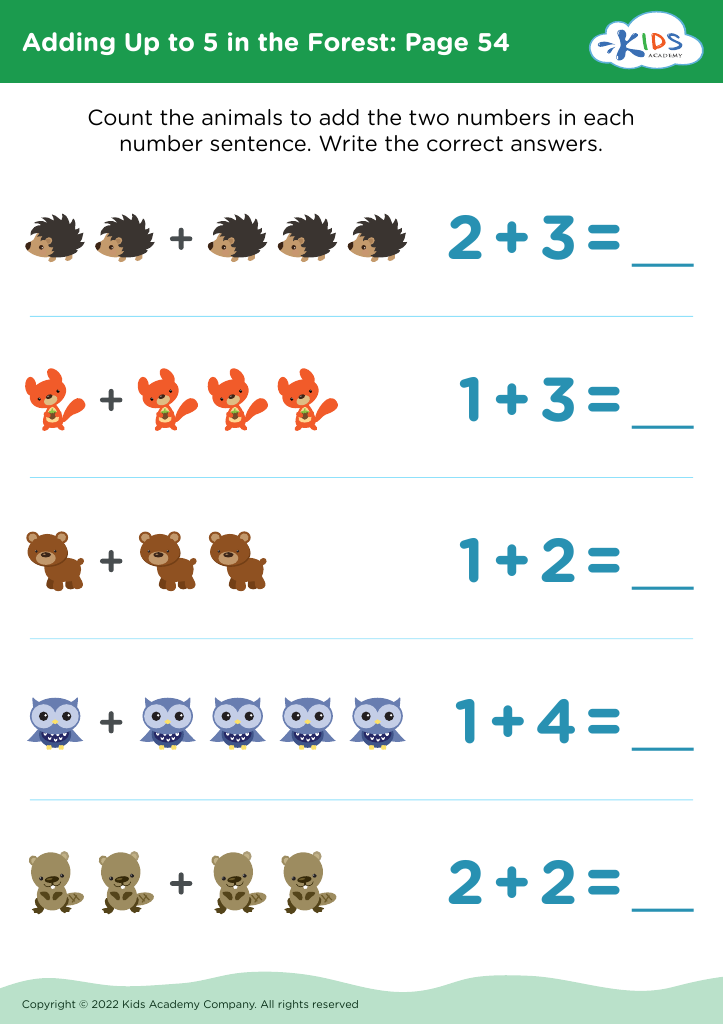
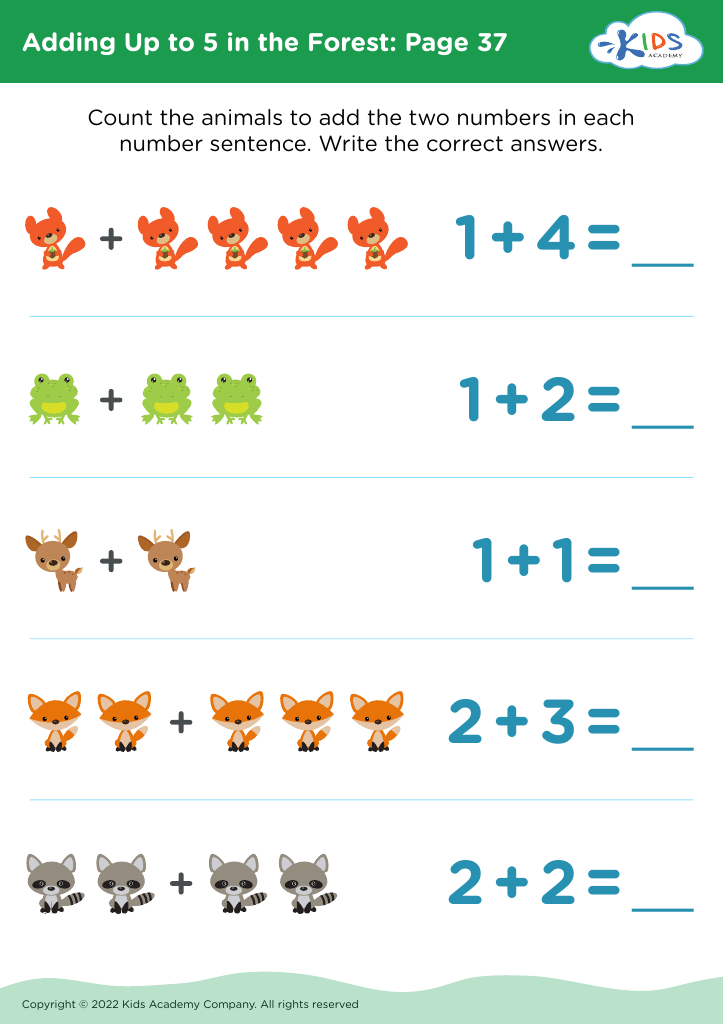
Introduce young learners to the beauty of nature while building essential math skills with our 'Nature Appreciation Adding Up to 5 Worksheets for Ages 4-6.' These engaging worksheets combine the wonders of the natural world with simple addition problems, making learning both fun and meaningful. Perfect for kids aged 4 to 6, the activities include counting leaves, flowers, and other natural elements to practice adding up to 5. Designed to foster a love for the environment and develop foundational math skills, these worksheets are an excellent resource for parents and educators seeking interactive and educational content. Download now to inspire your child's learning journey.


%20(1).jpg)





Nature appreciation is a foundational aspect of early childhood education that holds immense benefits for young learners. Introducing activities like "Nature Appreciation Adding Up to 5" for ages 4-6 fosters a combination of math skills and a love for the natural world.
At this developmental stage, children are incredibly curious and eager to explore their environment. By incorporating simple math exercises into outdoor activities, such as counting leaves or pebbles, teachers and parents can make learning both engaging and enjoyable. This approach helps children grasp basic mathematical concepts while also encouraging them to observe and interact with nature.
Furthermore, appreciating nature contributes to a child's overall well-being and cognitive development. Studies have shown that time spent in natural settings can enhance concentration, improve mood, and reduce stress. These benefits are particularly valuable for young children, as they create positive associations with learning and exploring the world around them.
Additionally, fostering a love for nature from a young age promotes environmental stewardship. Children who learn to appreciate and care for their surroundings are more likely to develop into conscientious adults who advocate for the protection of the planet.
Therefore, combining math skills with nature appreciation is a holistic educational strategy that nurtures intellectual growth, emotional health, and a sustainable mindset.








