Problem-Solving Skills Adding Up to 5 Worksheets for Ages 4-6 - Page 2
37 filtered results
-
From - To
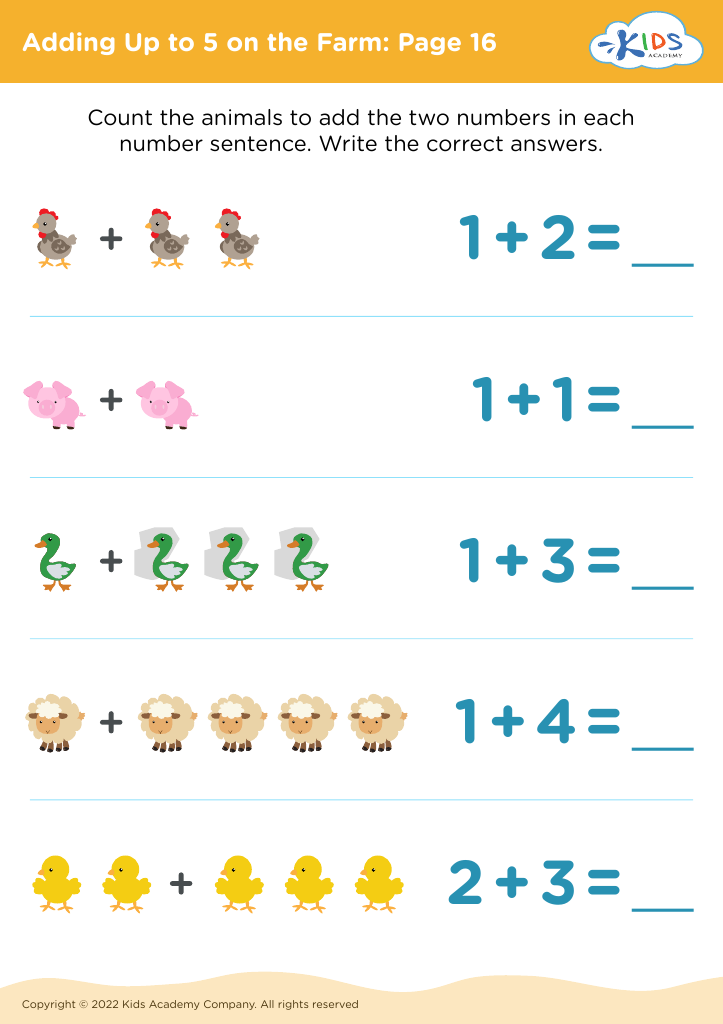
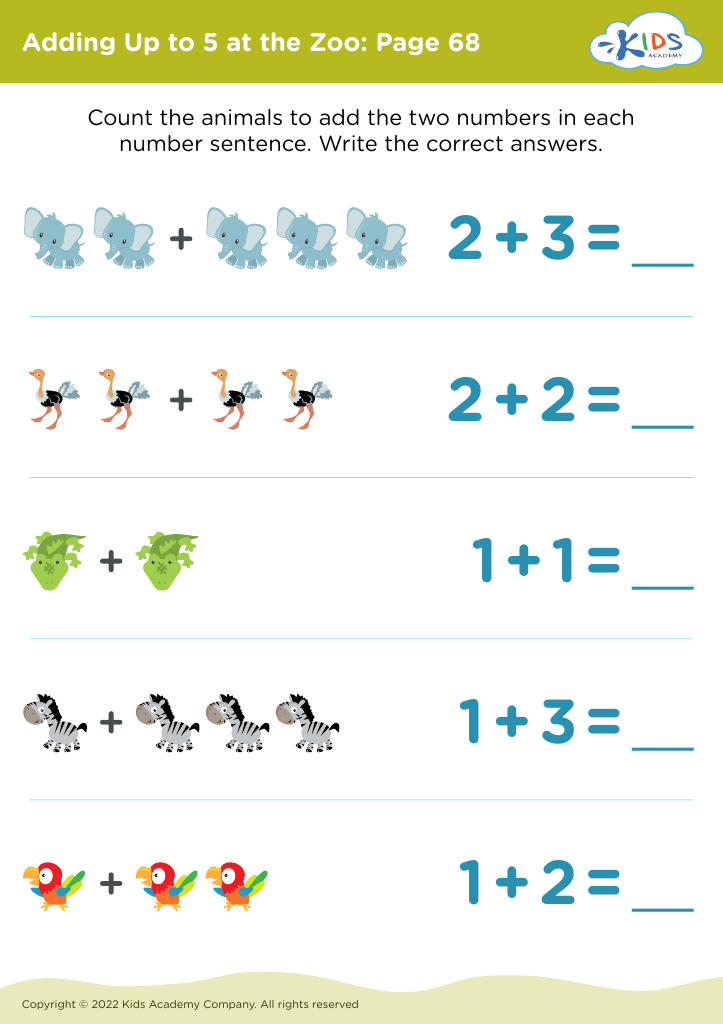
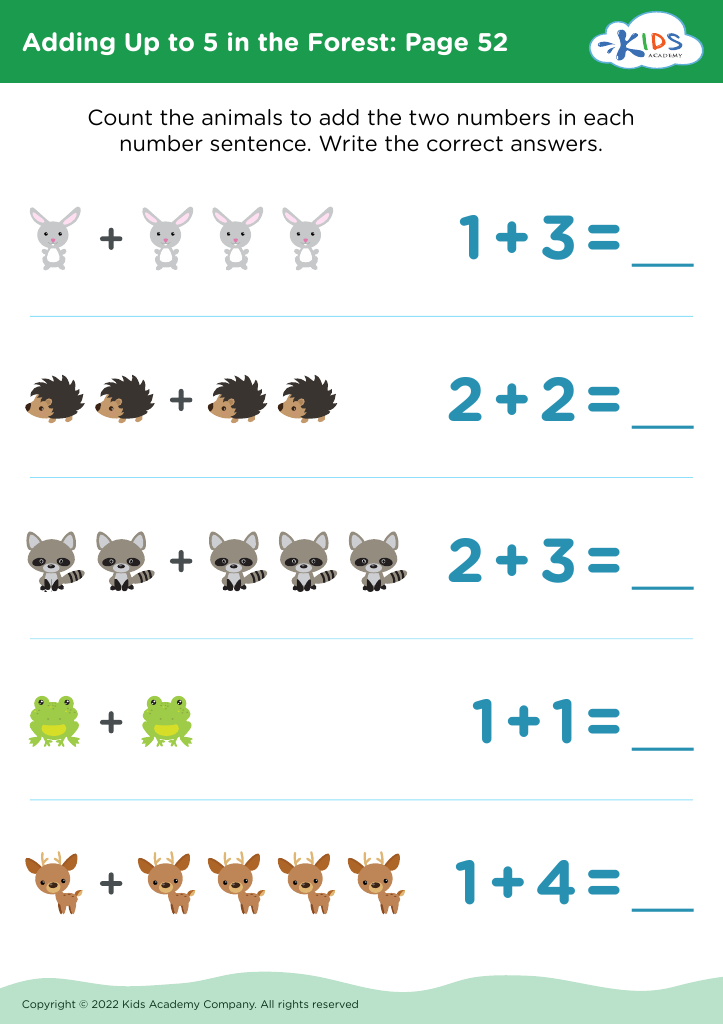
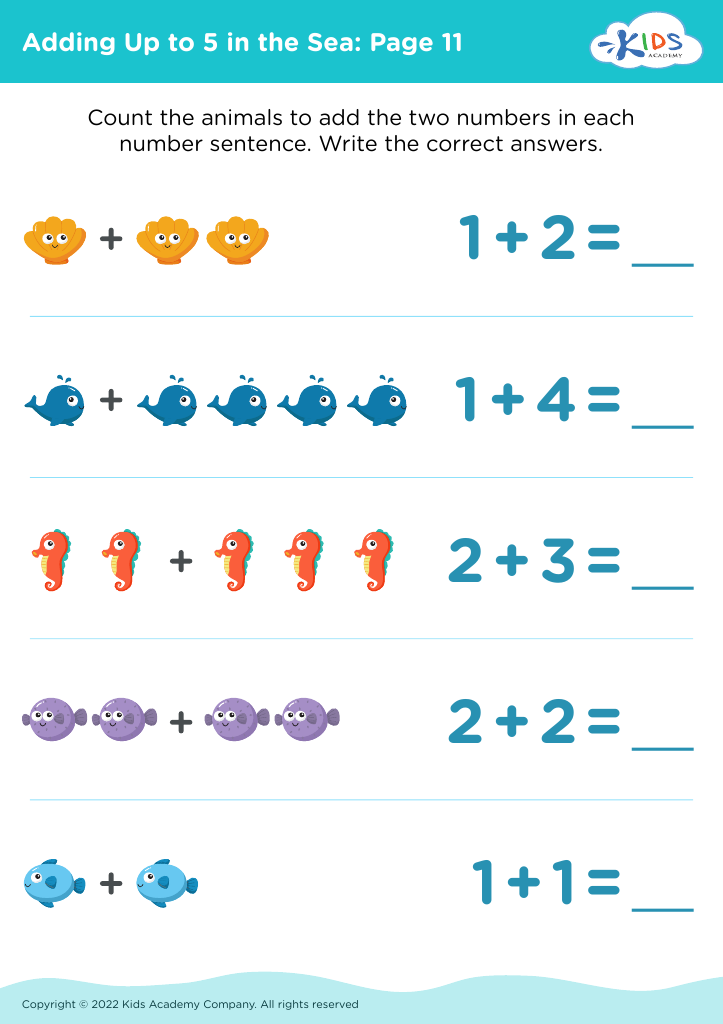
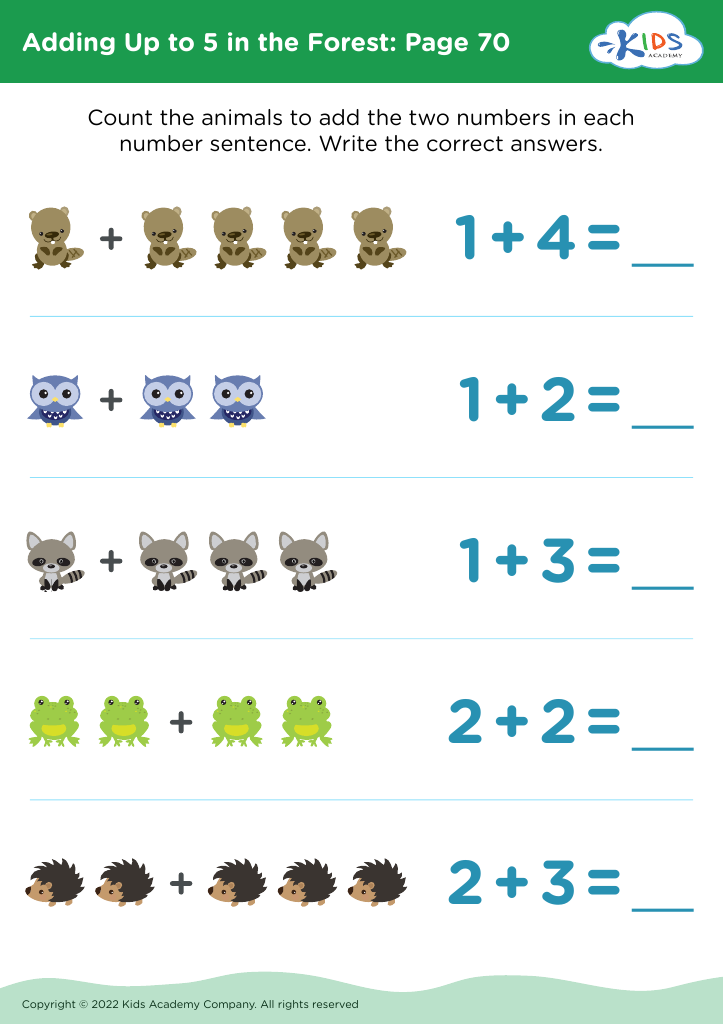
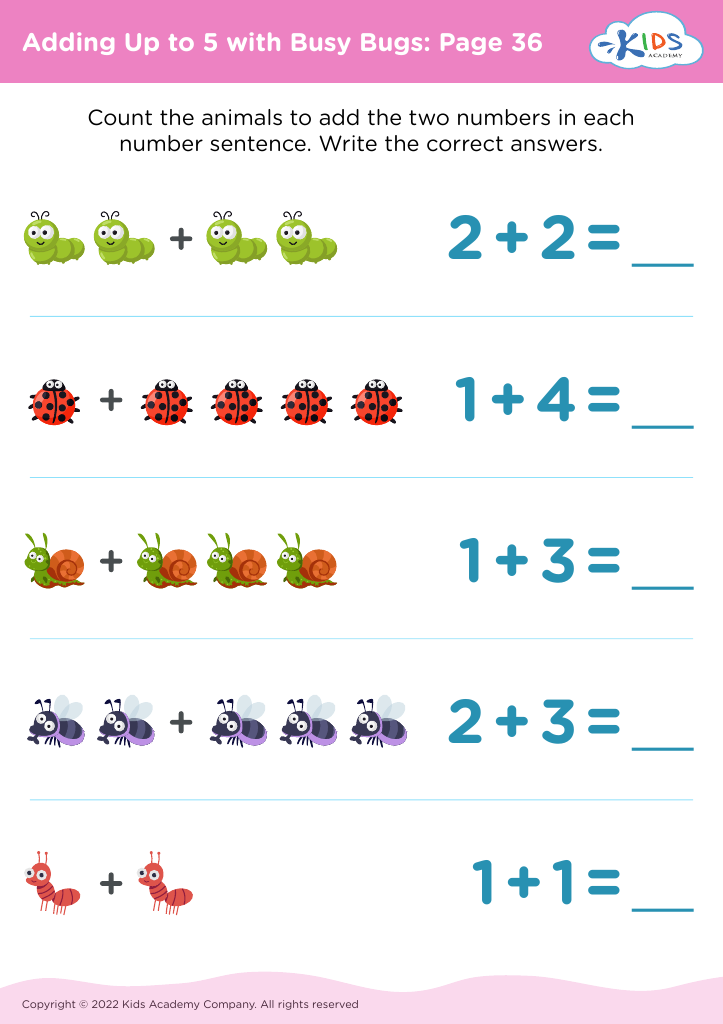
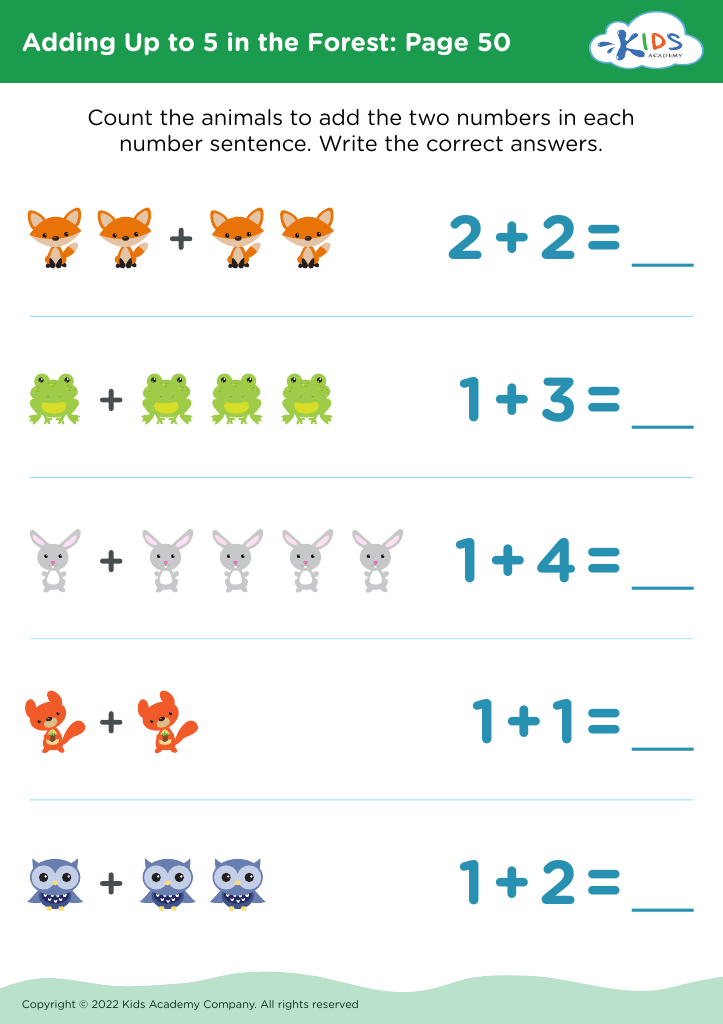
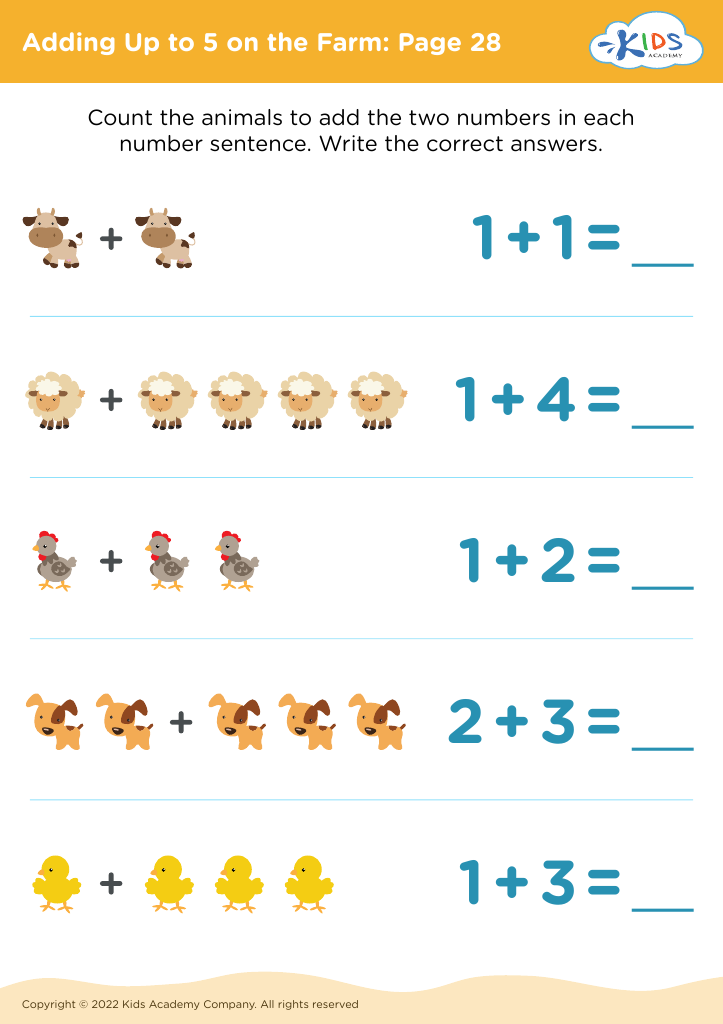
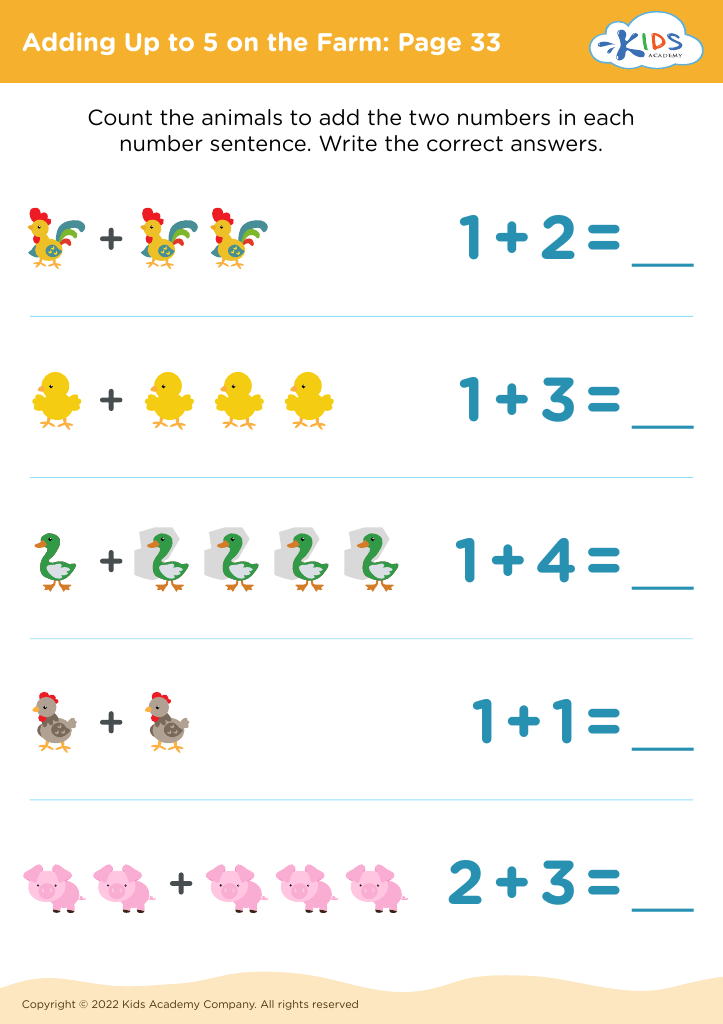
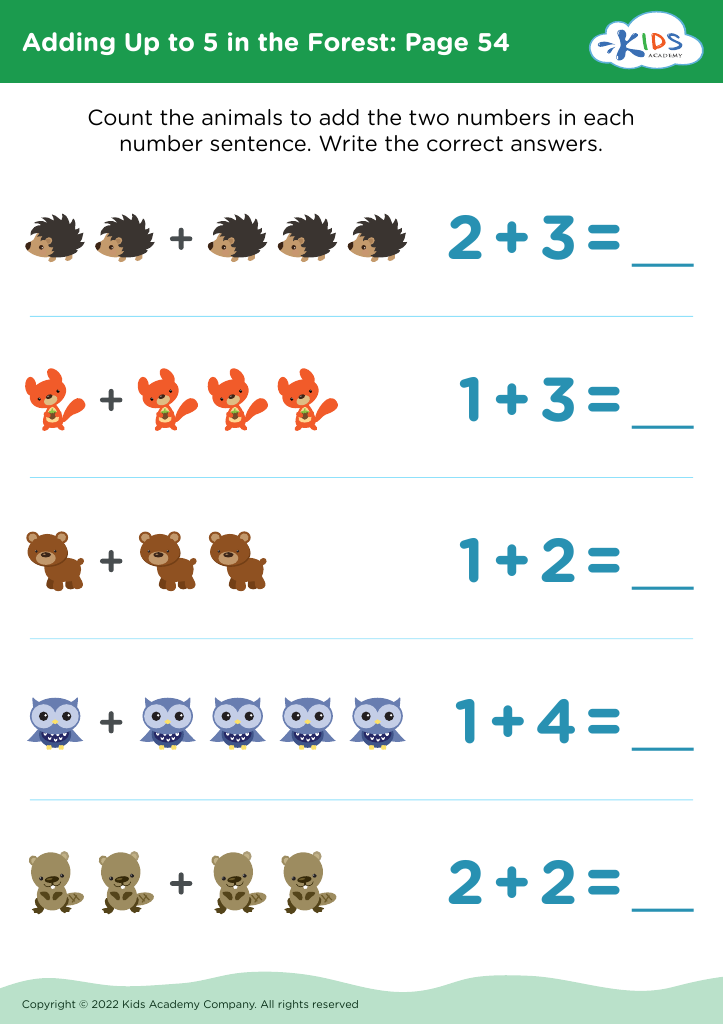
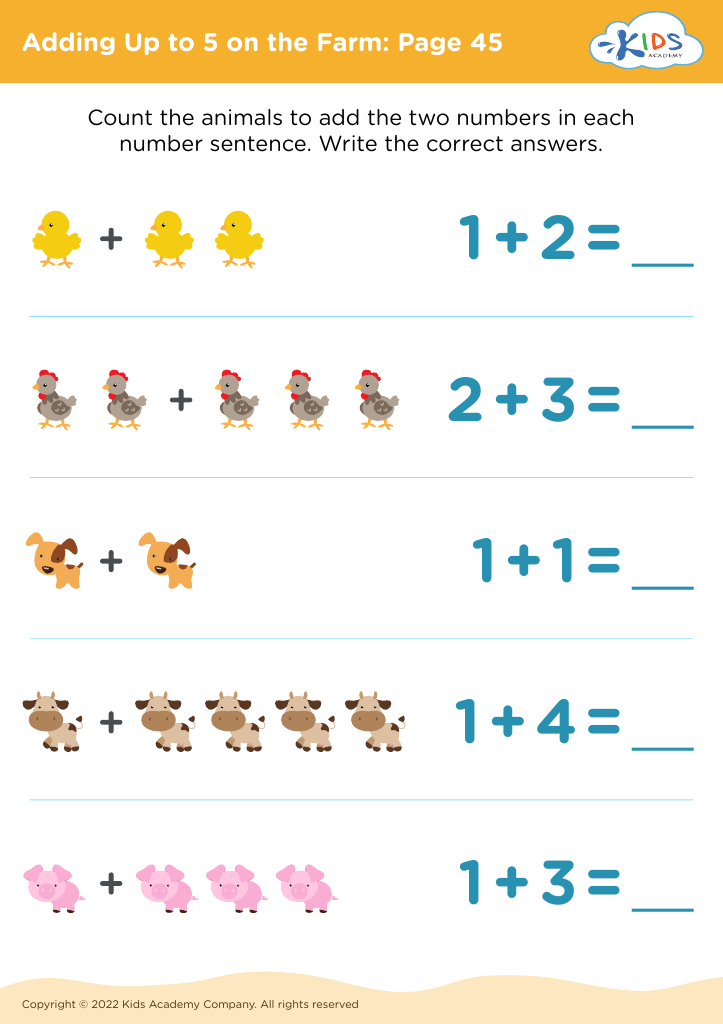
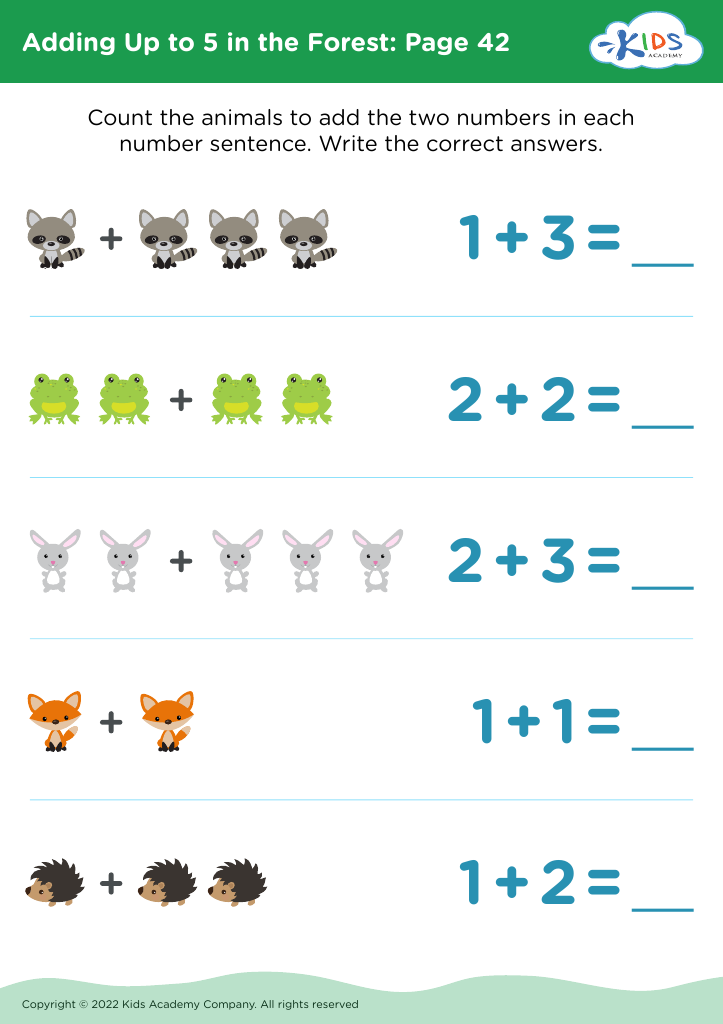
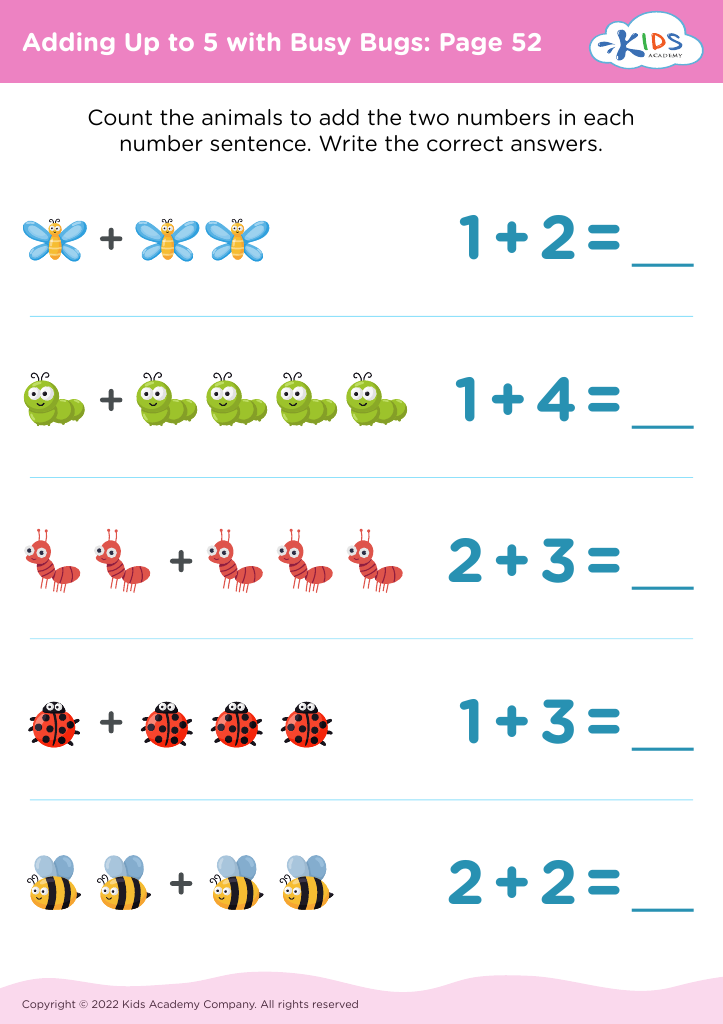








Problem-solving skills, especially when it comes to adding up to 5, are crucial for children aged 4-6 as they provide the foundation for cognitive development and future mathematical understanding. At this age, children are naturally curious and eager to explore relationships between numbers. By focusing on addition up to 5, parents and teachers can help children develop critical thinking, logical reasoning, and analytical skills that go beyond simple arithmetic.
Learning to add small numbers fosters confidence in young learners, encouraging them to tackle more complex math challenges as they progress. It also lays the groundwork for essential life skills, such as making decisions and solving real-world problems. For example, children can grasp concepts like quantity, sharing, and comparison through games and practical activities that involve adding up to 5, which reinforces their understanding of numbers in tangible ways.
Furthermore, engaging children in these problem-solving activities helps enhance their communication skills, as they articulate their thought processes and reasoning. In turn, such collaborative engagement fosters a sense of community and teamwork. Ultimately, by prioritizing problem-solving skills in early education, we equip children with the tools they need to succeed academically and personally.








