Visual learning reinforcement Adding Up to 5 Worksheets for Ages 4-6
5 filtered results
-
From - To
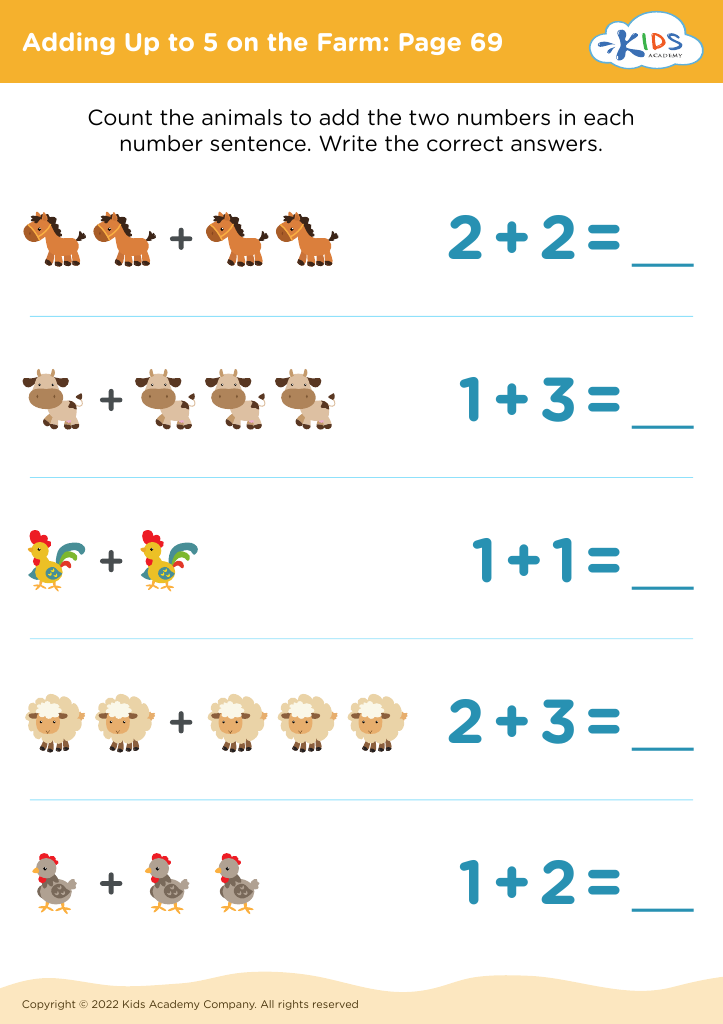
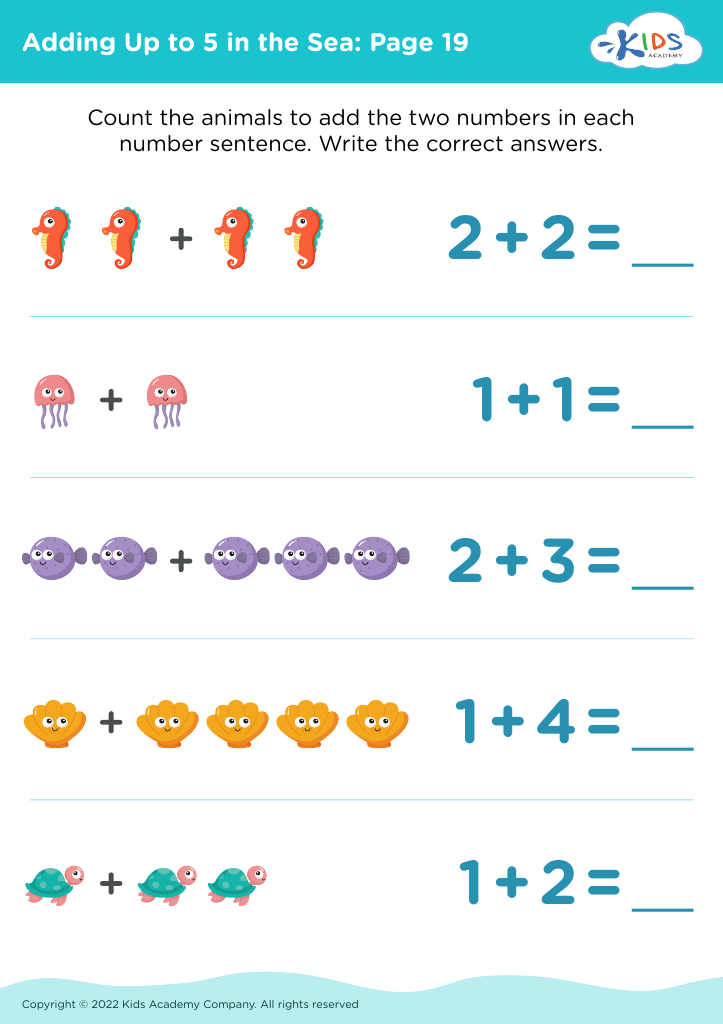
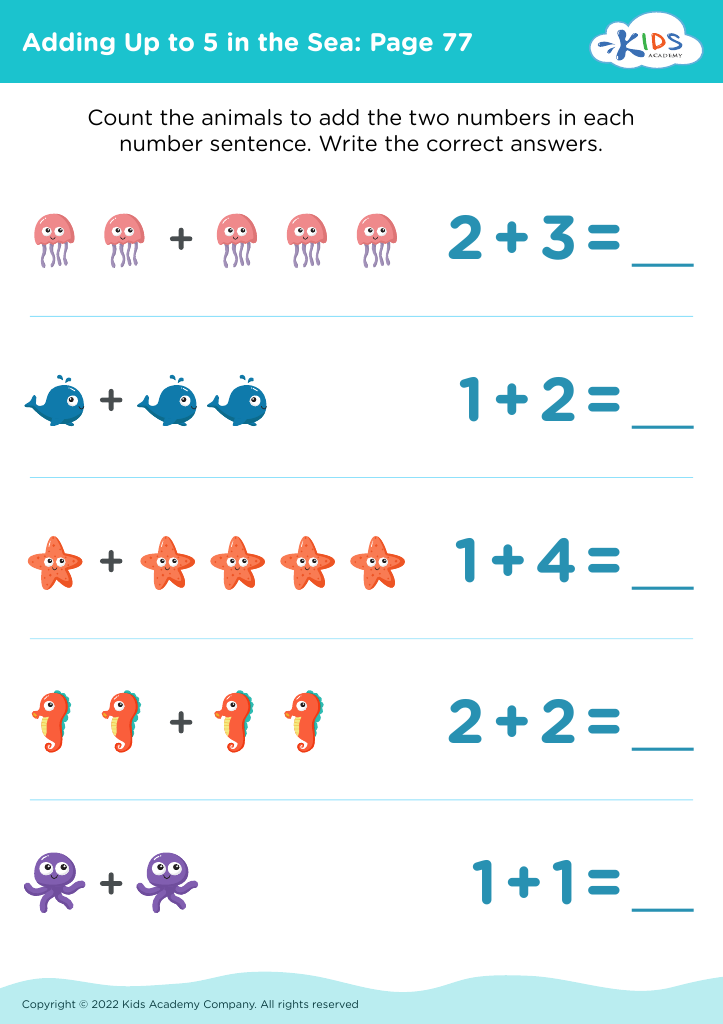
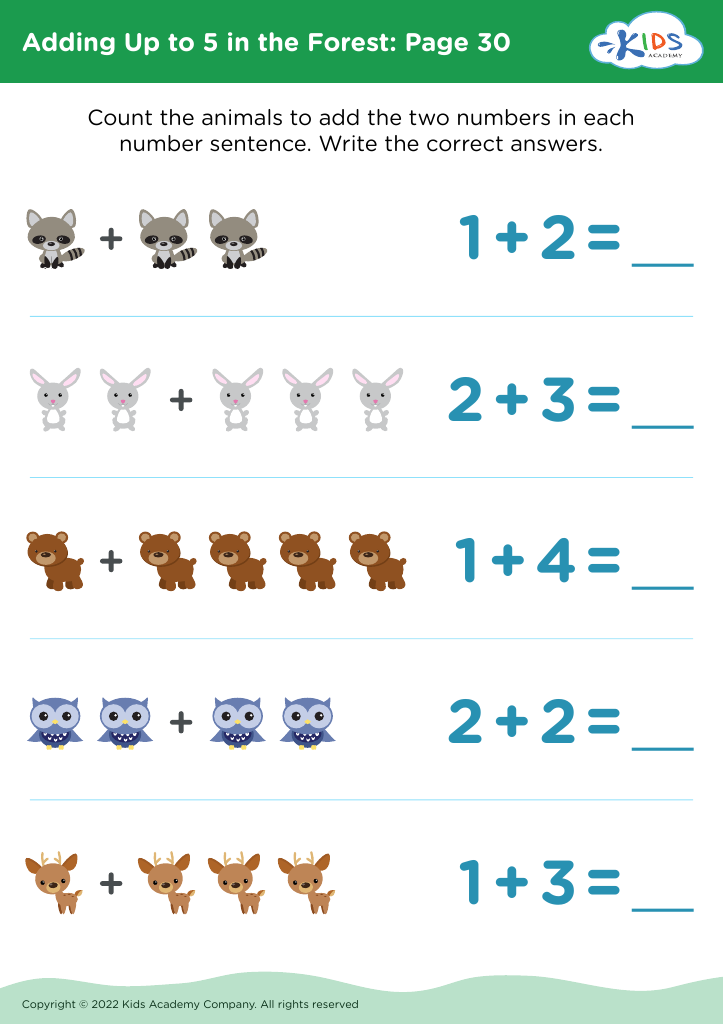
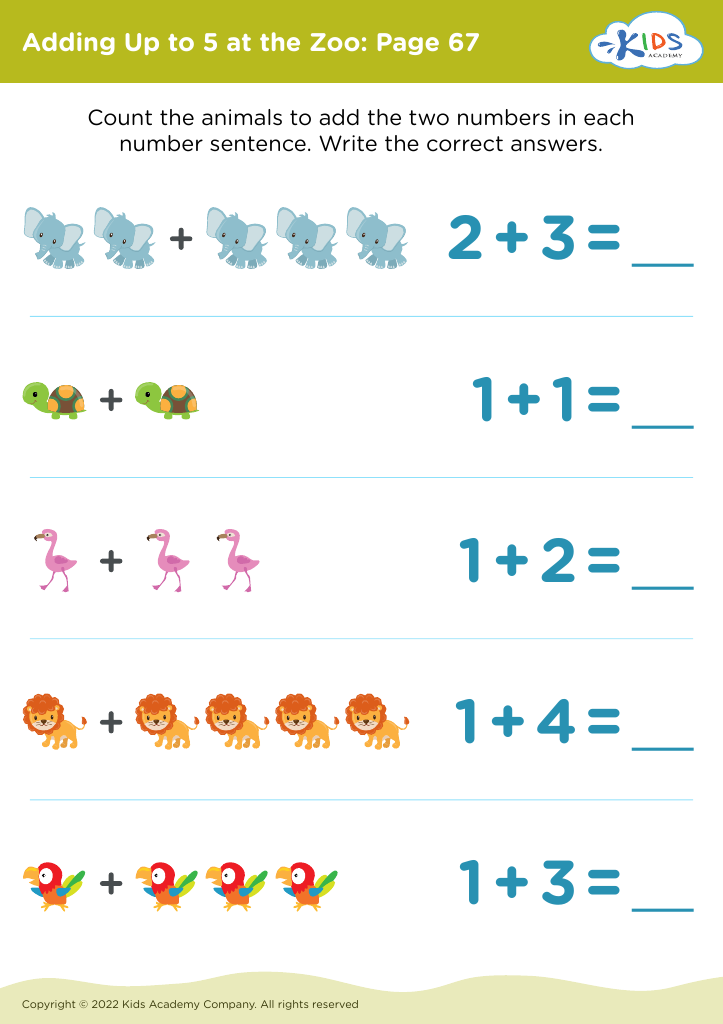
Discover engaging Visual Learning Reinforcement worksheets for young learners ages 4-6, focused on adding up to 5. Our carefully designed activities help children master early math concepts while boosting critical thinking and problem-solving skills. Featuring colorful visuals and interactive elements, these worksheets make learning addition fun and effective. Kids can explore number relationships and enhance their understanding of quantities in a visually stimulating way. Perfect for both classroom and home use, these resources support young learners in building a strong mathematical foundation. Encourage a love for learning with our easy-to-use worksheets that cater to diverse learning styles. Start their math journey today!



%20(1).jpg)




Visual learning reinforcement is crucial for children aged 4-6, especially when teaching foundational math concepts like adding up to 5. At this stage of development, children process information primarily through visual means, and incorporating visual aids can significantly enhance their understanding. Engaging visuals, such as colorful counters, pictures, or interactive games, make abstract concepts more concrete and relatable for young learners.
Through visual reinforcement, children can better grasp the concept of addition. For example, using five apples, they can physically group and count them, making the math relatable to their everyday lives. This hands-on approach also caters to diverse learning styles; some children may understand better through tactile experiences while others benefit from bright illustrations.
Moreover, visual aids foster engagement and motivation. Children are more likely to participate actively in their learning when it involves fun and colorful materials. This involvement builds a positive attitude toward math, encouraging lifelong interest and confidence in the subject.
Teachers and parents play a vital role in facilitating these learning experiences, ensuring that children not only learn to add but also enjoy the process. Successful visual learning experiences can lay a solid foundation for future math skills, making it an essential focus in early education.








