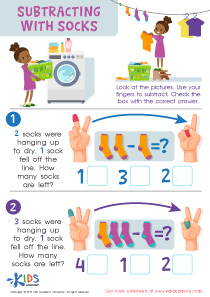
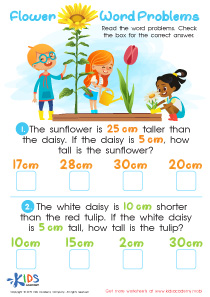
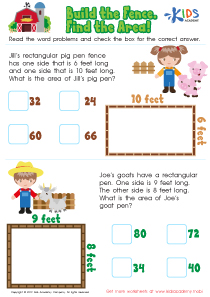
Problem-solving abilities Addition and Subtraction Word Problems Worksheets for Ages 4-6
4 filtered results
-
From - To
Enhance your child's problem-solving skills with our vibrant 'Addition and Subtraction Word Problems Worksheets' designed for ages 4-6. These age-appropriate worksheets from Kids Academy provide engaging, fun math challenges that help children grasp basic addition and subtraction concepts. Ideal for early learners, the worksheets focus on practical word problems to build confidence and improve critical thinking. Whether at home or in the classroom, these exercises are perfect for fostering a love of math and strengthening foundational skills necessary for future academic success. Jumpstart your child’s mathematical journey with our expertly crafted resources!
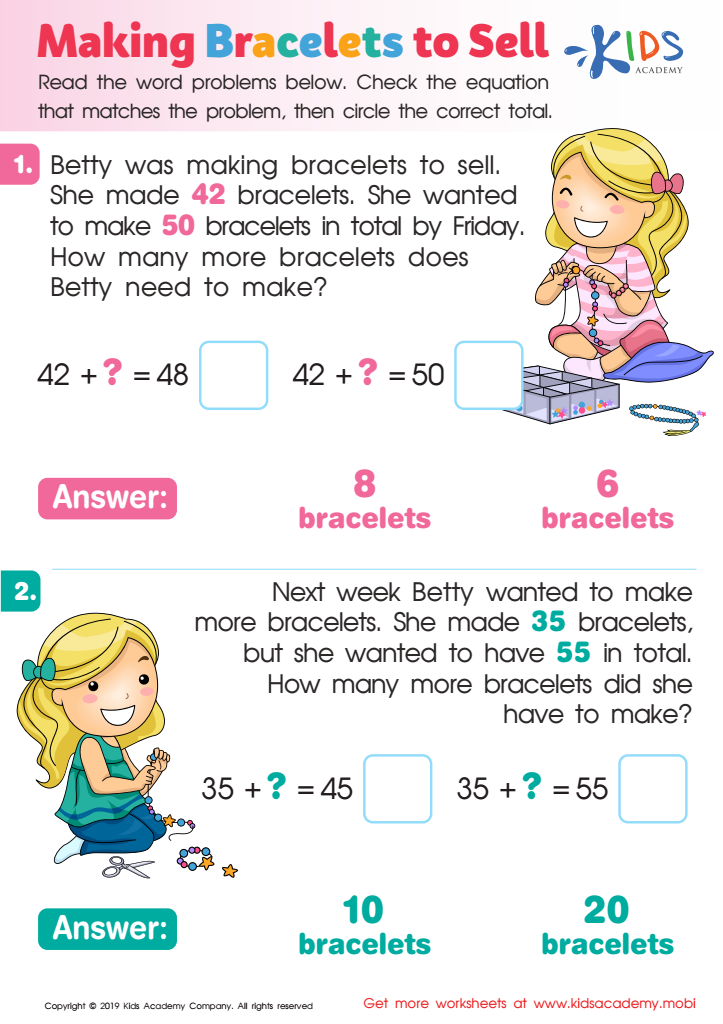
Making Bracelets to Sell Worksheet
 Assign to My Students
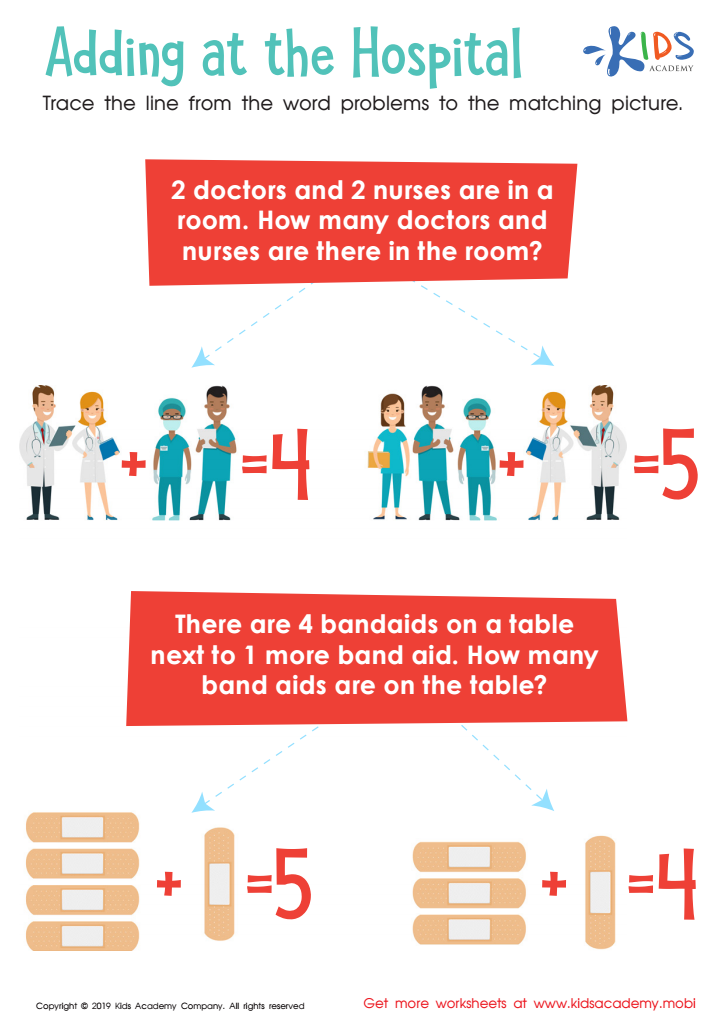
Adding at the Hospital Worksheet
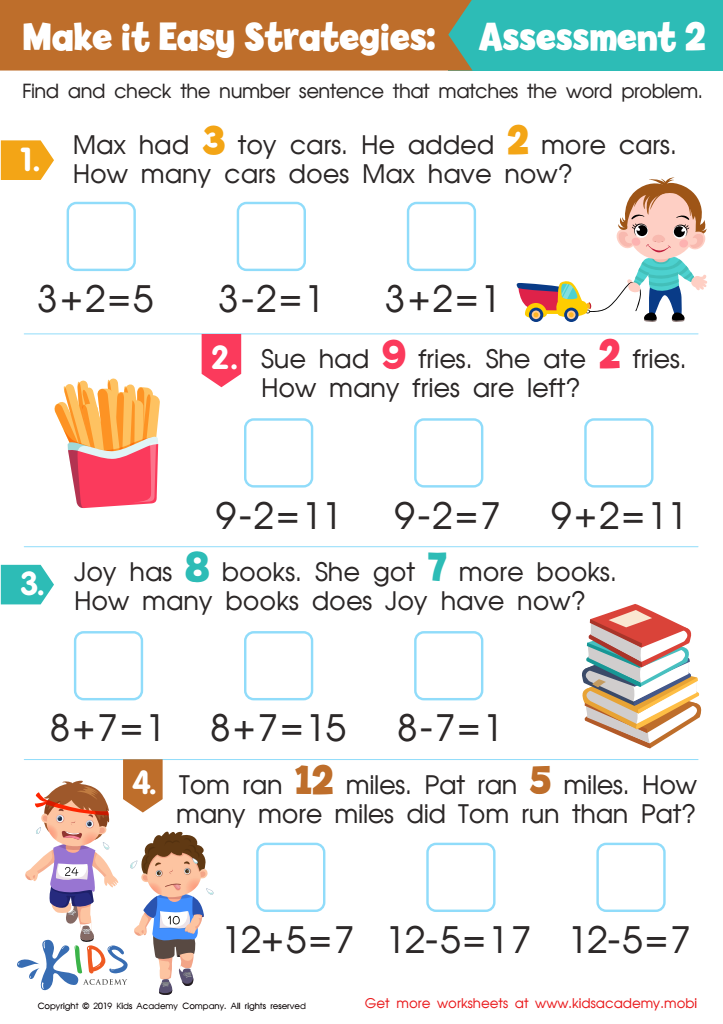
Make it Easy Strategies: Assessment 2 Worksheet
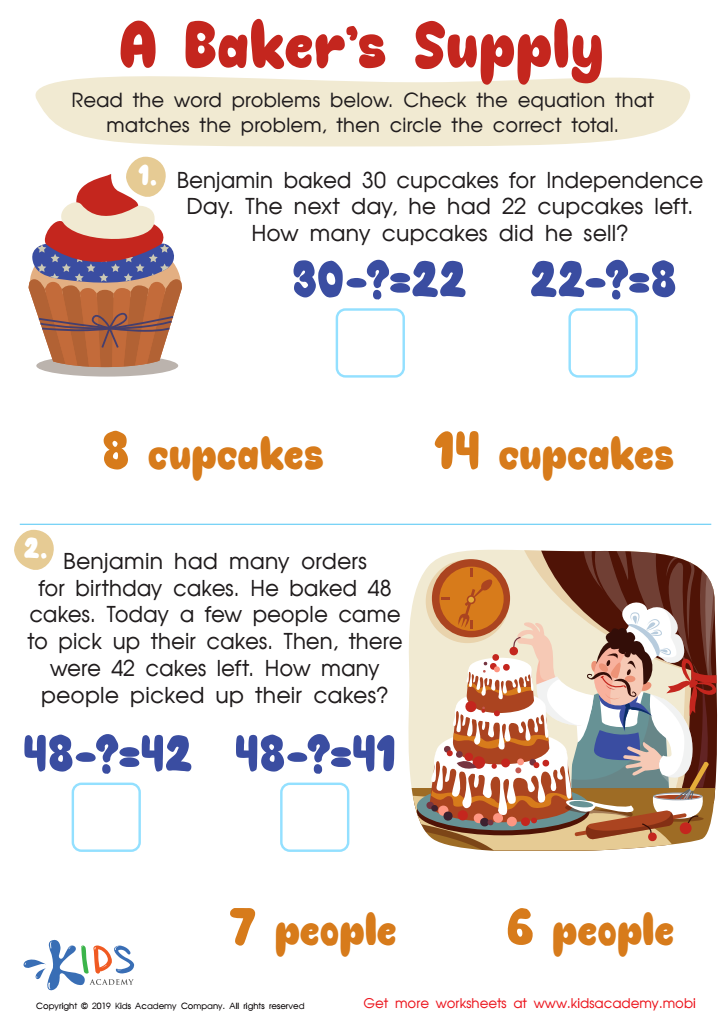
A Baker's Supply Worksheet








Parents and teachers should prioritize developing problem-solving abilities in young children, particularly through addition and subtraction word problems, as it lays the foundation for crucial cognitive and academic skills. At ages 4-6, children's brains are highly plastic, making it the ideal period to nurture critical thinking, logic, and numeracy. Engaging with word problems enables children to connect abstract mathematical concepts to real-world scenarios, enhancing their comprehension and practical application.
Problem-solving encourages perseverance, as children learn to experiment with different approaches and identify mistakes. This cultivates resilience and flexibility in thought, essential traits for lifelong learning. Additionally, word problems often involve reading comprehension, which supports language development and sharpens understanding of instructions and narratives.
Collaborating on problem-solving tasks promotes social skills, such as communication and cooperation, especially in group settings. Children learn to articulate their reasoning and understand diverse perspectives, fostering empathy and effective teamwork.
Ultimately, strong problem-solving abilities empower children to tackle academic challenges across all subjects, not just mathematics. Early mastery of these skills increases confidence and academic participation, setting a positive trajectory for future educational success and developing lifelong learners capable of continuous growth and innovation.