Visual Learning Addition and Subtraction Word Problems Worksheets for Ages 4-6
5 filtered results
-
From - To
Unlock the power of visual learning with our engaging addition and subtraction word problems worksheets, tailored specifically for children ages 4-6. Designed to make math fun, these worksheets use vibrant visuals to aid comprehension and stimulate young minds. Each problem encourages kids to visualize scenarios, helping to reinforce essential addition and subtraction concepts. Whether at home or in the classroom, our resources are perfect for fostering a love for math while developing critical thinking skills. Boost your child's confidence and fluency in numbers with our captivating, easy-to-follow worksheets that bring math problems to life! Start their learning adventure today!
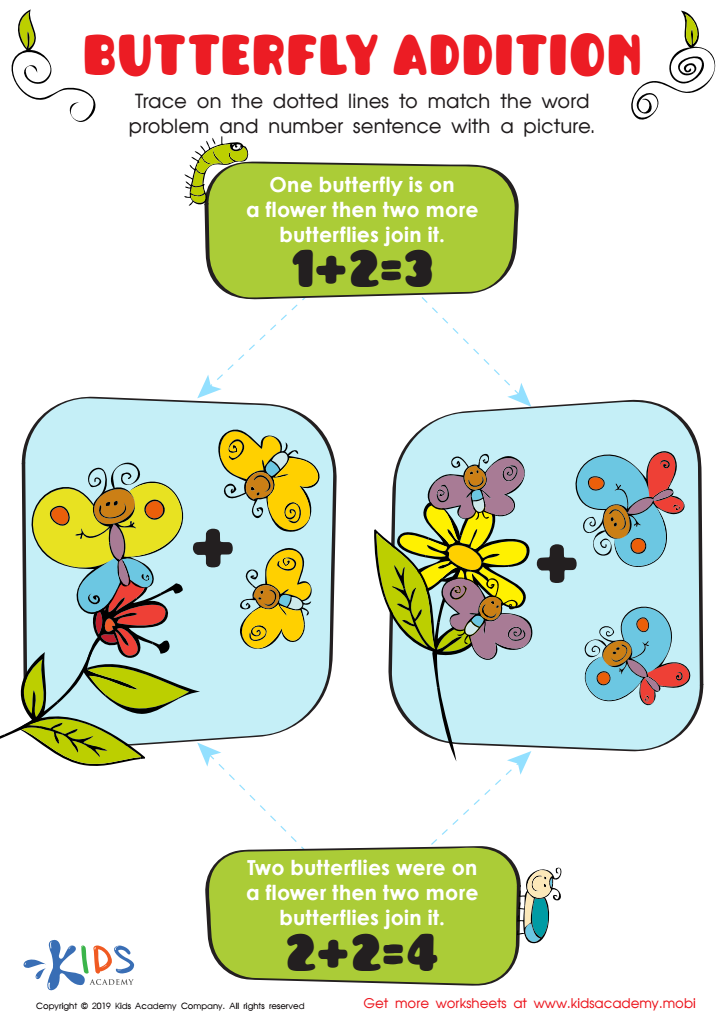
Butterfly Addition Worksheet
 Assign to My Students
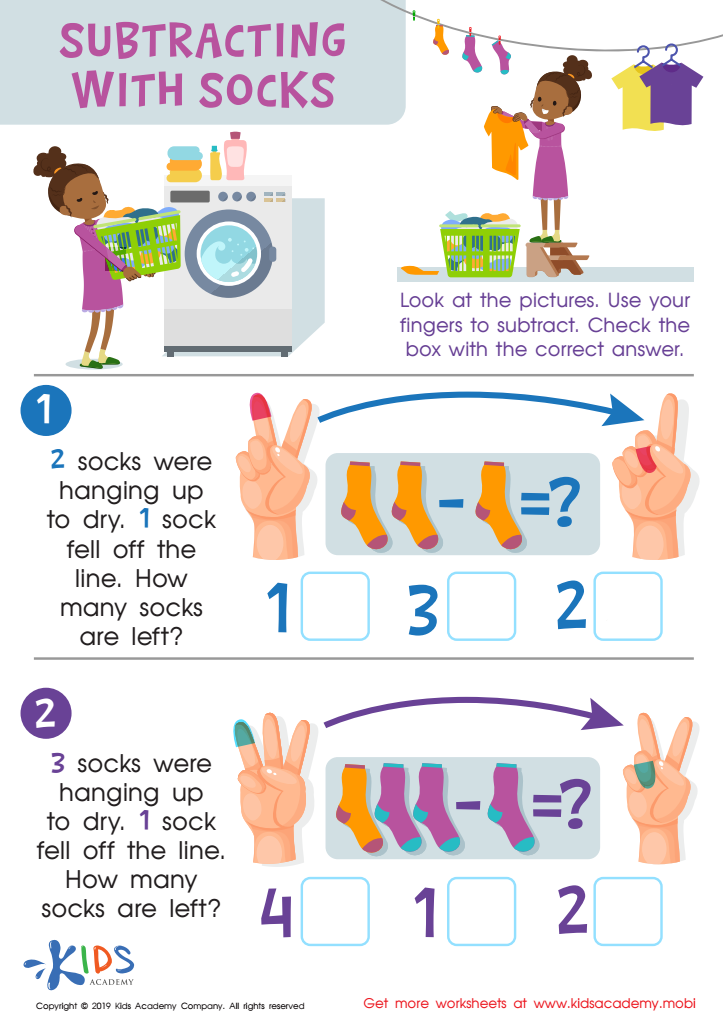
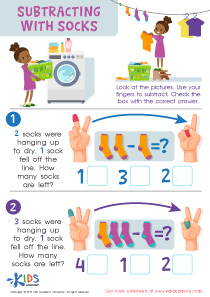
Subtracting Socks Worksheet
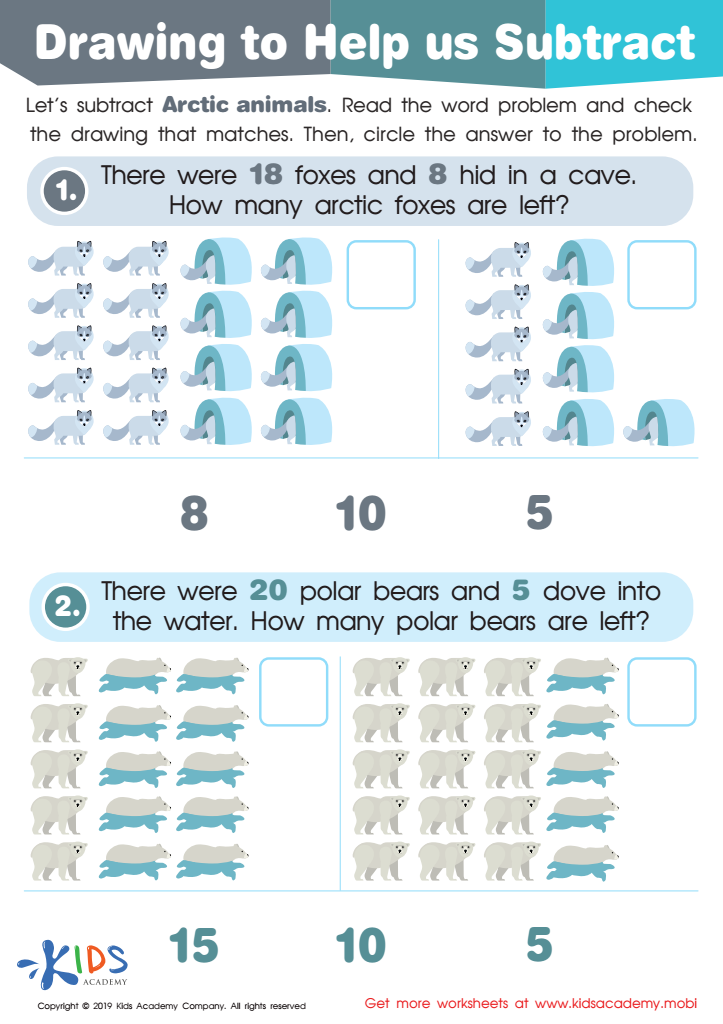
Drawing to Help Us Subtract Worksheet
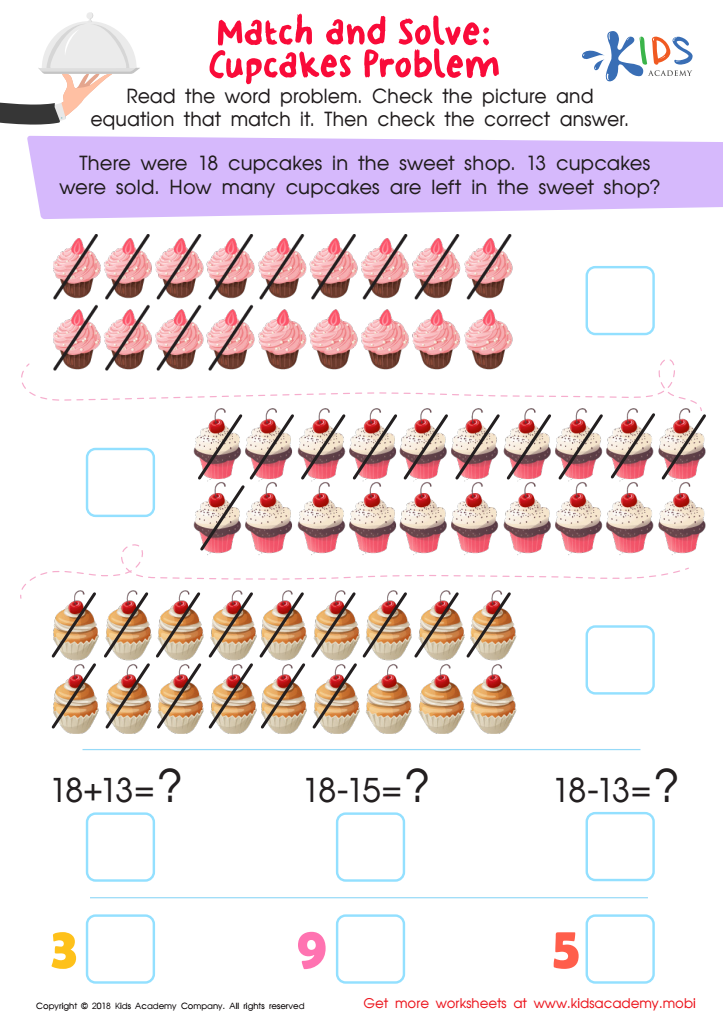
Match and Solve: Cupcakes Problem Worksheet
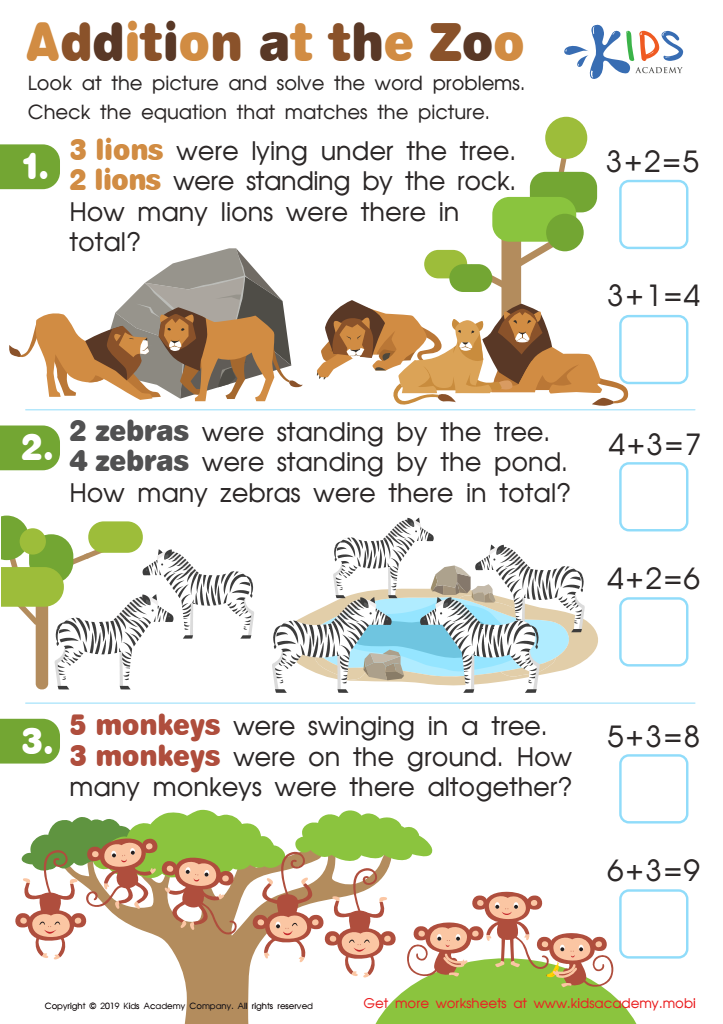
Addition at the Zoo Worksheet








Visual learning is crucial for children ages 4-6, especially when it comes to understanding addition and subtraction word problems. At this developmental stage, most children are concrete thinkers, making visual aids an essential tool for comprehension. By using visuals—like illustrations, counters, or number lines—children can better grasp mathematical concepts and how they relate to real-life situations.
Parents and teachers should care about this approach because it nurtures a child's curiosity and reinforces their cognitive skills. Visual learning helps children see the relationships between numbers and enhances their problem-solving abilities. When children visualize a problem, they can conceptualize it more easily, which leads to better retention and understanding of the material.
Moreover, encouraging visual learning promotes critical thinking and creativity. It empowers young learners to explore various strategies for solving problems, increasing their confidence in math while making learning more engaging. By integrating visual techniques in lessons, parents and teachers can support diverse learning styles, ensuring that all children have the opportunity to succeed. Ultimately, fostering a strong mathematical foundation now prepares children for future academic success and instills a positive attitude toward learning.