Addition up to 5 Addition & Subtraction Worksheets for Ages 4-6
4 filtered results
-
From - To
Discover engaging Addition up to 5 worksheets designed specifically for children ages 4-6! Our carefully curated activities help young learners grasp fundamental math concepts through vibrant visuals and fun exercises. These worksheets focus on simple addition and subtraction problems, fostering essential skills in a playful way. Tailored to meet developmental needs, they’re perfect for home or classroom learning. Each activity is crafted to enhance number recognition, improve problem-solving abilities, and build up confidence in early mathematics. Spark your child’s love for learning with our interactive resources that make mastering basic math both enjoyable and effective!
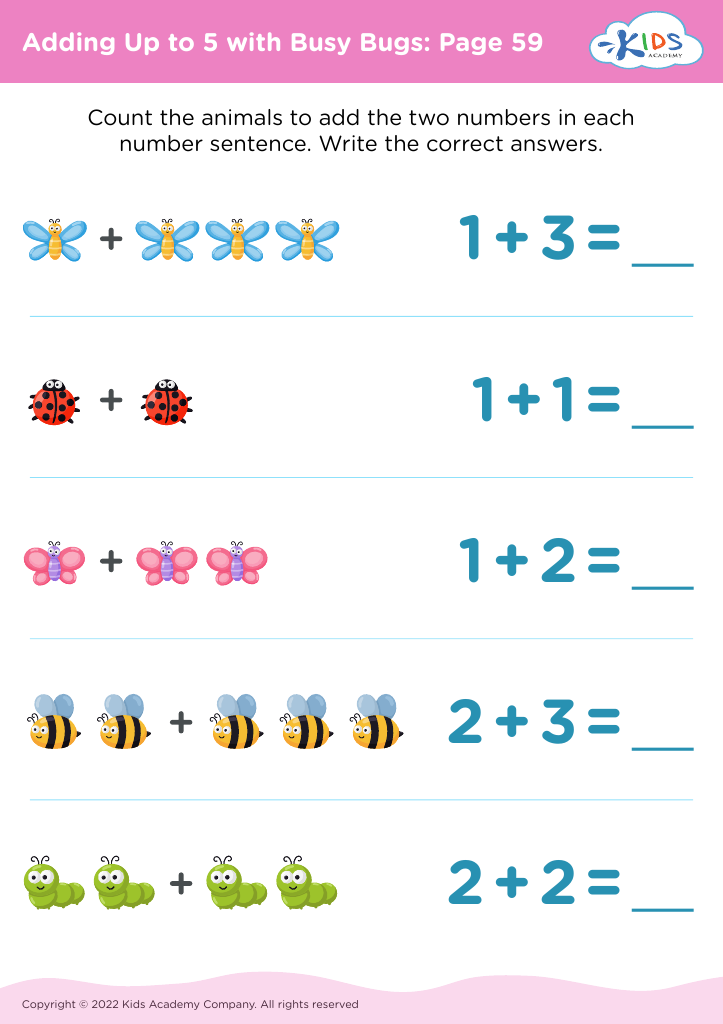
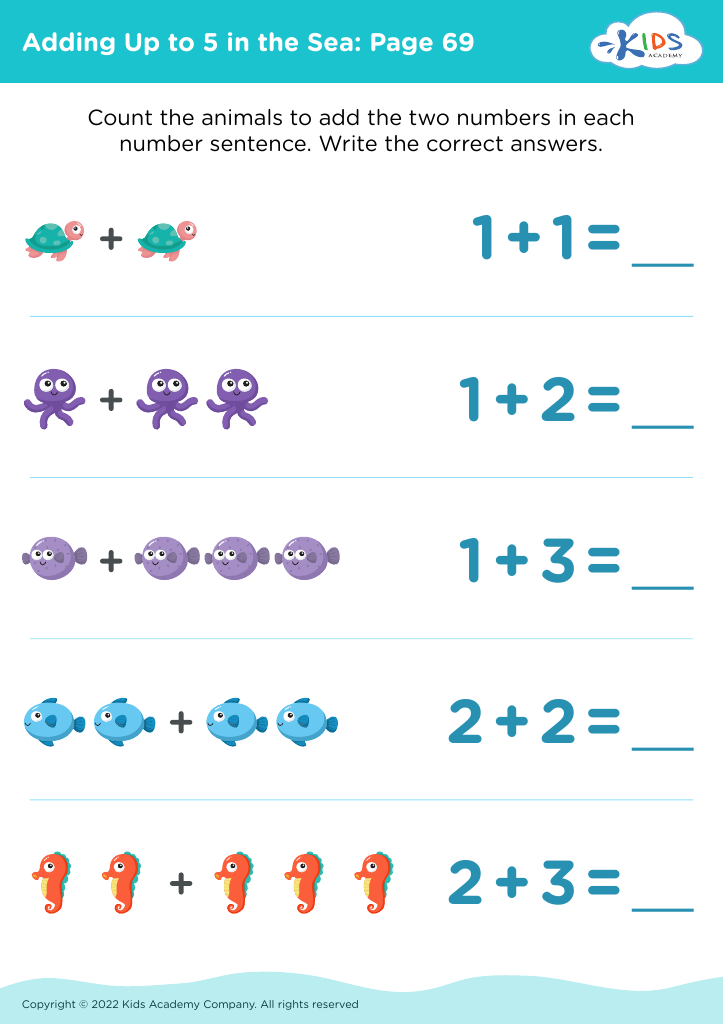
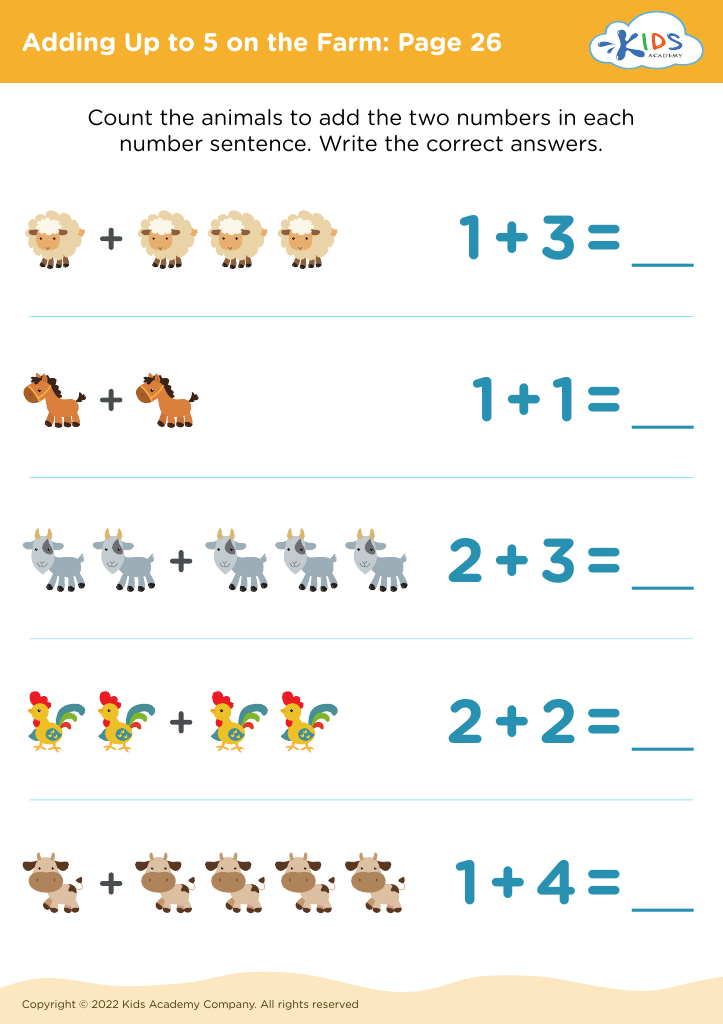
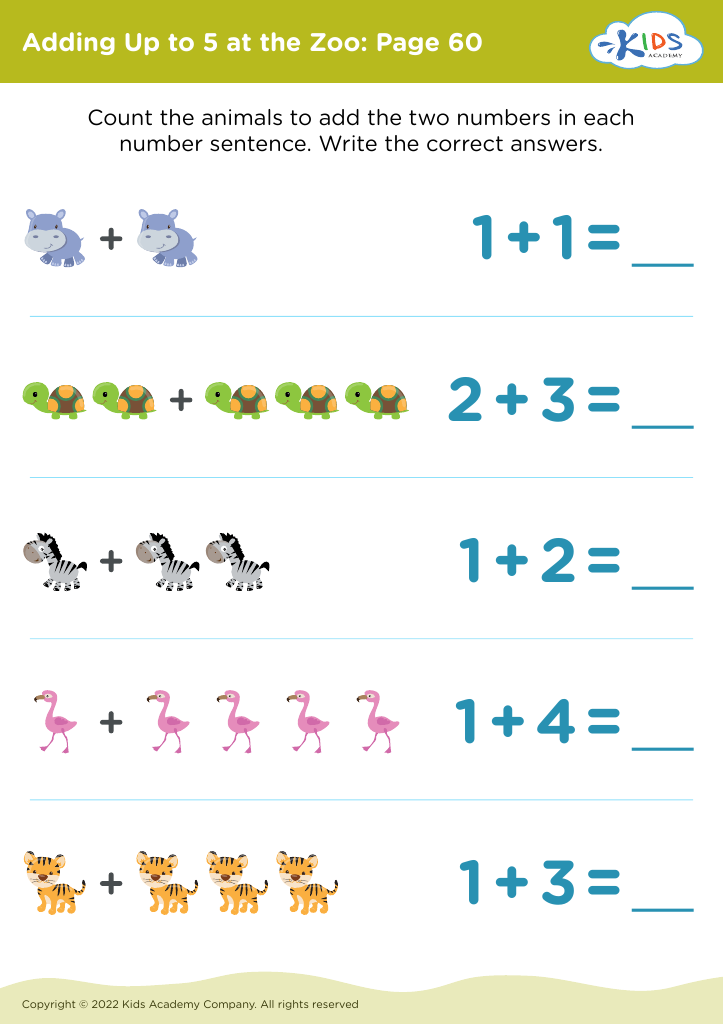








Parents and teachers should care about addition and subtraction up to 5 for children aged 4-6 because it lays the foundation for future mathematical skills. During these formative years, children develop critical thinking and problem-solving abilities that will support their overall cognitive development. Mastering basic addition and subtraction enhances their number sense, enabling them to understand more complex mathematical concepts later on.
Moreover, early exposure to these fundamental operations helps foster a positive attitude toward math. Engaging with numbers through games, manipulatives, and everyday activities builds confidence and makes learning enjoyable. This foundational knowledge is not only vital for academic success but also aids in everyday life skills, such as counting, estimating, and managing money.
Additionally, practicing addition and subtraction reinforces perseverance and resilience, as children learn that mistakes are part of the learning process. It promotes communication skills as they articulate their thought processes and collaborate with peers or family members. In essence, a strong command of addition and subtraction up to 5 equips young learners for a smoother transition into more advanced math topics, making it a crucial focus for parents and educators alike.








