Animal identification Addition & Subtraction Worksheets for Ages 4-6 - Page 2
27 filtered results
-
From - To
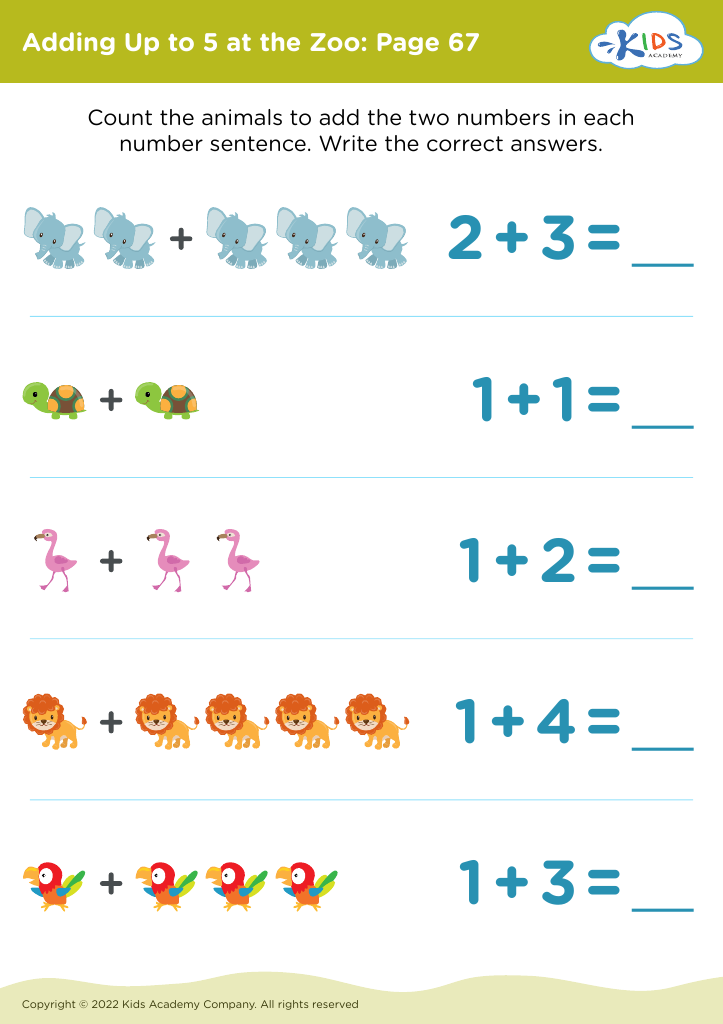
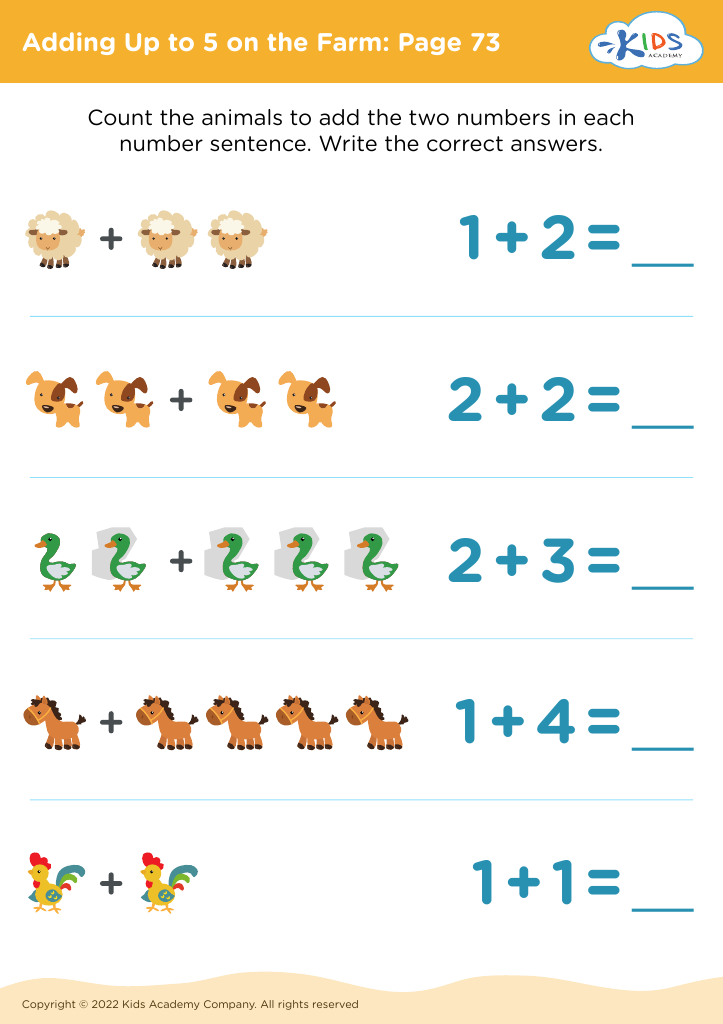
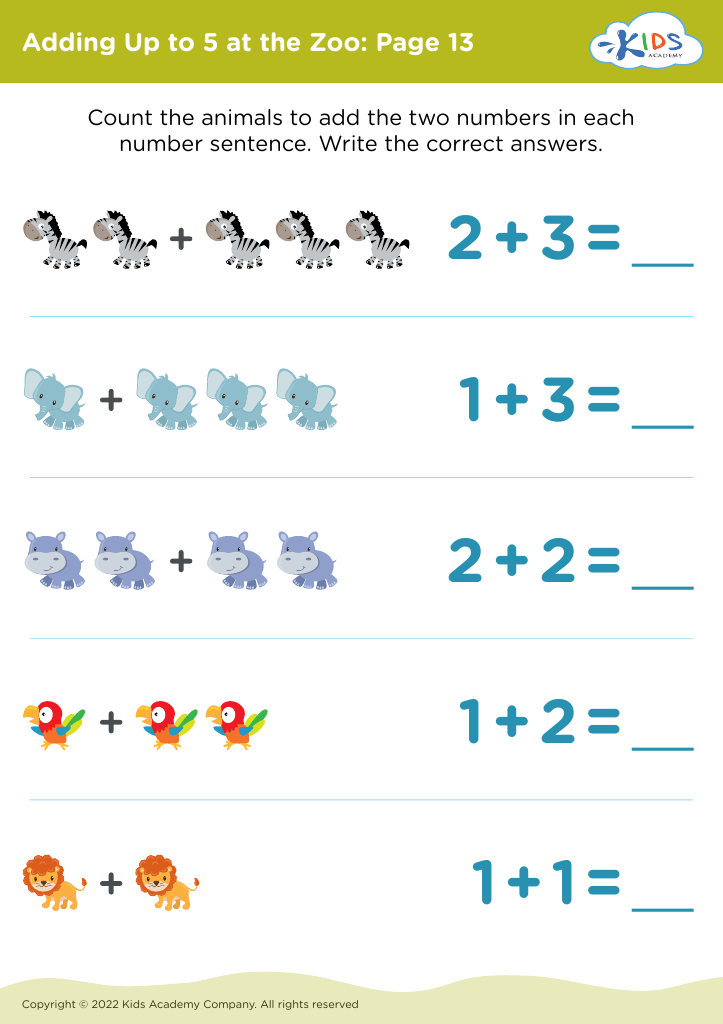








Parents and teachers should care about animal identification addition and subtraction for children ages 4-6 because it caters to both cognitive and emotional development during a crucial growth stage. At this age, children are in the early stages of number sense and basic arithmetic ability. Integrating these skills with animal identification makes learning more engaging, providing memorable contexts for practice.
First, associating numbers with animals capitalizes on children's natural curiosity and enthusiasm for animals. Recognizing and naming animals can heighten a child’s interest, making abstract concepts like counting and arithmetic tangible and relatable. This dual-layered learning helps in better retention of both numerical skills and zoological knowledge.
Second, such integrated activities also foster multidisciplinary learning. As children connect arithmetic with biology, they enhance their capacity for cross-context thinking, crucial for overall intellectual development.
Socially and emotionally, discussing animals can encourage empathy and pro-social behavior. Tasks that involve stories or interactions about animals, combined with arithmetic problems, not only improve numeracy but also construction narrative skills and compassion.
Overall, employing animal themes in addition and subtraction activities lays a foundation that is educational, emotionally supportive, intellectually versatile, and inherently enjoyable, for young learners. This well-rounded approach is why parents and teachers should integrate animal-themed arithmetic into early education.








