
Fine motor development Addition & Subtraction Worksheets for Ages 4-6
3 filtered results
Difficulty Level
Grade
Age
-
From - To
Subject
Activity
Standards
Enhance your child's fine motor skills and mathematical understanding with our engaging Addition & Subtraction Worksheets designed specifically for ages 4-6. These worksheets combine essential math concepts with activities that promote hand strength, coordination, and dexterity. Fun illustrations and interactive exercises keep young learners motivated as they practice addition and subtraction. Each worksheet encourages kids to use writing tools effectively, fostering both cognitive and physical development. Perfect for at-home learning or classroom settings, our resources support early math education while ensuring a playful approach to skill-building. Discover the joy of learning math through fine motor fun today!
Favorites
With answer key
Interactive
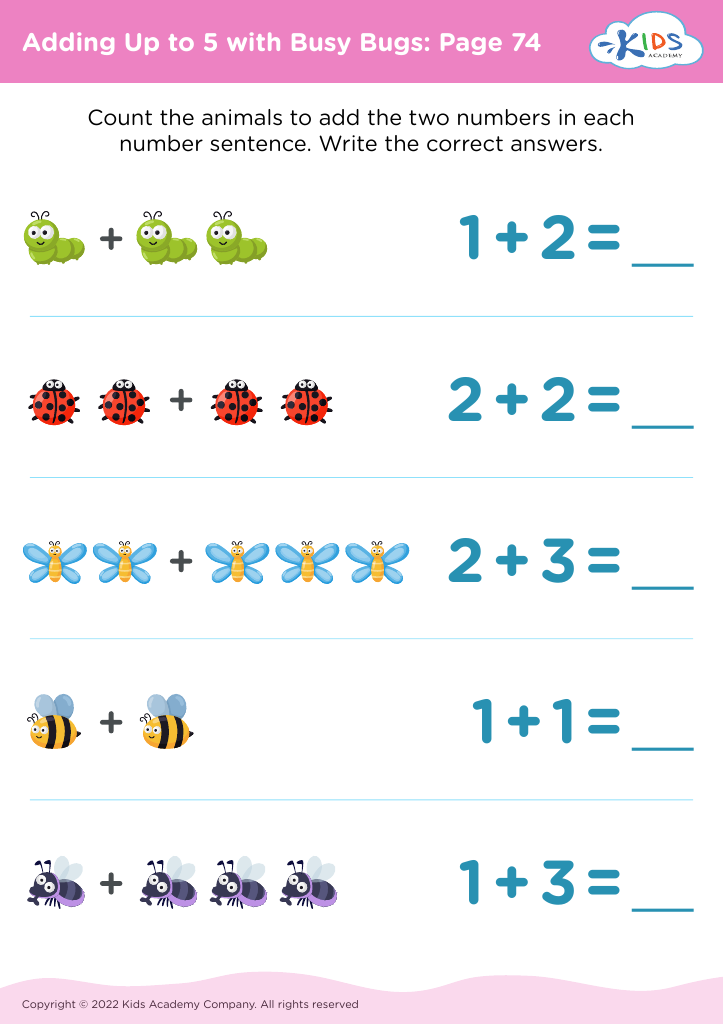
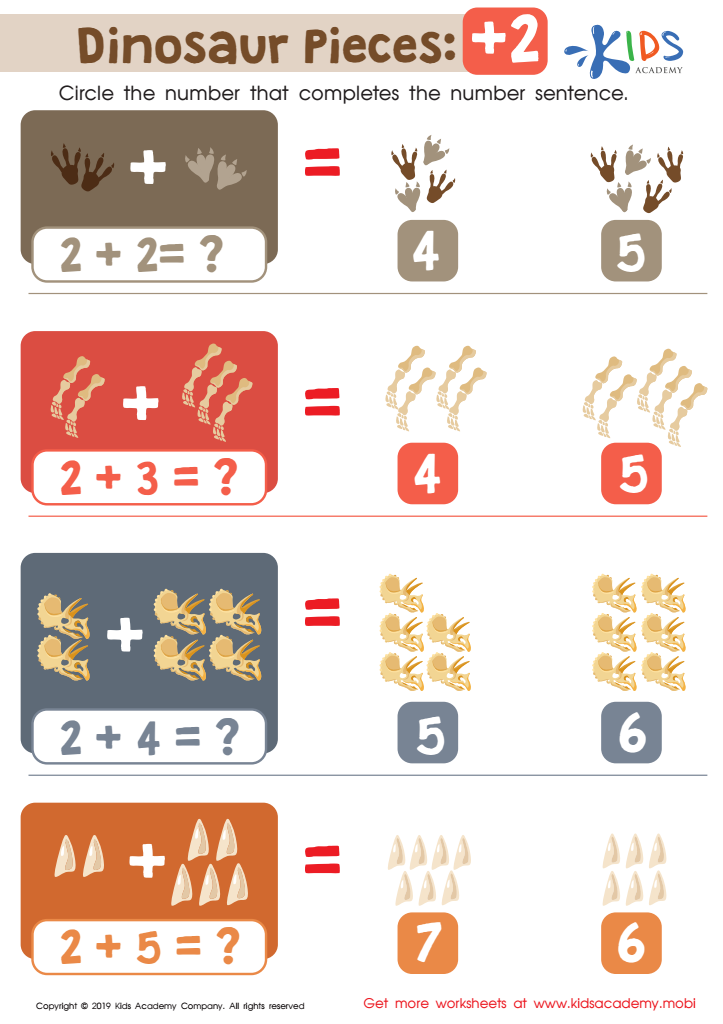
Dinosaur Pieces: +2 Worksheet
Kids love dinosaurs! See if your kids can solve these three equations featuring the mysterious creatures. Download the PDF and have them circle the number that completes each equation. Dinosaurs are extinct, not seen for thousands of years, but they can still help kids work on their math skills!
 Assign to My Students
Dinosaur Pieces: +2 Worksheet
Worksheet
Join Kids Academy for Free
Who is primarily going to use this learning content?








Fine motor development and foundational math skills, like addition and subtraction, are crucial for children's overall growth and learning, especially for ages 4-6. Fine motor skills involve the coordination of small muscles in the hands and fingers, which is essential for tasks such as writing, drawing, and using tools. As children engage in fine motor activities like cutting, drawing shapes, or building with blocks, they strengthen hand-eye coordination, dexterity, and concentration—all vital for academic readiness.
Simultaneously, early mathematical skills, specifically addition and subtraction, form the building blocks for critical thinking and problem-solving. Understanding these concepts at a young age helps children develop number sense, which is foundational for later, more complex math skills. When children practice these skills through playful activities—like counting blocks, sharing snacks for addition, or playing number games—they not only enhance their cognitive abilities but also connect math to real-world situations.
Parents and teachers play an essential role in fostering these skills by providing rich learning environments filled with engaging and purposeful activities. By prioritizing fine motor skills alongside basic math concepts, caregivers can support a child's confidence, independence, and eagerness to learn, setting the stage for future academic success.








