Problem-solving abilities Addition & Subtraction Worksheets for Ages 4-6 - Page 2
29 filtered results
-
From - To
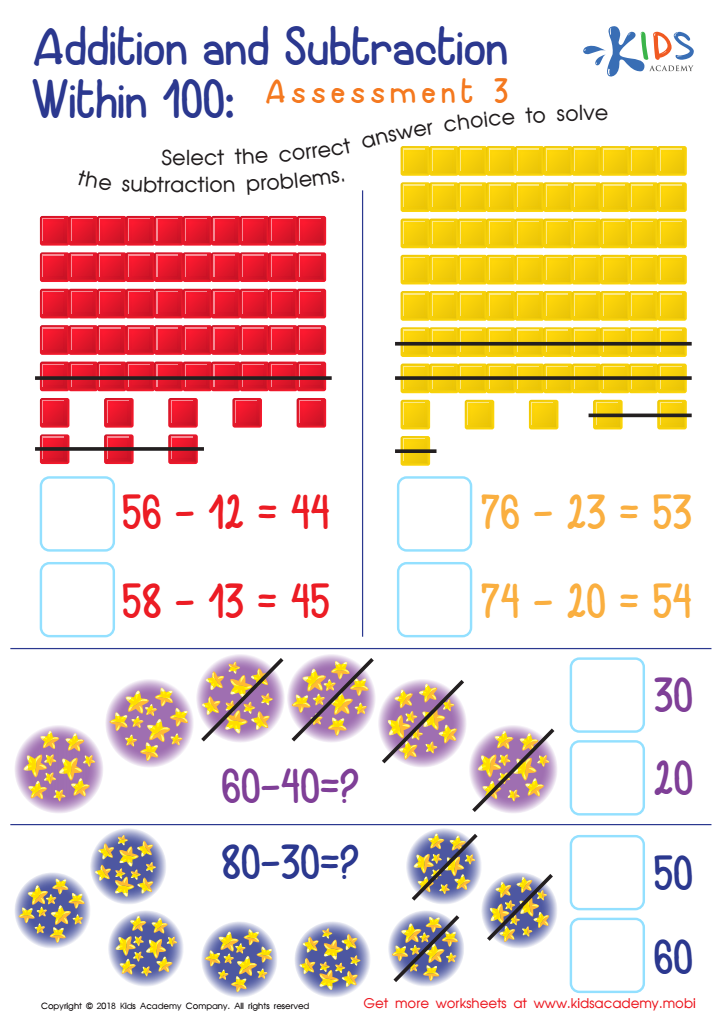
Addition and Subtraction Within 1: Assessment 3 Worksheet
 Assign to My Students
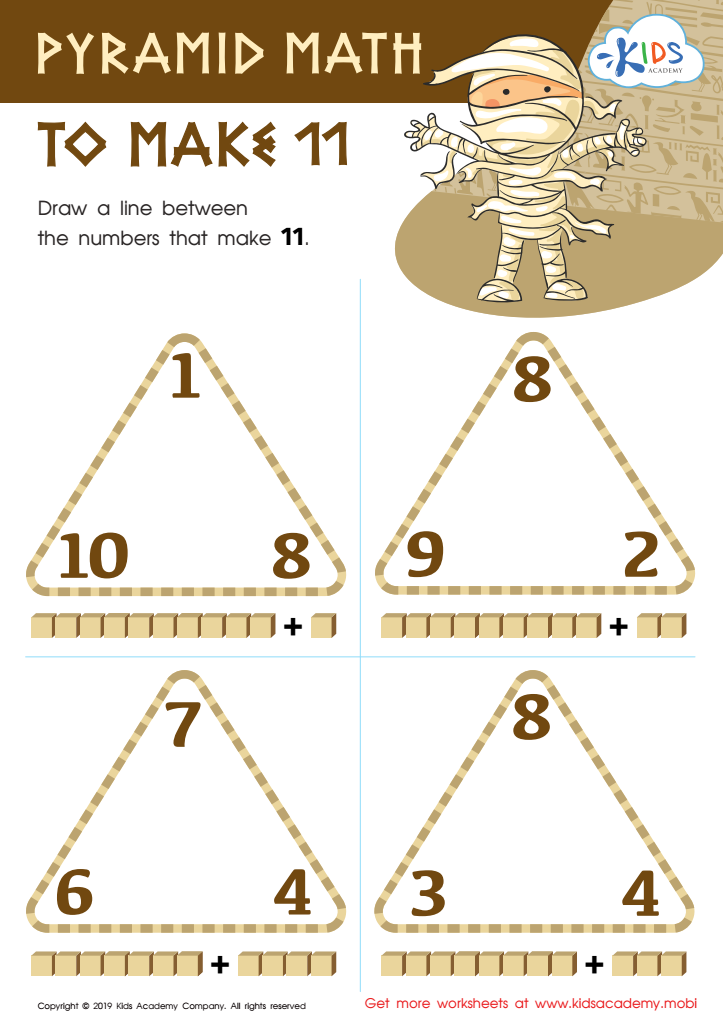
Pyramid Math to Make 11 Worksheet
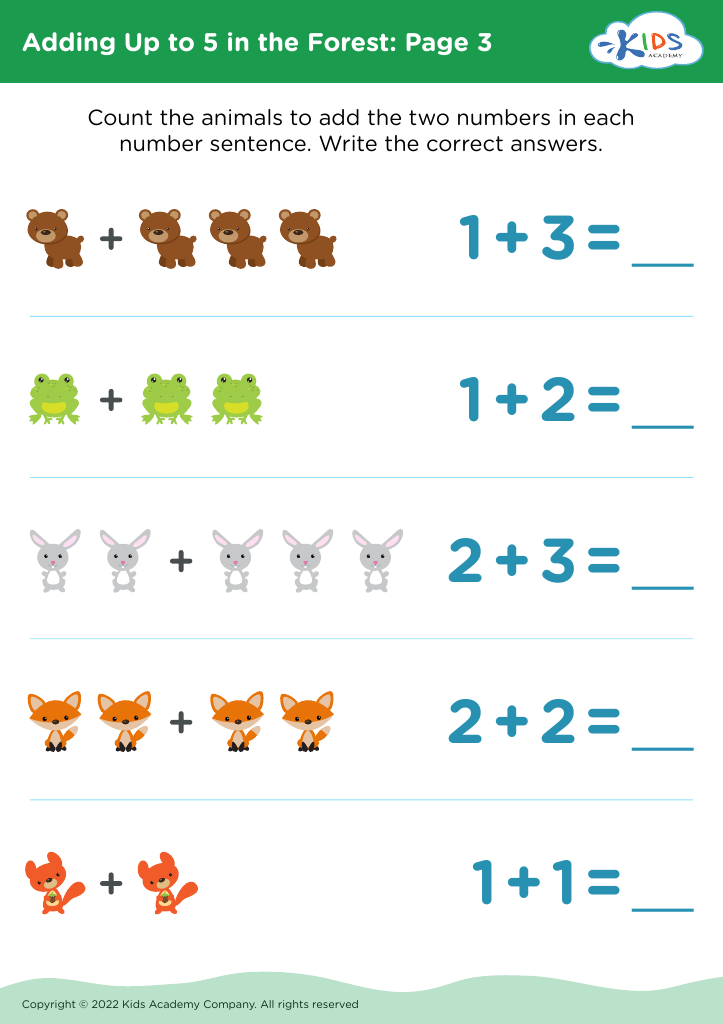








Problem-solving abilities in addition and subtraction for children ages 4-6 are crucial for their overall cognitive development and future academic success. At this stage, children are developing foundational mathematical skills that will serve as building blocks for more complex concepts. Understanding addition and subtraction helps children make sense of the world around them, as they learn to quantify their experiences, such as sharing toys or counting steps.
Parents and teachers should care about nurturing these skills because they promote critical thinking and logical reasoning. By engaging children in problem-solving tasks, they encourage creativity and perseverance. These skills are not only essential for math but also translate to better performance in other subjects and real-life situations.
Moreover, the early development of number sense fosters confidence and a positive attitude towards learning. When children find joy in solving math problems, they are more likely to engage actively in their education. Ultimately, investing in problem-solving abilities lays a strong foundation for lifelong learning, helping children become resilient and adaptive thinkers who are capable of tackling challenges both in and out of the classroom.








